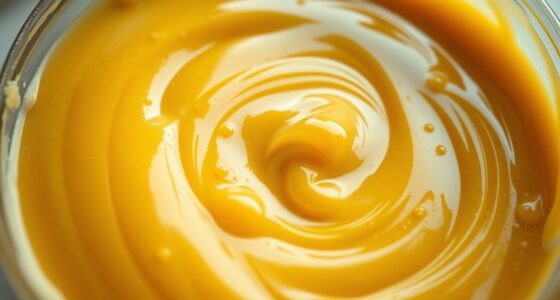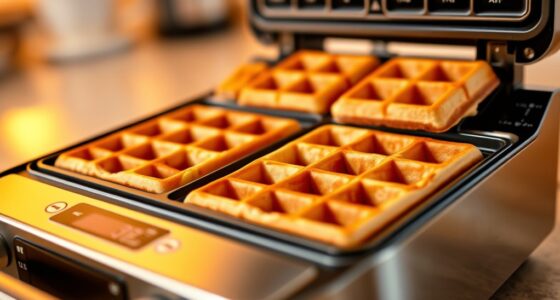
To control gluten formation in waffle batter, mix just until your ingredients are combined and there are no dry streaks. Use gentle folding instead of vigorous stirring to prevent overdeveloping gluten, which can make waffles tough. Avoid overmixing, as it creates a strong gluten network, while undermixing can leave dry pockets. Achieving the right balance results in tender, fluffy waffles. Keep exploring to master the subtle techniques that make your batter perfect every time.

Get baking supplies delivered free — and shop member deals
- Fast, free delivery on millions of items
- Access to Prime Big Deal Days deals on October 6–7
- Prime Video, Amazon Music and more included
Key Takeaways
- Mix batter until just combined to prevent excessive gluten development and maintain tenderness.
- Use gentle folding techniques to incorporate ingredients without overworking the gluten network.
- Avoid overmixing, which strengthens gluten and results in tough, chewy waffles.
- Stop mixing as soon as no dry flour remains to prevent overdevelopment of gluten.
- Proper batter consistency, achieved through correct mixing, ensures balanced gluten formation and optimal texture.

When you make waffle batter, understanding how gluten forms can help you achieve the perfect texture. Gluten develops when you mix flour with liquid, creating a network of proteins that gives your batter its structure. The key is to control dough elasticity and batter consistency through proper mixing techniques. Dough elasticity refers to how well your batter stretches without tearing, while batter consistency describes its thickness or thinness. Both factors influence the final outcome, so paying attention to how you handle your ingredients makes a big difference.
Start by measuring your ingredients accurately. Using too much flour can make your batter stiff and less elastic, resulting in dense waffles. Conversely, too much liquid can make it runny and difficult to hold its shape. Aim for a batter that’s smooth and slightly pourable, not overly thick or thin. This balance ensures the gluten network can form properly without becoming overdeveloped, which can lead to chewy or tough waffles. The consistency should be just enough to coat the back of a spoon smoothly.
When mixing, avoid overworking the batter. Gentle, minimal stirring is best. Once you combine your wet and dry ingredients, mix until just incorporated. Overmixing encourages excessive gluten development, which toughens the batter and reduces its tender, airy texture. As you stir, you’ll notice the batter becoming more elastic, stretching slightly as the gluten strands form. If it’s too elastic and resists flow, it might be overmixed. On the other hand, if it’s too loose and watery, it may not hold its shape during cooking, leading to flat or uneven waffles.
Pay attention to the mixing method itself. Folding the ingredients gently helps preserve air bubbles, which contribute to a light waffle. Use a spatula to fold the batter rather than vigorous stirring. This technique maintains batter fluffiness and prevents gluten from developing too aggressively. If you’re adding ingredients like fruit or nuts, fold them in carefully after the main mixture is combined. This prevents disrupting the gluten structure and keeps your batter cohesive.
Adjust your mixing time based on the batter’s appearance and feel. It should be just combined with no streaks of flour remaining. Overmixing can cause the gluten network to become too strong, making waffles chewy instead of tender. Under-mixing might leave pockets of dry flour, affecting batter consistency and resulting in uneven cooking. Striking the right balance ensures your gluten formation is ideal—enough to give structure but not so much that it toughens the final product. With practice, you’ll get a feel for the mixing technique that produces perfectly textured waffles every time.
As an affiliate, we earn on qualifying purchases.
Frequently Asked Questions
How Does Resting the Batter Affect Gluten Development?
Resting the batter slows gluten development, allowing the flour’s proteins to relax and hydrate fully. During this time, gluten formation continues gently, which helps create a tender, light waffle. If you rest the batter too long, gluten can overdevelop, resulting in a tougher texture. So, by resting the batter briefly, you strike a balance that promotes ideal gluten development, ensuring your waffles are fluffy and delicious.
Can Gluten Formation Be Prevented Altogether?
Did you know that about 1 in 100 people has a gluten intolerance? Gluten formation can’t be completely prevented because gluten proteins naturally develop when wheat flour mixes with water. However, you can use gluten-free alternatives or add dough stabilizers to minimize gluten development. These options help you create delicious waffles without gluten, making your breakfast inclusive and safe for those with sensitivities.
Does Using Alternative Flours Change Gluten Development?
Using alternative flours can markedly change gluten development in your waffle batter. Many gluten-free flours, like rice or almond flour, don’t contain gluten, so they prevent gluten formation altogether. Other options, such as oat or spelt flour, contain less gluten and develop it differently, resulting in a different texture. You’ll want to adjust your mixing techniques accordingly to achieve the desired waffle consistency, especially when working with these alternative flours.
What Impact Does Temperature Have on Gluten Formation?
Think of temperature as a puppeteer pulling the strings of gluten formation. When you keep your batter cold, the gluten network develops slowly, resulting in a tender waffle. Warmer temperatures speed up gluten development, creating a stronger, more elastic structure. So, the temperature influence directly affects the strength and texture of your waffle’s gluten network, helping you control whether your waffle turns out airy or chewy.
How Does Gluten Affect Waffle Texture and Taste?
Gluten affects your waffle’s texture by providing dough elasticity, making it tender yet sturdy enough to hold its shape. It also influences taste, subtly enhancing flavor as it interacts with other ingredients. Too much gluten can make waffles tough, while too little results in a crumbly texture. Striking the right balance guarantees your waffles are light, crispy, and flavorful, giving you a perfect breakfast every time.
Conclusion
So, next time you mix your waffle batter with reckless abandon, remember—you’re crafting a gluten masterpiece. Overmix, and you’ll get a tough, chewy waffle that’s basically a cardio workout for your jaw. But hey, who needs delicate, airy waffles when you can have a dense, gluten-packed extravaganza? Just embrace the chaos, and let your mixing technique be a testament to your unwavering dedication to the art of gluten formation. Bon appétit!
Fall Picks
fall essentials
As an affiliate, we earn on qualifying purchases.