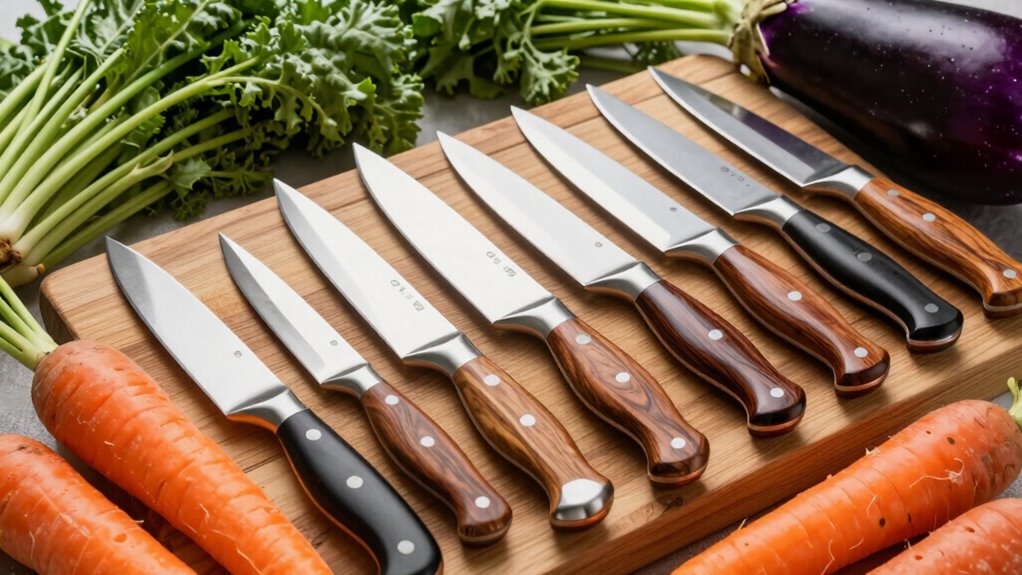

When selecting a vegetable knife, the key factors are sharpness, versatility, and comfort. The Shun Premier 3″ Vegetable Knife stands out as the best overall for its handcrafted Japanese quality and precision. For those seeking value, the Gourmetop Paring Knife Set offers great performance at an affordable price, while the Cuisinart Nakiri Knife provides a reliable, versatile option for everyday use. Buyers often face tradeoffs between premium craftsmanship and budget-friendly performance, or between specialized blades and all-purpose tools. Continue reading for a detailed breakdown of these options and how to find the best vegetable knife for your needs.

Get baking supplies delivered free with Prime
- Fast, free delivery on millions of items
- Prime Video, Amazon Music and more included
- Member-only deals all year
Complete the kit


Key Takeaways
- Top-ranked knives combine high-quality materials with versatile blade shapes, making prep work easier.
- Nakiri and similar rectangular blades excel at clean vegetable slicing, especially for Japanese-style cutting techniques.
- Budget options can perform surprisingly well but may lack long-term durability or ergonomic comfort.
- Serrated blades are ideal for tomatoes and soft-skinned produce, but less suited for general vegetable prep.
- Comfortable, ergonomic handles make a noticeable difference during extended prep sessions and reduce fatigue.


| vegetable knife | Blade length | Blade material | Handle material |
|---|---|---|---|
| BYkooc 8 pieces Paring Knives | — | Stainless Steel | PP Plastic |
| VITUER Paring knife | 4 inches | — | PP Plastic |
| Shun Premier 3" Vegetable Knif | 3 inches | — | Pakkawood |
| Omesata Tomato Knife | 3.5 inches | High carbon stainless steel | — |
| Gourmetop Paring Knife with Co | 3.8 inches | — | Ergonomic plastic |
| Victorinox 6.7831 Swiss Classi | 4.3 inches | High Carbon Stainless Steel | Textured, non-slip |
| imarku Chef Knife 7 Inch Kitch | 7 inches | High Carbon Stainless Steel | Pakkawood |
| Cuisinart 7" Nakiri Knife with | 7 inches | Stainless Steel | — |
| PAUDIN Nakiri Knife | 7 inches | 5Cr15Mov Stainless Steel | Pakkawood |
| Cuisinart 7" Nakiri Knife with | 7 inches | Stainless Steel | — |
| Brewin Professional Kitchen Kn | — | High-carbon stainless steel | — |
| HOSHANHO 7 Inch Nakiri Knife | 7 inches | Japanese 10Cr15CoMoV high carbon stainless steel | Pakkawood |
| DDF iohEF Kitchen Knife | 7 inches | Japanese stainless steel | Stainless steel |
More Details on Our Top Picks
BYkooc 8 pieces Paring Knives (4PCS Peeling Knives and 4PCS Knife Sheath), Ultra Sharp Vegetable and Fruit Knife,German Steel Small Kitchen Knife with PP Plastic Ergonomic Handle
This set stands out for its vibrant color coding and comprehensive coverage of small kitchen tasks. Compared with the Gourmetop Paring Knife Set, this option offers more knives for a similar price, making it ideal for households that want multiple tools without breaking the bank. However, its lack of detailed craftsmanship might compromise long-term edge retention, especially vs. the Shun Premier’s handcrafted quality. The included sheaths enhance safety and storage, making this set perfect for busy kitchens where visual organization matters. The knives’ ergonomic handles support comfortable use, but the stainless steel might not be as finely balanced as high-end Japanese options.
Pros:- Affordable price point for multiple knives
- Color-coded handles reduce cross-contamination
- Includes protective sheaths for safe storage
- Sharp blades suitable for small, intricate tasks
Cons:- Steel quality may dull faster with frequent use
- Lack of handcrafted craftsmanship compared to premium brands
Best for: Budget-conscious families who want versatile, colorful knives for everyday prep.
Not ideal for: Professional chefs seeking ultra-precise, handcrafted tools with superior edge retention.
- Number of knives:8
- Blade material:Stainless Steel
- Handle material:PP Plastic
- Knife type:Peeling/Paring
- Color options:4 different colors
- Sheath included:Yes
Our verdict“This set is an excellent choice for home cooks needing affordable, colorful paring knives with safety features.”
VITUER Paring knife, 4PCS Paring knives (4 Knives and 4 Knife cover), 4 Inch Peeling Fruit and Vegetable Knife, Ultra Sharp Kitchen Knives, German Steel, PP Plastic Handle
Compared to the BYkooc set, the VITUER knives emphasize durability with German stainless steel and a Rockwell hardness of 56 HRC, promising longer-lasting sharpness. The ergonomic handle design improves grip comfort, making it a better option for those who do a lot of detailed peeling and slicing. However, the simpler design might appeal less to users who prefer colorful or more personalized tools, unlike the BYkooc set’s vibrant options. Both sets include sheaths for safe storage, but VITUER’s focus on steel quality makes it more suitable for frequent, precise kitchen work. The blades’ sharpness and balance are tailored for control, yet the set’s minimalist aesthetic might be less engaging for users who enjoy colorful utensils.
Pros:- High-quality German stainless steel
- Long-lasting razor-sharp edges
- Ergonomic, comfortable handle design
- Includes protective knife sheaths
Cons:- Less colorful and visually playful than competitors
- Requires hand washing to maintain steel quality
Best for: Home cooks prioritizing durability and sharpness for daily detailed vegetable prep.
Not ideal for: Users seeking colorful, aesthetically vibrant tools or casual occasional use.
- Number of knives:4
- Blade length:4 inches
- Steel type:German stainless steel
- Handle material:PP Plastic
- Hardness:56 HRC
- Includes sheath:Yes
Our verdict“Ideal for those valuing steel durability and precision over design flair in vegetable preparation.”
Shun Premier 3″ Vegetable Knife, Handcrafted Japanese Knife, VG-MAX Core with Damascus Stainless Steel Cladding, Pakkawood Handle, Small Tool for Peeling, Coring & Cutting
This handcrafted Japanese knife excels in making peeling and coring effortless thanks to its razor-sharp VG-MAX steel and Damascus cladding, offering a level of finesse that sets it apart from the Gourmetop and BYkooc sets. Its 16-degree edge provides exceptional sharpness and edge retention, ideal for precision tasks, but its small size limits versatility for larger cutting or chopping. The Pakkawood handle provides comfort and control, though it may require more careful maintenance than stainless options. Compared with the Omesata Tomato Knife, this tool’s craftsmanship appeals more to those who value traditional Japanese artistry, at a higher price point. It’s best suited for detailed vegetable prep rather than heavy-duty slicing.
Pros:- Exceptional Japanese craftsmanship
- Long-lasting razor-sharp edge
- Beautiful hammered Damascus finish
- Comfortable Pakkawood handle
Cons:- Limited size restricts versatility
- Higher price point and more delicate maintenance
Best for: Serious home chefs and enthusiasts seeking a beautifully crafted, ultra-sharp vegetable tool.
Not ideal for: Casual cooks or those needing a multi-purpose or larger vegetable knife.
- Blade length:3 inches
- Steel core:VG-MAX
- Steel layers:68 Damascus layers
- Handle material:Pakkawood
- Edge angle:16 degrees
- Construction:Handcrafted Japanese
Our verdict“A superb choice for those who want a handcrafted, precision vegetable knife with Japanese artistry.”
Omesata Tomato Knife, Tomato Slicing Knives Serrated Blade from High Carbon Stainless Steel for Smooth Cutting Tomatoes, Vegetables and Fruits
This dedicated tomato knife features a highly specialized serrated blade made from high carbon stainless steel, making it a standout for slicing tomatoes and similarly textured produce with minimal effort. Unlike the Gourmetop paring set, which covers a broad range of small tasks, the Omesata knife focuses on one purpose with exceptional precision. Its textured handle ensures a secure grip, and the weighted balance makes slicing effortless, even for softer-skinned fruits. However, it’s a single-use tool, so those seeking an all-in-one vegetable set might find it limiting. The blade’s serrated edge remains sharp longer, but it’s less suitable for tasks that require a fine, smooth cut. It’s best for dedicated, high-volume tomato prep.
Pros:- Specialized serrated blade for tomatoes
- High carbon stainless steel for durability
- Weighted, balanced handle for easy slicing
- Textured, non-slip grip
Cons:- Limited to soft-skinned produce
- Not suitable for general vegetable prep
Best for: Home cooks and professionals who frequently prepare tomatoes and soft-skinned produce.
Not ideal for: Users looking for a multi-purpose vegetable knife or those preferring straight-edged blades.
- Blade material:High carbon stainless steel
- Blade length:3.5 inches
- Handle design:Textured, non-slip
- Blade type:Serrated
- Purpose:Tomato and soft produce slicing
Our verdict“This knife is perfect for those who need a dedicated tool for slicing tomatoes with ease and precision.”
This set emphasizes versatility and safety with color-coded handles and protective sheaths, making it ideal for multitasking and organized kitchen prep. The 15° double-bevel blades are finely sharpened, providing excellent precision for peeling, deveining, and detailed vegetable work. Compared to the VITUER set, Gourmetop’s handles are ergonomically contoured for comfortable use during extended prep sessions. Its nonstick coating reduces drag, but this feature may require more frequent cleaning to prevent buildup. While not as refined as the Shun Premier or handcrafted Japanese knives, this set offers excellent value for those who want a complete, safe, and color-coded solution. It’s particularly suited for home cooks managing multiple ingredients simultaneously.
Pros:- Color-coded handles for easy identification
- Includes protective sheaths for safe storage
- Ergonomically designed handles for comfort
- Finer 15° edge for precise peeling and trimming
Cons:- Nonstick coating may require frequent cleaning
- Less refined than high-end handcrafted Japanese knives
Best for: Home cooks seeking a versatile, color-coded, safety-focused paring knife set for everyday use.
Not ideal for: Cooks who prioritize high-end craftsmanship or extensive sharpening and maintenance.
- Number of knives:4
- Blade length:3.8 inches
- Blade angle:15 degrees
- Handle material:Ergonomic plastic
- Coating:Food-grade nonstick
- Includes sheath:Yes
Our verdict“A practical, organized choice for home cooks needing a versatile and safe paring knife set.”
Victorinox 6.7831 Swiss Classic Tomato and Table Knife Ideal for Cutting Fruits and Vegetables with Soft Skin Serrated Blade in Red, 4.3 inches
The Victorinox Swiss Classic Tomato and Table Knife stands out for its lightweight design and serrated blade, making it ideal for slicing soft-skinned vegetables and fruits like tomatoes and cucumbers. Compared to the imarku Santoku, this knife offers more finesse for delicate cuts, though it sacrifices some versatility for general chopping tasks. Its high carbon stainless steel blade ensures long-lasting sharpness, and the textured handle provides a secure grip even when wet. However, it’s limited to softer produce and isn’t suited for heavy-duty chopping or tougher vegetables. This pick is perfect for cooks who prioritize precision and easy handling for everyday slicing of tender produce.
Pros:- Lightweight and well-balanced for easy handling
- Sharp serrated edge ideal for soft-skinned produce
- Made with durable high carbon stainless steel
Cons:- Limited to soft vegetables and fruits; not suitable for harder produce
- Less versatile for general chopping tasks
Best for: Home cooks who mainly prepare soft fruits and vegetables and want a reliable, easy-to-handle knife.
Not ideal for: Those needing a multi-purpose knife for heavy chopping or tougher vegetables, as this is primarily a precision tool.
- Blade Material:High Carbon Stainless Steel
- Blade Length:4.3 inches
- Handle Material:Textured, non-slip
- Blade Edge:Serrated
- Construction Type:Conical ground, ice tempered
- Measurement:12 inches total length
Our verdict“This knife is best for those seeking a precise, lightweight tool specifically for slicing soft produce with minimal effort.”
imarku Chef Knife 7 Inch Kitchen Knife Ultra Sharp Santoku Knife – High Carbon Japanese Chefs Knife, Kitchen Gadgets 2025, Apartment Essentials, Birthday Gifts for Him Her, Best Gifts for Women Men
The imarku 7-inch Santoku is a standout for its ultra-sharp edge and ergonomic handle, making it highly effective for slicing, dicing, and mincing a variety of vegetables and meats. Unlike the Victorinox serrated knife, this offers a smooth, razor-sharp cut, suitable for more aggressive chopping and prep work. Its high carbon stainless steel resists rust and discoloration, and the scalloped hollow edge helps prevent sticking. However, its sharpness requires careful handling, and it’s less suitable for delicate tasks like slicing soft fruits. This knife makes the most sense for those who want a durable, all-purpose kitchen workhorse that can handle heavy-duty prep with precision.
Pros:- Ultra-sharp edge for precise cuts
- Ergonomic, stable pakkawood handle
- Resistant to rust and corrosion
Cons:- Requires careful handling to avoid injury
- Less suited for very delicate slicing tasks
Best for: Home chefs and culinary enthusiasts seeking a versatile, high-performance knife for daily prep tasks.
Not ideal for: Beginners who might find the sharp edge difficult to control or those primarily preparing soft produce.
- Blade Material:High Carbon Stainless Steel
- Blade Length:7 inches
- Handle Material:Pakkawood
- Blade Edge:Hollow scalloped
- Construction Type:Forged
- Size:12 inches total length
Our verdict“This knife is ideal for users who want a versatile, sharp, and durable tool capable of handling a wide range of kitchen prep work.”
Cuisinart 7″ Nakiri Knife with Blade Guard, Stainless Steel Collection
The Cuisinart Nakiri excels at vegetable prep, with its high-quality stainless steel blade designed for effortless slicing, chopping, and dicing. It’s a straightforward, no-fuss option that’s easy to maneuver. Compared with the more specialized PAUDIN Nakiri, this model offers excellent balance and comfort for daily use in home kitchens. The included blade guard enhances safety during storage, a feature the PAUDIN lacks. However, this Nakiri’s simplicity means it might lack some of the sharpness or specialized edge that professional-grade knives like the PAUDIN offer for more precise cuts. It’s a practical choice for those who want a reliable vegetable knife with added safety features.
Pros:- Effortless slicing and dicing of vegetables
- Includes a safety blade guard
- Made of durable stainless steel
Cons:- Not as razor-sharp as specialized Japanese knives
- Limited to vegetable prep, less versatile
Best for: Home cooks looking for an easy-to-use vegetable knife with safety features and straightforward performance.
Not ideal for: Professional chefs or those requiring ultra-thin, delicate vegetable slicing; this is more suited for general chopping.
- Blade Material:Stainless Steel
- Blade Length:7 inches
- Blade Color:Stainless Steel
- Construction Type:Forged
- Includes:Blade Guard
- Size:8.5 inches in total length
Our verdict“This Nakiri is well-suited for everyday vegetable chopping with safety in mind, perfect for home cooks.”
PAUDIN Nakiri Knife – 7″ Razor Sharp Meat Cleaver and Vegetable Kitchen Knife, High Carbon Stainless Steel, Multipurpose Asian Chef Knife for Home and Kitchen with Ergonomic Handle
The PAUDIN Nakiri offers a robust, razor-sharp edge with a 5Cr15Mov steel blade, making it highly suitable for heavy-duty chopping, slicing, and mincing. Its wave pattern not only adds aesthetic appeal but also helps reduce food friction, similar to Damascus knives, while making cleaning easier. Compared with the Cuisinart Nakiri, this knife provides a more professional-grade edge and a comfortable, ergonomic handle designed for extended use. Its high hardness and durability make it less vulnerable to dulling, though it demands careful handling to avoid chipping. This knife is best for those who need a multipurpose, powerful tool capable of tackling dense vegetables and even light meat tasks efficiently.
Pros:- Razor-sharp edge for effortless cutting
- Ergonomic, balanced handle
- High durability and rust resistance
Cons:- Requires careful handling to prevent chipping
- Heavier than typical vegetable knives
Best for: Home cooks and chefs needing a versatile, heavy-duty vegetable and meat prep knife.
Not ideal for: Beginners or those looking for a very lightweight, delicate slicing tool for soft produce.
- Blade Material:5Cr15Mov Stainless Steel
- Blade Length:7 inches
- Hardness:56+ HRC
- Handle Material:Pakkawood
- Wave Pattern:Damascus-style
- Size:Approximately 13 inches in total length
Our verdict“This knife is perfect for those who want a heavy-duty, multipurpose tool capable of handling tough vegetables and light meats with ease.”
Cuisinart 7″ Nakiri Knife with Blade Guard, Stainless Steel Collection
The Cuisinart Nakiri is designed for efficient vegetable prep, with a high-quality stainless steel blade that makes slicing, chopping, and dicing straightforward. It’s a dependable, user-friendly choice with an included blade guard for safe storage. Unlike the PAUDIN Nakiri, it may lack some of the razor-sharp edge and heavy-duty feel, but it compensates with ease of use and maintenance. Its balanced weight and comfortable handle make it suitable for everyday tasks, though it’s less ideal for professional or ultra-fine slicing applications. This model is a practical, safety-conscious option for home cooks who want a reliable vegetable knife for regular use.
Pros:- Effortless vegetable slicing
- Includes a safety blade guard
- Made of durable stainless steel
Cons:- Less sharp than specialized Japanese knives
- Limited to vegetable prep and lighter tasks
Best for: Home vegetable enthusiasts seeking an easy, safe, and effective knife for daily chopping tasks.
Not ideal for: Professional chefs or those requiring ultra-thin, precision vegetable cuts or multi-purpose heavy-duty knives.
- Blade Material:Stainless Steel
- Blade Length:7 inches
- Includes:Blade Guard
- Size:8.5 inches total length
- Construction Type:Forged
Our verdict“A reliable, safety-oriented vegetable knife ideal for everyday home kitchen use with moderate prep needs.”
Brewin Professional Kitchen Knives, 3PC Chef Knife Set Sharp Knives for Kitchen High Carbon Stainless Steel, Japanese Cooking Knife with Gift Box
The Brewin 3-piece set stands out for its versatile collection—including a chef’s knife, santoku, and utility knife—making it suitable for a wide range of vegetable prep tasks. Its high carbon stainless steel blades, with a 56+ Rockwell hardness, promise sharpness and edge retention that surpass many budget options like the DDF iohEF, which uses less durable steel. The full tang, ergonomic handle enhances control and comfort during extended cutting sessions, a feature less emphasized in smaller or less balanced knives. While the sharpness and durability are impressive, the set’s larger size and full bolster mean it may feel bulky for delicate tasks or those with smaller hands. It’s a great choice for serious home cooks or small commercial kitchens that need reliable, all-in-one vegetable knives. However, the set’s premium price point and the need for careful hand-washing** could deter casual users.
Pros:- Versatile set covering multiple prep needs
- High-carbon steel for sharpness and durability
- Full tang and ergonomic handle for control and comfort
Cons:- Higher price compared to single knives or simpler sets
- Requires hand washing and careful maintenance
Best for: Cooks who want a complete, high-quality vegetable knife set with durability and versatility.
Not ideal for: Beginners or those with small hands who prefer lightweight, smaller knives for fine vegetable prep.
- Blade Material:High-carbon stainless steel
- Rockwell Hardness:56+
- Blade Lengths:Chef’s knife, Santoku, Utility knife
- Handle Type:Triple-riveted ABS ergonomic
- Edge Angle:14-16 degrees per side
- Finish:Hand-polished
Our verdict“This set is ideal for experienced cooks seeking a durable, all-in-one solution for vegetable preparation.”
HOSHANHO 7 Inch Nakiri Knife, Japanese High Carbon Stainless Steel Chef Knife, Multipurpose Meat Vegetable Sharp Kitchen Knife with Ergonomic Pakkawood Handle
The HOSHANHO Nakiri excels in precise, effortless vegetable slicing, thanks to its hand-polished 15-degree edge and high carbon steel with a 60 HRC hardness. Compared to the DDF iohEF, which offers a more traditional, heavier profile, this Nakiri’s lightweight, balanced design and scalloped hollow sides reduce sticking and improve cutting speed. Its ergonomic pakkawood handle provides comfort during long prep sessions, making it ideal for those who prioritize precision and comfort. However, the focus on vegetables means it’s less suitable for tasks like meat carving, which a more versatile set could handle better. The all-around sharpness and stylish design make it a standout for vegetable enthusiasts or those who want a dedicated, high-performance Nakiri. Still, its narrower blade profile might be less effective for larger, tougher produce or multi-tasking beyond vegetables.
Pros:- Super sharp, 15-degree edge for effortless cutting
- High hardness steel ensures long-lasting edge retention
- Ergonomic, comfortable handle for extended use
- Stylish, hollow scalloped sides reduce sticking
Cons:- Limited versatility for tasks beyond vegetables
- Narrow blade may be less effective for large or tough produce
Best for: Vegetable-focused cooks who value precision and a lightweight, ergonomic tool.
Not ideal for: Users needing a multi-purpose knife for meats and larger ingredients or those seeking a heavier, more robust blade.
- Blade Length:7 inches
- Blade Material:Japanese 10Cr15CoMoV high carbon stainless steel
- Hardness:60 HRC
- Edge Angle:15 degrees
- Handle Material:Pakkawood
- Design Features:Hollow scalloped sides
Our verdict“This Nakiri is perfect for vegetable aficionados seeking precision and ease of use, with less focus on multi-tasking.”
DDF iohEF Kitchen Knife, Chef’s Knife In Japanese Stainless Steel Professional Santoku Cooking Knife, 7 Inch Non-slip Ultra Sharp Knife with Ergonomic Handle
The DDF iohEF chef’s knife offers a balanced, versatile design suited for both vegetable and broader culinary tasks. Its 15-degree double-edged blade makes it equally comfortable for left- and right-handed users, contrasting with the single-bevel Nakiri that favors vegetable prep. Made from professional Japanese stainless steel with 58 HRC, it strikes a good balance between sharpness and durability without the higher maintenance of premium high-carbon steels. Its ergonomic stainless steel handle minimizes fatigue, making it suitable for frequent use. While it doesn’t excel as much in fine, delicate vegetable slicing as the HOSHANHO Nakiri, it performs reliably across a variety of kitchen tasks. Tradeoffs include a slightly less specialized blade and a weight that might be less precise for very detailed cuts. Overall, it’s a solid choice for cooks wanting one knife for most vegetable and general prep.
Pros:- Double-edged, ambidextrous design
- Good balance of sharpness and durability
- Ergonomic handle for comfort during extended use
- Versatile for multiple kitchen tasks
Cons:- Less specialized for fine vegetable slicing than Nakiri
- Slightly heavier than dedicated vegetable knives
Best for: Home cooks seeking a reliable, well-balanced knife for various vegetable and basic kitchen tasks.
Not ideal for: Specialists who need dedicated, ultra-precise vegetable knives or those preferring lightweight or single-purpose tools.
- Blade Length:7 inches
- Blade Material:Japanese stainless steel
- Hardness:58 HRC
- Edge Angle:15 degrees per side
- Handle Material:Stainless steel
- Design:Double-edged, non-slip
Our verdict“This knife is well-suited for cooks who want a dependable, multi-purpose tool that handles vegetables and more with balanced ease.”

How We Picked
I evaluated each vegetable knife based on a combination of performance, build quality, ergonomic design, and value. Sharpness and edge retention were critical, as these directly impact ease of use and safety. I also considered handle comfort, balance, and ease of maintenance, since a well-designed knife reduces fatigue and simplifies cleaning. To ensure broad applicability, I included a range of blade styles from traditional Japanese Nakiris to Western paring knives. The ranking reflects a balance between high-end craftsmanship, affordability, and versatility, helping buyers find the best fit for their cooking styles and budgets.| vegetable knife | Handle material |
|---|---|
| BYkooc 8 pieces Paring Knives | PP Plastic |
| VITUER Paring knife | PP Plastic |
| Shun Premier 3" Vegetable Knif | Pakkawood |
| Omesata Tomato Knife | — |
| Gourmetop Paring Knife with Co | Ergonomic plastic |
| Victorinox 6.7831 Swiss Classi | Textured, non-slip |
| imarku Chef Knife 7 Inch Kitch | Pakkawood |
| Cuisinart 7" Nakiri Knife with | — |
| PAUDIN Nakiri Knife | Pakkawood |
| Cuisinart 7" Nakiri Knife with | — |
| Brewin Professional Kitchen Kn | — |
| HOSHANHO 7 Inch Nakiri Knife | Pakkawood |
| DDF iohEF Kitchen Knife | Stainless steel |
Factors to Consider When Choosing Vegetable Knives
Choosing the right vegetable knife involves more than just picking the sharpest blade. Understanding key factors like blade shape, material, and handle design can significantly improve your prep experience. Knowing what to prioritize helps avoid common mistakes, such as selecting a knife that’s too delicate or one that doesn’t suit your cutting style. This section highlights important considerations to help you make an informed decision tailored to your cooking needs.Blade Shape and Style
Blade shape influences how efficiently you can prepare vegetables. Nakiri knives feature a rectangular, straight-edged blade ideal for precise, push-cut slicing and dicing. Chefs who frequently work with Asian cuisines will appreciate this shape for its speed and control. Conversely, curved blades like paring knives excel at peeling and intricate cuts, making them more suitable for detailed tasks. Consider your typical prep work to choose a shape that simplifies your routine, rather than just opting for the most popular or attractive design.
Material and Edge Retention
High-quality steels like VG-MAX or high-carbon stainless steel ensure your knife stays sharp longer and resists rust. Cheaper steels may require more frequent sharpening, which can be frustrating during busy cooking sessions. However, premium steels often come at a higher cost and may demand careful maintenance. Balancing durability with ease of sharpening is key—if you prefer low-maintenance tools, look for knives with corrosion-resistant coatings or softer steels that are easier to hone.
Handle Design and Ergonomics
A comfortable, well-balanced handle reduces hand fatigue and improves control. Pakkawood and high-quality plastic handles often provide a natural grip, but some materials can become slippery if wet. Ergonomic handles with a slight contour and non-slip surfaces make prolonged prep more comfortable. Avoid handles that are too small or poorly balanced, which can cause strain or reduce precision. Think about your hand size and grip style when selecting a knife to ensure comfort and safety.
Size and Weight
The size of the knife directly impacts maneuverability. Smaller paring knives are perfect for detail work, while larger Nakiri blades provide more chopping power for bulk vegetable prep. Heavier knives can feel more substantial and reduce the effort needed to cut through dense produce, but may also cause fatigue over time. Conversely, lighter knives offer agility but might lack the stability needed for tougher vegetables. Choose a size and weight that balance control with comfort based on your typical cooking tasks.
Price and Value
While high-end knives deliver exceptional performance and craftsmanship, they come with a higher price tag. Budget-friendly options can be surprisingly capable, especially for casual cooks or those just starting out. However, they may require more frequent sharpening or replacement over time. Consider your budget alongside how often you prep vegetables—investing more in a durable, high-quality knife makes sense if you cook frequently, whereas occasional users might prefer a reliable mid-range option that balances cost and performance.
Frequently Asked Questions
Can I use a regular chef’s knife for vegetable prep instead of a specialized vegetable knife?
Yes, a chef’s knife can handle most vegetable prep tasks, especially larger or tougher vegetables. However, specialized vegetable knives like Nakiris or paring knives often offer better control and cleaner cuts for specific tasks such as peeling, julienning, or slicing delicate produce. Using a dedicated vegetable knife can also make your prep more efficient and reduce fatigue, especially during extended cooking sessions. For casual use, a versatile chef’s knife may suffice, but for precision and speed, a specialized knife is advantageous.
What’s the main difference between a Nakiri and a paring knife?
A Nakiri features a rectangular, straight-edged blade designed primarily for slicing vegetables with a push-cut motion, providing clean, uniform cuts. Its flat profile allows for full contact with the cutting surface, making it ideal for chopping large quantities efficiently. In contrast, a paring knife is smaller with a curved blade suited for peeling, trimming, and intricate detail work. Depending on your typical prep, choosing between these shapes can drastically affect your efficiency and comfort.
Should I choose a serrated or straight-edged vegetable knife?
Serrated knives excel at cutting soft-skinned or delicate vegetables like tomatoes, where a gentle sawing motion prevents crushing. Straight-edged knives provide cleaner cuts and are better suited for firm, dense vegetables such as carrots or squash. For general vegetable prep, a straight-edged blade offers more versatility, but keeping a serrated knife on hand can be useful for specific tasks. Combining both types in your kitchen ensures you’re prepared for different produce textures.
How often should I sharpen my vegetable knife?
The frequency of sharpening depends on use and the steel quality. High-quality steels retain their edge longer, often needing sharpening only every few months with regular use. Cheaper steels may require more frequent honing or sharpening, especially if used on hard or rough surfaces. Proper maintenance, such as hand washing and storing in a knife block or sheath, can extend the sharpness and lifespan of your knife. Regular honing with a ceramic rod can also keep the edge aligned between sharpenings.
Is it worth investing in a Japanese-made vegetable knife?
Japanese-made vegetable knives, especially those with handcrafted features and high-carbon steels, often deliver superior sharpness, edge retention, and precise control. They are generally designed with specific vegetable prep in mind, making them a favorite among professional chefs and serious home cooks. However, they tend to come at a premium price and may require more careful maintenance to prevent rust or damage. For those who prioritize performance and are willing to invest, Japanese knives can significantly enhance your prep work.
Conclusion
For everyday cooks seeking a reliable, versatile option, the Cuisinart Nakiri Knife offers excellent value with solid performance. Those looking for the best overall experience should consider the Shun Premier 3″ Vegetable Knife, which combines craftsmanship with precision. Beginners or casual users will find the Gourmetop Paring Knife Set a user-friendly and affordable choice, while serious enthusiasts may prefer the durability and high-performance features of Japanese-made knives like the PAUDIN Nakiri or HOSHANHO. Ultimately, selecting the right vegetable knife depends on your specific needs, budget, and how much you value precision versus convenience.
As an affiliate, we earn on qualifying purchases.Halloween Picks
halloween