The Maillard reaction in waffles occurs most intensely on the hot surface where proteins and sugars interact during cooking. This heat zone creates the inviting toasted aroma, rich flavor, and golden-brown crust you love. Controlling the temperature guarantees you develop perfect flavors without burning or undercooking. Achieving the right heat zone is key to mastering waffle flavor, and understanding how it works can elevate your baking skills even further. Keep exploring to reveal more tips.
Key Takeaways
- The Maillard reaction occurs most intensely on the waffle’s surface where heat is highest.
- Proper temperature promotes flavor development and aroma through protein-sugar interactions.
- Excessive heat can cause burning, leading to bitterness and uneven browning.
- Insufficient heat results in pale, underdeveloped waffles lacking rich flavors.
- Precise heat control ensures optimal Maillard reaction, creating the signature waffle flavor and appealing appearance.
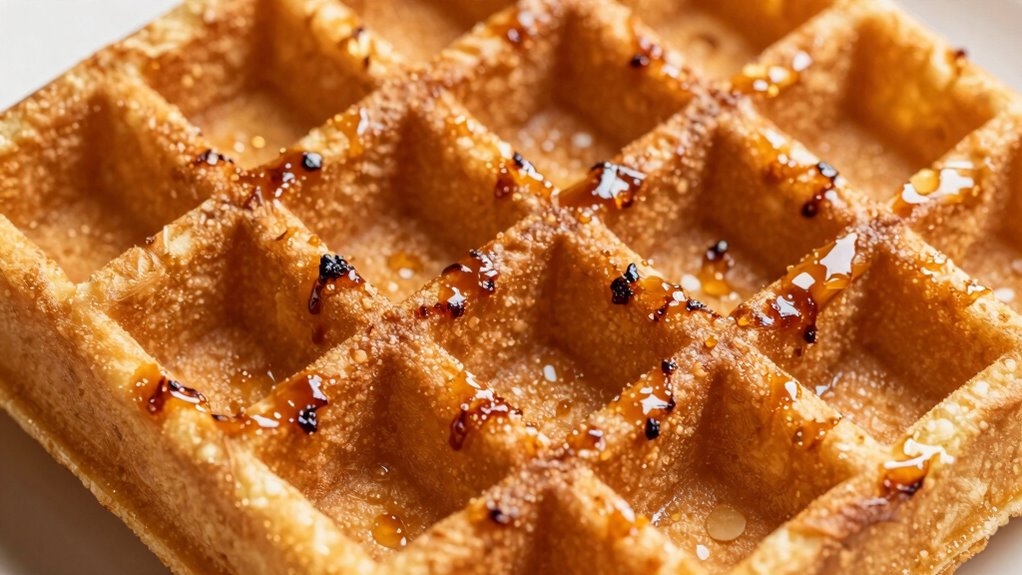
When you bite into a perfectly golden waffle, you’re experiencing more than just a sweet treat—you’re tasting the result of the Maillard reaction. This complex chemical process occurs when heat transforms the proteins and sugars in your batter into a rich tapestry of flavors and aromas. It’s responsible for that inviting, slightly toasted smell that wafts from your breakfast plate and makes your mouth water. As the waffle cooks, sugar caramelization kicks in, adding a layer of sweetness and depth. The caramelized sugars contribute to the golden-brown exterior, giving your waffle its appealing appearance and a subtle, sweet aroma that signals a perfect bake.
Bite into a golden waffle and savor the rich flavors created by the Maillard reaction and caramelization.
The Maillard reaction is what creates that signature “waffle flavor”—a harmonious blend of savory and sweet notes that can’t be replicated by simply adding sugar or flavorings. When heat is applied, the amino acids and reducing sugars in the batter interact, forming hundreds of new compounds that develop the complex aroma you associate with freshly baked waffles. This aroma development is essential because it triggers your senses even before you take the first bite. It’s a sensory cue that signals deliciousness, making your waffle more tempting with every passing second.
You might notice that the reaction occurs most intensely on the surface, where the heat is highest, resulting in that crispy, textured crust. The Maillard reaction’s influence extends beyond flavor; it also enhances the visual appeal. The warm, golden hue of a well-cooked waffle is a visual indicator of proper Maillard activity. If the heat is too low, the reaction slows down, leaving your waffle pale and lacking that rich, inviting aroma. Too high, and it might burn, producing bitter flavors instead of the desired caramelized sweetness.
Understanding this process helps you control your waffle-making. For a perfect balance, you need just the right heat to promote ideal sugar caramelization and aroma development without burning the exterior. Achieving this balance ensures the Maillard reaction creates those complex, mouthwatering flavors that define a great waffle. So next time you’re making waffles, remember: it’s not just about ingredients, but also about the heat that transforms batter into a delicious masterpiece through the magic of the Maillard reaction. This heat zone is what elevates your breakfast from ordinary to extraordinary, giving your waffles that irresistible flavor profile everyone loves. Recognizing how precise temperature control influences this process can help you perfect your waffle recipe every time.

Cuisinart Waffle Maker, 1250W Round Classic Waffle Iron, 5-Setting Adjustable Browning Control, WMR-CAP2, Brushed Stainless
- Professional Quality Waffle Maker: Bakes large traditional waffles quickly
- Adjustable Browning Control: 5 settings for custom browning
- Indicator Lights: Red and green for baking status
As an affiliate, we earn on qualifying purchases.
As an affiliate, we earn on qualifying purchases.
Frequently Asked Questions
How Does Humidity Affect the Maillard Reaction During Waffle Cooking?
Humidity impacts the Maillard reaction during waffle cooking by influencing moisture control. High humidity levels can introduce excess moisture, slowing the reaction and resulting in less browning and flavor development. Conversely, low humidity helps evaporate moisture quickly, encouraging better Maillard browning. You should manage humidity carefully, ensuring your waffle batter isn’t too wet and controlling the environment to achieve ideal moisture balance for rich, flavorful waffles.
Can the Maillard Reaction Occur at Lower Temperatures in Waffles?
Think of the Maillard reaction as a slow dance that can still create beautiful browning at lower temperatures. Yes, low temperature Maillard and alternative browning can occur in waffles, but they happen more slowly and less intensely. To achieve that rich flavor, you might need to extend cooking time or tweak moisture levels. This gentle process still develops those enticing flavors, just at a more leisurely pace.
What Ingredients Enhance Maillard Browning in Waffle Batter?
You can enhance Maillard browning in your waffle batter by adding ingredients like sweeteners and proteins. Use sugars like honey or brown sugar, which promote browning, and include protein-rich ingredients such as eggs or milk to boost the reaction. These components work together, increasing browning and flavor development. Adjusting the amount of sweeteners and protein content helps you control the depth of the Maillard reaction, giving your waffles a richer, more complex flavor.
How Does pH Level Influence the Maillard Reaction in Waffles?
You’ll find that maintaining the right pH balance is key to maximizing flavor enhancement through the Maillard reaction. When your waffle batter’s pH is slightly alkaline, it accelerates browning and deepens flavors. Conversely, a more acidic pH slows down the reaction, resulting in lighter waffles. So, adjusting ingredients like baking soda or acidic components helps you control the pH level, ensuring your waffles develop richer color and more complex, delicious flavors.
Are There Health Concerns Related to Maillard Reaction Compounds in Waffles?
You might wonder if there are health risks from compounds formed during the Maillard reaction in waffles. While some carcinogenic compounds, like acrylamide, can develop in high-temperature cooking, eating waffles occasionally isn’t likely to pose significant health concerns. To reduce risks, avoid overly browned or burnt waffles, and enjoy them as part of a balanced diet. Moderation and proper cooking methods can help minimize potential health risks associated with Maillard reaction compounds.
Conclusion
Now that you know how the Maillard reaction shapes that irresistible waffle flavor, don’t shy away from experimenting with your batter’s temperature. Yes, it takes a bit of attention, but imagine biting into a perfectly caramelized, golden waffle that’s bursting with flavor—something worth every effort. Don’t let fear of a slight learning curve stop you; instead, savor the joy of creating a delicious treat that’s uniquely yours. Happy waffle making!