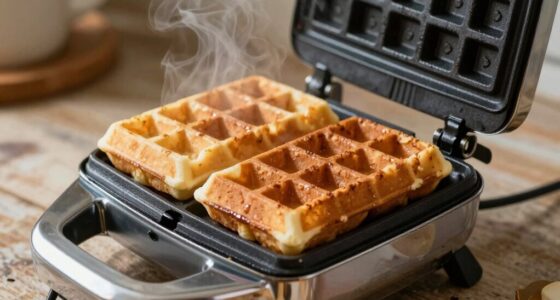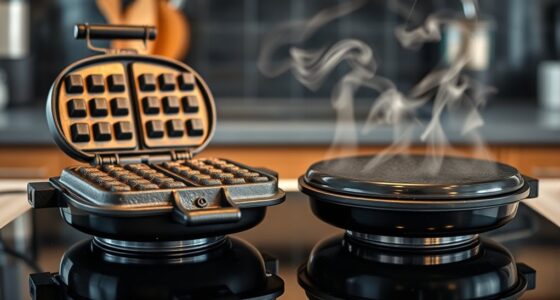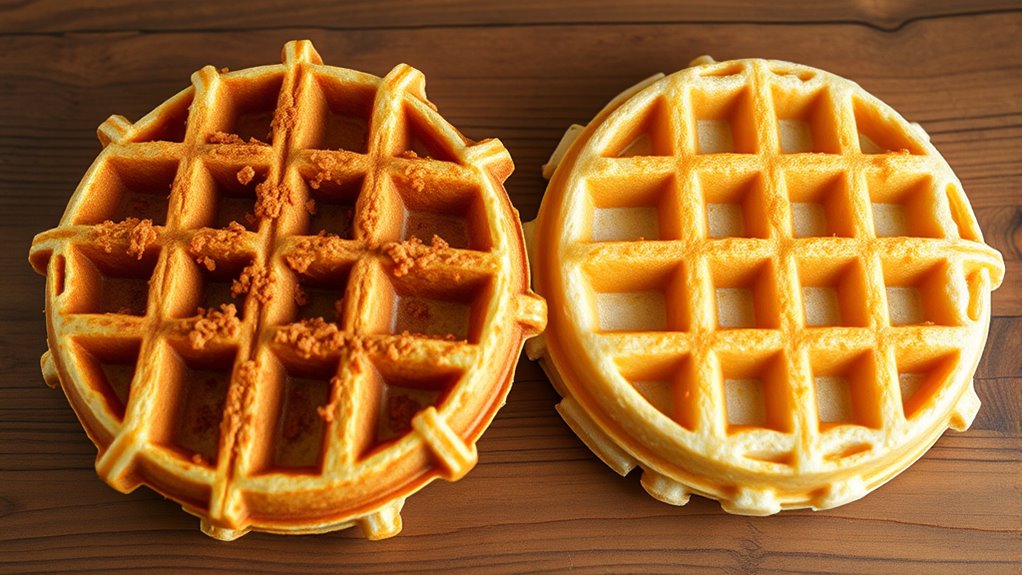

When you cook waffles at higher temperatures, they develop a crispy exterior by quickly forming a golden crust, while lower temperatures keep them softer and more tender inside. A hotter setting seals in moisture and creates that desirable crunch, whereas lower heat allows moisture to escape more slowly, resulting in a chewier or more delicate texture. To get the perfect waffle, understanding how heat impacts texture helps you decide the best temperature—keep exploring for tips on fine-tuning your approach.

Get baking supplies delivered free — and shop member deals
- Fast, free delivery on millions of items
- Access to Prime Big Deal Days deals on October 6–7
- Prime Video, Amazon Music and more included
Key Takeaways
- Higher temperatures quickly form a golden, crispy crust by rapidly sealing surface moisture.
- Lower temperatures allow moisture to escape slowly, resulting in a softer, more tender waffle.
- Increasing heat promotes crust development, while lower heat helps retain internal moisture for softness.
- Temperature adjustments should consider batter consistency and waffle iron type for optimal texture.
- Proper preheating and temperature control prevent undercooked or soggy waffles, balancing crispness and tenderness.
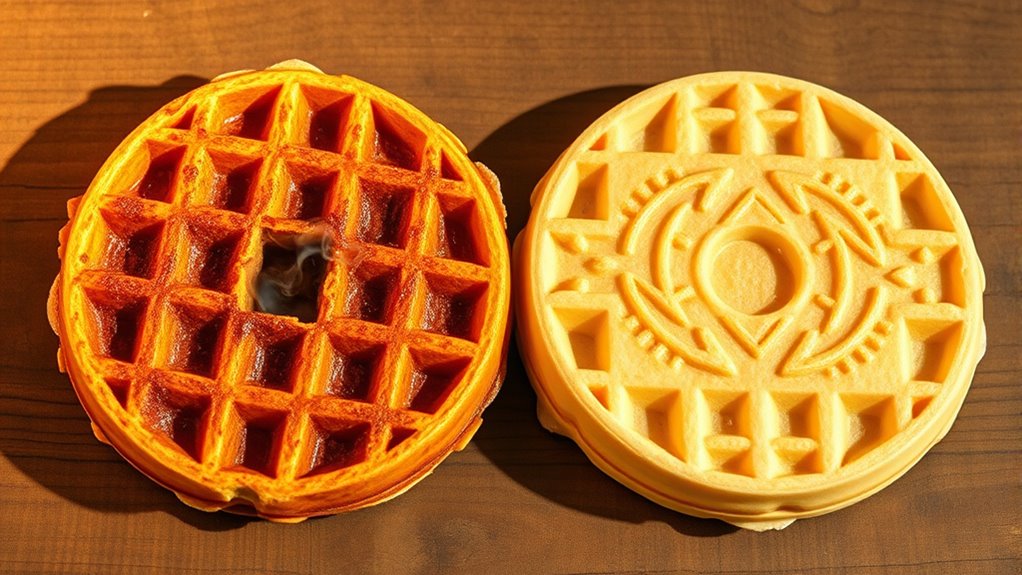
The temperature at which you cook your waffles directly influences their texture, determining whether they turn out crispy, tender, or chewy. One of the key factors in achieving the perfect waffle texture is understanding how batter consistency and waffle iron type interact with heat. When your batter is too thin, it spreads easily and can lead to a softer, more tender waffle, especially if cooked at lower temperatures. Conversely, a thicker batter tends to hold its shape better, resulting in a crunchier exterior when cooked at higher temperatures. Adjusting your batter’s consistency based on the waffle iron you’re using can make a significant difference. For example, traditional Belgian waffle makers, which often have deeper grids, perform well with thicker batter, helping to create a crispy outer shell while maintaining a fluffy interior. On the other hand, thinner batter works better with more modern, thinner-waffle irons that produce crisp edges quickly. Additionally, understanding the waffle iron type can help you optimize cooking times and temperatures for your desired texture. The waffle iron type plays an essential role in how heat affects your waffles. Some irons heat unevenly, leading to inconsistencies in texture—crisp on some parts and soft on others. To combat this, you might need to experiment with different temperature settings or preheat your waffle iron thoroughly. High heat generally produces a crisp waffle, as the exterior quickly forms a golden crust, sealing in moisture and preventing sogginess. Low heat, on the other hand, results in a softer waffle because the batter cooks more slowly, allowing moisture to stay inside longer. If you’re aiming for a crispy waffle, setting your waffle iron to a higher temperature is usually the way to go, especially if you’re working with a batter that’s on the thicker side.
adjustable waffle iron temperature control
As an affiliate, we earn on qualifying purchases.
As an affiliate, we earn on qualifying purchases.
Frequently Asked Questions
How Does Humidity Influence Waffle Texture at Different Temperatures?
Humidity effects can considerably influence waffle texture at various temperatures. When humidity is high, moisture in the air makes waffles softer and less crispy, especially at lower cooking temperatures. Conversely, low humidity helps achieve a crunchier exterior because less moisture is present to soften the waffle. At higher temperatures, humidity effects are less pronounced, but controlling moisture levels remains key to getting your desired waffle texture—crisp or soft.
Can Adjusting Cooking Time Compensate for Temperature Differences?
Verily, adjusting your cooking time can help offset temperature differences, but only to a point. When you tweak the cooking time, you’re fundamentally compensating for temperature adjustment; however, if the temperature is too low or too high, the waffle may not reach the ideal crispness or softness. To get perfect results, balance both cooking time and temperature, ensuring your waffle achieves the desired texture without over or undercooking.
Does Waffle Batter Composition Affect Temperature Sensitivity?
Yes, waffle batter composition influences temperature sensitivity. If your batter has a thick consistency or high fat and sugar content, it may require a lower temperature to prevent burning and achieve a soft interior. Conversely, a thinner batter with balanced ingredient ratios heats more evenly, making it easier to produce crisp waffles at higher temps. Adjusting batter consistency and ingredient ratios helps you control how temperature affects your waffle’s texture perfectly.
How Does Initial Batter Temperature Impact Final Waffle Texture?
Imagine your batter is cold, and you pour it into the waffle iron—your waffle might turn out softer and less crispy. When batter starts at a warmer temperature, it cooks faster, creating a crisper exterior. Initial batter temperature influences final texture because warmer batter promotes better batter consistency and flavor development. Conversely, cold batter can lead to uneven cooking and a softer waffle, affecting overall quality.
Are There Specific Temperature Ranges for Different Waffle Styles?
Yes, specific temperature ranges help you achieve different waffle styles through precise temperature control. For crispy waffles, set your iron around 375°F to 400°F, ensuring a golden, crunchy exterior. For softer waffles, lower the temperature to about 350°F to 375°F, which allows a tender, fluffy interior. Adjusting your waffle maker’s temperature effectively supports style differentiation, giving you control over texture and consistency with each batch.
Conclusion
So, next time you’re making waffles, remember that the temperature you choose can transform your treat from irresistibly crisp to delightfully soft. But which will you prefer? The perfect balance isn’t just about heat—it’s about your taste. As you tweak those settings and watch your waffle cook, one thing’s certain: the final texture holds a secret waiting to be discovered. Are you ready to open it? The answer lies just beyond the temperature dial.
Fall Picks
fall essentials
As an affiliate, we earn on qualifying purchases.