In your small waffle operation, keeping prep sinks and dishwashers clean and well-maintained is vital for food safety and efficiency. Proper cleaning protocols prevent cross-contamination, while regular equipment checks avoid delays and safety issues. Using the right supplies and techniques guarantees surfaces stay sanitized, and staff training promotes consistent standards. If you want to optimize your workflow and guarantee safety, understanding these strategies will help you succeed and keep customers happy.

Get baking supplies delivered free with Prime
- Fast, free delivery on millions of items
- Prime Video, Amazon Music and more included
- Member-only deals all year
Key Takeaways
- Proper prep sink and dishwashing strategies prevent cross-contamination in small waffle operations.
- Effective cleaning protocols ensure ingredient safety and maintain hygiene standards.
- Regular equipment maintenance avoids delays and food safety violations during busy periods.
- Organized workflows optimize efficiency and reduce contamination risks in limited space.
- Staff training ensures proper sanitation practices, supporting compliance and product quality.
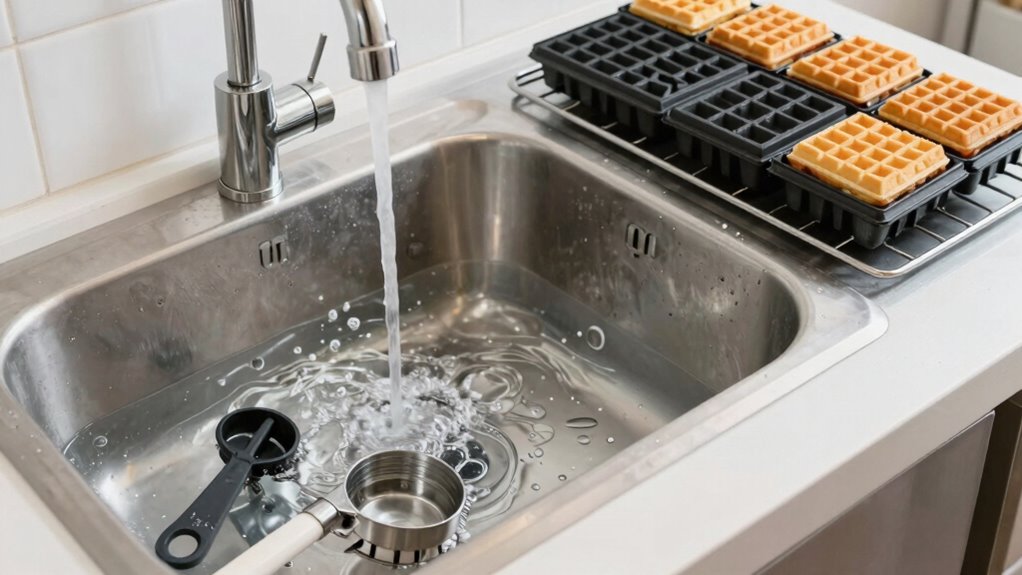
In small waffle operations, efficient prep sinks and dishwashing strategies are essential to maintaining a smooth workflow and ensuring food safety. You need to prioritize proper cleaning protocols to prevent cross-contamination and keep your workspace hygienic. This means regularly sanitizing your prep sinks and dishwashers, and establishing clear procedures for washing, rinsing, and sanitizing utensils, cookware, and equipment. When you follow these protocols consistently, you reduce the risk of bacteria buildup and ensure that your ingredients and tools remain safe for your customers. Proper equipment maintenance plays a critical role in supporting effective dishwashing strategies. Well-maintained sinks and dishwashers operate more efficiently, save water and energy, and prolong their lifespan. You should routinely check for clogs, leaks, and malfunctions, and address any issues immediately. This not only prevents delays during busy hours but also guarantees that cleaning is thorough. For instance, a broken or poorly functioning dishwasher may leave residue or bacteria behind, which could compromise food safety standards. Keeping your equipment in top shape is a fundamental part of your overall cleaning protocols, and it helps you avoid costly repairs or replacements down the line. Additionally, understanding the importance of equipment maintenance can help you identify potential issues early before they impact your operation. Proper cleaning supplies and sanitizers also impact the effectiveness of your prep sinks and dishwashing procedures. Use food-safe, EPA-approved cleaning agents that are suited for your equipment, and follow the manufacturer’s instructions regarding concentration and contact time. Properly diluted solutions ensure thorough cleaning without leaving harmful residues. Additionally, maintaining a clean, organized workspace around your sinks makes it easier to implement your cleaning protocols efficiently. When everything is in its place, you reduce cross-contamination risks and streamline your workflow, especially during high-demand periods. Using proper cleaning techniques further enhances the sanitization process and ensures that all surfaces are effectively disinfected. Training your staff on cleaning protocols and equipment maintenance is another key aspect of an effective dishwashing strategy. When everyone understands the importance of sanitation and knows how to properly operate and maintain sinks and dishwashers, you create a safer, more reliable operation. Regularly review procedures and conduct periodic checks to guarantee compliance. This proactive approach minimizes errors and enhances food safety, which ultimately protects your reputation and keeps your customers satisfied. Incorporating regular staff training ensures consistency and helps reinforce the importance of proper sanitation practices across your team. Proper training also involves understanding the benefits of routine maintenance, which can help extend the lifespan of your equipment and prevent unexpected breakdowns.
As an affiliate, we earn on qualifying purchases.
Frequently Asked Questions
How Do Prep Sink Placements Affect Overall Kitchen Workflow?
Placing prep sinks strategically boosts your kitchen’s workflow efficiency by minimizing movement and streamlining tasks. When you position prep sinks near storage organization areas, you reduce the time spent hauling ingredients across the kitchen. This setup helps keep your workspace organized and efficient, allowing you to focus on making waffles without unnecessary disruptions. Proper sink placement ultimately creates a smoother, more productive environment, especially in small waffle operations where space is limited.
What Are the Best Materials for Small Waffle Operation Prep Sinks?
You’ll want prep sink materials that are durable, easy to clean, and resistant to corrosion—stainless steel tops the list. Its ergonomic placement is essential for efficiency and safety, minimizing movement and streamlining your workflow. Stainless steel’s longevity and hygiene make it ideal for small waffle operations, ensuring you keep up with demand without sacrificing cleanliness or convenience. Proper placement and quality materials are key to smooth, effective kitchen operations.
How Often Should Dishwashing Stations Be Sanitized?
You should sanitize your dishwashing stations at least every four hours during operation to guarantee safety. After each use, wash dishes with dish soap thoroughly, then apply a sanitizing solution, such as a diluted bleach mixture, to eliminate bacteria. Regular sanitizing frequency helps prevent cross-contamination and maintains hygiene standards. Always follow local health regulations for specific timing, especially during busy hours or if there’s a spill or contamination concern.
What Are Common Mistakes in Dishwashing Strategies for Small Kitchens?
Think of your dishwashing process like a relay race—you need smooth handoffs. Common mistakes include skipping rinsing steps, using too little dish soap, or neglecting drying racks, which can cause cross-contamination. You might also overload sinks, slowing down the process or leaving dishes wet. Ensuring thorough washing, proper soap use, and organized drying racks keeps your small kitchen running efficiently and safely.
How Can I Optimize Water Usage in Small Waffle Operation Sinks?
To optimize water usage in your small waffle operation sinks, focus on water conservation and efficient sink design. Install low-flow faucets and use aerators to reduce water flow without sacrificing cleaning power. Design your sinks with separate compartments for washing, rinsing, and sanitizing to minimize water waste. Educate staff on proper dishwashing techniques that conserve water, and regularly check for leaks to prevent unnecessary water loss.
Conclusion
So, next time you’re juggling batter and dishes in your tiny waffle empire, remember: a well-placed prep sink and a clever dishwashing plan aren’t just good ideas—they’re your secret weapons. Ignore them, and you’ll be stuck with soggy waffles and dirty dishes that threaten to take down your breakfast dreams. Embrace the chaos, streamline your strategy, and watch your waffle world thrive—because in the end, cleanliness and efficiency aren’t just for health inspectors, they’re your ticket to waffle greatness.
Halloween Picks
halloween
As an affiliate, we earn on qualifying purchases.