
To keep toppings fresh and usable during long brunch hours, store them properly in airtight containers or resealable bags, and label with dates. Use clear jars or ramekins for quick access and appealing presentation. Keep dairy and cut fruits in the coldest fridge areas, adding lemon juice to prevent browning. Pre-portion and organize toppings to minimize exposure to air and bacteria. For longer storage, consider vacuum sealing or using moisture-controlled environments—discover more tips to maintain peak freshness.

Get baking supplies delivered free with Prime
- Fast, free delivery on millions of items
- Prime Video, Amazon Music and more included
- Member-only deals all year
Key Takeaways
- Use airtight containers or resealable bags to prevent air exposure and maintain freshness over extended periods.
- Store toppings in the coldest part of the fridge, ensuring proper sealing to prevent spoilage and cross-contamination.
- Portion toppings into small, manageable servings to minimize air exposure and simplify replenishment.
- Incorporate vacuum-sealing or freezing for long-term storage of perishables like fruits and dairy.
- Label all containers with dates and organize them for easy access and rotation during long brunch sessions.

Ever wonder how to keep your toppings fresh and flavorful for longer? When you’re preparing for a long brunch window, proper storage becomes essential to maintain the quality and appeal of your toppings. Fresh toppings like fruit slices, whipped cream, or even shredded cheese can lose their texture, flavor, or even spoil if not stored correctly. To combat this, start by selecting airtight containers or resealable bags. These help prevent exposure to air, which can cause toppings to dry out or absorb unwanted odors from your refrigerator. Label each container with the date so you can use older toppings first, reducing waste.
Keep toppings fresh longer with airtight containers, proper labeling, and organized storage to maintain flavor and reduce waste.
For toppings like sliced vegetables or fruits, consider storing them in individual portions to make refilling and serving easier. Using clear containers also allows you to see what you have at a glance, saving time during busy brunch hours. If you’re working with dairy-based toppings like yogurt or sour cream, keep them in the coldest part of your fridge, ideally in their original containers or small jars. Cover tightly with plastic wrap or foil if needed, but always prioritize airtight seals to prevent spoilage.
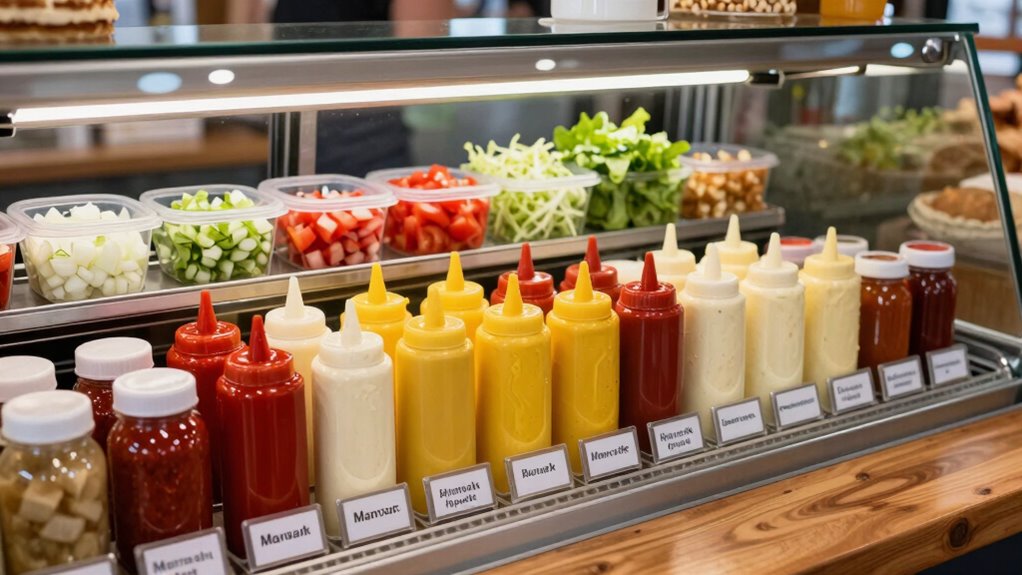
When it comes to creative presentation ideas, think beyond just traditional bowls. You can store toppings in small glass jars, ramekins, or even repurposed condiment bottles for a sleek look. This not only elevates your table but also makes topping access convenient for guests. To keep toppings looking fresh and vibrant, consider adding a small amount of lemon juice to fruit slices to prevent browning. For cheese or spreads, wrapping tightly prevents moisture loss and keeps flavors locked in. Additionally, some toppings, like herbs or greens, can benefit from being kept in a moisture-controlled environment to retain freshness longer. Using proper storage containers can also help organize your toppings and prevent cross-contamination.
Topping flavor combinations matter too. For example, if you’re serving a variety of cheeses and fruits, store complementary flavors together. Keep sweet toppings like honey or fruit preserves separate from savory options like olives or cured meats to avoid flavor transfer. If possible, pre-portion toppings into small, manageable amounts. This allows guests to grab what they want without exposing the entire supply to air and bacteria repeatedly. Additionally, using airtight containers helps maximize freshness and prevents spoilage over extended periods. Proper temperature control is also crucial in maintaining the quality of your toppings over time. To further prolong shelf life, consider using vacuum-sealing techniques for some toppings, especially when storing in the freezer.
In the end, the key to maintaining toppings during long brunch windows is consistent, thoughtful storage. Keep everything sealed, organized, and at the right temperature, and you’ll preserve flavor and freshness. With a little planning, your toppings will stay as tempting and delicious as the moment you prepared them, giving your brunch a polished, appealing presentation every time.
airtight food storage containers for toppings
As an affiliate, we earn on qualifying purchases.
As an affiliate, we earn on qualifying purchases.
Frequently Asked Questions
Which Toppings Are Most Prone to Spoilage During Long Storage?
You should watch out for dairy-based toppings like sour cream or cream cheese, as they have a short shelf life and spoil quickly. Signs of spoilage include sour smell, mold, or a slimy texture. Fruits like berries can also spoil fast, showing discoloration or mushiness. To keep them fresh longer, store these toppings in airtight containers, check regularly for spoilage signs, and keep them refrigerated during long brunch hours.
Can Toppings Be Frozen for Extended Preservation?
Yes, you can freeze toppings for extended preservation. To prevent frostbite, use proper freezing techniques like airtight containers or vacuum sealing. Make certain to leave some space for expansion, and label your containers with dates. Freezing keeps toppings fresh longer, but avoid thawing and refreezing to maintain quality. Proper freezing techniques guarantee your toppings stay flavorful and safe, ready to use whenever you need them during long brunch hours.
How Often Should Toppings Be Checked or Replenished?
Imagine a garden thriving with fresh blooms—your toppings need similar care. You should check and replenish them every few hours to guarantee topping freshness and prevent spoilage. Regularly inspecting your toppings maintains storage hygiene, stopping bacteria from taking hold. This routine guarantees your offerings stay appealing and safe, giving your brunch a vibrant, inviting look. Consistent attention keeps your toppings fresh, delicious, and ready to impress your guests.
Are There Specific Containers Best Suited for Different Toppings?
You should choose containers based on the toppings’ shelf life and container materials. For dairy or perishable toppings, use airtight, clear plastic or glass containers to prevent spoilage. For dry toppings like nuts or granola, airtight plastic jars or metal tins work well. Always check for leaks and guarantee containers are clean to extend shelf life and keep toppings fresh during long brunch hours. Proper containers help maintain quality and safety.
How Do Storage Methods Affect the Flavor and Texture of Toppings?
Storing toppings properly is essential—poor storage can turn a vibrant spread into a bland disaster! You’ll preserve flavor and maintain texture by choosing airtight containers, keeping toppings at the right temperature, and avoiding cross-contamination. Proper methods prevent flavors from fading and textures from becoming soggy or mushy. This way, your toppings stay fresh, flavorful, and delightful, making every bite as exciting as the first.
Conclusion
So, next time you leave those toppings out all day, don’t be surprised if your guests start passing around the moldy cheese or the sour cream that’s more liquid than creamy. You’ve spent ages perfecting your brunch, only to see it sabotaged by a forgotten jar. Remember, proper storage isn’t just about keeping things fresh—it’s about saving your reputation from becoming the talk of the brunch table for all the wrong reasons.
Halloween Picks
halloween
As an affiliate, we earn on qualifying purchases.