
TL;DR

Get baking supplies delivered free with Prime
- Fast, free delivery on millions of items
- Prime Video, Amazon Music and more included
- Member-only deals all year
Nikken Sekkei has unveiled Hatmachida, a small community hub in Tokyo featuring a distinctive copper canopy. The project aims to transform a busy street into a civic space supporting gathering, commerce, and interaction. The structure is designed as an evolving urban platform to enhance public life.
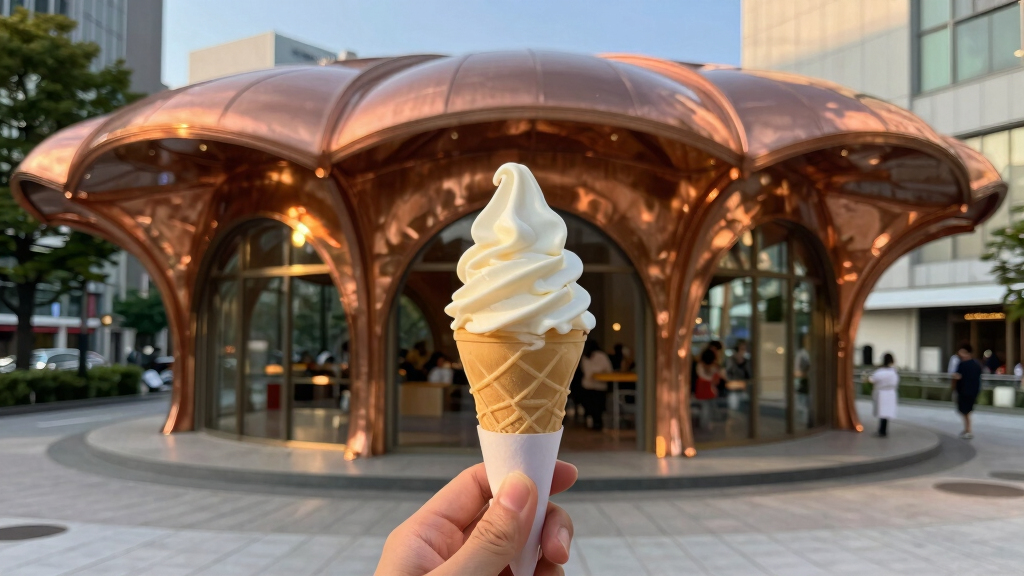
Nikken Sekkei has completed Hatmachida, a 22.7-square-meter community hub in Tokyo featuring a sculptural copper canopy that transforms a busy street into a civic space, supporting public activity and local interaction.
The project, located along Haramachida Odori in Machida, is designed as a ‘micro-landmark’ that blurs the boundaries between architecture, urban infrastructure, and public space. Its defining feature is an eight-meter-high copper roof, crafted using traditional ichimonji-buki standing-seam technique, which develops a natural patina over time. The canopy covers a pavilion that serves multiple functions, including information, takeout, retail, and gathering spots, fostering community engagement.
The structure was developed through social experiments conducted in 2021 and 2022, which informed its flexible program and design. It acts as an extension of the street, providing shelter and a visible civic presence while supporting small-scale commercial and social activities. The project is part of a broader strategy to activate public space along Haramachida Odori and potentially expand to other locations, creating a network of similar hubs to support urban vitality.
Impact of the Copper Canopy on Urban Public Space
The Hatmachida project demonstrates how a small-scale architectural intervention can significantly influence urban public life by creating a flexible, recognizable civic space within a transit-oriented environment. Its sculptural copper canopy not only provides shelter but also acts as a landmark, encouraging pedestrian engagement and local commerce. The project exemplifies a strategy for activating underutilized streets and fostering community interaction through adaptable, civic-oriented design.
As an affiliate, we earn on qualifying purchases.
Haramachida Odori and Urban Transformation Efforts
Haramachida Odori is a major boulevard in Machida, designed primarily for automobile circulation, which historically limited pedestrian activity. The area has long lacked dedicated spaces for public gathering, making it a focus for urban renewal efforts. The project builds on existing civic landmarks, such as a police box, to introduce a flexible, community-oriented space that encourages social interaction and local economic activity. The design process involved social experiments to test various uses, informing the final form of the structure.
“The copper canopy is a symbol of community resilience and adaptability, designed to age gracefully and reflect environmental change.”
— Nikken Sekkei
Uncertain Aspects of the Hub’s Long-Term Use
It is still unclear how the community will adopt and utilize the space over time, or whether the functions will evolve as intended. The impact on local commerce and pedestrian activity remains to be fully assessed, and future expansion plans depend on ongoing urban development strategies and community engagement.
Next Steps for the Community Hub Initiative
Monitoring of the hub’s usage and community feedback will inform potential adjustments. There are plans to expand similar structures along Haramachida Odori and integrate the project into broader urban renewal efforts. Additional funding and community participation will be key to its future development and success.
Key Questions
What is the purpose of the copper canopy?
The copper canopy serves as a visual landmark, provides shelter, and symbolizes civic resilience while aging gracefully over time.
How does the structure support local businesses?
It includes spaces for takeout vendors, retail, and community activities, helping local businesses engage with pedestrians and visitors.
Is the hub intended to be permanent?
The structure is designed as a civic platform that can evolve with public use, with potential for future expansion and adaptation.
What materials were used in constructing the canopy?
The roof was built using traditional ichimonji-buki standing-seam copper, which develops a patina over time, and the ceiling panels are made from shaped non-combustible plywood.
When was the project completed and opened to the public?
The project was completed and opened in 2024.
Source: designboom
Fall Picks
fall essentials
As an affiliate, we earn on qualifying purchases.