TL;DR
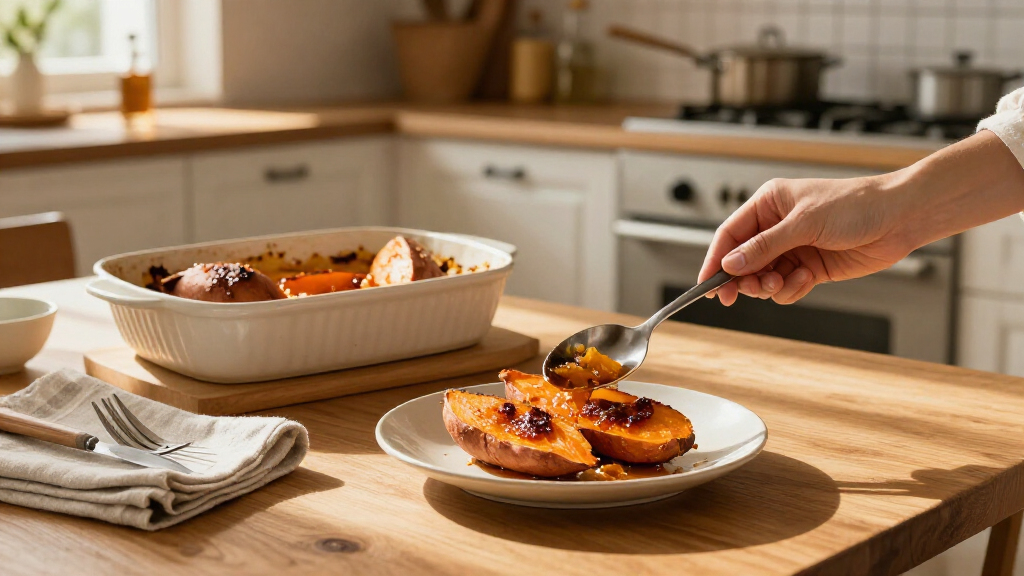
The Kitchn’s Ashia Aubourg tested a sweet potato topped with pastry cream and a broiled sugar crust after seeing the idea in an Instagram video. She described the combination of tender potato, custard and caramelized sugar, and noted that the sugar can darken quickly under the broiler.
The Kitchn’s Ashia Aubourg tested a crème brûlée-style sweet potato, topping a roasted potato with pastry cream and granulated sugar before caramelizing the surface under a broiler. Aubourg reported that the method produced a crisp sugar shell over tender potato and custard, combining a dessert topping with a roasted sweet potato.

Get baking supplies delivered free with Prime
- Fast, free delivery on millions of items
- Prime Video, Amazon Music and more included
- Member-only deals all year
Aubourg said the idea came from an Instagram video by @eatsbyrachel, which showed someone eating a sweet potato with a crunchy caramelized top. The video did not provide specific instructions for pastry cream, so Aubourg used The Kitchn’s pastry cream recipe. Her account is a first-person recipe review, not a report of a new restaurant product or formal recipe launch.
For the version she made, Aubourg roasted fork-pierced sweet potatoes on a foil-lined baking sheet at 450°F for about 45 minutes, until tender. She then split each potato, gently mashed the flesh, spread pastry cream over it and sprinkled on granulated sugar. A kitchen torch can caramelize the topping; Aubourg instead used the oven’s broiler for about two to four minutes.
The reviewer said the broiler worked, but warned that the sugar can change quickly from caramelized to very dark. She let the finished potato rest for about two minutes so the sugar could harden before eating. Aubourg described the potato as tender and mildly sweet, the custard as creamy with vanilla notes, and the topping as crunchy. She also said she tried a second potato with vanilla gelato, a serving suggestion rather than a required part of the method.
A Dessert Technique for Sweet Potatoes
The preparation uses the crackly sugar crust associated with crème brûlée on a roasted sweet potato rather than custard served in a ramekin. Aubourg’s version includes pastry cream and sugar, making it a sweet preparation rather than a conventional savory side.
Aubourg reports that the broiler worked in her test as an alternative to a cooking torch. She also cautions that the sugar can darken rapidly, so it requires close attention. Her account documents one test and does not establish that the method will produce the same result in every oven or with every potato.
Products Worth Considering

Cuisinart SM-50NAS 5.5-Quart Stand Mixer, 12-Speed, White Linen

De'Longhi Classic Signature Espresso Machine with Adjustable Milk Frother

Ninja CREAMi Scoop & Swirl 13-in-1 Ice Cream and Soft Serve Maker, NC701
As an affiliate, we earn on qualifying purchases.
From Instagram Clip to Kitchen Test
Aubourg frames the recipe as part of a broader trend of social media creators reworking crème brûlée beyond its familiar restaurant presentation. She mentions examples such as custard-filled doughnuts and French toast finished with caramelized sugar. The immediate trigger for her test was an Instagram post from @eatsbyrachel; the source does not provide the post’s publication date or a complete recipe from its creator.
Because the video lacked detailed directions, Aubourg supplied the missing custard step by drawing on The Kitchn’s pastry cream recipe. She also lists possible variations, including vanilla, citrus zest or Earl Grey tea in the custard, and turbinado or demerara sugar for the topping. These are suggestions in the article, not variations she reports having tested.
““The broiler worked well!””
— Ashia Aubourg, The Kitchn reviewer
Recipe Details and Results May Vary
The source does not give a full standalone recipe with exact ingredient quantities for the pastry cream or a precise amount of sugar per potato. Aubourg followed another Kitchn recipe for the custard, but the article excerpt does not reproduce its measurements. It also does not specify the sweet potatoes’ size, the broiler temperature, or the distance from the heat source, all of which can affect cooking time and browning.
The review reflects one writer’s test; it does not establish how consistently the method works across ovens. The report gives no nutrition information and does not assess the dish as a savory side. Pastry cream commonly contains milk and eggs, and may include other ingredients depending on the recipe; readers with allergies should check the specific custard ingredients. The source offers no food-safety guidance beyond cooking until tender and allowing the topping to cool briefly.
Watch the Broiler and Let Sugar Set
For readers following Aubourg’s method, the next practical step is to roast the potato until tender, add pastry cream and sugar, then watch closely while broiling for the suggested two to four minutes. The timing is a guide from the report, not a guarantee; ovens vary, and the sugar can darken fast. Let the topping stand for at least two minutes before eating so it can harden and the hot surface can cool.
Aubourg says she plans to make the dish again and experiment with other flavors or bases. She suggests roasted delicata squash or pumpkin as alternatives, but does not report testing them. Any further results or a more fully specified recipe would be needed to establish how those versions turn out.
Key Questions
What is a crème brûlée sweet potato?
It is a cooked sweet potato topped with pastry cream and sugar, with the sugar heated until it forms a crisp caramelized layer. The Kitchn reviewer used the broiler rather than a torch.
How long does the sweet potato take to roast?
Aubourg’s method calls for roasting fork-pierced potatoes at 450°F for about 45 minutes, or until tender. She notes that microwaving is an alternative but does not give detailed microwave instructions.
Can I make the caramelized topping without a torch?
Yes. Aubourg says the broiler worked in her test; she suggests placing the topped potato close to the heat source and broiling for roughly two to four minutes. Watch it closely because sugar can darken quickly.
How long should it cool before serving?
The report recommends waiting at least two minutes so the sugar topping can harden. The surface may still be hot, so use care when serving.
Does the dish contain common allergens?
The pastry cream Aubourg used is made from a separate recipe, and its full ingredient list is not included in the source excerpt. Pastry cream commonly contains milk and eggs; check the specific recipe and labels for allergens before serving.
Source: thekitchn.com