The best DJ controller for most buyers is the Pioneer DJ DDJ-FLX4, thanks to its approachable two-channel layout and flexible software support. For a more advanced setup, the Pioneer DJ DDJ-FLX10 adds four channels and performance controls, while the Denon DJ SC LIVE 4 stands out for standalone play without a laptop. The main tradeoffs are how much control you need, which software you plan to use, and whether you want a computer-free setup. Beginner-focused models can make learning easier, but may offer less room to grow; premium decks add control at the cost of complexity and a larger setup. Read on for how all 14 options compare and which one fits your way of DJing.

Get baking supplies delivered free with Prime
- Fast, free delivery on millions of items
- Prime Video, Amazon Music and more included
- Member-only deals all year
Complete the kit


Key Takeaways
- The DDJ-FLX4 is the most balanced starting point: it offers a familiar two-channel format and software flexibility without the size and complexity of the four-channel models.
- Four channels serve different priorities: the DDJ-FLX10 is aimed at laptop-based performance, while the SC LIVE 4 lets DJs play without a computer.
- Scratch-focused controllers deserve their own shortlist: the DDJ-REV7 and DDJ-REV5 use battle-style layouts that suit scratch routines better than standard club-style decks.
- Beginner options differ in how much room they leave to grow: the Inpulse 200 MK3 and Party Mix III simplify entry, while the Inpulse 500 offers a more substantial control surface.
- Several listings are variations on the DDJ-FLX4: the white, black bundle, and performance-pad listing should be checked for included accessories or configuration differences before choosing among them.
| Numark Mixtrack Platinum FX DJ Controller |  | Best for Four-Deck Control on a Computer | Control decks: 4 | Audio interface: 24-bit | Jog wheels: 6-inch capacitive-touch with color displays | VIEW ON AMAZON | See Our Full Breakdown |
| Numark Party Mix III Beginner DJ Controller with Lights, Black |  | Best for Casual, Light-Up Beginner Sets | Deck layout: 2 decks | Weight: 2.42 pounds | Dimensions: 8.07 x 13.3 x 1.85 inches | VIEW ON AMAZON | See Our Full Breakdown |
| Hercules DJControl Inpulse 500 2-Deck DJ Controller for Serato & DJUCED |  | Best Two-Deck Upgrade for Hands-On Control | Decks: 2 | Built-in audio interface: Yes | RGB pads: 16 | VIEW ON AMAZON | See Our Full Breakdown |
| Hercules DJControl Inpulse 200 MK3 2-Deck DJ Controller |  | Best for Guided Beginner Learning | Channels: 2 | Weight: 2.2 pounds | Dimensions: 15.6 x 10.4 x 3.7 inches | VIEW ON AMAZON | See Our Full Breakdown |
| Pioneer DJ DDJ-FLX4 2-Channel DJ Controller, White |  | Best All-Rounder for Beginner-to-Intermediate DJs | Channels and decks: 2 channels, 2 decks | Performance pads: 16 | Connectivity: USB and Bluetooth | VIEW ON AMAZON | See Our Full Breakdown |
| Pioneer DJ DDJ-FLX10 4-Channel DJ Controller |  | Best for Creative Four-Deck Mixing | Brand: Pioneer DJ | Model: DDJ-FLX10 | Channels: 4 | VIEW ON AMAZON | See Our Full Breakdown |
| Pioneer DJ DDJ-REV7 2-Deck Serato DJ Controller |  | Best for Turntable-Style Scratching | Decks: 2 | Software: Serato DJ | Jog wheels: Motorized, with rotational stability similar to a 12-inch turntable | VIEW ON AMAZON | See Our Full Breakdown |
| AlphaTheta DDJ-FLX2 2-Channel DJ Controller with Smart Fader and USB-C |  | Best Compact Controller for Beginners | Channels: 2 | Connectivity: USB-C; Bluetooth listed | Compatible devices: Android, Windows, iOS, PC/Mac | VIEW ON AMAZON | See Our Full Breakdown |
| Pioneer DJ DDJ-REV5 2-Channel Scratch DJ Controller, On-Jog Display | 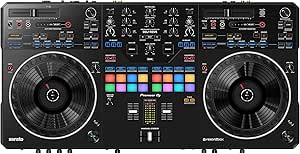 | Best Software-Flexible Battle Controller | Channels: 2 | Supported software: Serato DJ Pro, rekordbox | Connectivity: USB; USB Type C connector | VIEW ON AMAZON | See Our Full Breakdown |
| Pioneer DJ DDJ-REV1 2-Deck Serato DJ Controller |  | Best Entry Point for Scratch Practice | Brand: Pioneer DJ | Model: DDJ-REV1 | Channels: 2 | VIEW ON AMAZON | See Our Full Breakdown |
| Pioneer DJ DDJ-FLX4 2-Channel DJ Controller – Black Bundle with Carrying Case and Polishing Cloth |  | Best Beginner Bundle | Channels: 2 | Connectivity: USB Type-C, Bluetooth | Supported software: rekordbox, Serato DJ Lite, djay | VIEW ON AMAZON | See Our Full Breakdown |
| Pioneer DJ DDJ-FLX4 2-Channel DJ Controller with 16 Performance Pads |  | Best for Learning Performance Controls | Channels and decks: 2 channels, 2 decks | Performance pads: 16 | Connectivity: USB, Bluetooth | VIEW ON AMAZON | See Our Full Breakdown |
| AlphaTheta DDJ-GRV6 4-Channel DJ Controller | 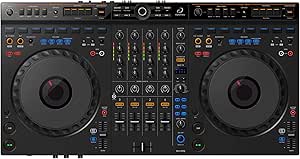 | Best for Club-Style Four-Channel Mixing | Channels: 4 | Connectivity: USB, auxiliary | Connectors: TRS, USB | VIEW ON AMAZON | See Our Full Breakdown |
| Denon DJ SC LIVE 4 Standalone 4-Deck DJ Controller |  | Best Standalone Controller | Channels: 4 | Display: 7-inch touchscreen | Internal effects: 17 | VIEW ON AMAZON | See Our Full Breakdown |
| dj controller | Weight | Connectivity | Channels |
|---|---|---|---|
| Numark Mixtrack Platinum FX DJ | — | — | — |
| Numark Party Mix III Beginner | 2.42 pounds | — | — |
| Hercules DJControl Inpulse 500 | — | — | — |
| Hercules DJControl Inpulse 200 | 2.2 pounds | — | 2 |
| Pioneer DJ DDJ-FLX4 2-Channel | 2.8 kg | USB and Bluetooth | — |
| Pioneer DJ DDJ-FLX10 4-Channel | 14.8 pounds | USB | 4 |
| Pioneer DJ DDJ-REV7 2-Deck Ser | — | — | — |
| AlphaTheta DDJ-FLX2 2-Channel | 2.7 pounds | USB-C; Bluetooth listed | 2 |
| Pioneer DJ DDJ-REV5 2-Channel | 14 pounds | USB; USB Type C connector | 2 |
| Pioneer DJ DDJ-REV1 2-Deck Ser | 5 pounds | USB, auxiliary | 2 |
| Pioneer DJ DDJ-FLX4 2-Channel | — | USB Type-C, Bluetooth | 2 |
| Pioneer DJ DDJ-FLX4 2-Channel | 2.8 kg | USB, Bluetooth | — |
| AlphaTheta DDJ-GRV6 4-Channel | 4.6 kg | USB, auxiliary | 4 |
| Denon DJ SC LIVE 4 Standalone | 13.6 lb | Wi-Fi, Bluetooth, 2 USB ports, SD card slot | 4 |
More Details on Our Top Picks
Numark Mixtrack Platinum FX DJ Controller
The Mixtrack Platinum FX is the strongest fit here for DJs who want more room to layer tracks without stepping up to a larger four-channel controller such as the Pioneer DJ DDJ-FLX10. Its four-deck control and color displays in the jog wheels make track position and deck information easier to follow while mixing. Dedicated loop controls, performance pads, and quick-launch effects also give it more hands-on options than the beginner-focused Numark Party Mix III.
The tradeoff is that this remains a computer-dependent Serato controller, not a standalone player, and its included Serato DJ Lite software may limit access to some functions. Choose it for layered laptop sets and visual feedback; skip it if you want standalone playback or the more expansive control layout of a higher-tier four-channel unit.
Pros:- Four-deck control supports layering and more complex mixes than the two-deck options here.
- Color displays in the 6-inch capacitive jog wheels provide useful visual feedback.
- Dedicated loop controls, eight pads per deck, and six quick-launch effects offer varied performance options.
- Built-in 24-bit audio interface and USB connection provide a straightforward computer-based setup.
Cons:- Requires a computer and does not provide standalone playback.
- Serato DJ Lite may restrict access to some functions compared with more advanced software setups.
- Its four-deck control does not provide the broader four-channel layout of the Pioneer DJ DDJ-FLX10.
Best for: Laptop-based DJs ready to mix across four decks and use jog-wheel displays, loops, and performance effects.
Not ideal for: DJs who need standalone playback, want to avoid relying on Serato DJ Lite, or prefer a simpler two-deck learning setup.
- Control decks:4
- Audio interface:24-bit
- Jog wheels:6-inch capacitive-touch with color displays
- Performance pads:8 per deck
- Effects:6 quick-launch FX with dual paddle triggers
- Loop controls:Dedicated instant loop controls
- Connections:USB, microphone input, headphone output, RCA output
- Software compatibility:Serato DJ Lite included; supports listed streaming services through compatible software
Our verdict“Choose the Mixtrack Platinum FX if you want four-deck laptop mixing and jog-wheel displays, but not if standalone operation is a priority.”
Numark Party Mix III Beginner DJ Controller with Lights, Black
The Party Mix III is the most approachable pick for new DJs who want a small controller that makes practice feel lively. Its beat-synced LED lights, 16 pads, and simple two-deck layout keep the focus on basic mixing rather than the denser controls of the Hercules DJControl Inpulse 500. Bluetooth and USB-C connectivity also give it flexibility for compatible mobile or computer setups, while the included stand and cable help support a compact practice station.
That portability comes with less room to grow: the two-deck layout is simpler than the four-deck Numark Mixtrack Platinum FX, and its small footprint leaves less space for hands-on adjustments. It is USB-powered, so a suitable power source is still needed. I would pick it for casual learning and small setups, not for DJs building a more elaborate performance rig.
Pros:- Compact 2.42-pound design is easy to carry and store.
- Beat-synced LED lights add visual effects without extra lighting gear.
- Bluetooth and USB-C support compatible mobile and computer configurations.
- Sixteen pads, 3-band EQ, and real-time Stems control provide useful features for a beginner-focused unit.
Cons:- Two-deck control offers less room for layered mixes than the Mixtrack Platinum FX.
- Small dimensions can feel cramped for DJs who want more space between controls.
- USB-powered operation depends on a compatible power source.
Best for: First-time DJs practicing at home or using a compact laptop or mobile setup who want basic controls and built-in light effects.
Not ideal for: DJs who need four-deck mixing, more spacious hands-on controls, or a controller designed for an advanced performance setup.
- Deck layout:2 decks
- Weight:2.42 pounds
- Dimensions:8.07 x 13.3 x 1.85 inches
- Performance pads:16
- Mixer controls:3-band EQ and real-time Stems control
- Connections:USB-C, RCA main output, 1/8-inch headphone jack
- Power:USB
- Software compatibility:Serato DJ Lite and Algoriddim djay
Our verdict“Pick the Party Mix III for portable, light-up beginner practice, but move to a roomier controller if you expect to build more complex sets.”
Hercules DJControl Inpulse 500 2-Deck DJ Controller for Serato & DJUCED
The DJControl Inpulse 500 suits learners who want a substantial two-deck layout rather than the tiny footprint of the Party Mix III. Its large touch-detection jog wheels, 16 RGB pads, and dedicated filter/FX area give each deck more room for tactile mixing and scratching. The built-in audio interface and hardware input mixer also make it a more versatile central setup than the especially compact Inpulse 200 MK3.
Its adjustable feet add stability and help keep the controller raised from a surface, but this is not the lightest choice for frequent travel. The two-deck limit also rules it out for DJs who want to layer several decks as the Mixtrack Platinum FX allows. Beginners may need time to learn its controls and setup. I’d choose it for a home setup focused on hands-on control, not for the simplest plug-in-and-go experience.
Pros:- Large touch-sensitive jog wheels support hands-on cueing and scratching.
- Sixteen RGB pads provide clear visual feedback during performance.
- Built-in audio interface and hardware input mixer add flexibility to a home setup.
- Adjustable feet improve stability and raise the controller from the surface.
Cons:- Two-deck layout cannot match the layered mixing capacity of the Mixtrack Platinum FX.
- Larger, more substantial design is less suited to frequent travel than the Inpulse 200 MK3.
- Its controls and software setup may take beginners some time to learn.
Best for: Developing DJs who want a roomier two-deck controller for scratching, pad performance, and learning Serato or DJUCED.
Not ideal for: Traveling DJs prioritizing minimal size, or performers who need more than two decks of control.
- Decks:2
- Built-in audio interface:Yes
- RGB pads:16
- Jog wheels:Large, with touch detection
- Performance controls:Vinyl function, Loop In/Out buttons, filter/FX area
- Physical design:Retractable/extendable feet
- Software compatibility:Serato and DJUCED
Our verdict“Choose the Inpulse 500 for tactile, spacious two-deck practice, but skip it if portability or four-deck mixing matters more.”
Hercules DJControl Inpulse 200 MK3 2-Deck DJ Controller
The Inpulse 200 MK3 makes learning beatmatching its central advantage. Its beatmatch guide lights point beginners toward tempo-fader and jog-wheel adjustments, offering more direct learning prompts than the Numark Party Mix III. At just 2.2 pounds, it is also easier to carry than the roomier Hercules DJControl Inpulse 500, while retaining speaker and headphone outputs for basic mixing and monitoring.
The compact body asks for a compromise: controls sit closer together, and the two-channel layout limits mixing to two decks. Eight pads cover Hot Cue, Stems, FX, and Sampler modes, but this is still an entry-level format rather than a spacious performance surface. It makes sense for learners who value guidance and portability; DJs who want more tactile room or complex layering should look at the Inpulse 500 or Mixtrack Platinum FX.
Pros:- Beatmatch guide lights offer actionable visual cues for tempo and jog-wheel adjustments.
- At 2.2 pounds, it is lighter than the Inpulse 500 and easy to transport.
- Eight pads support Hot Cue, Stems, FX, and Sampler modes.
- Separate master and headphone outputs support speakers and monitoring.
Cons:- Two-channel control restricts mixing to two decks.
- Compact dimensions leave less space for hands-on adjustments than the Inpulse 500.
- The beginner-focused guide lights may be less useful once a DJ no longer needs visual prompts.
Best for: New DJs who want visual beatmatching guidance and a lightweight controller for home practice or travel.
Not ideal for: Experienced performers seeking spacious controls, more than two decks, or a larger surface for extended sets.
- Channels:2
- Weight:2.2 pounds
- Dimensions:15.6 x 10.4 x 3.7 inches
- Performance pads:8, with Hot Cue, Stems, FX, and Sampler modes
- Main controls:2 jog wheels, 2 tempo faders, 1 crossfader, 2 mixers
- Audio outputs:Master speaker output and headphone monitoring output
- Hardware connections:3.5mm audio and USB
- Software:DJUCED and Serato DJ Lite
Our verdict“Pick the Inpulse 200 MK3 to learn beatmatching in a portable format, but choose a larger model for more control space or layered sets.”
Pioneer DJ DDJ-FLX4 2-Channel DJ Controller, White
The Pioneer DJ DDJ-FLX4 is the most balanced pick for someone who wants a familiar two-deck layout and room to build mixing skills. Its Smart Fader assists with tempo and volume changes during transitions, while Smart CFX adds effects without requiring a complex setup. Compared with the teaching-focused Hercules DJControl Inpulse 200 MK3, it leans more toward assisted performance than guided beatmatching; compared with the Party Mix III, it offers a broader computer-and-mobile setup.
Sixteen pads, a built-in sound card, and microphone mixing suit practice, monitoring, and streaming. The tradeoff is still a two-deck, two-channel limit, so it cannot match the layered control of the Mixtrack Platinum FX or DDJ-FLX10. Streaming access depends on compatible software and services, and the listed Bluetooth connection does not replace checking software-specific setup needs. It is a flexible starting point, not a long-term choice for complex multi-deck sets.
Pros:- Smart Fader helps simplify tempo and volume adjustments during transitions.
- Smart CFX and 16 performance pads support effects and cue-based performance.
- Computer and mobile compatibility suits a range of compatible setups.
- Built-in sound card and microphone mixing support monitoring, streaming, or MC use.
Cons:- Two-deck control offers less layering capacity than the Mixtrack Platinum FX or DDJ-FLX10.
- Streaming availability depends on compatible software and services.
- Its assisted features do not provide the same beatmatching guidance as the Inpulse 200 MK3.
Best for: New and intermediate DJs who want a flexible two-deck controller for computer or mobile mixing, practice, and streaming.
Not ideal for: DJs planning multi-deck performances or anyone who needs standalone playback rather than a software-based setup.
- Channels and decks:2 channels, 2 decks
- Performance pads:16
- Connectivity:USB and Bluetooth
- Compatible devices:PC, Mac, iPhone, iPad, Android
- Supported software:Serato DJ Pro and rekordbox
- Audio features:Built-in sound card and microphone mixing
- Weight:2.8 kg
- Included component:USB cable
Our verdict“Choose the DDJ-FLX4 for a flexible assisted two-deck setup, but look elsewhere if your sets require more decks or standalone playback.”
Pioneer DJ DDJ-FLX10 4-Channel DJ Controller
The DDJ-FLX10 earns this role through its mix of four-channel control and hands-on remix tools. Track Separation lets DJs work with vocals, drums, and instruments from compatible tracks, opening up live mashup options that the two-channel DDJ-REV5 and DDJ-REV1 do not offer in the same format. Its large jog wheels put waveforms, artwork, and playback-part information in view, while rekordbox and Serato DJ Pro support gives DJs a choice of software workflows. A built-in DMX output also links performance and lighting control in one setup. The tradeoff is a substantial 14.8-pound body, so it is less appealing for frequent transport than the 2.7-pound DDJ-FLX2. It also depends on compatible DJ software rather than operating as a standalone system.
Pros:- Four channels provide room for layered sets and more involved transitions.
- Track Separation supports live combinations of vocals, drums, and instruments.
- Large jog-wheel displays keep waveforms, artwork, and playback parts visible.
- Built-in DMX output allows controller-based lighting control.
Cons:- At 14.8 pounds, it is considerably less convenient to carry than compact controllers such as the DDJ-FLX2.
- Its supported rekordbox and Serato DJ Pro workflows require compatible DJ software.
Best for: DJs who want four software-controlled channels, live stem-style mashups, and lighting control in a performance setup.
Not ideal for: Mobile DJs who prioritize a light, easy-to-carry controller, or buyers seeking standalone operation without a computer and compatible software.
- Brand:Pioneer DJ
- Model:DDJ-FLX10
- Channels:4
- Supported software:rekordbox, Serato DJ Pro
- Connectivity:USB
- Lighting output:DMX
- Weight:14.8 pounds
- Model year:2023
Our verdict“Choose the DDJ-FLX10 for software-based four-channel performances with mashup and lighting tools; skip it if portability or standalone play matters more.”
Pioneer DJ DDJ-REV7 2-Deck Serato DJ Controller
For scratch-focused DJs, the DDJ-REV7’s defining advantage is its motorized jog wheels, designed to deliver a rotating, turntable-like feel rather than the stationary jog response of the DDJ-REV5. Each wheel has a 3.5-inch LCD, keeping track information visible close to the action, and the vinyl-textured acrylic top plate adds grip for physical control. The customizable Magvel Fader Pro gives scratch performers a way to tailor crossfader response to their technique. That specialized layout makes more sense for battle-style sets than the broader four-channel DDJ-FLX10, but it also narrows the fit: this is a two-deck Serato controller, and its controls may feel like a lot for a first-time DJ. Buyers who want a general-purpose, software-flexible setup may prefer the DDJ-REV5, which supports both rekordbox and Serato DJ Pro.
Pros:- Motorized jog wheels provide a rotating feel suited to turntable-style scratching.
- 3.5-inch displays on the jog wheels keep key track information close to hand.
- Vinyl-textured acrylic top plate supports grip during physical control.
- Customizable Magvel Fader Pro can be adapted to a DJ’s scratch style.
Cons:- Serato DJ software is required, unlike the DDJ-REV5’s support for both Serato DJ Pro and rekordbox.
- The specialized controls and workflow may be challenging for beginners.
- Two-deck operation is less suited to layered sets than the four-channel DDJ-FLX10.
Best for: Experienced Serato DJs who want motorized, turntable-like jog control and a customizable crossfader for scratch and battle routines.
Not ideal for: Beginners seeking a simple learning layout, or DJs who need four channels or the software choice offered by the DDJ-REV5.
- Decks:2
- Software:Serato DJ
- Jog wheels:Motorized, with rotational stability similar to a 12-inch turntable
- Jog-wheel displays:3.5-inch LCD on each jog wheel
- Top plate:Acrylic with vinyl texture
- Fader:Customizable Magvel Fader Pro
Our verdict“Pick the DDJ-REV7 if motorized jogs and scratch-focused control matter more than beginner simplicity, extra channels, or software flexibility.”
AlphaTheta DDJ-FLX2 2-Channel DJ Controller with Smart Fader and USB-C
The DDJ-FLX2 is the easiest fit here for beginners who want to practice in different places without hauling a full-size controller. At 2.7 pounds, it is far lighter than the DDJ-REV1, while USB-C bus power and support for phones, tablets, and computers make the setup flexible. Smart Fader and Smart CFX can help new DJs shape transitions and effects as they learn, and headphone monitoring plus a 3.5 mm speaker output covers basic practice and casual sessions. It gives up the scratch-oriented controls and larger jog-wheel experience of the DDJ-REV1, and its two-channel layout leaves little room for more complex mixes. Streaming access also depends on the selected compatible app, so buyers should check their preferred software before relying on a particular music service.
Pros:- Light 2.7-pound design suits portable practice setups.
- USB-C bus power supports a simple connection to compatible devices.
- Smart Fader and Smart CFX offer guided help with transitions and effects.
- Headphone monitoring and a 3.5 mm speaker output support casual practice.
Cons:- The two-channel layout limits more layered or complex performance setups.
- Streaming service availability depends on the compatible DJ app in use.
- Its compact beginner-focused controls offer less dedicated scratch capability than the DDJ-REV1.
Best for: New DJs who want a lightweight controller for phone, tablet, or computer practice, with guided mixing tools and simple audio connections.
Not ideal for: Scratch-focused performers or experienced DJs who need a larger control surface, more channels, or a specific streaming service without checking app compatibility.
- Channels:2
- Connectivity:USB-C; Bluetooth listed
- Compatible devices:Android, Windows, iOS, PC/Mac
- Supported software:rekordbox, djay, Serato DJ Lite
- Features:Smart Fader, Smart CFX
- Outputs:3.5 mm audio output
- Dimensions:18 x 11.7 x 4.4 inches (D x W x H)
- Weight:2.7 pounds
- Power:USB-C bus powered
Our verdict“Choose the DDJ-FLX2 for portable beginner practice and guided mixing, but look at a larger controller if scratch control or setup growth is a priority.”
Pioneer DJ DDJ-REV5 2-Channel Scratch DJ Controller, On-Jog Display
The DDJ-REV5 is a strong choice for experienced scratch and open-format DJs who want a battle-style layout without committing to a single software platform. It supports both Serato DJ Pro and rekordbox, unlike the Serato-focused DDJ-REV7, and its full-size jog wheels with on-jog displays keep control and track information in the same working area. Performance pads handle hot cues, samples, and loops, while its scratch-oriented layout favors hands-on mixing over the four-channel layering available on the DDJ-FLX10. The supplied software compatibility is a practical advantage for DJs who may switch workflows, but this remains a substantial 14-pound controller rather than a casual carry-around option. Its professional control set can also demand more familiarity than the beginner-oriented DDJ-FLX2.
Pros:- Supports both Serato DJ Pro and rekordbox for software flexibility.
- Full-size jog wheels with on-jog displays support precise, information-rich control.
- Performance pads cover hot cues, samples, and loops.
- Scratch-style layout and professional effects suit battle and open-format workflows.
Cons:- At 14 pounds, it is less convenient to transport than the DDJ-REV1 or DDJ-FLX2.
- Its experienced-DJ-oriented controls can be complex for beginners.
- Two-channel operation offers less layering flexibility than the DDJ-FLX10.
Best for: Experienced battle and open-format DJs who want full-size jogs, performance pads, and the option to work in either rekordbox or Serato DJ Pro.
Not ideal for: Beginners looking for a guided, lightweight first controller, or DJs who need four channels for layered sets.
- Channels:2
- Supported software:Serato DJ Pro, rekordbox
- Connectivity:USB; USB Type C connector
- Additional features:Scratch-style layout
- Jog wheels:Full-size with on-jog displays
- Performance pads:Hot cues, samples, and loops
- Weight:14 pounds
Our verdict“Choose the DDJ-REV5 for scratch-oriented performance with a choice of major DJ software, but not for lightweight travel or four-deck mixing.”
Pioneer DJ DDJ-REV1 2-Deck Serato DJ Controller
The DDJ-REV1 brings a battle-style layout to a more approachable, compact setup for DJs learning scratch and open-format techniques. Its tall pitch faders and quick-effect controls make key actions easy to reach, while the included Serato DJ Lite and one-motion scratch routines offer a starting point for practice. Compared with the advanced DDJ-REV7, the REV1 avoids motorized jogs and customizable Magvel Fader Pro, so it is less specialized for demanding scratch performance. That simpler approach can suit learners, but the two-channel design and Serato DJ Lite-only software listing limit room for more complex setups and software choice. At five pounds, it is also much easier to carry than the 14-pound DDJ-REV5, making it a practical option for lessons or compact home setups.
Pros:- Battle-style layout introduces a workflow inspired by mixer-and-turntable setups.
- Serato DJ Lite provides a software starting point.
- Tall pitch faders and quick-effect controls support hands-on scratch practice.
- Five-pound weight is easier to manage than the DDJ-REV5 and DDJ-REV7.
Cons:- Two-channel operation limits more involved, layered mixes.
- The listed software is Serato DJ Lite, offering less platform choice than the DDJ-REV5.
- One-motion scratch routines are aimed at building beginner confidence rather than replacing advanced scratch controls.
Best for: New DJs who want to learn battle-style mixing and basic scratch routines on a compact two-deck controller with Serato DJ Lite.
Not ideal for: Experienced scratch DJs seeking motorized jogs and a customizable pro fader, or users who need four channels or software flexibility beyond Serato DJ Lite.
- Brand:Pioneer DJ
- Model:DDJ-REV1
- Channels:2
- Software:Serato DJ Lite
- Connectivity:USB, auxiliary
- USB ports:1
- Dimensions:10.6 x 20.7 x 2.33 inches
- Weight:5 pounds
Our verdict“Pick the DDJ-REV1 to learn scratch and battle-style mixing in a compact format, but choose a more advanced model for serious performance growth.”
Pioneer DJ DDJ-FLX4 2-Channel DJ Controller – Black Bundle with Carrying Case and Polishing Cloth
The DDJ-FLX4 bundle is a strong starting point for learning two-deck mixing, with an approachable layout and support for rekordbox, Serato DJ Lite, and djay. That software choice gives beginners room to try different workflows without committing to one platform immediately. Compared with the Denon DJ SC LIVE 4, it is much simpler and depends on a connected computer or mobile device rather than offering standalone performance; the tradeoff is a lighter, less complex setup to learn. The included carrying case adds practical protection for lessons or occasional gigs, while the polishing cloth is a small maintenance extra. Its two channels and RCA master output are limiting for expanded setups, and buyers planning PA use should check their audio-interface needs before purchasing.
Pros:- Beginner-friendly two-channel layout supports a manageable learning curve.
- Works with rekordbox, Serato DJ Lite, and djay.
- Included carrying case helps protect the controller during transport.
- USB-C connectivity and Bluetooth provide flexible device connections.
Cons:- Two channels restrict layering and more advanced set configurations.
- RCA master output may call for an external DAC or audio interface in some PA setups.
- Some supported streaming services require separate subscriptions.
Best for: New DJs who want a portable two-channel controller, broad software choices, and a case for carrying it between home, lessons, or small events.
Not ideal for: DJs who need four-channel mixing, standalone playback, or a professional PA connection without checking whether additional audio hardware is needed.
- Channels:2
- Connectivity:USB Type-C, Bluetooth
- Supported software:rekordbox, Serato DJ Lite, djay
- Inputs:1 × MIC
- Outputs:MASTER (RCA), PHONES (3.5 mm)
- Frequency response:20 Hz–20,000 Hz
- Signal-to-noise ratio:103 dB
- Power:DC 9V, 3A (USB adapter); DC 5V, 500 mA (USB bus)
Our verdict“Choose this bundle if you want an accessible first controller with useful software flexibility and transport protection, but not a four-channel or standalone system.”
Pioneer DJ DDJ-FLX4 2-Channel DJ Controller with 16 Performance Pads
This DDJ-FLX4 is the better fit for learners who want more hands-on access to cue points and effects while building core mixing skills. Its 16 performance pads handle Hot Cues, Pad FX, Beat Jump, and Sampler functions, while Smart Fader helps blend tracks by adjusting volume, bass, and BPM. Compared with the bundled DDJ-FLX4 listed above, this product description foregrounds the pad controls and mobile-device compatibility rather than a carrying case. It also supports PC, Mac, iOS, and Android, giving a learner more ways to practice. The main limitation is shared by both FLX4 options: two channels and two decks leave little room for four-deck mixing, and buyers should confirm which software features are available in their chosen platform.
Pros:- Sixteen pads provide direct access to Hot Cues, Pad FX, Beat Jump, and Sampler.
- Smart Fader can help simplify basic track transitions.
- Compatible with PC, Mac, iOS, and Android.
- Built-in sound card supports a portable computer-based setup.
Cons:- Two channels and two decks limit more complex mixes.
- Software compatibility and available features vary by platform.
- The listed package does not specify a carrying case.
Best for: Learners who want a compact two-deck controller with performance pads for practicing cueing, effects, and beat jumps across computer or mobile setups.
Not ideal for: DJs who need four simultaneous channels, a standalone controller, or an expanded club-style setup.
- Channels and decks:2 channels, 2 decks
- Performance pads:16
- Connectivity:USB, Bluetooth
- Compatible platforms:PC, Mac, iOS, Android
- Compatible DJ software:djay, rekordbox, Serato DJ Pro
- Weight:2.8 kg
- Color:Graphite
- Warranty:1-year limited manufacturer warranty
Our verdict“Pick this FLX4 if performance-pad practice and mobile compatibility matter more than extra channels or included transport protection.”
AlphaTheta DDJ-GRV6 4-Channel DJ Controller
The DDJ-GRV6 suits DJs ready to move beyond the two-deck limits of either DDJ-FLX4, offering four channels and a layout modeled on CDJ-3000 and DJM-A9 equipment. That familiarity can make practice on a controller more relevant to a future club-style setup. Its Groove Circuit supports live drum swaps and remixing, while Serato DJ Pro adds Stems FX for manipulating vocals, drums, bass, and melody. Compared with the Denon DJ SC LIVE 4, the GRV6 emphasizes a software-connected workflow and club-inspired controls rather than laptop-free operation and built-in speakers. It also needs a connected device and compatible software, and its roughly 28-inch width takes more desk or booth space than a beginner two-channel controller.
Pros:- Four channels support more layered and flexible mixes than the DDJ-FLX4 models.
- Club-inspired layout helps build familiarity with CDJ- and DJM-style equipment.
- Groove Circuit enables live drum swaps and remixing.
- Compatible with rekordbox and Serato DJ Pro.
Cons:- Requires a connected computer or other compatible device and DJ software.
- Large footprint needs substantial table or booth space.
- Its advanced controls may be more than a beginner needs.
Best for: Intermediate DJs who want four-channel mixing, club-style control habits, and hands-on remix features in a laptop-connected setup.
Not ideal for: Beginners seeking the simplest practice controller, performers who need standalone operation, or DJs with limited setup space.
- Channels:4
- Connectivity:USB, auxiliary
- Connectors:TRS, USB
- Compatible software:rekordbox, Serato DJ Pro
- Jog wheels:CDJ-3000X sized
- Dimensions:14.8 × 28 × 3 in
- Weight:4.6 kg
- Compatible devices:Laptop, PC, smartphone, tablet
Our verdict“Choose the GRV6 for software-based four-channel sets and club-style practice, but choose the SC LIVE 4 if laptop-free performance is your priority.”
Denon DJ SC LIVE 4 Standalone 4-Deck DJ Controller
The SC LIVE 4 is the clearest choice here for DJs who want to perform without a laptop: its Engine DJ OS, 7-inch touchscreen, and four-deck layout put playback and control on the unit itself. Built-in speakers can help with private practice or quick monitoring, while Wi-Fi streaming, Bluetooth audio input, USB, and SD support offer several ways to access music. Compared with the AlphaTheta DDJ-GRV6, it trades the GRV6’s club-inspired, software-connected workflow for standalone operation and onboard convenience. It also has XLR main outputs, booth output, and microphone inputs for more involved setups. The tradeoff is a heavier, larger unit, and stem separation requires tracks to be pre-rendered with Engine DJ Desktop rather than applied as an unrestricted live feature.
Pros:- Standalone Engine DJ OS enables performances without a connected computer.
- Seven-inch touchscreen and built-in speakers support convenient operation and practice.
- Wi-Fi, Bluetooth, USB, and SD card options broaden music access.
- XLR main and booth outputs plus microphone inputs suit more developed setups.
Cons:- At 13.6 lb and over 28 inches wide, it is less convenient to carry and set up than the DDJ-FLX4.
- Stem separation requires tracks to be pre-rendered with Engine DJ Desktop.
- Corded power limits where it can be used.
Best for: Mobile and home DJs who want four-deck performance without a laptop, plus onboard speakers, a touchscreen, and multiple media options.
Not ideal for: DJs who prioritize light transport, a compact setup, or live stem separation without advance preparation.
- Channels:4
- Display:7-inch touchscreen
- Internal effects:17
- Connectivity:Wi-Fi, Bluetooth, 2 USB ports, SD card slot
- Audio inputs:RCA, 2 XLR/1/4-inch combo inputs
- Audio outputs:2 RCA main outs, 1/4-inch booth out, XLR main out
- Dimensions:15.9 × 28.3 × 3.9 in (D × W × H)
- Weight:13.6 lb
- Software compatibility:Serato DJ Pro, VirtualDJ
Our verdict“Choose the SC LIVE 4 if laptop-free four-deck performance is worth the extra size and weight.”

How We Picked
I ranked these DJ controllers by how well their layout, software compatibility, and performance features match a clear buyer need. I weighed channel count and hands-on control against the likely learning curve, portability, and dependence on a laptop. A larger feature set did not automatically place a controller higher: a four-channel deck can be a poor fit for someone learning basic beatmatching, while a compact beginner model may feel limiting to a DJ preparing for regular gigs.
Versatility and practical fit shaped the overall order, with controllers that suit a broad range of laptop-based mixing placed ahead of narrower specialist picks. I separated beginner, scratch, premium, and standalone roles so readers can compare like with like. I also treated the three DDJ-FLX4 listings as closely related rather than three distinct controller designs; buyers should verify the exact color, bundled accessories, and stated configuration on the listing they choose.
Factors to Consider When Choosing Dj Controllers
Before choosing a controller, I would settle the parts of the setup that are harder to change later: software, performance style, and whether a laptop is part of the plan. These choices matter more than a long feature list because they shape what feels natural to use and what you may need to replace.
Choose Software Before Choosing a Layout
Controller compatibility is not a minor detail: it determines which library tools, effects, and performance features are available to you. Start with the DJ software you already use, or check which programs you intend to learn, then confirm the exact controller support and included license terms. A controller that supports more than one software option can preserve flexibility, but a familiar layout in your preferred program may be more useful than extra compatibility on paper. Avoid assuming that every feature works identically across applications; some controls and functions can vary by software. Also check whether a computer, tablet, or phone is supported for your intended setup. This decision can prevent an otherwise capable controller from becoming an awkward match for your existing music library.
Buy for Your Mixing Style, Not Just Channel Count
Two channels are enough for many DJs who mix tracks, practice transitions, and play common party sets. Four channels can help when layering extra decks, using external sources, or building more involved live performances, but they also add controls to learn and space to manage. Scratch DJs may get more from a battle-style layout and performance-oriented controls than from simply adding channels. Think about the sets you actually want to play, not every technique you might try someday. A common mistake is paying for unused channels while overlooking jog-wheel feel, pad placement, or access to the controls used most often. If your style is still developing, a clear two-channel surface can be easier to master and easier to carry.
Decide Whether You Want a Laptop in the Setup
Most controllers rely on a connected computer or compatible mobile device to run DJ software and manage music. That approach can make library preparation and software-based features straightforward, but it adds a screen, cables, and another device to set up. Standalone systems move more of the performance workflow into the controller, which can simplify a laptop-free booth while increasing the importance of onboard navigation and library preparation. Do not treat standalone operation as automatically simpler: you still need to organize compatible music and learn the system’s browsing workflow. Check the connections and playback options you need before choosing either approach. The right choice depends on whether you value a familiar computer workflow or a more self-contained rig.
Match Size and Portability to Where You Play
A controller that fits comfortably at home may be inconvenient to transport or may not fit the tables available at small venues. Check the device footprint alongside the space required for a laptop, headphones, cables, and any stand or case. Smaller models are easier to pack, but their controls can feel more crowded and leave less room for hands-on practice. Larger decks often provide more room for performance gestures, yet require a more deliberate transport plan. Think about the full carried setup rather than the controller alone. If you expect to move between locations, also check whether a suitable case is included or sold separately and whether bundled accessories actually meet your needs.
Treat Beginner Features as Learning Aids, Not a Substitute for Practice
Guided learning tools and simplified controls can help new DJs understand timing, phrasing, and transitions, especially during early practice. They are most useful when they support learning the underlying skills rather than hiding every decision. Check whether a feature teaches a technique you want to learn or merely automates a result you could later need to control manually. A very basic controller can be a sensible first step, but it may call for an upgrade sooner if you want larger jog wheels, more performance controls, or a sturdier-feeling surface. On the other hand, an advanced deck can slow a beginner down if its extra controls are unfamiliar. Choose the level that encourages regular practice without paying for complexity you will not use.
Compare Complete Setups and Listing Details
The controller is only one part of a working DJ setup, so plan for the software, headphones, speakers or venue connection, cables, and transport protection you may need. Bundles can save time when they include useful accessories, but an added case or cloth does not change the controller’s core capabilities. This matters in this roundup because several listings describe the DDJ-FLX4 in different colors or bundle configurations. Read the listing details closely to distinguish the actual controller from its included extras, and confirm any stated pad or configuration differences rather than inferring them from the title. Check connection requirements and included software terms before purchase. Comparing the complete setup helps avoid paying for accessories you already own or missing an item needed to start practicing.
Frequently Asked Questions
Is the Pioneer DJ DDJ-FLX4 a better first controller than the smaller beginner models?
For a beginner who wants a familiar two-channel layout with room to develop, the DDJ-FLX4 is the more balanced starting point among these picks. The Inpulse 200 MK3 and Party Mix III focus more directly on entry-level learning and a simpler setup, which may suit someone who wants basic practice without many controls. The Inpulse 500 takes a larger step toward a more substantial control surface. Choose based on how much hands-on space and future flexibility you expect to use, not on the assumption that the most advanced beginner option is always best. Software preference should also factor into the decision.
Do I need a four-channel controller if I only plan to mix two tracks at a time?
Usually, no: a two-channel controller is enough for standard two-track mixing and can keep the layout easier to learn. Four channels make more sense if you plan to layer extra decks, connect additional sources, or build performances that use more simultaneous audio. The DDJ-FLX10 and AlphaTheta DDJ-GRV6 are laptop-oriented four-channel choices, while the Denon DJ SC LIVE 4 adds a standalone approach. More channels also mean more controls and a larger setup to manage. If you do not have a concrete use for the extra channels, prioritize layout, software fit, and portability instead.
Should I choose a scratch-style controller or a standard club-style controller?
Choose a scratch-oriented layout if scratching and battle-style routines are central to the sets you want to play. The DDJ-REV7 and DDJ-REV5 are the specialist options here, while the DDJ-REV1 offers a more accessible entry into that style. A standard club-style controller is often a better fit for learning conventional two-deck mixing and preparing for layouts used in many general DJ setups. Neither format is universally better; the control placement changes what feels direct and comfortable. Before choosing, compare where the faders, pads, and jog controls sit relative to the techniques you expect to practice.
Can the Denon DJ SC LIVE 4 replace a laptop-based controller setup?
The SC LIVE 4 is the clearest choice in this roundup for DJs who want a standalone, four-deck workflow, so it can reduce reliance on a laptop during performance. That does not remove the need to prepare and organize music or learn the system’s onboard browsing process. A laptop-based controller may suit you better if you rely on computer software, prefer managing a library on a larger screen, or already have a compatible workflow. Check the music sources, connections, and software features you need before treating standalone operation as a complete replacement. The decision is about workflow as much as hardware.
Are the three DDJ-FLX4 listings different controllers or different bundles?
The white DDJ-FLX4, black bundle, and listing that mentions 16 performance pads appear to center on the same controller family, rather than three clearly distinct designs in this roundup. Their titles point to differences in color, included accessories, or listing details, so compare the exact contents before deciding. Check whether a carrying case or other item is actually included, and verify the controller configuration against the seller’s current description. Do not assume a bundle has different core performance features simply because it has a different title. If the controller itself is otherwise the same, choose the listing that matches your accessory needs and preferred finish.
Conclusion
For most buyers, I recommend the Pioneer DJ DDJ-FLX4 as the best overall choice: it balances a familiar two-channel setup with flexibility for learning and regular mixing. For value, compare the Numark Mixtrack Platinum FX with the Hercules DJControl Inpulse 500 based on the layout and software you prefer, rather than paying for channels you will not use. Beginners who want more direct guidance can start with the Inpulse 200 MK3 or Numark Party Mix III; the FLX4 is a stronger fit if they want more room to develop. For a premium laptop-based setup, look at the DDJ-FLX10, while the SC LIVE 4 is the specialist pick for standalone four-deck play. Scratch-focused DJs should compare the DDJ-REV7 and DDJ-REV5, and buyers choosing among the FLX4 listings should verify bundle contents before ordering.