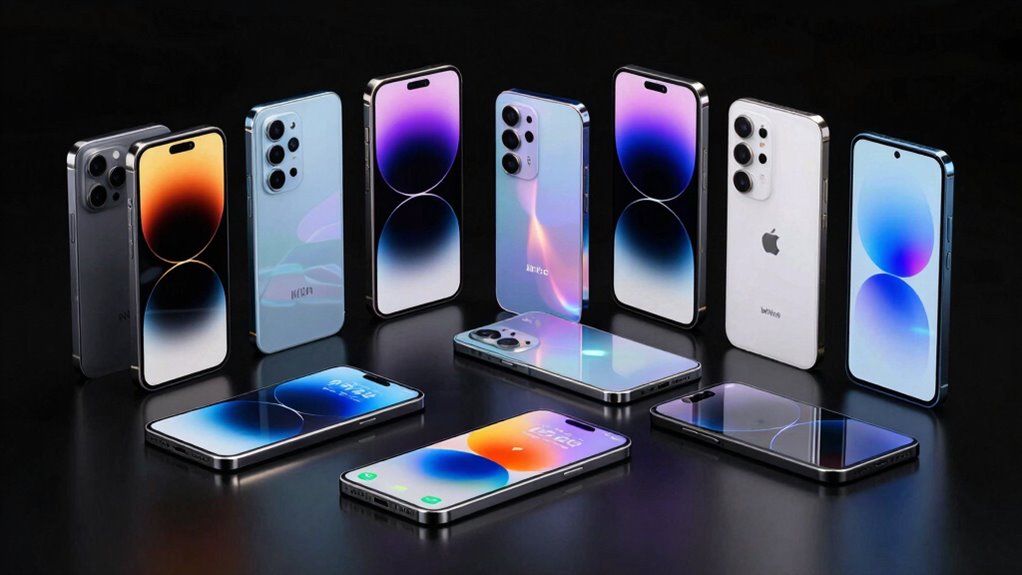

Among these high-end smartphones, I’d make the Samsung Galaxy S26 Ultra my best overall pick for its flagship positioning, 512GB storage, and broad feature set. The Google Pixel 11 Pro XL is a strong alternative for buyers who prioritize Google’s software and a large-screen format, while the Samsung Galaxy Z Fold8 is the standout for multitasking on an expansive foldable display. The main tradeoffs are familiar: a larger phone can be harder to handle, more storage may matter more than an extra camera feature, and specialized designs suit fewer people. This lineup also includes older or renewed models, so year, condition, and software support deserve attention alongside hardware. Read on for my full breakdown and help matching a phone to your needs.

Get baking supplies delivered free with Prime
- Fast, free delivery on millions of items
- Prime Video, Amazon Music and more included
- Member-only deals all year
Complete the kit


Key Takeaways
- The Galaxy S26 Ultra leads this lineup as the newest listed Samsung Ultra with 512GB storage, while the S25 Ultra options offer a choice of standard or 1TB configurations.
- Pixel Pro models split by size and generation: the Pixel 11 Pro XL favors a larger format, the Pixel 11 Pro offers a smaller one, and the Pixel 10 Pro is the older, lower-storage entry.
- The Z Fold8 is a use-case pick, not a default flagship: its foldable design makes sense for screen-heavy multitasking, but buyers seeking a simple, conventional phone may prefer an Ultra or Pixel Pro.
- OnePlus and Sony target specific priorities: the OnePlus 15 pairs 16GB RAM with 512GB storage, while the Xperia 1 VIII offers a distinct option for buyers drawn to Sony’s approach and 512GB storage.
- Not every phone here is a current premium buy: the renewed Galaxy S23 Ultra and standard Pixel 10 trade newer-generation status for potentially different ownership and support considerations.
| Samsung Galaxy S23 Ultra 5G, 256GB, Phantom Black, Unlocked (Renewed) |  | Best Renewed S Pen Flagship | Processor: Snapdragon 8 Gen 2 | Display: 6.8-inch Dynamic AMOLED 2X | Resolution: 1440 × 3088 pixels | VIEW ON AMAZON | See Our Full Breakdown |
| Nothing Phone (4a) Pro Cell Phone 2026, Unlocked Android 16, 12GB/256GB, 6.83″ AMOLED, Triple-Lens Camera, 5080mAh Battery, Dual-SIM, Glyph Matrix, Silver |  | Best Distinctive Display and Design | Processor: Qualcomm Snapdragon 7 Gen 4 | Display: 6.83-inch AMOLED, 1.5K resolution | Refresh rate: 144Hz | VIEW ON AMAZON | See Our Full Breakdown |
| Samsung Galaxy S25 Ultra, 256GB Smartphone, Unlocked, Titanium Black |  | Best for S Pen Productivity | Processor: Snapdragon 8 Elite | Storage: 256GB | Battery: 5,000mAh | VIEW ON AMAZON | See Our Full Breakdown |
| Samsung Galaxy S26 Ultra Unlocked Android Smartphone, 512GB, Black |  | Best for Screen Privacy and AI Tools | Device type: Unlocked Android smartphone | Storage: 512GB | Display feature: Built-in privacy display | VIEW ON AMAZON | See Our Full Breakdown |
| Samsung Galaxy S25 Ultra 1TB Unlocked Smartphone, Titanium Whitesilver |  | Best for Maximum Storage and Zoom | Processor: Snapdragon 8 Elite for Galaxy | Memory and storage: 12GB RAM; 1TB storage | Display: 6.9-inch Dynamic AMOLED 2X QHD+ | VIEW ON AMAZON | See Our Full Breakdown |
| Google Pixel 11 Pro XL – Unlocked Smartphone, 256 GB, Obsidian |  | Best for AI-Assisted Photography | Storage: 256 GB | Color: Obsidian | Carrier compatibility: Unlocked; works with Google Fi, Verizon, T-Mobile, AT&T, and other carriers | VIEW ON AMAZON | See Our Full Breakdown |
| Samsung Galaxy Z Fold8, 512GB Lavender |  | Best for Multitasking and Big-Screen Entertainment | Storage: 512GB | Color: Lavender | Display: Foldable; described as the brightest Galaxy phone display | VIEW ON AMAZON | See Our Full Breakdown |
| Google Pixel 10 Pro – Unlocked Smartphone with Gemini – Obsidian – 128 GB |  | Best Compact Flagship | Storage: 128 GB | Display: 6.3-inch Super Actua | Peak brightness: 3,300 nits | VIEW ON AMAZON | See Our Full Breakdown |
| Google Pixel 11 Pro Unlocked Smartphone, 256 GB, Obsidian |  | Best Compact All-Day Pick | Operating system: Android 16 | RAM: 12 GB | Processor: Google Tensor, 3.1 GHz | VIEW ON AMAZON | See Our Full Breakdown |
| OnePlus 15 16GB RAM 512GB Storage Unlocked Android Smartphone |  | Best for Battery and High-Refresh Performance | RAM: 16GB | Storage: 512GB | Battery: 7,300 mAh | VIEW ON AMAZON | See Our Full Breakdown |
| Sony Xperia 1 VIII XQ-GE74 512GB 12GB RAM 5G Unlocked Smartphone, Garnet Red |  | Best for Expandable Storage | Display: 6.5-inch LTPO OLED, 120Hz, 1080 x 2340 | Processor: Qualcomm Snapdragon 8 Elite Gen 5 | Memory: 12GB RAM | VIEW ON AMAZON | See Our Full Breakdown |
| Google Pixel 10 – Unlocked Smartphone with Gemini – Indigo – 128 GB |  | Best for Everyday Camera Versatility | Display: Actua display, up to 3,000 nits | Processor: Google Tensor G5 | Storage: 128GB | VIEW ON AMAZON | See Our Full Breakdown |
| high end smartphone | Processor | Display | Storage | Color |
|---|---|---|---|---|
| Samsung Galaxy S23 Ultra 5G | Snapdragon 8 Gen 2 | 6.8-inch Dynamic AMOLED 2X | — | — |
| Nothing Phone | Qualcomm Snapdragon 7 Gen 4 | 6.83-inch AMOLED, 1.5K resolution | — | — |
| Samsung Galaxy S25 Ultra | Snapdragon 8 Elite | — | 256GB | Titanium Black |
| Samsung Galaxy S26 Ultra Unloc | — | — | 512GB | Black |
| Samsung Galaxy S25 Ultra 1TB U | Snapdragon 8 Elite for Galaxy | 6.9-inch Dynamic AMOLED 2X QHD+ | — | — |
| Google Pixel 11 Pro XL | — | — | 256 GB | Obsidian |
| Samsung Galaxy Z Fold8 | Snapdragon 8 Elite Gen 5 | Foldable; described as the brightest Galaxy phone display | 512GB | Lavender |
| Google Pixel 10 Pro | Google Tensor G5 | 6.3-inch Super Actua | 128 GB | Obsidian |
| Google Pixel 11 Pro Unlocked S | Google Tensor, 3.1 GHz | 6.3-inch Super Actua | — | — |
| OnePlus 15 16GB RAM 512GB Stor | — | 6.78-inch AMOLED, 165Hz | 512GB | — |
| Sony Xperia 1 VIII XQ-GE74 512 | Qualcomm Snapdragon 8 Elite Gen 5 | 6.5-inch LTPO OLED, 120Hz, 1080 x 2340 | 512GB internal; dedicated microSDXC slot | — |
| Google Pixel 10 | Google Tensor G5 | Actua display, up to 3,000 nits | 128GB | Indigo |
More Details on Our Top Picks
Samsung Galaxy S23 Ultra 5G, 256GB, Phantom Black, Unlocked (Renewed)
The Galaxy S23 Ultra makes a high-end feature set more accessible through its renewed status, pairing a sharp 6.8-inch 120Hz AMOLED screen with a built-in S Pen for notes, markup, and precise edits. Its 200MP main camera and Snapdragon 8 Gen 2 still give it a strong foundation for photography and demanding everyday use. Compared with the newer Galaxy S25 Ultra, this model has an older processor and less listed storage, but keeps the stylus and a 5,000mAh battery. The main compromise is condition: renewed devices can show wear, and the supplied listing specifies only a 90-day limited warranty. I’d choose it over a newer Ultra when S Pen features matter more than having the latest hardware; buyers who want predictable condition should choose a new model instead.
Pros:- Built-in S Pen adds practical note-taking and precision input
- 6.8-inch 1440 × 3088 AMOLED display supports adaptive refresh rates up to 120Hz
- 200MP main camera is paired with a quad-camera system
- 5,000mAh battery and 256GB storage
Cons:- Renewed condition means cosmetic state may vary
- 90-day limited warranty is shorter than the one-year warranty listed for the Galaxy S25 Ultra
- Large 8.32-ounce body is awkward for some one-handed use
Best for: Buyers who want a large-screen Samsung flagship with an S Pen and are comfortable purchasing a renewed device.
Not ideal for: Shoppers who require a new phone, a longer stated warranty, or a compact handset.
- Processor:Snapdragon 8 Gen 2
- Display:6.8-inch Dynamic AMOLED 2X
- Resolution:1440 × 3088 pixels
- Refresh rate:Up to 120Hz
- Rear cameras:Quad system; 200MP main sensor
- Memory and storage:8GB RAM; 256GB storage
- Battery:5,000mAh
- Condition and warranty:Renewed; 90-day limited warranty
Our verdict“Choose this renewed S23 Ultra if you want an S Pen-equipped Samsung flagship and accept older hardware and variable condition.”
Nothing Phone (4a) Pro Cell Phone 2026, Unlocked Android 16, 12GB/256GB, 6.83″ AMOLED, Triple-Lens Camera, 5080mAh Battery, Dual-SIM, Glyph Matrix, Silver
The Nothing Phone (4a) Pro is the lineup’s style-led alternative: its 6.83-inch AMOLED panel runs at 144Hz, while the Glyph Matrix gives notifications a visible hardware-based cue rather than another conventional screen alert. A 50MP main camera and 3.5x optical telephoto provide more photographic range than a single-lens design, and 12GB RAM supports multitasking. Against Samsung’s Galaxy S25 Ultra, though, its Snapdragon 7 Gen 4 sits below the Ultra’s flagship-class Snapdragon 8 Elite, and the supplied camera details don’t match Samsung’s higher-resolution, four-camera system. The 5,080mAh battery and 50W charging make a useful everyday pairing, but network support deserves a check: the listing warns of limited 5G support on Verizon. I’d pick it for its screen and distinctive design, not for maximum processing headroom or carrier flexibility.
Pros:- 6.83-inch AMOLED display with a 144Hz refresh rate
- 50MP telephoto camera offers 3.5x optical zoom
- 5,080mAh battery with 50W fast charging
- Glyph Matrix offers a distinctive way to surface notifications
Cons:- Snapdragon 7 Gen 4 is a lower performance tier than the Galaxy S25 Ultra’s Snapdragon 8 Elite
- Listing warns of limited 5G support on Verizon
- IP65 water resistance is specified, but no dust-resistance details are provided
Best for: Android buyers who value a high-refresh-rate screen, a distinctive notification design, and a useful optical telephoto camera.
Not ideal for: Verizon customers who need broad 5G compatibility, or buyers seeking the highest-tier processor and camera hardware.
- Processor:Qualcomm Snapdragon 7 Gen 4
- Display:6.83-inch AMOLED, 1.5K resolution
- Refresh rate:144Hz
- Memory and storage:12GB LPDDR5X RAM; 256GB UFS 3.1 storage
- Rear cameras:50MP main, 50MP telephoto with 3.5x optical zoom, 8MP ultrawide
- Battery and charging:5,080mAh; 50W fast charging
- Water resistance:IP65
- Connectivity:5G, LTE, VoLTE, VoNR; listing notes limited Verizon 5G support
Our verdict“Pick the Phone (4a) Pro for its unusual design and smooth display, provided its carrier support and mid-tier processor fit your needs.”
Samsung Galaxy S25 Ultra, 256GB Smartphone, Unlocked, Titanium Black
For a high-end phone that doubles as a pocket-sized work surface, the Galaxy S25 Ultra combines a built-in S Pen with Samsung’s Snapdragon 8 Elite processor and a 5,000mAh battery. The stylus is the defining difference: it suits users who annotate documents, jot down ideas, or make precise selections, while the newer Galaxy S26 Ultra listing emphasizes its privacy display and AI tools instead. Samsung also calls out AI Night Mode and portrait features, though the supplied product data gives less camera detail than the fully specified S25 Ultra 1TB listing, which names its four rear cameras and optical zoom levels. This 256GB version makes sense when you want the core S Pen and processing experience without needing a terabyte of storage. Its large form can be tiring for one-handed use, and warranty terms are listed as specific to the US market.
Pros:- Snapdragon 8 Elite processor is suited to demanding apps and multitasking
- Built-in S Pen supports handwriting and precise on-screen work
- 5,000mAh battery
- AI Night Mode and portrait features are specified
Cons:- Large size may be uncomfortable for one-handed use
- 256GB offers less headroom than the 1TB Galaxy S25 Ultra configuration
- Warranty terms are described as US-market-specific
Best for: Professionals, students, and note-takers who want a fast Samsung flagship with a built-in stylus and 256GB of storage.
Not ideal for: People who prefer compact phones, need detailed optical-zoom specifications before buying, or want the extra storage of the 1TB S25 Ultra.
- Processor:Snapdragon 8 Elite
- Storage:256GB
- Battery:5,000mAh
- Stylus:Built-in S Pen
- Camera features:AI Night Mode and portrait features
- Color:Titanium Black
- Model year:2025
- Warranty:1 year; listing specifies US-market terms
Our verdict“Choose this S25 Ultra if S Pen productivity and a current flagship processor matter more than extra storage or a smaller body.”
Samsung Galaxy S26 Ultra Unlocked Android Smartphone, 512GB, Black
The Galaxy S26 Ultra earns its place through features aimed at people who use a premium phone in public or rely on Samsung’s software tools. Its built-in privacy display can be set to activate for selected content such as notifications, passwords, or chosen apps, giving it a role the camera-focused S25 Ultra listings don’t claim. Galaxy AI adds Photo Assist and Now Nudge, while Nightography targets low-light photos and video; the wider front camera is a practical touch for group selfies. The tradeoff is that the supplied information leaves key hardware details, including the processor and display size, unspecified. Some AI tools need a Samsung account and internet access, and Photo Assist edits can be resized to as much as 12MP. I’d favor this over the S25 Ultra when privacy features and AI tools lead your priorities, but not when camera specifications or offline access need to be clear.
Pros:- Privacy display can be set for notifications, passwords, or selected apps
- 512GB storage provides more listed capacity than the 256GB Galaxy S25 Ultra
- Nightography is designed for low-light photos and videos
- Wider front camera can include more people in group selfies
Cons:- Some AI features require a Samsung account and an internet connection
- Photo Assist edits can be resized to up to 12MP
- Supplied product details do not name the processor or give display dimensions
Best for: Samsung users who often check sensitive content in public and want Galaxy AI tools for editing and on-device assistance.
Not ideal for: Buyers who need complete processor and display specifications, or who want AI features to work without an account and internet access.
- Device type:Unlocked Android smartphone
- Storage:512GB
- Display feature:Built-in privacy display
- AI features:Galaxy AI, including Photo Assist and Now Nudge
- Rear camera feature:Nightography for low-light photos and videos
- Front camera feature:Wider front camera
- Charging:Super Fast Charging 3.0 ready
- Color:Black
Our verdict“Choose the S26 Ultra if its privacy display and Galaxy AI features are more useful to you than fully documented hardware specifications.”
Samsung Galaxy S25 Ultra 1TB Unlocked Smartphone, Titanium Whitesilver
This 1TB Galaxy S25 Ultra is the strongest fit here for buyers who capture a lot of media and want multiple optical zoom options. Its four-camera array pairs a 200MP main sensor with 3x and 5x optical telephoto zoom, so distant subjects are easier to frame without relying only on digital cropping. The 6.9-inch QHD+ AMOLED screen adapts from 1Hz to 120Hz, while 12GB RAM and the Snapdragon 8 Elite for Galaxy provide flagship-level hardware. Compared with the 256GB S25 Ultra, the central advantage is storage capacity; the Galaxy S26 Ultra instead distinguishes itself with a built-in privacy display and AI features. This model is a poor match for anyone who won’t use its extra space, and the listing flags inconsistent product information, including conflicting RAM configurations and foldable-device details. I’d verify the exact configuration before purchase.
Pros:- 1TB storage and 12GB RAM provide ample capacity for large media libraries
- 200MP main camera plus 3x and 5x optical telephoto zoom
- 6.9-inch QHD+ AMOLED display with adaptive 1–120Hz refresh rate
- 5,000mAh battery supports wired, wireless, and reverse wireless charging
Cons:- Large 6.9-inch format may not suit buyers who want easy one-handed handling
- Listing contains inconsistent RAM and foldable-device information, so configuration details need verification
- Extra storage may go unused by buyers who rely on cloud storage or lighter workloads
Best for: Mobile photographers, frequent video creators, and media-heavy users who want 1TB of storage and dedicated optical zoom choices.
Not ideal for: Buyers who need a compact or lighter phone, don’t need extensive local storage, or cannot confirm the listed configuration.
- Processor:Snapdragon 8 Elite for Galaxy
- Memory and storage:12GB RAM; 1TB storage
- Display:6.9-inch Dynamic AMOLED 2X QHD+
- Refresh rate:Adaptive 1–120Hz
- Rear cameras:200MP wide, 50MP ultrawide, 50MP periscope telephoto with 5x optical zoom, 10MP telephoto with 3x optical zoom
- Battery:5,000mAh
- Charging:45W wired, wireless, and reverse wireless charging
- Network and SIM:Unlocked; 5G, Wi-Fi, Bluetooth; eSIM and Nano SIM size listed
Our verdict“Pick this S25 Ultra configuration if you’ll use its 1TB capacity and versatile optical zoom, after confirming the exact listed variant.”
Google Pixel 11 Pro XL – Unlocked Smartphone, 256 GB, Obsidian
I’d shortlist the Pixel 11 Pro XL for buyers who want a camera-led flagship with software that helps manage the moments around a shot, not just the shot itself. Its enhanced telephoto sensor, improved low-light capabilities, and automatic editing tools give it a different emphasis from the multitasking-first Galaxy Z Fold8. Pixel HiLight alerts and Gemini Intelligence also add notification tools that aren’t specified for the Fold8. The unlocked configuration supports a broad range of major carriers, which suits people who may change networks. The tradeoff is that the supplied details don’t specify battery life, charging, display size, or processor, making it harder to judge as an all-around flagship against models with those details available. I’d skip it if battery endurance is your deciding factor.
Pros:- Camera system is described as improved for low-light photography
- Enhanced telephoto sensor and automatic editing features support flexible shooting
- Unlocked for Google Fi, Verizon, T-Mobile, AT&T, and other carriers
- Pixel HiLight alerts and Gemini Intelligence add notification-management tools
Cons:- Battery life and charging details are not specified
- Display and processor information are not provided for comparison
- The camera and AI emphasis may be unnecessary for buyers who prioritize multitasking or a large screen
Best for: Photography-focused buyers who want assisted editing, low-light improvements, and the flexibility to use a major carrier of their choice.
Not ideal for: Shoppers choosing primarily by battery endurance, charging speed, or display specifications, since those details are not provided.
- Storage:256 GB
- Color:Obsidian
- Carrier compatibility:Unlocked; works with Google Fi, Verizon, T-Mobile, AT&T, and other carriers
- Special features:Pixel HiLight alerts and Magic Capture
- Telephoto:Enhanced telephoto sensor
- Camera capabilities:Improved low-light performance and automatic editing
Our verdict“Choose the Pixel 11 Pro XL if camera assistance and carrier flexibility matter more to you than clearly documented battery and performance details.”
Samsung Galaxy Z Fold8, 512GB Lavender
The Galaxy Z Fold8 is the clearest choice here for buyers who want a phone that can open into a more immersive workspace. Its foldable display suits movies, games, and multitasking in a way the 6.3-inch Pixel 10 Pro cannot match. Samsung pairs that format with a Snapdragon 8 Elite Gen 5 processor and 512GB of storage, giving demanding apps and large media libraries room to breathe. The Fold8 also claims a lightweight design for a foldable, though that doesn’t remove the added concern of a more delicate folding construction. Its 50MP dual camera is versatile, but the product details give the OnePlus 15 a more explicit camera configuration, with three 50MP cameras. I’d choose the Fold8 for screen flexibility, not as the safest pick for rough handling.
Pros:- Foldable display creates more room for entertainment and multitasking
- Snapdragon 8 Elite Gen 5 is specified for demanding workloads
- 512GB storage suits large app and media libraries
- Super Fast Charging 2.0 and a versatile 50MP dual camera system
Cons:- Foldable construction may be more vulnerable than a conventional smartphone
- Battery life may vary with heavy use
- The dual-camera details are less extensive than the OnePlus 15’s listed triple-camera setup
Best for: Power users who watch video, play games, or work across multiple apps and want a foldable screen with generous storage.
Not ideal for: Buyers who want a traditional slab phone, prioritize durability over screen size, or need battery performance that is clearly established under heavy use.
- Storage:512GB
- Color:Lavender
- Display:Foldable; described as the brightest Galaxy phone display
- Processor:Snapdragon 8 Elite Gen 5
- Camera:50MP dual camera system
- Battery and charging:Long-lasting battery; Super Fast Charging 2.0
- Design:Lightweight foldable design
Our verdict“Pick the Galaxy Z Fold8 if an expansive foldable screen is worth the durability tradeoff for your work and entertainment.”
Google Pixel 10 Pro – Unlocked Smartphone with Gemini – Obsidian – 128 GB
Among these high-end options, the Pixel 10 Pro offers a smaller stated display without giving up flagship-style camera and AI features. Its 6.3-inch Super Actua screen makes it a more manageable choice than the 6.78-inch OnePlus 15 or the expansive Galaxy Z Fold8, while its 3,300-nit peak brightness is aimed at keeping content visible outdoors. The 50MP camera, 8K video, and listed 100x Pro Res Zoom give it broad shooting options, and Gemini adds an AI-focused software angle. Gorilla Glass Victus 2 and an aluminum frame round out the build. The tradeoffs are 128GB of storage and unspecified battery details; the Pixel 11 Pro, by comparison, lists 256GB and a 30+ hour battery claim.
Pros:- 6.3-inch display is smaller than the OnePlus 15 and Galaxy Z Fold8 formats
- 3,300-nit peak brightness is specified for bright viewing conditions
- 50MP camera supports 8K video and 100x Pro Res Zoom
- Aluminum and Gorilla Glass Victus 2 provide a durable stated build
Cons:- 128GB storage is less than the 256GB Pixel 11 Pro and 512GB options in this roundup
- Battery life and charging details are not specified
- The 100x zoom figure alone does not establish image quality at the longest range
Best for: Buyers who want a relatively compact premium Android phone with a bright display, advanced camera features, and Gemini tools.
Not ideal for: People who store extensive video and photo libraries locally or need a stated long battery life; the listed storage is 128GB and battery details are absent.
- Storage:128 GB
- Display:6.3-inch Super Actua
- Peak brightness:3,300 nits
- Processor:Google Tensor G5
- Camera:50 MP; 8K video; 100x Pro Res Zoom
- Materials:Aluminum and Gorilla Glass Victus 2
- Color:Obsidian
Our verdict“Choose the Pixel 10 Pro if you want a smaller-screen premium phone with strong stated camera features and can work within 128GB of storage.”
Google Pixel 11 Pro Unlocked Smartphone, 256 GB, Obsidian
The Pixel 11 Pro is the more grounded choice for buyers who want a premium phone in a 6.3-inch format and value a stated battery claim. Compared with the Pixel 10 Pro, it lists 256GB of storage instead of 128GB and specifies 30+ hours of battery life, wireless charging, and IP68 protection. Its up-to-120x zoom and Night Sight features give camera fans plenty to explore, while Android 16, 12GB RAM, and carrier flexibility round out a well-specified package. It gives up the Pixel 10 Pro’s stated 3,300-nit peak brightness and 8K video detail, so I’d choose the older model if those particular camera and screen claims matter more. The 6.3-inch display also makes this a poor fit for buyers who want Fold8-style viewing space.
Pros:- 30+ hour battery life is specified, unlike several models with no battery details
- 256GB storage doubles the listed capacity of the Pixel 10 Pro
- IP68 protection, wireless charging, and fingerprint and facial recognition
- Unlocked for major carriers, with Night Sight and up to 120x digital zoom
Cons:- 6.3-inch screen may feel small to buyers who want a large entertainment display
- USB Type-C headphone connection may require compatible headphones or an adapter
- The supplied camera details do not specify 8K video, unlike the Pixel 10 Pro listing
Best for: Buyers who prefer a manageable 6.3-inch phone and want specified battery life, wireless charging, IP68 protection, and unlocked carrier support.
Not ideal for: People who want a large screen for gaming and video or who prioritize a stated peak-brightness figure and 8K video capability.
- Operating system:Android 16
- RAM:12 GB
- Processor:Google Tensor, 3.1 GHz
- Storage and color:256 GB; Obsidian
- Display:6.3-inch Super Actua
- Cameras:48 MP rear; 13 MP front; up to 120x digital zoom
- Battery and charging:30+ hours; wireless charging
- Protection and SIM:IP68; eSIM and Nano SIM
- Biometrics and connector:Fingerprint and facial recognition; USB Type-C
Our verdict“Choose the Pixel 11 Pro for a smaller premium Android phone with a specified long battery claim and practical durability features.”
OnePlus 15 16GB RAM 512GB Storage Unlocked Android Smartphone
I’d point heavy users toward the OnePlus 15 when battery capacity, memory, and a fast-feeling screen take priority over a compact build. Its 7,300 mAh battery is the most explicit high-capacity claim in this group, while 16GB RAM and a 165Hz AMOLED display are aimed at demanding multitasking and smooth gaming. The triple 50MP camera system also gives it broader stated camera coverage than the Galaxy Z Fold8’s 50MP dual setup. Against the Fold8, however, the OnePlus uses a conventional 6.78-inch display rather than a foldable screen, so it won’t offer the same adaptable workspace. Its IP66/IP68/IP69K ratings are a notable durability specification, but the large screen and battery make this a substantial phone, not an easy one-handed pick.
Pros:- 7,300 mAh battery capacity is the largest explicitly stated battery figure in this group
- 16GB RAM and a 165Hz display suit demanding apps and gaming
- Triple 50MP camera system offers three high-resolution cameras
- IP66/IP68/IP69K ratings provide specified dust and water resistance
Cons:- 6.78-inch display and large battery make one-handed use difficult for some buyers
- Conventional screen does not offer the Galaxy Z Fold8’s foldable workspace
- The supplied details do not identify the processor model or give a battery-life estimate
Best for: Power users, mobile gamers, and frequent travelers who want high memory, a fast-refresh display, large battery capacity, and robust stated water and dust resistance.
Not ideal for: People who prefer one-handed phones or want a foldable screen for tablet-like multitasking and entertainment.
- RAM:16GB
- Storage:512GB
- Battery:7,300 mAh
- Display:6.78-inch AMOLED, 165Hz
- Camera:Triple 50 MP
- Water and dust resistance:IP66/IP68/IP69K
- Network status:Unlocked Android smartphone
Our verdict“Choose the OnePlus 15 if you want a large, fast-display phone with substantial battery capacity and memory, and can accept its size.”
Sony Xperia 1 VIII XQ-GE74 512GB 12GB RAM 5G Unlocked Smartphone, Garnet Red
The Sony Xperia 1 VIII is the standout choice here for buyers who want room to keep a large photo, video, or music library on their phone. Its 512GB internal storage plus a dedicated microSDXC slot gives it a flexibility the listed Google Pixel 10 with 128GB does not offer. The 6.5-inch 120Hz LTPO OLED and triple 48MP camera system also make it a well-equipped high-end option, with a periscope lens offering 2.9x optical zoom. Its tradeoff is less straightforward ownership in the U.S.: this international model may have limited carrier compatibility and lacks a U.S. manufacturer warranty. I’d choose it over the Pixel 10 for expandable local storage and Sony’s stated camera hardware, but only after checking carrier support.
Pros:- 512GB built-in storage plus a dedicated microSDXC slot
- 6.5-inch 120Hz LTPO OLED display
- Triple 48MP rear cameras, including a 2.9x optical-zoom periscope lens
- IP65/IP68 dust and water resistance
Cons:- International model may have limited U.S. carrier and service compatibility
- No U.S. manufacturer warranty
- 2.9x optical zoom is less reach than the Pixel 10’s advertised 20x Super Res Zoom
Best for: Android buyers with large offline media or camera libraries who want expandable storage and have confirmed the phone works with their U.S. carrier.
Not ideal for: U.S. buyers who need assured carrier compatibility, local manufacturer warranty support, or a simple purchase without checking network bands.
- Display:6.5-inch LTPO OLED, 120Hz, 1080 x 2340
- Processor:Qualcomm Snapdragon 8 Elite Gen 5
- Memory:12GB RAM
- Storage:512GB internal; dedicated microSDXC slot
- Rear cameras:Triple 48MP system: wide, ultrawide, and periscope telephoto with 2.9x optical zoom
- Front camera:12MP
- Operating system:Android 16, upgradable to Android 17
- SIM:Nano-SIM and eSIM; up to two active at a time
- Protection:IP65/IP68; Gorilla Glass Victus 2 front and Gorilla Glass Victus back
Our verdict“Choose the Xperia 1 VIII for high-capacity, expandable storage and a versatile camera setup if you can verify U.S. network support and accept the warranty gap.”
Google Pixel 10 – Unlocked Smartphone with Gemini – Indigo – 128 GB
The Google Pixel 10 suits buyers who want a high-end phone with broad carrier compatibility and a camera system that offers reach beyond its standard lenses. Its listed 20x Super Res Zoom gives it a different appeal from the Sony Xperia 1 VIII, whose telephoto lens has 2.9x optical zoom; the Sony counters with 512GB storage and microSD expansion, while this Pixel has just 128GB. The 3,000-nit Actua display is specified for strong visibility in bright conditions, and IP68 protection adds reassurance around dust and water. Google Tensor G5 is the stated processor, though the supplied details do not include battery-life figures. I’d favor the Pixel for carrier flexibility and zoom range, but skip it if you keep a large library stored locally.
Pros:- Triple rear camera with advertised 20x Super Res Zoom
- Actua display specified at up to 3,000 nits
- Unlocked and described as compatible with Verizon, T-Mobile, and AT&T
- IP68 water and dust resistance with Gorilla Glass Victus 2 protection
Cons:- 128GB storage is less than the Xperia 1 VIII’s 512GB and expandable capacity
- Battery-life details are not specified in the supplied product data
- Large size may not suit buyers who prefer a compact phone
Best for: Buyers who want an unlocked Android phone for major U.S. carriers, a bright screen, and versatile camera zoom for travel and everyday photography.
Not ideal for: People who store extensive video, photo, or music libraries on their phone, since the listed 128GB capacity is not described as expandable.
- Display:Actua display, up to 3,000 nits
- Processor:Google Tensor G5
- Storage:128GB
- Rear cameras:Triple camera with 20x Super Res Zoom
- Water and dust resistance:IP68
- Protection:Corning Gorilla Glass Victus 2
- Connectivity:Unlocked; listed as compatible with Verizon, T-Mobile, and AT&T
- Color:Indigo
Our verdict“Pick the Pixel 10 for carrier flexibility, a bright display, and high advertised zoom, but choose the Xperia 1 VIII if storage capacity matters more.”

How We Picked
I ranked these phones by how well their listed configurations serve high-end buyers across performance potential, storage, usability, versatility, and product positioning. I gave extra weight to current-generation flagship status and configurations that leave room for demanding apps, media, and long-term use. The Fold8 earns a distinct place for its large, flexible screen, while the Pixel Pro models stand apart through Google’s software-led approach. Storage capacity and screen size matter, but neither automatically makes a phone the right choice for every buyer.
The order reflects how broadly each device can suit premium-phone shoppers, not a claim that every specification has been independently tested or that all models are identical in availability. I treated renewed condition, older generation, and specialist design as meaningful tradeoffs. The S26 Ultra sits ahead of the S25 Ultra models as the newer listed Ultra configuration; the 1TB S25 Ultra still has a clear case for storage-heavy buyers. Phones with narrower appeal rank lower for general recommendations, even when their distinct features may make them a better match for a particular person.
| high end smartphone | Color |
|---|---|
| Samsung Galaxy S23 Ultra 5G | — |
| Nothing Phone | — |
| Samsung Galaxy S25 Ultra | Titanium Black |
| Samsung Galaxy S26 Ultra Unloc | Black |
| Samsung Galaxy S25 Ultra 1TB U | — |
| Google Pixel 11 Pro XL | Obsidian |
| Samsung Galaxy Z Fold8 | Lavender |
| Google Pixel 10 Pro | Obsidian |
| Google Pixel 11 Pro Unlocked S | — |
| OnePlus 15 16GB RAM 512GB Stor | — |
| Sony Xperia 1 VIII XQ-GE74 512 | — |
| Google Pixel 10 | Indigo |
Factors to Consider When Choosing High End Smartphones
Before choosing among these high-end smartphones, I’d narrow the field by how you use a phone day to day. The biggest decision is rarely a single headline specification: it is the balance between size, storage, software preferences, and how long you plan to keep the device.
Choose a screen size you can live with
A large display is useful for reading, video, maps, and multitasking, but it also affects pocketability and one-handed use. Decide whether your phone spends more time in your hand on the go or propped up for longer sessions. A foldable adds a larger working area, yet its form factor asks you to accept a different everyday feel than a conventional slab phone. Don’t treat the biggest screen as an automatic upgrade if you often use your phone while walking or with one hand. If possible, handle a similarly sized device before committing. The right fit is the one you will enjoy carrying, not just viewing.
Buy storage for your habits, not the headline
Storage needs grow quickly when you keep large video files, download media for travel, or install demanding games. Cloud backups can reduce local storage pressure, but they depend on reliable access and may involve ongoing service costs. A 1TB configuration is useful for people who keep extensive files on-device; it is excessive for someone who regularly clears media or relies on cloud storage. Check whether the model you want has a storage tier that fits your routine before comparing other extras. Also distinguish storage from RAM: they solve different problems, and a larger number in one category does not replace the other. Paying for capacity you will not use is a common way to overspend on a premium phone.
Match the phone to the software you prefer
Samsung, Google, OnePlus, Sony, and Nothing offer different software experiences, so switching brands can change more than the interface. Think about which apps, services, accessories, and account features already fit into your routine. A phone that works smoothly with your existing setup may be more useful than one with a spec advantage you rarely notice. Check the manufacturer’s published update policy for the exact model and region rather than assuming every flagship gets the same support period. This matters especially when comparing newer releases with older or renewed devices. Buyers who keep phones for many years should treat software support as part of the purchase, not an afterthought.
Decide whether a specialist feature earns its place
Foldable screens, unusual camera controls, and distinctive interface features can make a phone better for a particular routine, but they may add complexity without helping everyone. Ask how often you will use the feature and what it replaces: a tablet, a separate camera, or simply a familiar phone layout. A specialist phone is easier to justify when it solves a recurring problem rather than just sounding novel. Consider repair access, case choices, and how comfortable you are with a less conventional design. If you mainly want a dependable premium phone for messaging, photos, and everyday apps, a conventional flagship may be the less fussy choice. Pick specialization for a clear benefit, not for the promise of doing everything differently.
Check generation, condition, and carrier fit
A model name alone does not tell the whole story: generation, storage configuration, unlocked status, and condition can change the ownership experience. Renewed phones deserve extra checks around battery condition, included accessories, return terms, and the seller’s grading description. Confirm the exact model supports the network bands and features your carrier uses, especially when buying an unlocked import or specialist model. Older hardware can still suit some buyers, but compare its remaining software support and expected battery life with the newer options. Avoid assuming that a lower model number or renewed label means a poor choice—or a guaranteed bargain. Verify the specific listing details before making a decision.
Frequently Asked Questions
Is the Galaxy S26 Ultra worth choosing over the S25 Ultra?
I’d favor the S26 Ultra if you want the newer listed Samsung Ultra generation and its 512GB configuration suits your storage needs. The S25 Ultra remains a reasonable alternative if its features and 256GB capacity fit your routine, while the 1TB S25 Ultra makes more sense for large offline libraries. Compare the exact model specifications and software support rather than relying on the generation number alone. If you already own a recent Ultra, consider whether the changes solve a real need before replacing it. The best choice depends on how much value you place on newer hardware versus extra storage.
Should I choose the Pixel 11 Pro or Pixel 11 Pro XL?
Choose between them first by screen size and handling comfort, since the Pro XL is the larger-format option and the Pro is better suited to buyers who want a more compact phone. Consider how often you watch video, read, or work across apps; those habits can make the larger screen more useful. If one-handed use and carrying comfort matter more, the smaller Pro may be the better daily fit. Check the full specifications for the exact differences beyond size before deciding. There is little benefit in choosing the larger model if you will find it awkward to carry.
Does a foldable phone make sense as my only smartphone?
It can, if you regularly use a large screen for reading, multitasking, or viewing documents and are comfortable with a foldable design. The Galaxy Z Fold8 is aimed at that kind of screen-heavy use, not simply at buyers who want the most conventional flagship. Think about how often you will open the device and whether its folded form works for your everyday calls, messaging, and travel. Check warranty, repair, and case options before buying, since foldables can involve different ownership considerations from slab phones. If you rarely need the larger inner screen, a standard flagship may be simpler.
Is a renewed Galaxy S23 Ultra a sensible high-end phone purchase?
A renewed S23 Ultra may appeal if you want an established Samsung Ultra design and are comfortable buying a device that is not new. Its age makes condition, battery health, return terms, and remaining software support more important than they are for the newer Ultra models in this list. Ask how the device was inspected and what warranty or returns apply to the specific listing. Compare its expected ownership life with a newer phone before making the call. I would skip it if you want the longest possible support runway or prefer the certainty of a new device.
How much storage should I choose for a high-end smartphone?
Start with how much space your current phone uses and whether you keep photos, video, downloads, and games locally. The listed options range from 128GB Pixel models to 1TB on the S25 Ultra, so the right tier depends on your habits rather than the phone’s premium status. If you regularly record high-resolution video or travel with offline media, more capacity can save frequent cleanup. Cloud storage can help, though it relies on connectivity and may add a recurring fee. When unsure, compare your current storage use and leave room for growth instead of buying the largest tier automatically.
Conclusion
For the broadest premium-phone recommendation, I’d choose the Samsung Galaxy S26 Ultra as best overall, while the Samsung Galaxy S25 Ultra 1TB is the best fit for buyers who keep extensive files on-device. For a Google-first experience, pick the Pixel 11 Pro if you want a smaller format or the Pixel 11 Pro XL for a larger screen; either is a more natural starting point for beginners who prefer a straightforward conventional phone. The Galaxy Z Fold8 is my best pick for multitasking across a foldable display, and the OnePlus 15 stands out for buyers drawn to its 16GB RAM and 512GB storage configuration. I’d choose the Xperia for shoppers specifically interested in Sony’s distinct approach, and consider the renewed S23 Ultra only after checking condition and support. Match the phone to your preferred size, software, and storage needs before paying for capabilities you may not use.