
An overflow moat is a built-in feature in your sink designed to protect your countertops from water spills. When water level rises unexpectedly, the moat redirects excess water into a dedicated drain, preventing pooling or overflow onto your counters. It acts as a safety measure, saving you from costly water damage to cabinets and flooring. To learn more about how this smart feature works and how to maintain it, keep exploring the details below.
Key Takeaways
- The overflow moat is a built-in channel that redirects excess water to prevent spills on countertops.
- It activates when water levels rise too high in the sink, guiding water safely away.
- Proper positioning and design ensure it functions effectively without clogging or debris buildup.
- Regular cleaning maintains its efficiency and prevents blockages that could lead to water damage.
- This safety feature protects countertops, cabinets, and flooring from water damage during leaks or pressure surges.
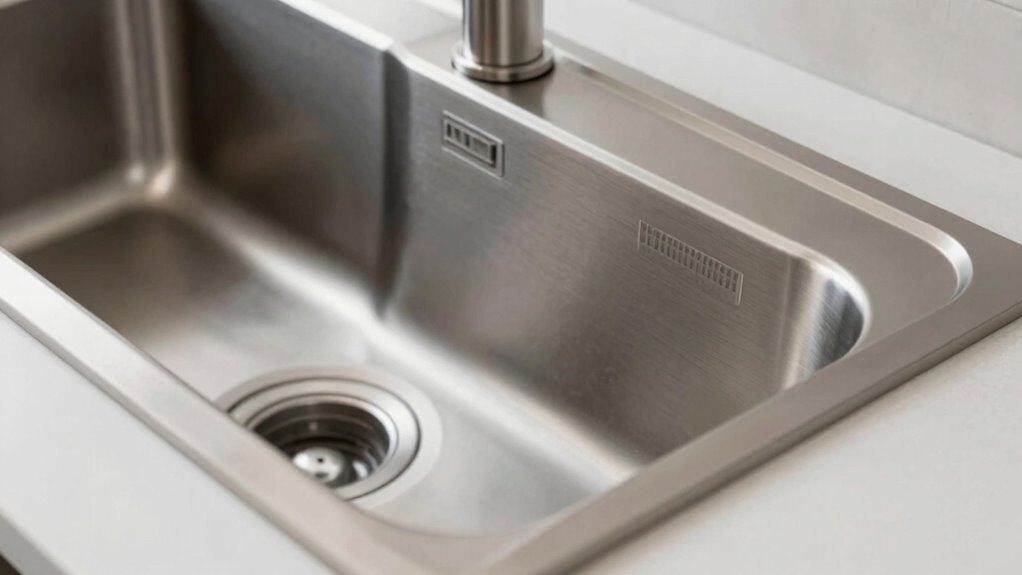
Have you ever wondered how companies protect their valuable data from unexpected surges or attacks? While data security involves firewalls and encryption, protecting your kitchen countertop from water damage relies on different principles, like an overflow moat. This feature isn’t just a fancy addition; it’s a smart element of drainage design that guarantees water doesn’t spill over and cause costly damage. When water from your sink rises beyond the usual level, the overflow moat acts as a safety feature, guiding excess water away from your countertop and into a designated drain. This simple yet effective system helps prevent water from pooling on your surface, saving you time and money on repairs.
The drainage design of an overflow moat is carefully engineered to work seamlessly with your sink’s plumbing. It’s usually a small, built-in channel or opening located just below the rim of your sink. When water reaches this level, instead of spilling over the edge and creating a mess, it flows into the moat and is directed safely away. This setup not only protects your countertops but also reduces the risk of water damage to cabinets and flooring beneath. The key is in the safety features of the design — the moat acts as a secondary line of defense, catching excess water before it can cause harm. It’s a simple addition that provides peace of mind, especially if you tend to leave the water running or forget to turn off the tap.
Installing an overflow moat requires careful attention to drainage design. It must be positioned correctly to catch surges without interfering with everyday use or clogging easily. The safety features also include smooth, unobstructed channels that prevent debris from blocking water flow. Regular maintenance, like cleaning out any buildup or debris, helps keep your overflow system functioning effectively. When working properly, the overflow moat ensures your kitchen remains dry even during unexpected water surges or pressure spikes. Understanding drainage design principles can help you better maintain and troubleshoot your system.
In essence, the overflow moat is a vital safety feature that enhances your sink’s drainage design. It acts as a reliable safeguard against water spills, protecting your countertop and surrounding areas. By understanding how it functions and maintaining it well, you can avoid costly repairs and keep your kitchen safe and dry. Whether you’re washing dishes or filling a bucket, knowing your overflow moat is ready to handle excess water gives you confidence that your space is protected from water damage. It’s a small feature with a big role — a true lifesaver for your countertops.

VEVOR Commercial Waffle Maker, 1300W Round Waffle Iron, Non-Stick Rotatable Waffle Baker Machine With 122-572℉ Temp Range and Time Control, Teflon-Coated Baking Pan Stainless Steel Body 120V
Quickly Make Delicious Waffles: Our 1300W high-power round waffle maker can easily make a piece of 1-inch thick...
As an affiliate, we earn on qualifying purchases.
Frequently Asked Questions
Can Overflow Moats Be Customized for Different Sink Styles?
Yes, overflow moats can be customized for different sink styles. You’ll find various customization options to guarantee compatibility with your sink, whether it’s a farmhouse, undermount, or vessel design. By working with manufacturers or specialists, you can tailor the overflow moat’s size, shape, and placement to match your specific sink compatibility needs, ultimately enhancing functionality and preventing water spills effectively.
What Materials Are Best for Durable Overflow Moats?
You should choose materials like high-quality silicone, stainless steel, or durable plastic for overflow moats, as they offer excellent material durability and resist cracking or warping over time. These materials also provide flexible installation options, making it easier to fit your sink’s design. Opting for sturdy, water-resistant materials guarantees your overflow moat remains functional and long-lasting, protecting your countertop from water damage effectively.
How Do I Clean and Maintain an Overflow Moat?
To keep your overflow moat clean and functioning well, follow a regular maintenance schedule. Use gentle cleaning tips like wiping it with a soft cloth and mild soap weekly to prevent buildup. Avoid harsh chemicals that can damage the material. Check for clogs or debris monthly, and clear them out promptly. Proper cleaning and maintenance guarantee your overflow moat stays effective, protecting your countertop from water damage over time.
Are Overflow Moats Suitable for All Kitchen Sink Types?
Did you know that over 80% of modern kitchens incorporate overflow moats? They’re versatile but not suitable for all sink types. Before installing, consider the installation considerations, like size and plumbing fit. Aesthetic options also vary, from sleek stainless steel to custom finishes. While they work well with most undermount and drop-in sinks, check your sink’s design to make sure of compatibility and a seamless look.
Can Overflow Moats Prevent All Types of Overflows?
Overflow moats can’t prevent all types of overflows, but they greatly reduce the risk during sink installation with proper overflow design. They work best for preventing accidental overflows caused by clogs or overfilling. However, if there’s a plumbing issue or a leak elsewhere, an overflow moat won’t stop it. To maximize protection, make sure your sink’s overflow design is well-integrated and maintained regularly.

VEVOR Commercial Waffle Maker, Dual-Head Round Waffle Baker Machine, 2460W Non-Stick Stainless Steel Belgian Waffle Iron with Temp and Time Control, Handle, for Restaurant Bakery Snack Bar Family
Quickly Make Delicious Waffles: Our 2460W high-power round waffle maker can easily produce a 1-inch thick waffle in...
As an affiliate, we earn on qualifying purchases.
Conclusion
So, now you see how the overflow moat maintains your countertop’s cleanliness and curb chaos. By cleverly channeling excess water away, it prevents potential problems before they start. This simple yet significant feature safeguards your space, saving you stress and spills. Remember, a small moat makes a mighty difference, making your kitchen safer, smarter, and super more stress-free. Stay savvy, and let the overflow moat safeguard your space seamlessly!

POPFOODEX Belgian Waffle Maker, 110V Industrial Waffle Maker w/Non-Stick Coating and Adjustable Temperature (122-572°F), 1200W Rotary Commercial Waffle Machine w/Timer, Restaurants and Food Trucks
Easy Release & Quick Cleanu: This flip Waffle Maker is coated with a double-layer of Teflon, ensuring that...
As an affiliate, we earn on qualifying purchases.

HTTSICHI Waffle Maker - Commercial Waffle Iron w/Two Non-stick 7 in Baking Pans, 550 ℉ Temperature and Timers, 2400W Dual Waffle Machine for Double Baking, Stainless Steel Waffle Maker for Restaurant
DOUBLE SIDED BAKING: This double-sided heating design of our double waffle maker ensures even heat distribution on both...
As an affiliate, we earn on qualifying purchases.