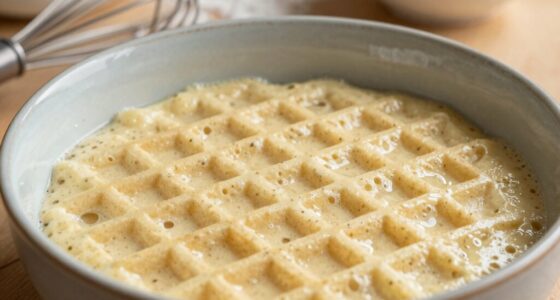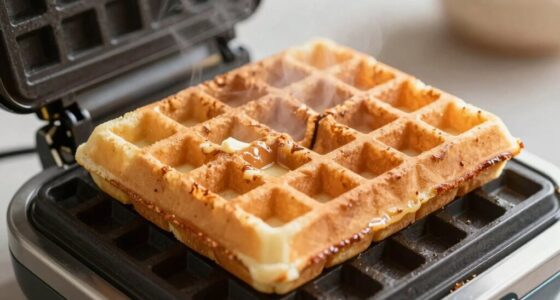
To avoid both overflowing and hollow centers, fill your containers no more than two-thirds full, leaving room for batter expansion during baking. Use gradual pouring, and monitor the batter level closely to make certain you don’t overfill or underfill. Adjust the amount based on your container’s shape, and always consider how the batter will expand as it heats. For more tips on perfect pouring, keep exploring to get the best results.
Key Takeaways
- Fill containers no more than two-thirds full to allow batter expansion and prevent overflow.
- Gradually pour batter, stopping periodically to monitor the fill level.
- Use appropriate measuring tools for accurate batter volume before pouring.
- Adjust pour amounts based on container shape and manufacturer capacity guidelines.
- Leave sufficient space for batter expansion during baking to avoid hollow centers.
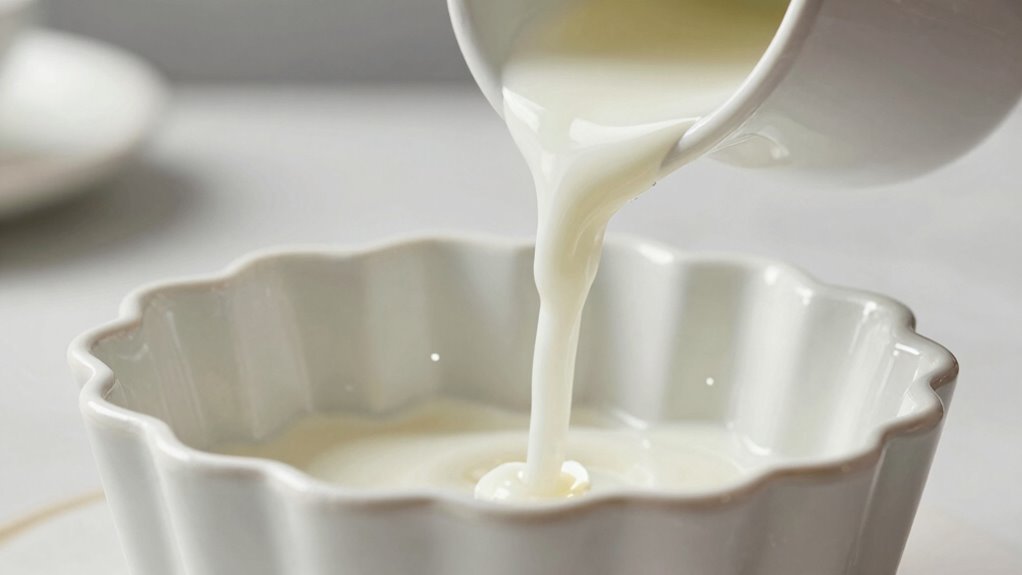
Have you ever poured batter only to end up with overflow or hollow centers? It’s frustrating and can ruin your baked goods. The key to avoiding these issues lies in understanding the right pour amount, which depends on proper measurement techniques and the shape of your container. When you’re preparing to pour batter, you need to think about how much you’re adding and how the container will handle that amount.
First, mastering measurement techniques is essential. Use a liquid or dry measuring cup to accurately gauge your batter volume. For thin batters, a ladle or a spoon can help you pour steadily, avoiding sudden overflows. For thicker batters, a scoop or a pitcher with a spout offers better control. Always measure your ingredients carefully beforehand, but also pay attention to how much batter you’re pouring into your container. Overfilling increases the risk of overflow, especially if your oven heats unevenly or your batter expands during baking. Conversely, pouring too little can lead to hollow centers because the batter doesn’t fill the mold properly, leaving air pockets that expand into cavities.
Master measurement techniques to prevent overflow and hollow centers in baked goods.
Container shapes play a significant role in how much batter you should pour. For round pans, filling them no more than two-thirds full provides enough room for expansion and prevents overflow. Square or rectangular containers should be filled similarly, ensuring the batter doesn’t spill over the sides. When working with specialty shapes like bundt pans or novelty molds, you need to adapt your pour amount further, considering the unique contours and volume. Some shapes are more prone to hollow centers if not filled adequately, so understanding their volume and how batter distributes during baking becomes essential. It’s often helpful to consult the manufacturer’s guidelines or measure your container’s capacity beforehand to get a precise idea of how much batter it can hold comfortably.
Additionally, considering the batter expansion during baking and how it interacts with the container’s shape can help prevent overflow and hollow centers. Another tip is to fill the container gradually, stopping periodically to check the level. This allows you to gauge whether you’re over-pouring or under-filling. If you notice batter climbing the sides, it’s a sign you’re pouring too much. On the other hand, if the batter looks sparse and uneven, you might need to add a little more, but carefully. Remember, the goal is to pour just enough to fill the mold or pan appropriately while leaving space for expansion during baking. Proper measurement techniques combined with an understanding of container shapes help you find that perfect amount, reducing the chances of messy overflow and hollow centers. With a little practice, you’ll develop a sense of how much batter to pour, resulting in better, more consistent baked treats every time.

TILUCK Stainless Steel Measuring Cups & Spoons Set, Cups and Spoons,Kitchen Gadgets for Cooking & Baking (10)
[Multiple Sizes]: Including 4 Measuring cups ( 1/4, 1/3, 1/2, 1 cup), 6 Measuring spoons (1/8, 1/4, 1/2…
As an affiliate, we earn on qualifying purchases.
As an affiliate, we earn on qualifying purchases.
Frequently Asked Questions
How Does Ambient Temperature Affect the Optimal Pour Amount?
Ambient temperature influences your ideal pour amount because it affects thermal expansion of the material. Higher temperatures cause the liquid to expand slightly, requiring a smaller pour to maintain pour consistency and avoid overflow or hollow centers. Lower temperatures cause contraction, so you might need to pour a bit more. Adjusting your pour amount based on ambient temperature ensures consistent results and prevents issues caused by thermal expansion or contraction.
Can Different Container Shapes Change the Ideal Pour Volume?
Yes, different container shapes can change the ideal pour volume. You need to take into account container ergonomics, which affect how comfortably and accurately you pour. A container with a wider opening or a specific pour angle allows for better control, reducing spills or hollow centers. Adjust your pour amount based on these factors, ensuring you don’t overflow or create hollow spaces, especially with uniquely shaped containers that demand precise handling.
What Tools Help Measure the Precise Pour Amount?
You can improve pour accuracy with tools like graduated measuring cups or digital scales for precise measuring techniques. A liquid level sensor or pour control spout also helps monitor and control flow, ensuring you pour the exact amount needed. Using these tools allows you to achieve consistent, accurate pours, reducing waste and ensuring quality. Practice with these tools enhances your pour accuracy, making every pour just right.
Does the Type of Liquid Impact the Recommended Pour Level?
When considering the ideal pour level, it’s essential to recognize that the type of liquid does influence your approach. Thicker liquids with higher viscosity require a gentler, slower pouring speed to prevent spills and hollow centers, while thinner liquids flow more easily and may need a slightly higher pour. Adjust your technique accordingly, paying close attention to how viscosity and pouring pace affect the outcome, ensuring a smooth, precise fill every time.
How to Adjust Pour Amount for Varying Batch Sizes?
To adjust pour amount for different batch sizes, you should perform batch size adjustment by scaling your pour calibration. Measure the initial pour for your standard batch, then modify the amount proportionally for larger or smaller batches. Use precise tools to calibrate your pour each time, ensuring consistency. This approach helps prevent overflow or hollow centers, regardless of batch size, by maintaining accurate pour levels through careful calibration.

Fox Run Easy Pour Measuring Cup with Funnel Spout, 3.5, Clear Plastic
PRECISELY MEASURE AND POUR with the Fox Run easy pour 3.5 cup measuring cup with funnel spout; This…
As an affiliate, we earn on qualifying purchases.
As an affiliate, we earn on qualifying purchases.
Conclusion
To find the perfect pour amount, you just need to listen closely to your ingredients’ gentle whispers. When you strike that delicate balance, you’ll smoothly avoid both overflow and hollow centers. Trust your instincts and let your patience guide you, like a quiet dance between precision and intuition. By doing so, you’ll create a beautifully even result, where everything flows just right, leaving behind only the delightful harmony of a well-poured masterpiece.
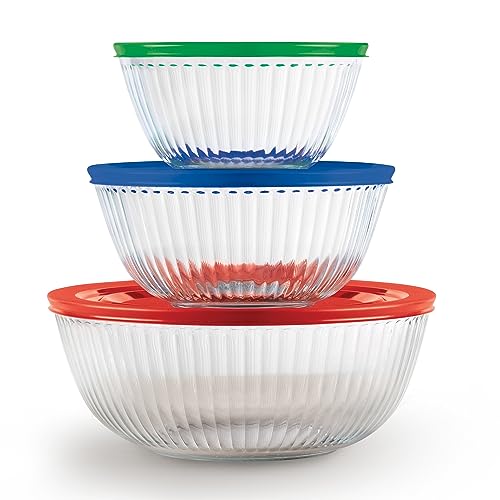
Pyrex Sculpted (3-Pack) Glass Mixing Bowls Set With Plastic Lids For Prepping, Baking and Cooking, Preheated Oven, Dishwasher, Freezer, and Microwave Safe
6-PIECE: Set includes 1.3-qt, 2.3-qt, and 4.5-qt round glass bowls with BPA Lids. This is the perfect set…
As an affiliate, we earn on qualifying purchases.
As an affiliate, we earn on qualifying purchases.

Stay Fresh Clear Storage Container – BPA Free Plastic Canister for Kitchen Pantry, Baking Needs – Holds 5LB Bag – Large Form-Fitting Food Keeper Bin – Food Holder (Flour)
FLOUR POWDER CONTAINER – Crafted with a lid that snaps close to keep food fresh. Our durable plastic…
As an affiliate, we earn on qualifying purchases.
As an affiliate, we earn on qualifying purchases.