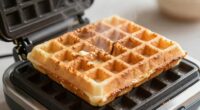
The key habit that makes every batch more consistent is ensuring you preheat your oven thoroughly before starting. This sets a stable environment, helps confirm the correct temperature with an oven thermometer, and prevents uneven baking. Avoid opening the door during baking to maintain temperature stability. Mastering this simple step keeps your baked goods evenly cooked and reliable. Keep going, and you’ll discover even more tips to perfect your baking process.

Get baking supplies delivered free with Prime
- Fast, free delivery on millions of items
- Prime Video, Amazon Music and more included
- Member-only deals all year
Key Takeaways
- Always allow the oven to fully preheat to the target temperature before baking.
- Use an oven thermometer to verify the oven has reached the correct temperature.
- Avoid opening the oven door during preheating to maintain consistent temperature.
- Set a timer to ensure proper preheating duration as per recipe guidelines.
- Maintain steady oven conditions by not adjusting temperature or opening the door during baking.
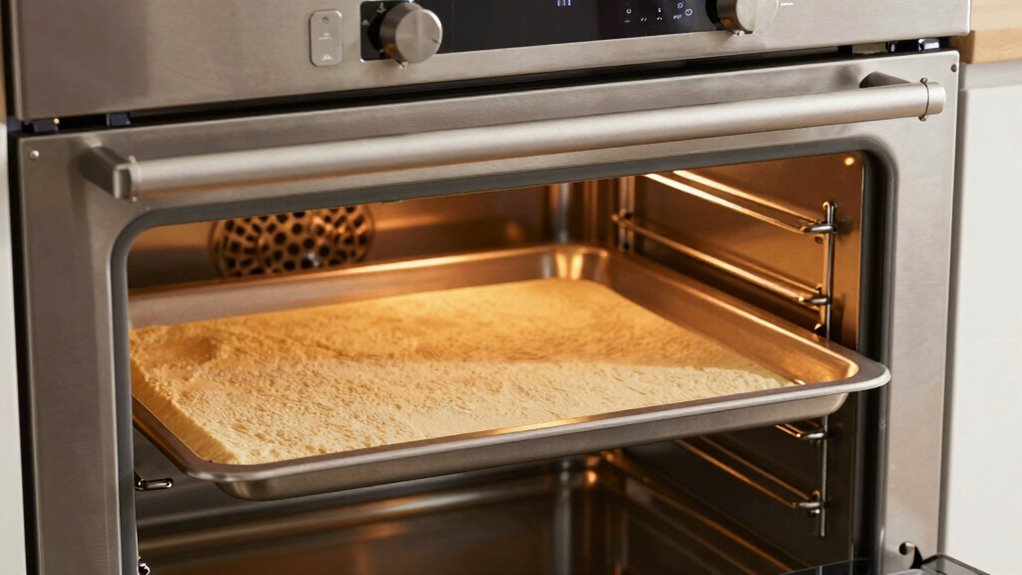
Preheating your equipment before starting a batch is essential for achieving consistent results every time. When you set your oven to the right temperature and give it enough time to heat thoroughly, you create a stable environment that guarantees your baked goods turn out just as you expect. Skipping this step often leads to uneven baking, with some parts overdone while others remain undercooked. To get it right, always check that your oven reaches the specified oven temperature before you begin. Using an oven thermometer can help you verify that the internal temperature matches the dial setting, preventing surprises and inconsistencies. Once your oven hits the right temperature, it’s *crucial* to maintain that heat throughout the baking process, which brings us to the importance of baking duration.
Baking duration is closely tied to your oven temperature. If your oven is not properly preheated, the baking time you’ve calculated might be off, leading to underbaking or overbaking. When you start with a correctly preheated oven, your baked goods will begin cooking immediately at the right temperature, ensuring that the baking duration you plan for is accurate. For example, if a recipe calls for 20 minutes at 350°F, preheating ensures this time is sufficient for even donning and rising, rather than risking a longer or shorter duration because the oven was still heating up. This consistency is especially important when baking multiple batches, as you want each to turn out similar in texture and appearance.
Furthermore, maintaining a steady oven temperature during the entire baking process is equally *vital*. Once you set it, avoid opening the oven door too frequently, as this causes temperature fluctuations that can extend or shorten the needed baking duration. Trust your preheated oven to keep a stable temperature, and keep a close eye on the clock rather than relying solely on visual cues. If you notice your baked goods are browning too fast or not enough, it might be a sign that your oven isn’t maintaining its temperature properly, which underscores the importance of preheating to the correct oven temperature initially.
As an affiliate, we earn on qualifying purchases.
Frequently Asked Questions
How Long Should I Preheat My Oven for Best Results?
You should preheat your oven for about 15-20 minutes to guarantee even cooking and accurate temperatures. Always prioritize oven safety by staying nearby and checking preheat indicators, like the light or a beep, to confirm it’s ready. Rushing can lead to uneven baking or safety issues. For best results, give your oven enough time to reach the desired temperature and double-check that the preheat indicator signals it’s fully heated before baking.
Does the Type of Oven Affect Preheating Times?
Your oven’s efficiency influences preheating times and baking consistency, much like a race car needs the right tune-up. Different oven types, whether convection or conventional, require varying preheat durations. Recognizing these differences helps you achieve consistent results. So, don’t just set a timer blindly; understand your oven’s unique needs. This awareness guarantees your baking is precise, and every batch turns out perfect—because consistency starts with knowing your oven’s true rhythm.
Can Preheating Be Skipped if I’m in a Hurry?
Skipping preheating isn’t recommended, even if you’re in a hurry, because it impacts baking quality. Instead, use quick oven preheat techniques like turning on the oven early or setting it to a higher initial temperature, then lowering it once heated. These baking speed tips help save time without sacrificing results. Remember, consistent preheating guarantees your baked goods turn out perfect every time.
What’s the Ideal Preheat Temperature for Different Baked Goods?
Did you know that 75% of home ovens are miscalibrated? For best results, aim for 350°F (177°C) for most baked goods, but adjust based on specific recipes. Always check your oven’s temperature accuracy with an oven thermometer, since calibration issues can affect baking. For delicate items like soufflés, preheat to 375°F (191°C), while cookies often need 325°F (163°C). Proper preheating guarantees consistent, delicious results every time.
How Does Preheating Influence the Texture of Baked Items?
Preheating your oven influences the texture of baked items by ensuring even heat distribution, which helps develop the right crust and crumb. Maintaining oven humidity during preheating keeps the environment moist, preventing dryness, while a properly heated baking surface promotes crispness and rise. When you preheat thoroughly, your baked goods achieve a consistent, desirable texture, whether you want a tender crumb or a crunchy crust.
Conclusion
By mastering this preheat habit, you’re revealing the secret to consistency—like warming a blank canvas before painting. It’s a simple act that transforms your batches from unpredictable to reliable, turning everyday ingredients into something special. Think of preheating as the foundation of a sturdy house; without it, everything else risks crumbling. Embrace this habit, and watch your baking rise to a new level, proof that small steps can create a lasting masterpiece.
Halloween Picks
halloween
As an affiliate, we earn on qualifying purchases.