

The waffle market is quickly evolving with new plant-based and gluten-free options that cater to your health and dietary needs. You’ll find waffles made with alternative flours like almond, chickpea, and oats, offering better nutrition without sacrificing flavor. Brands are also introducing vegan and gluten-free varieties to appeal to more consumers. If you’re curious about how these innovations are shaping the future of waffles, there’s more to uncover beyond the surface.
Key Takeaways
- Growing demand for plant-based waffles featuring ingredients like flaxseed, chia, and alternative proteins to cater to vegans and vegetarians.
- Rising popularity of gluten-free waffles made with almond, chickpea, or oat flour for consumers with sensitivities or celiac disease.
- Innovation in recipes combining health benefits with indulgent flavors, appealing to wellness-conscious and flavor-seeking customers.
- Regional and cultural influences driving development of unique, gluten-free, and plant-based waffle options inspired by local ingredients.
- Market expansion opportunities through branding and marketing of allergen-friendly, nutritious waffles to diverse consumer segments.
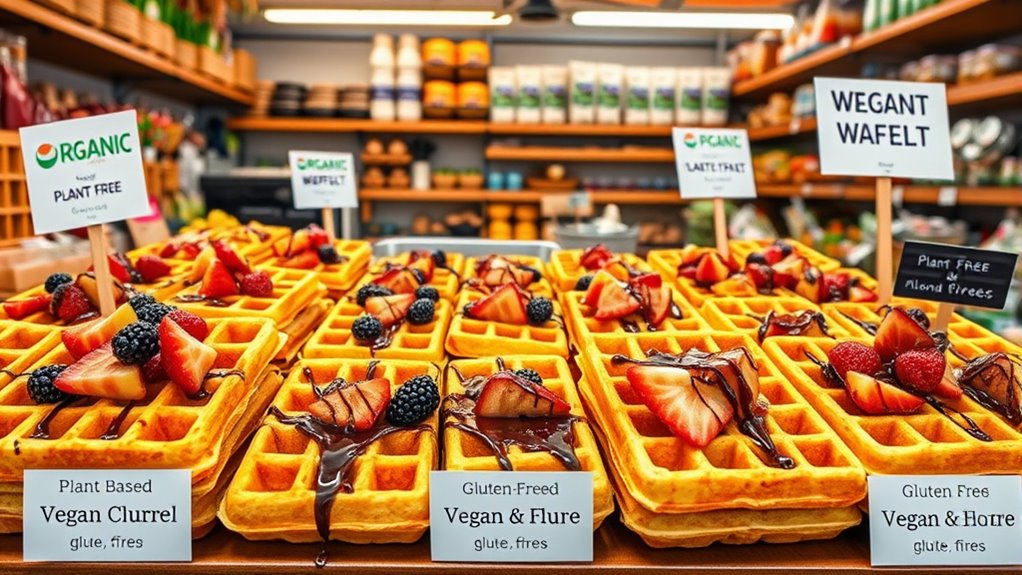
The waffle market is experiencing rapid growth as consumer preferences shift toward convenient and indulgent breakfast options. More people are seeking out waffles that not only satisfy their cravings but also align with healthier lifestyles. This has led manufacturers to experiment with healthy ingredients, creating recipes that incorporate whole grains, plant-based proteins, and natural sweeteners. Instead of traditional white flour, you’ll find options made with almond flour, chickpea flour, or oats, providing better nutritional value without sacrificing taste. These healthier ingredients appeal to health-conscious consumers who want a satisfying breakfast but also care about their overall wellness. As a result, the market is seeing a surge in products that combine indulgence with nutrition, making waffles a more versatile meal option. Additionally, local food traditions are inspiring some brands to develop waffle recipes that incorporate regional flavors and ingredients, adding a unique cultural twist to the modern waffle trend.
At the same time, flavor innovations are driving excitement in the waffle world. You no longer have to settle for plain, predictable flavors. Instead, brands are pushing boundaries with inventive combinations—think matcha, sweet potato, or black sesame. These new flavor profiles offer a fresh twist on a classic dish, attracting adventurous eaters enthusiastic to try something different. Seasonal and limited-edition flavors also keep the market dynamic, encouraging repeat purchases and exploration. This focus on flavor innovation not only enhances consumer satisfaction but also helps brands stand out in a crowded marketplace. Waffles are becoming more than just a breakfast staple—they’re evolving into a canvas for culinary creativity.
The fusion of healthy ingredients and flavor innovations is opening up new opportunities for entrepreneurs and established brands alike. You can see this in the rise of plant-based waffle options that cater to vegans and vegetarians. These products often feature ingredients like flaxseed or chia seeds to boost omega-3 content while maintaining a delicious texture. Gluten-free options are also gaining popularity, appealing to those with sensitivities or celiac disease. By offering waffles that are both healthy and innovative in flavor, brands can tap into a broader audience passionate about options that fit their dietary needs without compromising on taste. This trend reflects a broader shift toward mindful eating, where consumers want products that satisfy their palate and support their health goals.

Simple Mills Mix Pancake & Waffle, 10.7 oz
GREAT for breakfast (or anytime), satisfies sweet or savory tastes, fun family weekend cooking activity.
As an affiliate, we earn on qualifying purchases.
As an affiliate, we earn on qualifying purchases.
Frequently Asked Questions
How Do Plant-Based Waffle Ingredients Impact Nutritional Value?
Plant-based waffle ingredients enhance nutritional benefits by offering more fiber, vitamins, and minerals compared to traditional options. You benefit from better digestion and sustained energy. These ingredients are often sourced sustainably, reducing environmental impact. By choosing plant-based waffles, you support healthier eating habits and enjoy diverse, nutrient-rich flavors. Overall, they boost your diet’s nutritional profile while promoting eco-friendly ingredient sourcing.
What Are the Environmental Benefits of Gluten-Free Waffles?
Imagine your plate as a tiny eco-forest thriving with every bite. Gluten-free waffles offer significant benefits, reducing the need for resource-intensive wheat cultivation. This lowers water use and minimizes soil degradation. The gluten free benefits extend to less agricultural runoff, helping ecosystems. By choosing gluten-free options, you’re actively decreasing environmental impact, fostering a more sustainable future—one waffle at a time—while supporting healthier ecosystems and reducing your carbon footprint.
Which Regions Are Leading in Plant-Based Waffle Innovation?
You’ll find North America leading in plant-based waffle innovation, driven by regional innovation and a focus on sustainable ingredient sourcing. Companies in the U.S. and Canada prioritize locally sourced, plant-based ingredients, creating innovative products that appeal to health-conscious consumers. Europe also makes significant strides, emphasizing eco-friendly sourcing and regional culinary traditions. Together, these regions push the boundaries of plant-based waffle development, setting trends that influence global markets.
How Do Consumer Preferences Influence Gluten-Free Waffle Development?
Imagine a world where your choices shape the future—your preferences are the brushstrokes of innovation. You influence gluten-free waffle development by demanding clear gluten free labeling, which builds trust and transparency. As your awareness grows, companies focus on ingredient quality and allergen safety. This emotional connection drives progress, inspiring brands to craft waffles that honor your needs, making your health and satisfaction the heart of every gluten-free creation.
What Challenges Face the Commercialization of New Waffle Trends?
You face several challenges when commercializing new waffle trends, especially around market entry and flavor innovation. You need to stand out in a crowded market and meet evolving consumer demands. Balancing innovative flavors with cost-effective production is tricky, and ensuring product consistency is essential. Regulatory hurdles and sourcing unique ingredients also pose obstacles. Overcoming these challenges requires strategic planning, strong branding, and continuous adaptation to consumer preferences.
Simple Mills Mix Pancake & Waffle, 10.7 oz
GREAT for breakfast (or anytime), satisfies sweet or savory tastes, fun family weekend cooking activity.
As an affiliate, we earn on qualifying purchases.
As an affiliate, we earn on qualifying purchases.
Conclusion
As you explore the evolving waffle market, it’s clear that embracing plant-based and gluten-free options puts you ahead of the curve. Staying adaptable and open to new innovations helps you stay relevant in a competitive landscape. Remember, in the world of food trends, sometimes you have to roll with the punches. By doing so, you’ll turn challenges into opportunities and keep serving up what your customers crave, no matter how the market shifts.

Double Waffle Bowl Maker by StarBlue – White – Make bowl shapes Belgian waffles in minutes | Best for serving ice cream and fruit | Gift ideas 110V 50/60Hz 1200W
MULTIPLE WAFFLE BOWLS – The innovative design contains dual waffle makers allowing for cooking of two waffles at…
As an affiliate, we earn on qualifying purchases.
As an affiliate, we earn on qualifying purchases.

Miss Jones Baking Original Oat Pancake and Waffle Mix – Made with Oat Flour, Gluten Free, 10g of Protein, 100% Whole Grains (Pack of 1)
10G OF PROTEIN – Miss Jones Baking Co.'s Everyday Delicious Oat Pancake and Waffle Mix contains 10G of…
As an affiliate, we earn on qualifying purchases.
As an affiliate, we earn on qualifying purchases.