
TL;DR

Get baking supplies delivered free with Prime
- Fast, free delivery on millions of items
- Prime Video, Amazon Music and more included
- Member-only deals all year
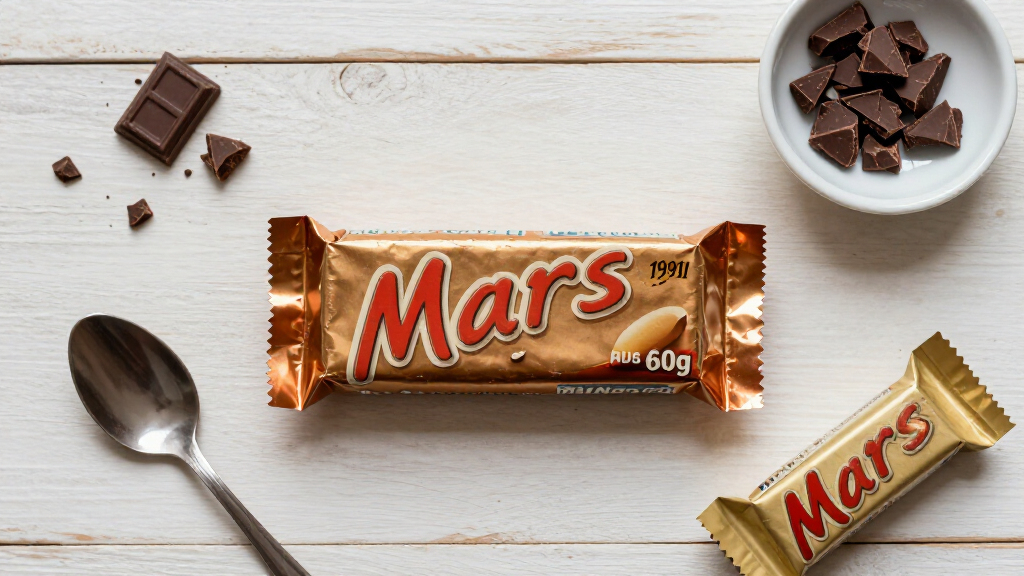
A Mars Bar from 1991 was recently found and measures 20 grams more than current versions. The discovery highlights changes in product sizing over the years. The significance and implications are still being assessed.
A Mars Bar from 1991 has been found and measures 20 grams more than the current standard size, according to sources familiar with the discovery. The find has attracted attention because it highlights how product sizes may have changed over the past three decades, making it relevant for consumers and industry observers alike.
The discovered Mars Bar was identified by a collector and measures approximately 60 grams, compared to the 40 grams typical of today’s Mars Bars. The find was confirmed by a spokesperson from the collector’s community, who stated that the bar was from the 1991 packaging era.
Experts note that product sizes and formulations often change due to manufacturing, cost, and marketing strategies. However, the specific reason for the size difference in this case remains unconfirmed. Industry insiders suggest that packaging regulations and consumer preferences may have influenced such changes over the years.
Implications of Changing Mars Bar Sizes
The discovery of a larger Mars Bar from 1991 raises questions about product consistency and consumer expectations. It may reflect broader trends in the confectionery industry, where portion sizes have been adjusted for cost efficiency or marketing. For consumers, this highlights how product experiences can vary significantly over time, affecting perceptions of value and quality.
For manufacturers, understanding these historical changes can inform branding and product development strategies. The find also fuels discussions about regulatory standards and labeling practices related to food portioning.
As an affiliate, we earn on qualifying purchases.
Historical Changes in Mars Bar Packaging
The Mars Bar has been produced since the 1930s, with packaging and size evolving over decades. In the early 1990s, the bar was typically around 60 grams, but recent versions have standardized at 40 grams. Changes in packaging laws, cost considerations, and marketing trends have contributed to this reduction.
Previous reports indicate that many confectionery products have experienced size reductions, often termed shrinkflation, over the past 20 years. The 1991 Mars Bar’s larger size now serves as a tangible example of this trend, although detailed historical packaging data is limited.
Unconfirmed Reasons Behind the Size Difference
It is not yet clear why the Mars Bar from 1991 was larger. Industry insiders suggest factors such as cost management or marketing strategies, but no official explanation has been provided by Mars or its parent companies. Further investigation is needed to confirm the reasons behind this change.
Next Steps in Understanding Product Evolution
Researchers and industry analysts plan to examine historical packaging data and company records to better understand size trends. Additionally, consumer advocacy groups may investigate whether such changes impact perceived value or consumer satisfaction. The discovery may also prompt a review of packaging regulations and labeling standards.
Key Questions
Why was the 1991 Mars Bar larger than today’s?
It is not yet confirmed why the size was larger. Industry speculation points to cost, marketing, or packaging regulations, but no official explanation has been provided.
How much did the size of Mars Bars change over the years?
Historical data suggests Mars Bars were around 60 grams in the early 1990s, but current versions are typically 40 grams, indicating a reduction of about 20 grams.
Does this discovery mean all Mars Bars were larger in the past?
Not necessarily. The find is specific to a single 1991 bar; it does not confirm that all bars from that era were larger. Variations may have existed.
Could this size difference affect the taste or quality?
Potentially, but there is no evidence to suggest that size changes directly impact taste or quality. It mainly relates to portion size and packaging.
Source: hn
Fall Picks
fall essentials
As an affiliate, we earn on qualifying purchases.