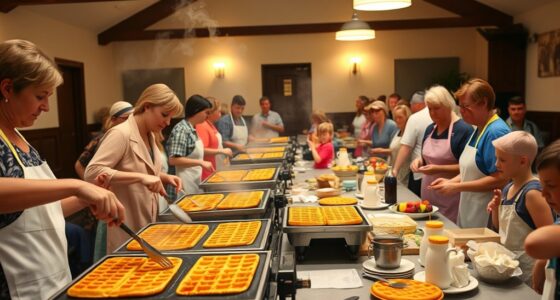

European traditions that shaped modern waffles often go unnoticed. You might not realize that centuries-old techniques from medieval and Renaissance times influenced the recipes and tools used today. Regional variations, like Belgian, French, and German styles, reflect local ingredients and culinary practices. Cast iron waffle irons helped standardize different textures and appearances. If you want to uncover how these ancient customs continue to influence your favorite treat, there’s more to discover beneath the surface.

Get baking supplies delivered free with Prime
- Fast, free delivery on millions of items
- Prime Video, Amazon Music and more included
- Member-only deals all year
Key Takeaways
- Medieval culinary practices introduced early waffle recipes and techniques that influenced later European variations.
- Regional ingredients like pearl sugar in Belgium and rye flour in Germany shaped distinctive waffle styles.
- Cast iron waffle irons from different European regions standardized textures and designs, preserving traditional methods.
- Festive occasions and cultural celebrations in France and Germany contributed to unique waffle preparations.
- Historical trade routes facilitated the exchange of recipes and tools, enriching Europe’s waffle-making heritage.
European traditions have played a crucial role in shaping the beloved modern waffle, blending centuries-old culinary practices with regional flavors. As you explore the history of waffles, you’ll notice how diverse cultures contributed their unique techniques and ingredients, resulting in a variety of regional variations that still influence contemporary recipes today. These culinary influences reflect the rich tapestry of European history, from medieval times through the Renaissance and into modern cuisine, each adding layers of flavor and tradition to the humble waffle.
European culinary traditions shaped the waffle through diverse techniques and regional flavors, enriching its history and modern varieties.
In Belgium, for example, waffles became a celebrated street food, with their crisp exterior and airy interior. This regional variation was heavily influenced by the use of specific ingredients like pearl sugar, which caramelizes during cooking to produce a sweet crunch. The Belgian waffle‘s popularity spread across Europe, but it still retains its distinctive character rooted in local culinary influences. Meanwhile, in France, the gaufre was often associated with festive occasions, and its preparation involved a slightly different batter, incorporating ingredients like butter and eggs to create a richer flavor profile. These subtle differences highlight how regional variations were shaped by available ingredients and local tastes, making each country’s waffle tradition unique.
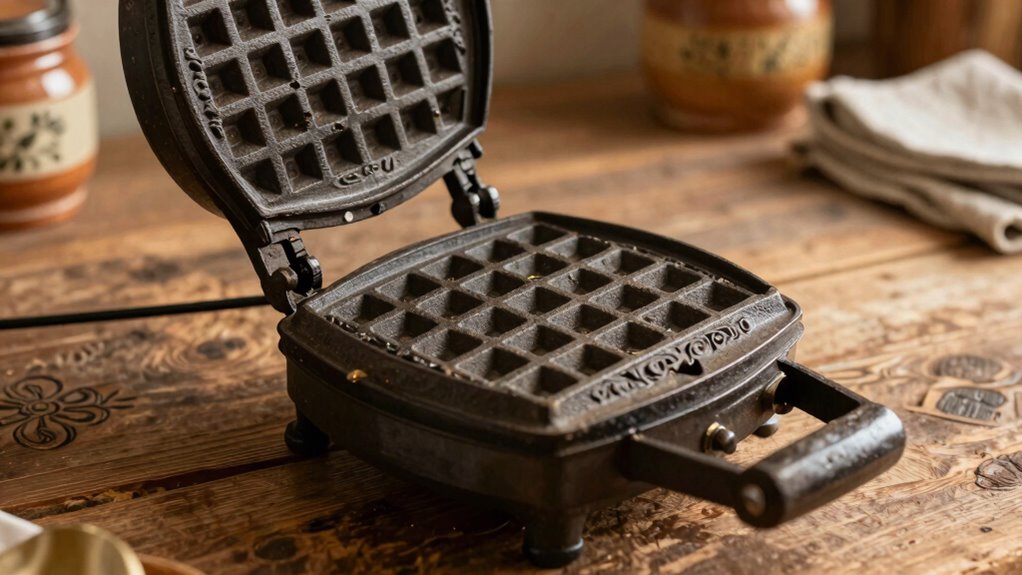
Across Central Europe, particularly in Germany, waffles took on a more robust and hearty form, reflecting the culinary influences of the region’s colder climate and grain-based diets. Here, recipes often included rye flour or added spices, emphasizing the importance of local agriculture and flavors. As you explore these regional variations, you’ll see how local ingredients and cooking methods evolved over time, influenced by trade routes, cultural exchanges, and historical events. Additionally, the development of specialized waffle irons, often made of cast iron, was instrumental in standardizing and enhancing these regional styles, rooted in European culinary traditions. Moreover, these waffle irons varied in design and size, further contributing to regional differences in texture and appearance.
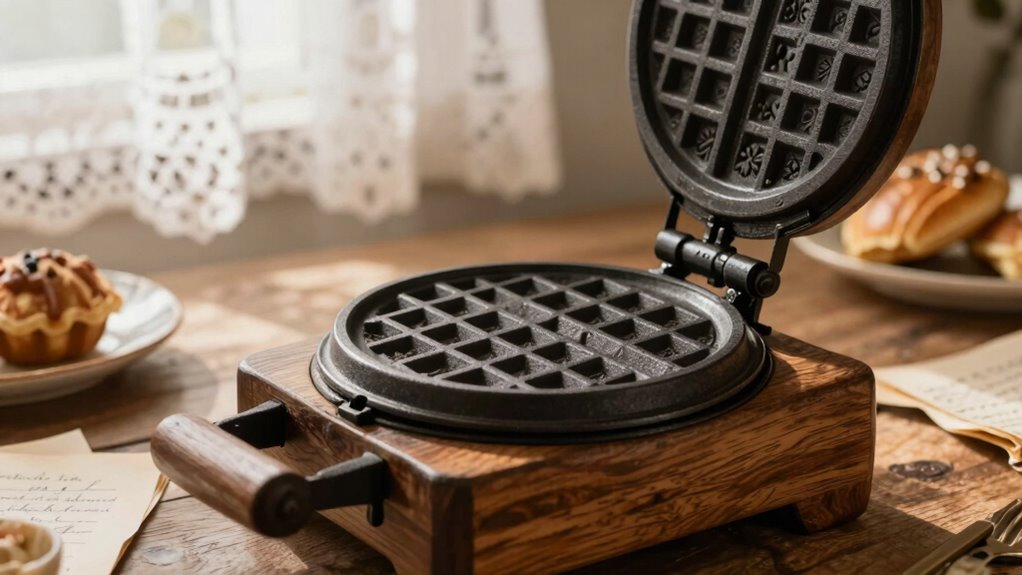
The story of waffles isn’t just about ingredients; it’s also about the techniques passed down through generations. For example, the use of specialized waffle irons, often made of cast iron, originated in various parts of Europe, each with its own design and purpose. These tools helped shape the texture and appearance of waffles, and their development was deeply rooted in regional culinary traditions. As you appreciate these nuances, you’ll realize that the modern waffle is a product of countless culinary influences, each adding complexity and character to what might seem like a simple dish. Furthermore, the evolution of waffle irons played a significant role in the development of regional styles, allowing for consistency and innovation in waffle making.
Ultimately, the forgotten European traditions behind waffles reveal a fascinating blend of regional variations and culinary influences. They remind you that behind every crispy bite lies a history rich with cultural exchange, innovation, and regional pride. These traditions continue to inspire modern chefs and home cooks alike, ensuring that the legacy of European culinary artistry lives on in every waffle you enjoy today.
As an affiliate, we earn on qualifying purchases.
Frequently Asked Questions
Which European Country First Invented the Waffle Batter Recipe?
You’ll find that Belgium is credited with inventing the waffle batter recipe, marking a significant point in culinary evolution. Historically, early versions used ancient batter mixtures with simple ingredients. Over time, these recipes evolved, influenced by regional traditions and techniques. Today’s waffles reflect this rich history, blending ancient culinary roots with modern innovations. Belgium’s contributions truly laid the foundation for the beloved, crispy waffles we enjoy worldwide.
How Did Medieval European Festivals Influence Waffle Shapes?
Medieval European festivals influenced waffle shapes through festival symbols and medieval craftsmanship, which inspired intricate, symbolic patterns. During celebrations, artisans crafted waffle irons with detailed designs representing local motifs or religious symbols. You’d notice these shapes reflected cultural stories and traditions, making waffles more than just food—they became edible art. These festival-inspired designs helped preserve regional identities and added a festive touch to everyday treats, shaping modern waffle aesthetics.
Are There Regional Variations of Traditional European Waffle Toppings?
You’ll find regional variations of traditional European waffle toppings, from sweeteners like honey and fruit in France to whipped cream and berries in Belgium. Don’t miss out on savory toppings like cheese, smoked meats, or herbs in parts of Germany. These local flavors evoke a sense of pride and history, making each bite a unique experience. Exploring these diverse toppings connects you to centuries-old traditions that still delight today.
What Tools Were Historically Used to Cook Early European Waffles?
You use a waffle iron to cook early European waffles, often made from batter mixed in simple tools like bowls or troughs. The waffle iron, usually made of cast iron, was heated over an open flame or stove, creating the crispy exterior and soft interior we associate with waffles today. This method allowed for even cooking, shaping the batter into the iconic waffle pattern that’s still popular worldwide.
How Did Religious Traditions Impact Waffle-Making Practices in Europe?
Religious traditions deeply influenced waffle-making practices in Europe by embedding cultural symbolism into their preparation. You’ll find that waffles often symbolize community and faith, especially during religious festivals like Lent or Epiphany. Religious symbolism shaped the ingredients and shapes used, reflecting spiritual themes. This connection made waffles more than just food; they became a way to celebrate faith and tradition, reinforcing cultural identity through culinary practices.
Conclusion
You might think waffles are just a simple breakfast, but their rich history shows how European traditions have shaped them into what you enjoy today. While some might see them as modern treats, they’re rooted in centuries of cultural exchange and culinary innovation. Embracing these traditions doesn’t mean you’re stuck in the past—it connects you to a delicious legacy that’s still evolving. So, next time you bite into a waffle, remember the centuries of history behind it.
Halloween Picks
halloween
As an affiliate, we earn on qualifying purchases.