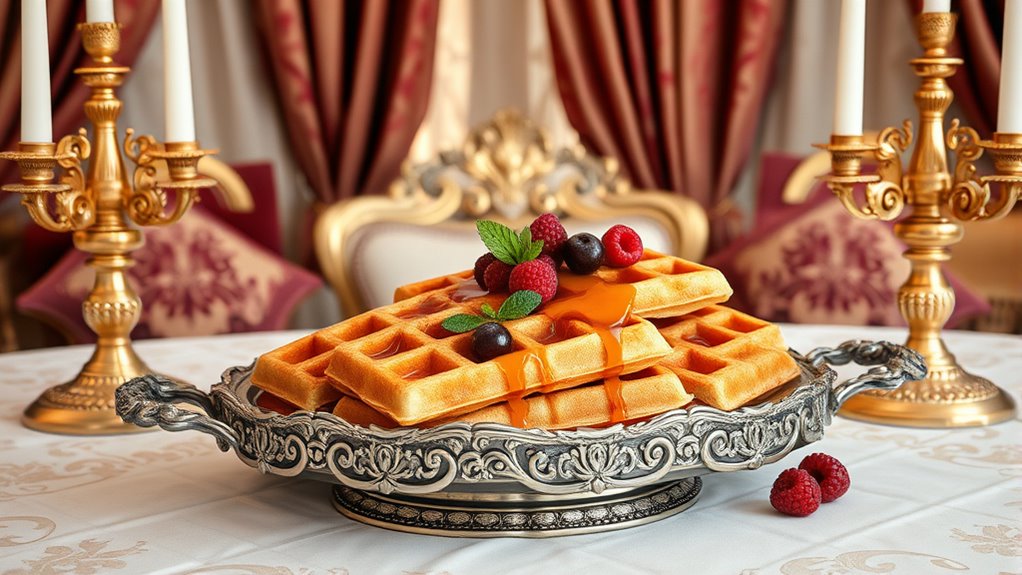

European nobility transformed waffles from simple street food into symbols of luxury and refinement. They perfected recipes using ornate molds, rich ingredients, and elegant presentation techniques to showcase status and taste. Over centuries, royal influences shaped regional variations, elevating waffles into a culinary art form admired even today. By exploring this history, you’ll discover how aristocratic traditions continue to influence modern waffle culture and appreciation. Keep going to uncover more about this regal culinary evolution.
Key Takeaways
- Waffles originated as aristocratic symbols of status during medieval European royal breakfasts.
- Nobles used ornate molds and fine tableware to elevate waffle presentation and reflect wealth.
- Regional aristocrats added local ingredients and luxurious toppings, enhancing waffles’ royal appeal.
- Noble customs emphasized elaborate presentation and refinement, transforming waffles into symbols of opulence.
- The aristocratic influence established waffles as a tradition of elegance, shaping modern perceptions of luxury cuisine.
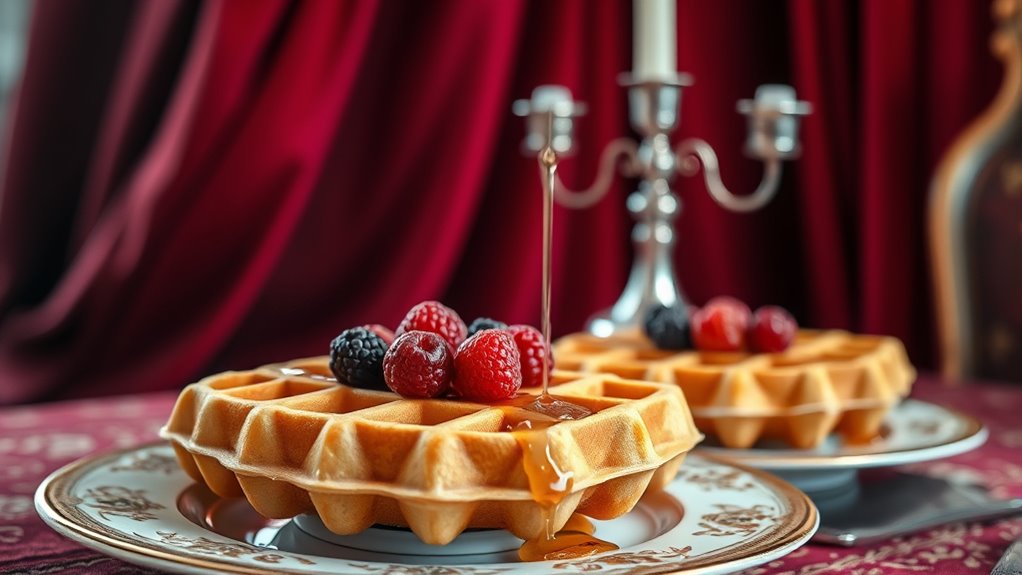
Have you ever wondered how waffles became a favorite treat among royalty? The story begins with the rich traditions of royal breakfast rituals, where breakfast was more than just a meal—it was a display of status, taste, and cultural influence. European nobility, with their sophisticated palates and appreciation for fine cuisine, played a significant role in shaping these breakfast traditions. Waffles, with their intricate patterns and delightful texture, fit perfectly into this aristocratic culinary influence. They weren’t just simple fare; they became symbols of elegance and refinement, often served at grand morning gatherings in palaces and castles.
Waffles became symbols of elegance, served at royal gatherings to showcase aristocratic refinement.
During the Middle Ages and Renaissance periods, the aristocracy was heavily involved in culinary innovation. They sought out new recipes that could impress guests and reflect their social standing. Waffles, originating from medieval Europe, evolved through this aristocratic culinary influence. The use of ornate iron molds and the presentation of waffles on fine porcelain plates elevated them from street food to a luxurious breakfast item. Nobles would host elaborate breakfasts, showcasing their wealth through the variety and presentation of dishes, including these patterned, golden-brown treats. Over time, waffles became intertwined with royal breakfast traditions, symbolizing a taste of opulence and exclusivity.
As European courts embraced the waffle, they adapted recipes to suit their tastes and ingredients. French, Belgian, and Dutch aristocrats each added their own touches—rich creams, fresh fruit, and decadent syrups—further cementing waffles as a regal indulgence. The influence of aristocratic kitchens spread across borders, turning waffles into a versatile dish that could reflect local flavors while maintaining its royal appeal. The presentation was essential; serving waffles in ornate silverware or with elaborate toppings became a hallmark of noble breakfast tables. This tradition of elevating simple ingredients into culinary art was a direct result of aristocratic influence, which prioritized aesthetics and luxury. Additionally, the use of ornate kitchenware and refined techniques further distinguished noble breakfast customs.
Today, the legacy of royal breakfast traditions persists in how we enjoy waffles. Despite their humble origins, they still carry echoes of their aristocratic past. When you indulge in a waffle, you’re partaking in centuries of culinary evolution shaped by European nobility’s desire for refinement. Their influence made waffles more than just a morning meal; it made them a symbol of sophistication and tradition that continues to delight people around the world. The history of waffles, intertwined with royal tastes and aristocratic culinary influence, reminds us that even the simplest foods can carry a legacy of elegance and cultural significance.
ornate waffle iron with intricate patterns
As an affiliate, we earn on qualifying purchases.
As an affiliate, we earn on qualifying purchases.
Frequently Asked Questions
Which European Royal Families Popularized Waffle Recipes Historically?
You should know that French and Belgian royal families popularized waffle recipes through royal chef collaborations and noble culinary innovations. The Belgian monarchy, in particular, helped turn waffles into a beloved treat, encouraging chefs to experiment and refine recipes. These royal influences spread across Europe, making waffles a symbol of elegance and indulgence. Their patronage and innovations truly shaped how waffles are enjoyed today, blending aristocratic tradition with everyday delight.
How Did Noble Tastes Shape Traditional Waffle Ingredients?
You know what they say, “You are what you eat.” Noble tastes shaped traditional waffle ingredients by inspiring culinary innovations, incorporating luxury ingredients like fine honey, exotic spices, and rich creams. These aristocratic preferences elevated simple recipes into luxurious treats, influencing chefs to experiment and refine waffle recipes. Your appreciation for gourmet ingredients today traces back to these noble influences, showing how their refined palates transformed everyday dishes into symbols of elegance.
Were There Any Royal Bans or Restrictions on Certain Waffle Recipes?
Yes, there were royal culinary restrictions and noble recipe bans that affected waffle recipes. You might find that some ingredients, like exotic spices or costly toppings, were forbidden or limited to maintain social hierarchy. Nobles often imposed these bans to preserve exclusivity and status, which meant certain waffle variations were reserved for the elite. These restrictions shaped how waffles evolved, making some recipes royal secrets or symbols of wealth.
How Did Royal Events Influence Waffle Presentation and Serving Styles?
Imagine a grand event where the table’s centerpiece is a meticulously crafted waffle. Royal events influence waffle presentation by elevating plate presentation and choosing elegant serving utensils, turning simple breakfast into a spectacle. You’re likely to see ornate platters, silver tongs, and garnishes that reflect prestige. These touches create a sense of occasion, transforming waffles from everyday fare into regal delights, all while emphasizing sophistication and tradition.
Are There Specific Waffles Named After European Monarchs or Noble Families?
Yes, some waffles are named after European monarchs or noble families, reflecting royal culinary traditions and noble dessert innovations. For instance, the “Liege waffle” is linked to Belgian royalty, showcasing rich, sweet toppings favored by nobility. These names honor historical figures or regions, emphasizing their influence on culinary history. By naming waffles after noble families, chefs celebrate their legacy and preserve royal culinary traditions in modern desserts.
luxury Belgian waffle maker
As an affiliate, we earn on qualifying purchases.
As an affiliate, we earn on qualifying purchases.
Conclusion
You might find it fascinating that nearly 60% of traditional European waffle recipes were influenced by noble tastes. As you explore history, you’ll see how royalty’s preferences shaped common dishes, making them more luxurious. So next time you enjoy a waffle, remember it’s not just breakfast—it’s a royal legacy. Your simple treat carries centuries of aristocratic influence, blending history with your everyday life in a delicious way.
antique silver waffle serving platter
As an affiliate, we earn on qualifying purchases.
As an affiliate, we earn on qualifying purchases.
decorative waffle molds for special occasions
As an affiliate, we earn on qualifying purchases.
As an affiliate, we earn on qualifying purchases.