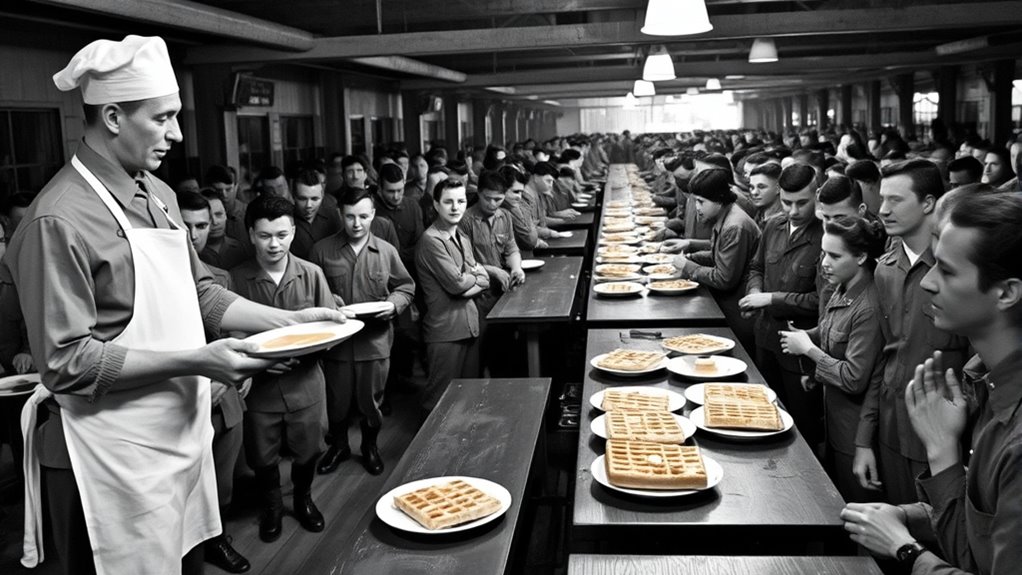

During WWII, waffles played a surprising role in boosting troop morale and supporting wartime efforts. Canteens served them as a comforting treat that symbolized resilience and normalcy amidst chaos. Soldiers and civilians used creative recipes to stretch limited supplies, making waffles a symbol of resourcefulness. Additionally, espionage agents covertly sent messages inside waffle batter or packaging, turning an everyday food into a secret communication tool. Learn more about how simple foods impacted wartime strategies and morale.
Key Takeaways
- Waffles served as morale-boosting comfort food for troops and civilians during WWII canteen services.
- Wartime rationing led to creative waffle recipes utilizing limited ingredients like flour, eggs, and milk.
- Waffles symbolized resilience and normalcy, helping maintain troop spirits in military canteens.
- They were used as covert communication tools, with hidden messages in batter or packaging.
- Waffle consumption promoted resourcefulness and collective effort, supporting the war effort on the homefront and in canteens.

During times of conflict, even the simplest comforts, like a warm waffle, can become powerful symbols of peace and resilience. “Waffles and War” explores how this beloved breakfast food has played unexpected roles in wartime history, from serving as morale boosters to covert tools in espionage. When you think about WWII, you might imagine rationing and homefront sacrifices more than breakfast treats, but waffles played a surprising part in both areas.
During wartime, waffles symbolized resilience, morale, and even covert espionage efforts beyond their breakfast table role.
Ration strategies became central to the war effort, and food supplies were carefully controlled to ensure enough resources for soldiers and civilians. Waffles, made from basic ingredients like flour, eggs, and milk, were often part of these rationed menus. To stretch limited supplies, households and canteens adopted creative recipes, substituting ingredients or reducing portions. This meant that waffles, once a decadent breakfast, became a modest but morale-boosting staple for many families. Serving waffle breakfasts at home or in military canteens reminded people of normalcy and comfort amidst chaos. Despite the restrictions, finding ways to enjoy familiar foods helped sustain morale on the homefront, making sacrifices more bearable.
On the homefront, the sacrifices extended beyond just rationing. People contributed by growing victory gardens, conserving sugar, and reducing waste, all to support the war effort. Waffles, simple yet satisfying, became a symbol of these collective sacrifices. Women, in particular, played an essential role in maintaining food supplies, often experimenting with wartime recipes to ensure families could still enjoy comforting meals. These small acts of ingenuity helped boost spirits and foster a sense of unity.
In addition to their role in morale, waffles also found a covert purpose during the war. Espionage agents used waffle recipes and ingredients as cover for secret communications. For example, messages could be hidden inside waffle batter or concealed in the packaging of waffle-related supplies. Such clever tactics turned an everyday food into a tool for covert operations, proving that even the most innocent snacks could serve as espionage assets. Recognizing the importance of food-based covert communication, spies employed various creative methods to transmit information securely.
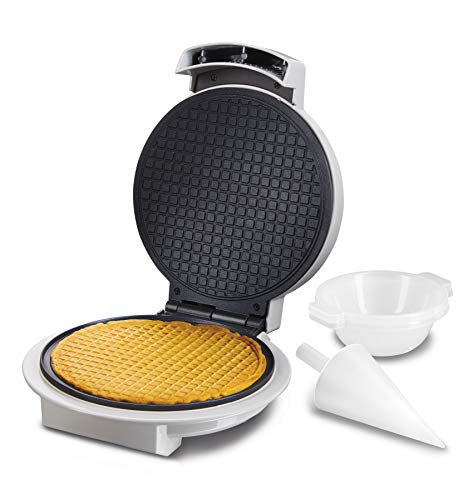
Proctor Silex Waffle Cone and Ice Cream Bowl Maker with Browning Control, Shaper Roller and Cup Press, 7.5” PFAS-Free Nonstick Plates, White (26410MN)
COOKS CRISP BUTTERY SUGAR CONES AND BOWLS QUICKLY IN 2-3 MINUTES 800 watts of power cooks batter fast…
As an affiliate, we earn on qualifying purchases.
As an affiliate, we earn on qualifying purchases.
Frequently Asked Questions
How Did Wartime Rationing Affect Waffle Ingredients?
Wartime rationing considerably impacted waffle ingredients by causing shortages and forcing ingredient substitutions. You might find that flour, sugar, and eggs became scarce, leading you to use alternatives like powdered milk or other substitutes. Rationing limited your access to typical ingredients, so bakers had to get creative, adjusting recipes to make do with available supplies. These changes helped guarantee everyone still enjoyed waffles despite the challenging wartime shortages.
Were Waffles Used for Morale-Boosting Among Troops?
You’d find that waffles played a role in boosting soldier morale by offering food comfort during tough times. Soldiers appreciated familiar treats, and waffles provided a sense of normalcy amidst chaos. By serving warm, comforting waffles, you help lift spirits and foster camaraderie, making the war effort a bit more bearable. These moments of indulgence reminded troops of home, strengthening their resolve and sense of unity.
Did Different Military Branches Have Unique Waffle Recipes?
You might wonder if different military branches had unique waffle recipes. While military culinary efforts aimed to boost morale, specific historical recipes for waffles varied across branches. These variations reflected regional tastes and available ingredients, making each recipe somewhat distinct. So, yes, some branches experimented with their own versions, tailoring their waffle recipes to suit their troops’ preferences and circumstances, which added a personal touch to their culinary traditions.
How Did Waffle Preparation Adapt to Field Conditions?
Imagine you’re in a WWII field kitchen, where waffle preparation had to adapt quickly. You’d rely on waffle batter modifications to make it more durable and easier to cook with limited resources. Portable waffle equipment, like compact irons, allowed you to produce waffles on the go, even in tough conditions. This innovation guaranteed soldiers could enjoy warm meals, boosting morale during challenging times.
Were Waffles Considered a Luxury or Standard Meal During WWII?
You might wonder if waffles were seen as a luxury or a standard meal during WWII. Waffles generally held a luxury status, enjoyed during special occasions, rather than being an everyday staple for troops. Due to rationing and limited ingredients, soldiers mostly ate simple, practical foods. So, waffles weren’t part of the regular diet; they were more of a treat, emphasizing their status as a luxury during wartime.

GoShambar Blank Recipe Book To Write In Your Own Recipes, Leather Recipe Notebook, Recipe Journal Hold 150 Recipes(Long Recipes & Short Recipes) (Brown)
The Complete Set: This cooking journal comes in an A5 format (6.5“x9.0“). Includes: 1 page kitchen measurement, 4…
As an affiliate, we earn on qualifying purchases.
As an affiliate, we earn on qualifying purchases.
Conclusion
As you imagine the bustling canteens, the scent of warm waffles fills the air, offering comfort amidst chaos. You see soldiers gathering, plates clutched tightly, smiles breaking through wartime tension. Those simple waffles, golden and crispy, became more than food—they were a reminder of home and hope. In every bite, you taste resilience and unity, fueling the fighters who carried the world through darkness. Waffles and war, forever intertwined in history’s rich, comforting fabric.

Fun Food Friends Mini Waffle Maker- 7 Different Kawaii Style Design Pan Cakes Feat. Avocado Pizza Ramen Taco & More- Cool Electric Nonstick Waffler Iron, Morning Breakfast w Recipes – Kids Easter Gift
Kawaii Snacks Waffle Maker Iron – Make 7 adorable food shaped waffles featuring a taco, avocado, unicorn shake,…
As an affiliate, we earn on qualifying purchases.
As an affiliate, we earn on qualifying purchases.

Military Outdoor Clothing New 2 Qt OD Canteen with Used 2 Qt OD Canteen Cover with Strap – K1025
Genuine US Military Issued Surplus
As an affiliate, we earn on qualifying purchases.
As an affiliate, we earn on qualifying purchases.