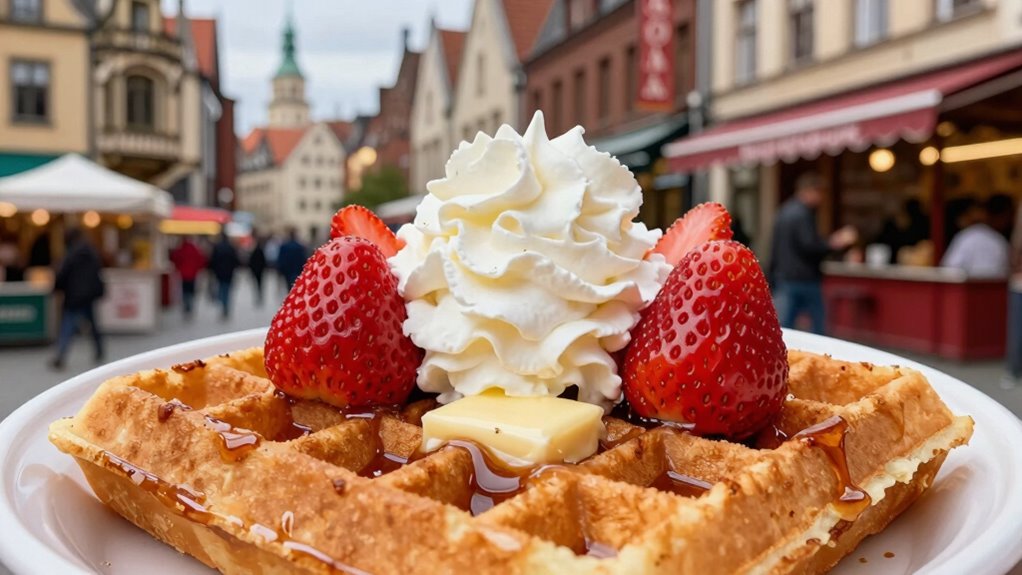

You’ll discover that Belgian waffles symbolize different things around the globe because each country adapts them to local tastes, ingredients, and traditions. In Belgium, they’re a simple breakfast enjoyed leisurely, while in the US, they’re decadent brunch treats with rich toppings. Other regions incorporate waffles into cultural celebrations or personal culinary twists, reflecting their unique identities. If you keep exploring, you’ll find how these variations reveal the rich cultural stories behind each waffle style.

Get baking supplies delivered free with Prime
- Fast, free delivery on millions of items
- Prime Video, Amazon Music and more included
- Member-only deals all year
Key Takeaways
- Regional ingredients and culinary traditions influence how waffles are prepared, served, and perceived worldwide.
- Cultural customs and historical origins shape the significance and style of waffles in different countries.
- Variations in toppings and presentation reflect local tastes, ingredients, and social habits.
- Waffles have evolved from simple treats to diverse dishes, blending breakfast, dessert, and comfort food traditions globally.
- The adaptability of waffles allows each culture to assign unique meanings and significance to this versatile food.
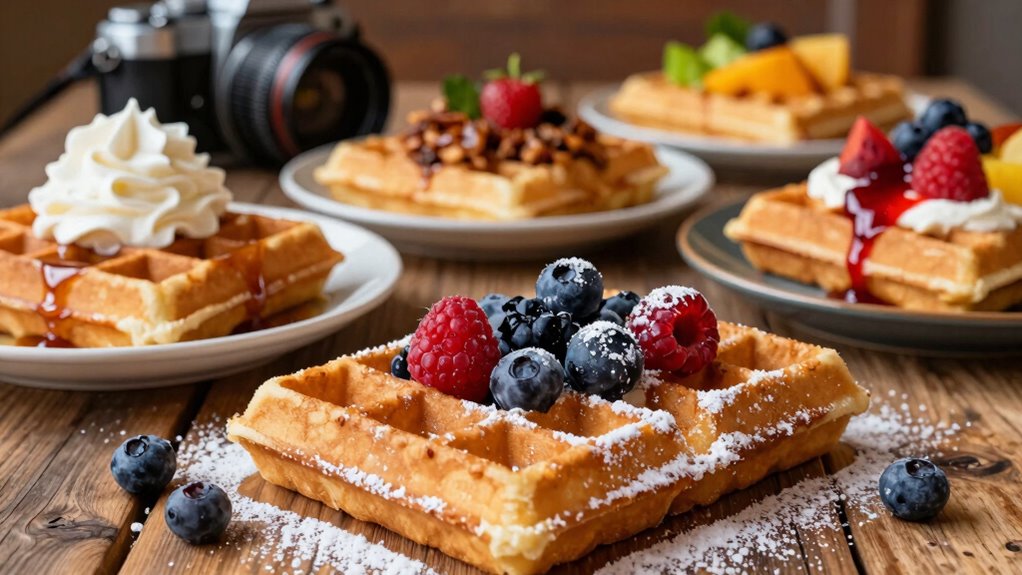
Belgian waffles have become a beloved treat enjoyed worldwide, thanks to their crisp exterior and fluffy interior. But the way people enjoy them varies greatly from country to country, reflecting local tastes, ingredients, and breakfast traditions. In some places, the toppings you choose can define the experience, transforming a simple waffle into a cultural symbol. For example, in Belgium, waffles are often served plain or with modest toppings like powdered sugar and whipped cream, emphasizing their natural sweetness and texture. They’re a staple at breakfast traditions, enjoyed leisurely with family or friends, and often paired with hot beverages like coffee or hot chocolate.
Belgian waffles are enjoyed worldwide with simple toppings, highlighting their natural sweetness and cozy breakfast traditions.
In the United States, Belgian waffles have taken on a more elaborate persona. Here, waffle toppings are often piled high with fresh fruit, syrup, butter, or even whipped cream. The American take on waffles emphasizes indulgence, making breakfast a hearty, customizable affair. Waffles are commonly served as a weekend treat or special brunch item, where the focus is on creating a visually appealing, decadent meal. You might find waffles topped with strawberries and blueberries, drizzled with maple syrup, or layered with savory ingredients like fried chicken, blurring the line between breakfast and comfort food.
Across Europe, breakfast traditions influence how waffles are enjoyed. In France, for instance, waffles are often lighter and thinner, served alongside yogurt or fresh fruit, emphasizing a refined approach to breakfast. Meanwhile, in Scandinavian countries, waffles are often heart-shaped and served with jam, sour cream, or cheese, reflecting local dairy and berry traditions. These regional variations show how waffles adapt to local ingredients and customs, becoming more than just a breakfast item—they become an expression of cultural identity. Additionally, these regional variations highlight how local ingredients shape traditional serving styles and preferences. You might also notice how regional customs influence the presentation and accompaniments of waffles, further emphasizing their cultural significance. The historical origins of waffles have influenced regional styles and recipes, adding depth to their cultural importance. Moreover, the evolution of waffle recipes over time demonstrates how culinary practices adapt to changing tastes and available resources.
In some countries, waffles are even integrated into dessert traditions, blurring the lines between breakfast and sweet snack. In parts of Africa, for example, waffles might be coated in honey or caramel, enjoyed as a sweet treat at any time of day. The toppings and serving styles mirror the local palate and available ingredients, highlighting how versatile these waffles are in different culinary contexts. Moreover, the adaptability of waffles allows them to be incorporated into diverse cuisines and celebrations around the world. So, when you think of Belgian waffles, remember they’re more than just a breakfast staple—they’re a reflection of local traditions, preferences, and creativity, shaping how they’re enjoyed around the world.
Belgian waffle maker with deep pockets
As an affiliate, we earn on qualifying purchases.
As an affiliate, we earn on qualifying purchases.
Frequently Asked Questions
How Did Belgian Waffles Become Popular Internationally?
You see, Belgian waffles became popular internationally through clever marketing strategies and cultural influences. Tourists visiting Belgium spread their love for these waffles, sharing photos and recipes worldwide. International food festivals and media exposure also played roles. Plus, the unique texture and toppings appealed globally. These factors combined to make Belgian waffles a beloved treat across many countries, turning them into an iconic symbol of Belgian cuisine and culinary culture.
Are There Regional Variations in Belgian Waffle Recipes?
You’ll find that regional flavor and cultural adaptations shape Belgian waffle recipes worldwide. For example, in Belgium, waffles are light and airy with a crisp exterior, while in the U.S., they often feature denser batter and richer toppings. These variations reflect local tastes and ingredients, making each waffle unique. With over 10 million waffles consumed annually in some countries, it’s clear that regional differences keep this treat exciting and diverse globally.
What Ingredients Distinguish Belgian Waffles From Other Types?
You’ll notice that Belgian waffles are distinguished by their rich waffle batter, which often includes beaten egg whites for extra fluffiness. They also feature deeper grids, perfect for holding topping varieties like whipped cream, fruit, or syrup. Unlike other waffles, Belgian ones are typically made with yeast or baking powder, giving them a light, airy texture. This combination of batter and toppings makes Belgian waffles uniquely indulgent and versatile.
How Do Serving Styles Differ Across Countries?
You’ll notice that serving styles vary across countries, reflecting unique cultural presentations and serving traditions. In Belgium, waffles are often served plain or topped with whipped cream and fruit, emphasizing their texture. In the US, they’re typically topped with syrup, butter, or even fried chicken. Meanwhile, in some countries, waffles may be part of breakfast buffets or street food stalls. These differences highlight how cultural presentation shapes each country’s waffle experience.
Are Belgian Waffles Considered a Traditional Dish Worldwide?
Belgian waffles aren’t considered a traditional dish worldwide, but they hold strong cultural perceptions and culinary symbolism, especially in Belgium. You’ll find them celebrated as a national specialty, often associated with festive occasions and street food. In other countries, they might be viewed more as a decadent treat or breakfast item rather than a cultural staple. Their global popularity highlights how culinary symbolism varies, shaping local perceptions of what’s considered traditional.
Conclusion
No matter where you travel, Belgian waffles will practically teleport your taste buds to a world of pure, sweet magic! From fluffy, syrup-laden stacks to crispy, chocolate-drizzled masterpieces, these waffles are more than just breakfast—they’re an international celebration of flavor that can turn any ordinary moment into an extraordinary adventure. So next time you indulge, remember: Belgian waffles aren’t just food—they’re a global phenomenon that can make your day feel like a delicious, waffle-filled dream come true!
Fall Picks
fall essentials
As an affiliate, we earn on qualifying purchases.