
If you’re out of all-purpose flour, try using a combination of whole wheat or spelt flour for a hearty flavor and dense crumb, or almond flour for a nutty taste and added moisture, though you may need extra eggs or binding agents. Coconut flour can work too, but use less and add more liquids. Mixing gluten-free or whole grain flours can improve texture, helping you make delicious waffles without the usual ingredients. Keep exploring for more tips to perfect your batter.

Get baking supplies delivered free — and shop member deals
- Fast, free delivery on millions of items
- Access to Prime Big Deal Days deals on October 6–7
- Prime Video, Amazon Music and more included
Key Takeaways
- Use almond flour for a nutty flavor and moist texture, but add extra eggs for lightness.
- Substitute with whole wheat flour for a hearty, nutrient-rich waffle with a denser crumb.
- Try spelt or rye flour to add complex, nutty flavors while maintaining similar baking properties.
- Mix gluten-free flours like rice or oat flour with binding agents to mimic all-purpose results.
- Incorporate cornstarch or xanthan gum to improve structure and prevent crumbliness when swapping flours.
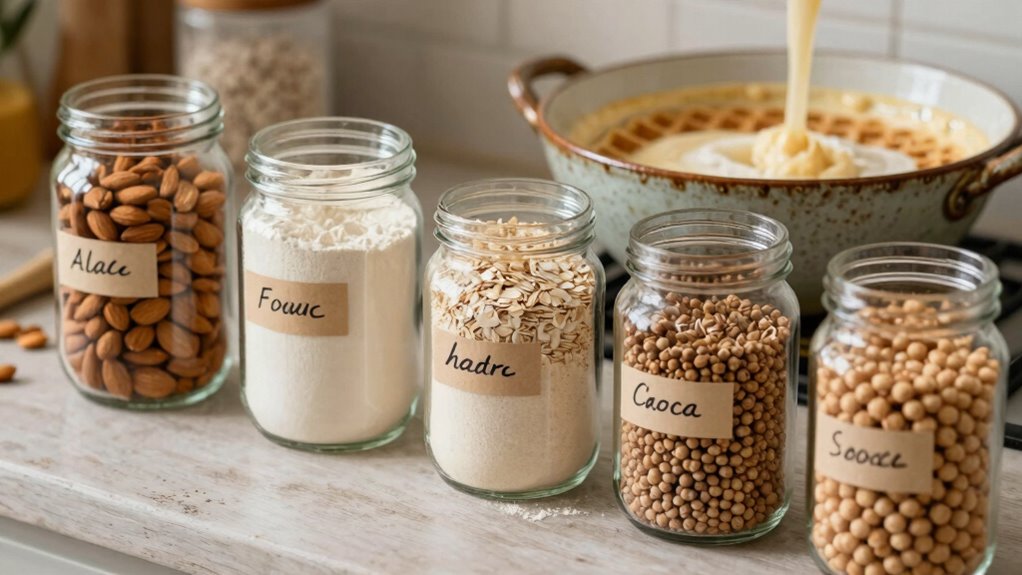
When making waffles, using the right flour can considerably impact their texture and flavor. If you’re out of all-purpose flour, don’t worry—there are plenty of effective swaps that can still give you delicious results. One of the most common alternatives is gluten-free options, which cater to dietary restrictions while maintaining the light, crispy texture you want in waffles. Almond flour, for example, adds a nutty flavor and moisture, but it can make your batter denser. To counteract this, you might mix it with a gluten-free blend or add an extra egg. Coconut flour is another gluten-free choice, but it absorbs a lot of moisture, so use less and increase your liquids to keep the batter from becoming too thick. These gluten-free alternatives are excellent if you’re avoiding gluten but still want fluffy, flavorful waffles. Additionally, understanding the absorption rates of different flours can help you fine-tune your recipes for perfect results. Using a flour substitution can make the process even easier and help you achieve consistent results. If you’re looking to boost the nutritional profile of your waffles, whole grain options are a fantastic choice. Whole wheat flour is the most straightforward substitute, offering a hearty flavor and denser crumb that many find delicious. It adds fiber and nutrients while still providing a familiar taste. For a more complex, nutty flavor, consider using spelt or rye flour. These whole grain options can change the texture slightly, making your waffles more substantial, but they still work well with traditional waffle recipes. You might need to adjust the liquids or leavening slightly because whole grain flours tend to absorb more moisture, but the result is a wholesome, satisfying waffle. You can also combine these alternatives to customize your waffles. For example, mixing half whole wheat flour with half gluten-free blend can balance flavor, texture, and dietary needs. Remember that each flour type has different absorption rates and flavors, so some experimentation may be necessary. When using gluten-free or whole grain options, it’s often helpful to increase the leavening agents slightly to ensure your waffles rise properly. Keep in mind that some flours, like coconut or almond, may require additional binding agents such as eggs or xanthan gum to achieve the right consistency. Knowing the properties of different flours can further help you tailor your recipes for the best results. For instance, understanding moisture absorption helps prevent over- or under-thickening your batter. With a little adjustment, these flour swaps can help you make waffles that are just as delicious—if not more so—than your usual batch, even when you’re out of all-purpose flour.
As an affiliate, we earn on qualifying purchases.
Frequently Asked Questions
Can Gluten-Free Flours Be Used for Waffle Recipes?
Yes, you can use gluten-free options for waffle recipes. Gluten-free flours like almond, rice, or coconut flour work well, especially when combined in alternative flour blends. These blends mimic the texture and flavor of traditional flour, ensuring your waffles stay fluffy and delicious. Just remember to adjust liquids and leavening agents as needed, since gluten-free flours behave differently. Experimenting with different blends helps you find your perfect waffle consistency.
How Does Flour Type Affect Waffle Texture and Flavor?
Flour type directly influences your waffle’s crispness and flavor variations. Using all-purpose flour gives a classic, balanced texture with reliable crispness. Whole wheat adds a hearty flavor and denser texture, while rice or corn flours can create lighter or crisper waffles. Experimenting with different flours allows you to customize your waffles’ flavor profiles and achieve the perfect crispness, matching your preference for texture and taste in every batch.
Are There Health Benefits to Using Alternative Flours?
Switching to alternative flours opens a treasure trove of health benefits and ingredient diversity. You’ll harness incredible nutritional advantages, like more fiber, antioxidants, and healthy fats, transforming your waffle game into a powerhouse of wellness. Each unique flour, from almond to coconut, offers distinct benefits that can boost digestion, stabilize blood sugar, and support overall health. Embracing these swaps makes your breakfast not only tastier but also a smart choice for your well-being.
Can I Substitute Almond Flour in a Waffle Batter?
Yes, you can substitute almond flour in waffle batter. Almond flour substitution adds a nutty flavor and creates a slightly denser texture, which can lead to a unique waffle flavor variation. Keep in mind that almond flour lacks gluten, so you might want to add a little extra egg or baking powder to help with binding and rise. Experimenting with almond flour can give you delicious, flavorful waffles with a different twist.
Do Different Flours Impact Cooking Time or Temperature?
Different flours can dramatically impact your waffle’s cooking time and temperature—sometimes more than you’d expect! Heavier flours like whole wheat may require longer cooking to develop gluten properly and reach the desired crispiness, while lighter flours caramelize faster, altering the browning process. You might need to tweak your temperature to prevent burning or undercooking, ensuring the caramelization process happens just right without sacrificing gluten development for that perfect waffle.
Conclusion
When you run out of all-purpose flour, don’t stress—these swaps can save your waffle game! Did you know that using alternative flours can sometimes boost fiber content by up to 20%, making your breakfast healthier? Whether it’s almond or oat flour, each option adds a unique flavor and texture. So next time, get creative and experiment—your perfect waffle might just come from an unexpected ingredient!
Fall Picks
fall essentials
As an affiliate, we earn on qualifying purchases.




![Bread 🍞 [Bonnymama7]](https://thewaffleaffair.com/wp-content/uploads/2026/09/bread-bonnymama7-featured-260x140.jpg)