
TL;DR
An FDA report says a Salmonella Oranienburg outbreak sickened 99 people and hospitalized 22, with illnesses associated with Mexican-style restaurants in the Midwest. The heavily redacted report describes a traceback involving six points of sale and a packing house and farms, but does not identify the businesses or establish a confirmed source.
A heavily redacted Food and Drug Administration report says a Midwest outbreak of Salmonella Oranienburg sickened 99 people, including 22 who were hospitalized, and was associated with Mexican-style restaurants. The report does not name the restaurants, packing house or farms examined in the investigation, leaving consumers unable to identify the businesses involved from the public document.

Get baking supplies delivered free with Prime
- Fast, free delivery on millions of items
- Prime Video, Amazon Music and more included
- Member-only deals all year
The FDA report says the agency’s Emergency Response Coordinator notified its outbreak investigation arm about the illness cluster on June 29. State partners were investigating a subcluster associated with a local restaurant, according to the executive summary. Restaurant names and other details in that account are blacked out.
Investigators requested recipes, supplier details and distribution information from restaurant representatives, the report says. The FDA also conducted a traceback investigation covering six points of sale and multiple commodities. The document says the traceback identified growers across six supply-chain paths that converged at a packing house and a grower, whose names are redacted.
The FDA report describes implicated lots with harvest dates from April 28 to May 7. It says lots harvested on different days were mixed in outgoing shipments. Because the traceback paths converged at a grower but investigators did not have microbiological evidence matching the outbreak strain, the report says the product was designated a suspect vehicle—not a confirmed source.
Why the Redactions Matter
The report documents a substantial outbreak—99 illnesses and 22 hospitalizations—but the redactions prevent readers from seeing which restaurants and suppliers were investigated. That limits the public’s ability to understand where the implicated food may have been served or how investigators connected the cases to the supply chain.
The distinction between a suspected vehicle and a confirmed source also matters. The report describes a traceback convergence, but says investigators lacked matching microbiological evidence. The findings therefore point to a possible supply-chain route without publicly establishing that a named farm, packing house, restaurant or specific product caused the illnesses.
Products Worth Considering

De'Longhi Magnifica Start Automatic Espresso Machine with Milk Frother, Silver
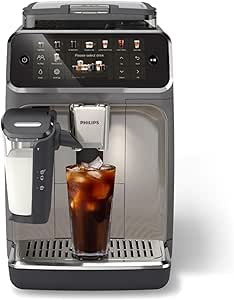
Philips 5500 Series Fully Automatic Espresso Machine with LatteGo Milk System

Weber Q 1400 Portable Electric Grill, Gray
As an affiliate, we earn on qualifying purchases.
How Investigators Traced the Food
The investigation combined state partners’ restaurant-related inquiries with the FDA’s traceback work. According to the executive summary, investigators gathered recipes and supplier and distribution records from restaurant representatives, then traced commodities through six paths linked to different points of sale.
The FDA also inspected farms identified during the traceback. The report says that inspection took place outside the growing season and closed on August 28. It recommends another inspection during the next growing season, with sampling. The agency provided the firm with an FDA Form 4056 documenting multiple sanitation observations, according to the report. The redactions obscure the identities of the farms and the full details of those observations.
“State partners were investigating a subcluster of illnesses associated with a local (redacted) (redacted) restaurant, and illnesses in restaurants.”
— FDA executive summary
What the Report Leaves Unnamed
The public report does not identify the restaurants, packing house, farms, growers or commodities obscured by redactions. It also does not provide enough detail in the available text to determine which specific food item consumers may have eaten, whether all cases shared the same exposure, or whether investigators later obtained evidence confirming the suspected source.
The FDA says the traceback paths converged at a grower, but also says there was no microbiological evidence matching the outbreak strain. The report’s findings therefore do not establish that any particular business or farm caused the outbreak. The supplied material also does not give the outbreak’s illness onset dates or say whether new cases were still being reported when the report was published.
Next Growing-Season Inspection
The FDA recommended another inspection during the next growing season, including sampling. The supplied report does not state when that inspection will occur, whether it has been scheduled, or whether samples have since been collected or tested.
Any further public update would help clarify whether investigators identified a confirmed source, what corrective steps were taken in response to the sanitation observations, and whether the redacted businesses or products will be named. Until such information is released, the report supports a suspected supply-chain connection, not a definitive attribution of the outbreak.
Key Questions
How many people were sickened and hospitalized?
The FDA report says 99 people became ill and 22 were hospitalized in the Salmonella Oranienburg outbreak.
Did the FDA identify the restaurants or farms?
No. The report is heavily redacted and does not name the restaurants, packing house or farms described in its investigation.
Did the FDA confirm the source of the outbreak?
Not in the supplied report. It says six traceback paths converged at a grower, but investigators lacked microbiological evidence matching the outbreak strain and designated a suspected vehicle.
What did the farm inspection find?
The report says an inspection conducted outside the growing season recorded multiple sanitation observations on an FDA Form 4056. It recommended another inspection with sampling during the next growing season.
What happens next in the investigation?
The report recommends a follow-up inspection and sampling during the next growing season. It does not say whether that work has been scheduled or whether later results have been released.
Source: foodsafetynews.com