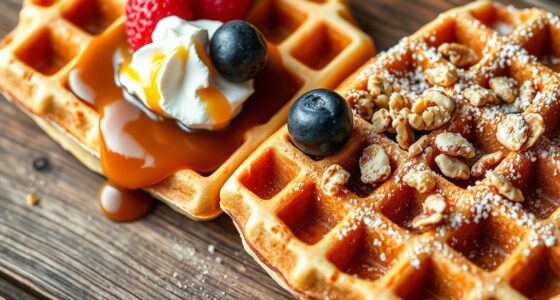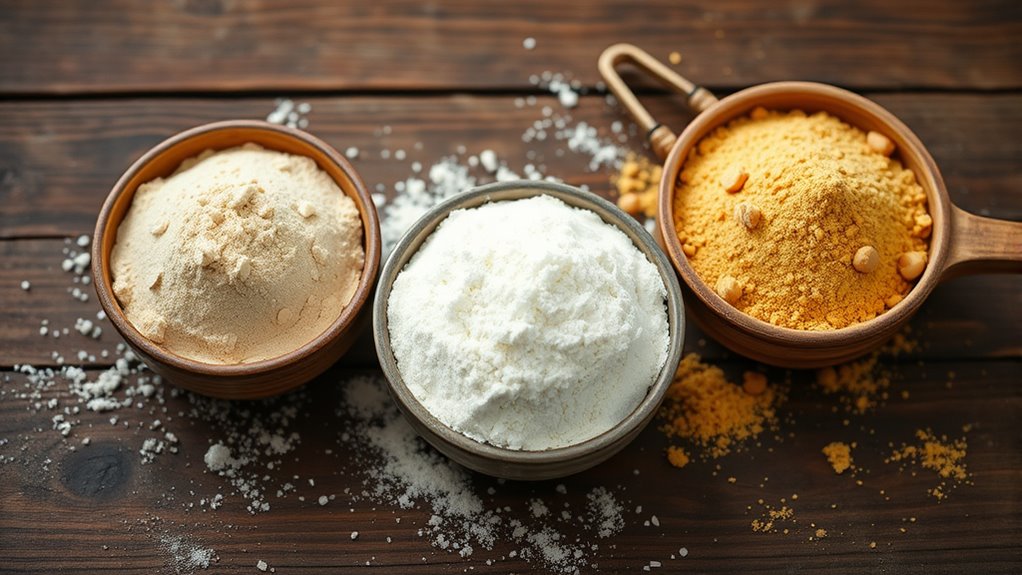

Using almond, coconut, and chickpea flours in your baking can boost nutrition and add unique flavors, but they also change texture and moisture levels. Almond flour makes baked goods moist and tender, while coconut flour provides density and requires more liquids. Chickpea flour adds a hearty, earthy taste but can be gritty if not blended well. Adjusting recipes is key, and exploring these flours helps you create healthier, flavorful treats—discover more about their tricks and benefits ahead.

Get baking supplies delivered free with Prime
- Fast, free delivery on millions of items
- Prime Video, Amazon Music and more included
- Member-only deals all year
Key Takeaways
- Almond, coconut, and chickpea flours offer diverse nutritional benefits, enriching gluten-free baked goods with healthy fats, fiber, and protein.
- These flours impact texture: almond provides moistness, coconut yields density, and chickpea can add grittiness if not properly prepared.
- Baking adjustments are necessary, such as adding liquids or binding agents, due to their differences from traditional wheat flour.
- Flavor profiles vary: almond adds nuttiness, coconut imparts sweetness, and chickpea offers earthy notes, influencing recipe choices.
- They expand gluten-free culinary options, suitable for cakes, bread, pancakes, and savory dishes, enhancing diversity and nutritional value.
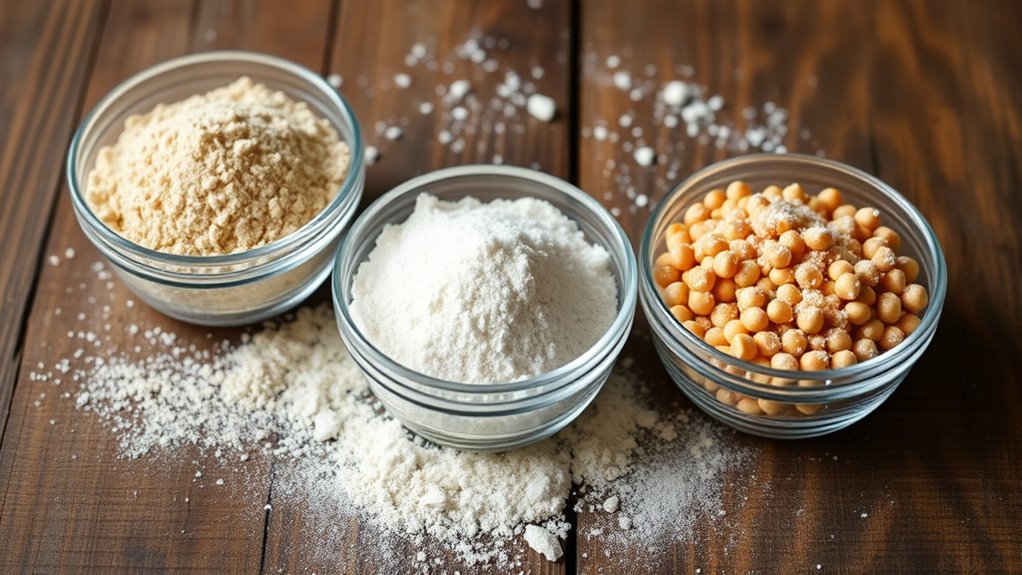
If you’re looking to bake without gluten, choosing the right flour is essential. Almond, coconut, and chickpea flours each bring unique qualities to your kitchen, offering nutritional benefits and introducing new baking techniques. When you opt for almond flour, you’re adding a source rich in healthy fats, protein, vitamin E, and magnesium. Its high-fat content means baked goods tend to be moist and tender, making it perfect for cakes, muffins, and cookies. Almond flour’s fine texture allows for easy incorporation into traditional recipes, but keep in mind that it doesn’t provide the same structure as wheat flour. To achieve the right consistency, you might need to blend it with other gluten-free flours or add binding agents like eggs or xanthan gum.
Coconut flour, on the other hand, is highly absorbent due to its fiber content, which means you’ll need considerably less of it than other flours in recipes. Its nutritional benefits include fiber, healthy fats, and small amounts of vitamins and minerals. Coconut flour lends a slightly sweet, nutty flavor to baked goods, making it ideal for pancakes, bread, and muffins. When baking with coconut flour, you’ll find that it demands different techniques—most notably, increasing liquids or eggs to compensate for its absorbency. This flour’s unique properties also call for specific adjustments in recipes, such as reducing the amount of fat or sugar, to balance flavors and textures properly. It can create dense, moist baked goods, but mastering its use requires some experimentation and understanding of its baking techniques.
Chickpea flour, derived from ground chickpeas, offers a robust nutritional profile, including protein, fiber, vitamins, and minerals like folate and iron. Its hearty flavor lends a slightly nutty or earthy taste, which pairs well with savory dishes and can be used in bread, pancakes, or flatbreads. Chickpea flour is versatile but requires particular baking techniques to prevent a gritty texture. Incorporating it with other gluten-free flours can improve the overall crumb and structure of your baked goods. It also benefits from binding agents, especially since it lacks gluten’s elasticity. When baking with chickpea flour, adjusting liquid levels and blending it with lighter flours can help you achieve a desirable texture.
As an affiliate, we earn on qualifying purchases.
Frequently Asked Questions
How Do Gluten-Free Flours Affect Baking Texture?
Gluten-free flours affect baking texture by altering gluten development, which can make your baked goods denser or crumblier. Without gluten, the crumb structure may lack elasticity, resulting in a more delicate or crumbly texture. To improve this, you might need to add binding agents like xanthan gum or eggs. These adjustments help create a better crumb structure, making your baked items more satisfying and closer to traditional wheat-based products.
Are Gluten-Free Flours Suitable for All Dietary Restrictions?
You should be cautious with gluten-free flours, especially if you have nut allergies, since almond flour can trigger reactions. Coconut and chickpea flours are good vegan options, making them suitable for plant-based diets. However, always check labels for cross-contamination or added ingredients. While these flours fit many dietary restrictions, they might not be suitable for everyone, so consider individual needs and allergies before using them in your recipes.
What Is the Shelf Life of Almond, Coconut, and Chickpea Flour?
Imagine a pantry shelf, where almond, coconut, and chickpea flours rest in airtight containers. You’ll find their shelf stability varies: almond flour lasts about 6-12 months, coconut flour 1-2 years, and chickpea flour up to a year. Store them in a cool, dark place, away from sunlight and moisture, to extend freshness. Proper storage tips keep your gluten-free flours flavorful and safe for your baking adventures.
Can Gluten-Free Flours Be Used Interchangeably With Wheat Flour?
You can’t directly substitute gluten-free flours like almond, coconut, or chickpea for wheat flour without adjustments. These gluten-free substitutes have different properties and flavors, which can lead to flavor variation and texture differences in your baked goods. To achieve the best results, you often need to modify recipes, add binding agents, or blend flours, ensuring your baked items hold together and taste great despite the differences.
Do Gluten-Free Flours Impact Blood Sugar Levels Differently?
Gluten-free flours can dramatically change your glycemic response, making blood sugar spikes feel like a rollercoaster ride. Almond, coconut, and chickpea flours each impact insulin levels differently due to their unique carbohydrate profiles and fiber content. You might notice some flours cause steadier blood sugar levels, while others lead to quicker spikes. Choosing the right flour helps you manage your blood sugar more effectively and avoid those dreaded energy crashes.
Conclusion
As you explore these gluten-free flours—almond, coconut, chickpea—you reveal new possibilities for your recipes. But which one will truly transform your baking? Each has unique qualities that could surprise you, and the choice might just change everything. Are you ready to discover that secret ingredient or method that takes your gluten-free creations to the next level? The answer lies just beyond your current horizon—waiting to be uncovered.
Halloween Picks
halloween
As an affiliate, we earn on qualifying purchases.