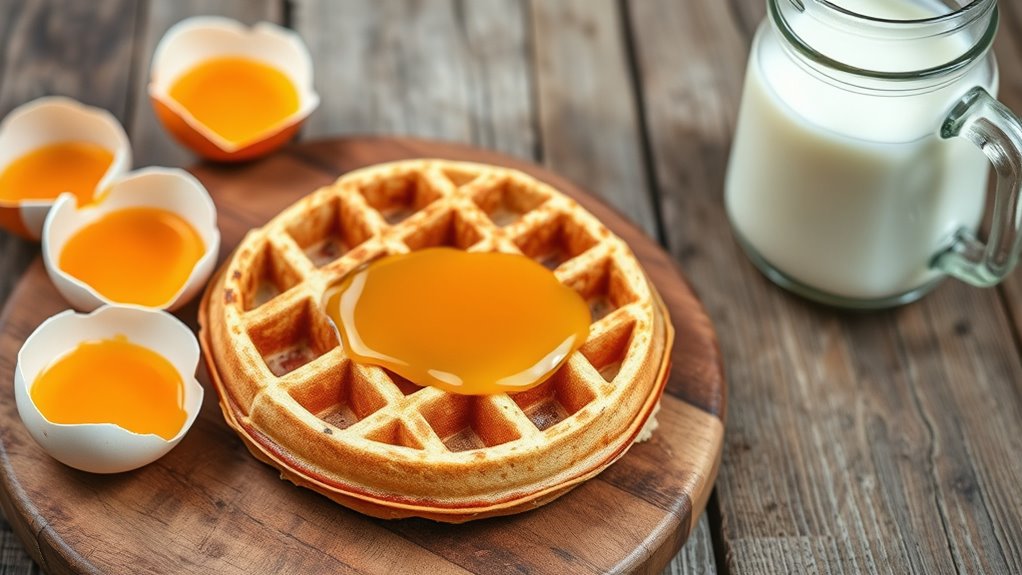

Eggs and milk boost the nutrition, flavor, and texture of your waffles by providing essential proteins, vitamins, and minerals. Eggs supply high-quality protein that supports muscle growth and immune health, while milk offers calcium, vitamin D, and potassium for strong bones and blood pressure regulation. Together, they create a balanced, satisfying meal that promotes overall health. If you keep exploring, you’ll discover even more about how these ingredients make your waffles healthier.
Key Takeaways
- Eggs and milk enhance waffles by adding essential proteins, vitamins, and minerals for balanced nutrition.
- Dairy supplies calcium, vitamin D, and potassium, supporting bone health and blood pressure regulation.
- Eggs provide high-quality, complete protein, aiding muscle repair, immune function, and satiety.
- Combining eggs and milk increases micronutrient intake, including B vitamins and choline, promoting overall health.
- Their inclusion improves waffle texture, flavor, and nutritional profile, contributing to a satisfying and nourishing meal.

Eggs and milk are fundamental ingredients that boost the nutritional value of waffles, providing essential proteins, vitamins, and minerals. When you include these ingredients in your waffle batter, you’re not just enhancing flavor and texture—you’re also enriching your meal with valuable nutrients. Dairy nutritional benefits are well-known, offering calcium for bone health, vitamin D for immune support, and potassium to help regulate blood pressure. Milk’s natural composition makes it an excellent base for waffles, ensuring you get these essential nutrients with every bite. Meanwhile, eggs contribute more than just flavor; they are packed with high-quality protein that plays a crucial role in muscle repair, immune function, and overall growth. The egg protein quality is particularly noteworthy because eggs contain all the essential amino acids your body needs, making them one of the most complete protein sources available. This means that by adding eggs to your waffles, you enhance their nutritional profile considerably, supporting muscle development and recovery, especially if you’re active or trying to maintain a balanced diet.
The proteins in eggs are easily digestible, and their amino acid profile makes them superior to many plant-based sources. When you incorporate eggs into your waffle batter, you’re providing your body with a readily available source of these vital nutrients, helping you feel full longer and sustain energy levels. Milk, on the other hand, adds moisture, richness, and a subtle sweetness, but it also contributes to your daily calcium intake, which is essential for maintaining strong bones and preventing osteoporosis. The combination of eggs and milk in your waffle recipe creates a balanced mix of macronutrients: proteins, carbohydrates, and fats, along with a wealth of micronutrients. This not only makes your waffles more nutritious but also more satisfying, helping you curb hunger and avoid overeating later.
Additionally, incorporating eggs and milk into your waffles can support emotional well-being by providing nourishing comfort during meals. Furthermore, the dairy nutritional benefits extend beyond just calcium; milk contains B vitamins, especially riboflavin and vitamin B12, which support energy production and red blood cell formation. Eggs provide choline, important for brain health, and selenium, an antioxidant that helps protect your cells from damage. When you understand the value of these ingredients, you realize that your choice to include eggs and milk in your waffle recipe isn’t just about taste—it’s about fueling your body with essential nutrients that promote overall health. So, next time you whip up waffles, remember that these simple ingredients do a lot more than improve texture—they deliver a powerful nutritional punch that supports your well-being.

Hong Kong Egg Waffle Maker by StarBlue with BONUS recipe e-book – Make Hong Kong Style Bubble Egg Waffle in 5 minutes AC 120V, 60Hz 760W
NON-STICK COATING PLATE – The state of the art non-stick coating plate is specially designed for the ease…
As an affiliate, we earn on qualifying purchases.
As an affiliate, we earn on qualifying purchases.
Frequently Asked Questions
Can Vegan Waffles Be Made Without Eggs and Milk?
Yes, you can make vegan waffles without eggs and milk. Use plant-based substitutions like almond milk, soy milk, or oat milk instead of dairy, and mashed bananas, flaxseed, or applesauce to replace eggs. These options allow you to create delicious vegan waffles with unique flavor options. You’ll enjoy a tasty, cruelty-free breakfast that’s just as satisfying as traditional waffles.
How Do Eggs and Milk Affect Waffle Allergen Content?
Imagine a world where waffles bring joy without worry. Eggs and milk markedly influence allergen levels, making waffles unsafe for some. They contain proteins that trigger allergies, so ingredient substitution becomes essential for allergy-friendly options. By replacing eggs with applesauce or flaxseed and milk with plant-based alternatives, you reduce allergen risks, allowing everyone to savor waffles safely and happily. Your choices create inclusive, delicious moments for all.
Are There Health Benefits to Using Organic Eggs and Milk?
Yes, using organic eggs and milk offers nutritional benefits like higher levels of omega-3 fatty acids and antioxidants. Organic farming avoids synthetic pesticides and hormones, making these ingredients potentially healthier and more natural. By choosing organic, you support sustainable practices that can lead to cleaner, more nutrient-rich products, enhancing your waffle’s overall health profile. This choice aligns with a healthier lifestyle and promotes environmentally friendly farming methods.
What Are Alternative Ingredients for Eggs and Milk in Waffles?
You can replace eggs and milk in waffles with plant-based substitutes and dairy-free options. Use mashed bananas or applesauce to mimic eggs’ binding power, and opt for almond, soy, or oat milk instead of dairy. These alternatives provide moisture and structure while accommodating dietary restrictions. By choosing plant-based substitutes and dairy-free options, you create delicious, inclusive waffles that suit various health needs and preferences.
How Do Eggs and Milk Influence Waffle Shelf Life?
Eggs and milk help extend waffle shelf life by acting as natural preservatives, slowing microbial growth. They create a moist environment that can hinder spoilage bacteria, but they also provide nutrients for microbes if not stored properly. To preserve your waffles longer, use proper preservation methods like airtight containers and refrigeration. This way, you keep them fresh, safe, and tasty while minimizing microbial growth.

ProDough Shop Buttermilk Pancake and Waffle Mix – Gluten Free, Low Carb, High Protein Pancake Mix – Healthy Pancakes and Waffles for Breakfast or Snack
ALL NATURAL INGREDIENTS: Our pancake mix is made with natural ingredients, nothing artificial. Our all natural gluten-free flour…
As an affiliate, we earn on qualifying purchases.
As an affiliate, we earn on qualifying purchases.
Conclusion
So, next time you bite into a waffle, remember those simple ingredients—eggs and milk—that do so much more than just add flavor. They’re quietly shaping your nutrition in ways you might not expect. But what if there’s more to discover about their true power? The answer could change how you see your favorite treat forever. Are you ready to reveal the hidden secrets behind those delicious bites? The journey is just beginning.

BulkSupplements.com Egg White Protein Powder – Egg White Powder, Lactose Free Protein – Unflavored & Dairy Free, 30g per Serving, 500g (1.1 lbs) (Pack of 1)
Maximize your Potential: Enhance your active lifestyle with our Egg White Protein powder, a lactose free protein powder,…
As an affiliate, we earn on qualifying purchases.
As an affiliate, we earn on qualifying purchases.

Kodiak Cakes Power Waffles, Buttermilk & Vanilla 13.4oz (Frozen)
Protein-packed frozen waffles with buttermilk and vanilla flavor, made with whole grains for a nutritious breakfast
As an affiliate, we earn on qualifying purchases.
As an affiliate, we earn on qualifying purchases.