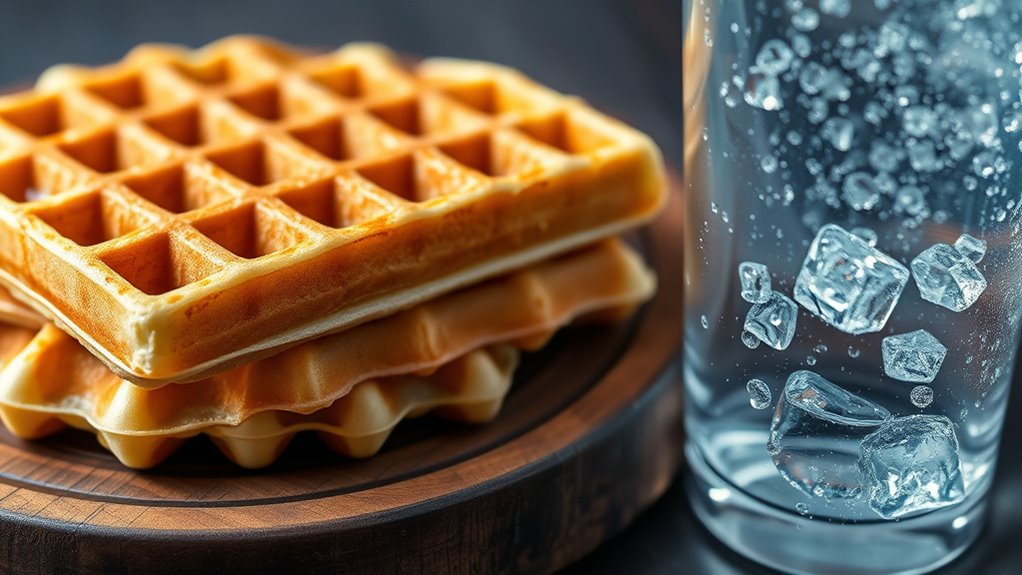

Water plays a vital role in waffle batter by activating gluten, starches, and leavening agents, which determine the batter’s consistency, rise, and overall texture. When you add the right amount of water, it helps develop a tender, fluffy waffle with a golden exterior. Too much or too little water affects the batter’s ability to hold air and produce a light crumb. Keep exploring to discover how mastering hydration can elevate your waffle game.
Key Takeaways
- Water hydrates dry ingredients, ensuring a smooth, cohesive batter for optimal waffle texture.
- Proper hydration develops gluten and starch networks, contributing to waffle elasticity and structure.
- Water activates leavening agents, producing CO₂ bubbles that make waffles fluffy and well-risen.
- Water temperature influences reaction rates, affecting batter consistency and final waffle crispness or tenderness.
- Balancing water amount and timing is essential for achieving the desired batter thickness and perfect waffle body.

Have you ever wondered how hydration impacts your favorite breakfast treat, waffles? It’s more than just pouring water into the batter; hydration influences how the ingredients interact and ultimately determines the texture and flavor of your waffles. When you add water to your batter, water absorption becomes a key factor. Proper water absorption ensures that the dry ingredients, like flour and starches, hydrate evenly, resulting in a smooth, cohesive mixture. If the batter is too dry, it’ll be difficult to combine the ingredients, leading to dense waffles. Conversely, if it’s too wet, the waffles might turn out soggy or fall apart. Achieving the right water absorption balance helps develop the ideal batter consistency, which is essential for fluffy, golden waffles.
Proper water absorption is key to achieving fluffy, golden waffles with ideal texture and flavor.
Water’s role goes beyond just hydration; it actively interacts with other ingredients. For example, when water interacts with flour, it begins to hydrate gluten proteins and starches. This interaction affects the batter’s structure and elasticity, allowing it to hold air and rise well during cooking. Proper ingredient interaction depends on the amount of water you add—too little, and the gluten network won’t develop properly; too much, and the batter might become overly loose, impacting the final texture. The interaction between water and leavening agents, like baking powder, is also vital. Water activates these agents, producing carbon dioxide that creates bubbles and lifts the batter. Without enough water, this process doesn’t occur efficiently, resulting in flat waffles.
Your choice of water also influences flavor and consistency. Using cold water can slow down certain reactions, giving you more control over batter formation. Warm water, on the other hand, speeds things up but might affect the texture if not managed carefully. Additionally, the type of water used—tap, filtered, or mineral—can subtly alter the flavor profile of your waffles. Proper hydration not only enhances ingredient interaction but also helps you refine the batter to your preferred thickness. This control allows you to customize the texture, making waffles that are crisp on the outside and tender inside. Furthermore, understanding how water absorption impacts gluten development can help you achieve a more consistent and desirable waffle texture.
In the end, understanding how water absorption and ingredient interaction work together helps you craft better waffles. It’s not just about pouring water in; it’s about knowing how much and when to add it to optimize batter consistency and flavor. When you master this balance, your waffles will turn out consistently delicious, with perfect texture and taste every time. Hydration isn’t just a small step—it’s the foundation of great waffles and a key to elevating your breakfast game.

Whiskware Pancake Batter Mixer with BlenderBall Wire Whisk
The fastest, easiest way to make smooth batters for pancakes, waffles, crepes, and more. Simply add ingredients, toss…
As an affiliate, we earn on qualifying purchases.
As an affiliate, we earn on qualifying purchases.
Frequently Asked Questions
How Does Water Affect Waffle Texture and Crispiness?
Water crucially influences waffle texture and crispiness by affecting gluten development and moisture retention. More water creates a lighter, crispier exterior because it helps form a delicate gluten network that boosts structure without making the waffle dense. Additionally, adequate water ensures moisture stays inside, keeping the waffle tender inside while the outside remains crispy. So, adjusting water amounts lets you control the perfect balance between soft interior and crunchy crust.
Can Substituting Other Liquids for Water Improve Waffle Flavor?
Imagine turning a blank canvas into a masterpiece—substituting alternative liquids can truly boost your waffle’s flavor. Yes, using options like milk, buttermilk, or juice enhances taste and adds richness. These liquids act as flavor enhancers, making each bite more delightful. So, experiment boldly with different liquids to elevate your waffles, creating a symphony of flavors that transforms a simple breakfast into an unforgettable experience.
How Much Water Is Ideal for Different Waffle Recipes?
You should use about 1 to 1.5 cups of water for most waffle recipes, adjusting based on batter consistency. The ideal water amount depends on your recipe’s ingredients and desired waffle flavor. Remember, water temperature matters—use warm water to activate leavening agents and enhance flavor. Too much water makes waffles soggy, while too little results in dry, dense waffles. Experiment to find your perfect balance for flavorful, crispy waffles.
Does Drinking Water Influence Waffle Digestion?
Think of your body as a well-oiled waffle iron—hydration keeps it running smoothly. Drinking water boosts digestion by helping break down food efficiently, preventing sticking and clumping. Adequate water intake benefits your gut, ensuring nutrients are absorbed properly and waste moves freely. So, yes, drinking water influences waffle digestion, making each bite easier to process and enjoy. Keep sipping to keep your digestive system in perfect harmony.
Are There Hydration Tips Specific for Making Perfect Waffles?
Yes, for perfect waffles, focus on the hydration process by adjusting waffle ingredient ratios carefully. Use just enough water to create a smooth, pourable batter without overdoing it, which can make waffles soggy. Proper hydration guarantees even mixing and ideal texture. Keep the water temperature consistent and gradually add it to the dry ingredients, allowing the batter to hydrate fully before cooking for the best results.

Cuisinart Waffle Maker, 1250W Round Classic Waffle Iron, 5-Setting Adjustable Browning Control, WMR-CANAS, Brushed Stainless
SUPERIOR FUNCTION: This Cuisinart Waffle Maker offers professional quality for home use, making delicious breakfast waffles fast and…
As an affiliate, we earn on qualifying purchases.
As an affiliate, we earn on qualifying purchases.
Conclusion
Remember, water is the silent architect behind every perfect waffle and every healthy body. Without it, your batter becomes lifeless, and your body struggles to function. Think of water as the invisible thread weaving through your ingredients and your cells, holding everything together. By staying hydrated, you’re fueling your inner masterpiece, ensuring that both your waffles and your body rise to their fullest potential. Keep water close—it’s the secret ingredient that makes everything better.

WaterChef C6500 Premium Countertop Water Filter System (White), 600 Gallon Capacity, NSF/ANSI Certified for 78 Contaminants, Made in USA
PREMIUM COUNTERTOP WATER FILTER SYSTEM – REMOVE MORE CONTAMINANTS FROM YOUR WATER – This Countertop Water Filter features…
As an affiliate, we earn on qualifying purchases.
As an affiliate, we earn on qualifying purchases.

Buttermilk Powder by Medley hills farm 1.25 lbs. in Reusable Container – Perfect powdered buttermilk for baking- Perfect for Bread, Biscuits, Pancakes, Salad Dressing – Non-GMO – Kosher – Made in USA
Includes 1.25 lbs. of Buttermilk powder in Reusable container for easy storage. Enhance your baked goods with added…
As an affiliate, we earn on qualifying purchases.
As an affiliate, we earn on qualifying purchases.