
To avoid that harsh, chemical taste, use baking powder for recipes needing a neutral leavening agent and baking soda only when there’s a natural acid like buttermilk or chocolate. Baking powder contains acids and reacts with moisture and heat for a smooth rise, while baking soda needs an added acid to activate. Precise measurements and proper ingredient pairing help prevent bitterness. For more tips on mastering these ingredients and perfecting your baked goods, keep exploring.
Key Takeaways
- Use baking powder for a neutral, predictable rise without chemical aftertastes.
- Only use baking soda with natural acids like buttermilk or lemon juice to prevent bitterness.
- Correctly measure baking powder to avoid bitter or metallic flavors from excess.
- Substitute baking powder with baking soda by adding an acid to balance the flavor.
- Proper activation of baking soda and powder ensures a clean taste and light texture.
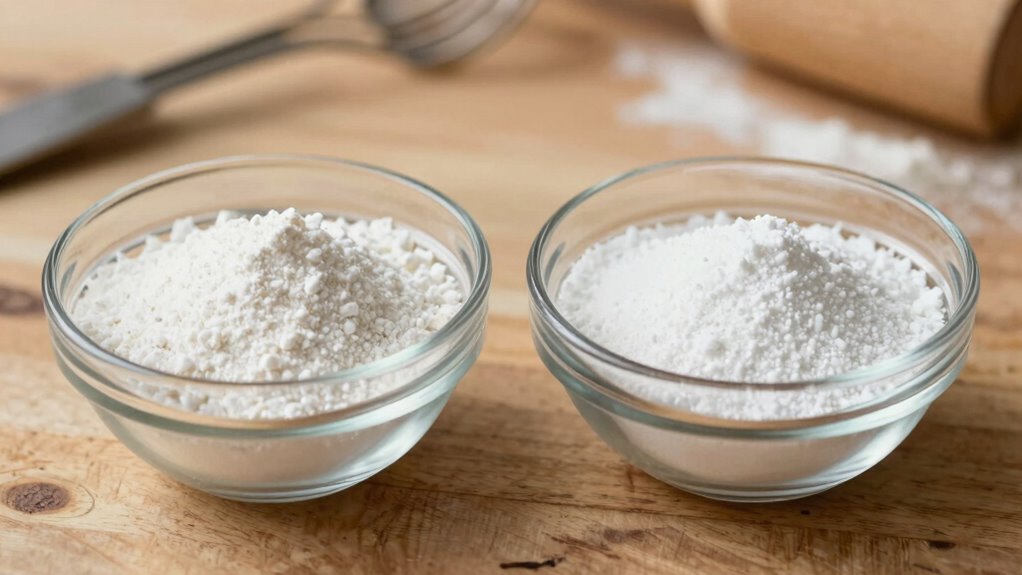
Ever wondered what truly sets baking powder apart from baking soda? The key difference lies in how they produce that rise in your baked goods. Baking powder is a complete leavening agent, containing both an acid and a base, which react when mixed with moisture and heat. This natural leavening process means you don’t need to add anything else to get your batter to rise. Baking soda, on the other hand, is just pure sodium bicarbonate. It needs an acid—like lemon juice or buttermilk—to activate and create carbon dioxide bubbles that make your dough expand. Without that acid, baking soda can leave behind a harsh, chemical taste, which is why understanding when and how to use each is essential.
Baking powder is a complete leavening agent, while baking soda requires an acid to activate and produce rise.
When it comes to ingredient substitution, knowing which to use can be a game-changer. If a recipe calls for baking powder but you only have baking soda, you’ll need to add an acid to mimic the leavening effect. Typically, you can substitute about one teaspoon of baking powder with a quarter teaspoon of baking soda plus a half teaspoon of cream of tartar or another acid. This adjustment ensures your baked goods still rise without that overpowering chemical flavor. Conversely, if your recipe calls for baking soda and you only have baking powder, you’ll want to use about three times as much baking powder as baking soda to achieve similar leavening. But be mindful: using too much baking powder can also result in a bitter taste or a metallic aftertaste, so precise measurement is key.
Understanding the role of natural leavening in baking helps you avoid that unwanted “chemical” taste many associate with baking soda. When used correctly, baking powder provides a more neutral, predictable rise without the need for additional acids. It’s especially handy in recipes where adding acid isn’t desirable or practical. Meanwhile, baking soda’s strength makes it ideal for recipes that already include acidic ingredients—like buttermilk pancakes or chocolate cakes—ensuring a proper rise while maintaining a clean, fresh flavor. Knowing how to properly substitute one for the other allows you to adapt recipes based on what you have on hand, all while preserving the quality of your baked goods.
Getting a handle on these differences not only improves your baking but also helps you avoid that unpleasant chemical aftertaste. Whether you prefer the convenience of baking powder or the potency of baking soda, understanding their roles, natural leavening properties, and how to swap them effectively keeps your baked treats light, flavorful, and perfectly textured.
baking powder
As an affiliate, we earn on qualifying purchases.
As an affiliate, we earn on qualifying purchases.
Frequently Asked Questions
Can I Substitute Baking Soda for Baking Powder in Recipes?
You can substitute baking soda for baking powder, but you need to adjust the ingredient amounts to avoid flavor impact. Since baking soda is more potent, use about one-third of the amount of baking powder called for, and add an acid like lemon juice or vinegar to activate it. Keep in mind, this substitution may change the flavor profile slightly, so consider the overall taste you’re aiming for.
How Do I Tell if My Baking Soda or Powder Is Expired?
Imagine your baking soda or powder as tiny timekeepers. To check expiration indicators, perform a freshness testing by mixing a teaspoon with a few drops of vinegar. If it fizzes vigorously, it’s still lively; if not, it’s past its prime. This simple test reveals whether your leavening agents are fresh or expired, ensuring your baked goods rise perfectly without that unwanted chemical taste.
What Are the Health Risks of Consuming Too Much Baking Soda?
Consuming too much baking soda can lead to health concerns like stomach pain, nausea, and vomiting. Overconsumption effects include electrolyte imbalances, which might cause muscle weakness or irregular heartbeat. It’s important to stick to recommended amounts in recipes and avoid taking large doses. If you experience symptoms, seek medical advice promptly. Remember, moderation is key to prevent potential health risks associated with excessive baking soda intake.
Does the Type of Flour Affect How Baking Soda or Powder Work?
You might think the type of flour doesn’t matter, but it actually influences how baking soda or powder works. Different flours vary in gluten development and absorption, affecting rise and texture. For instance, bread flour with higher gluten content reacts differently than cake flour, which absorbs liquids more readily. These differences impact how your leavening agents perform, so choose your flour carefully to get the best rise and texture in your baked goods.
Can Baking Soda or Powder Be Used for Cleaning Instead of Baking?
Yes, you can use baking soda or powder as cleaning alternatives, but baking soda is more effective as a surface disinfectant and deodorizer. You might mix baking soda with water for scrubbing surfaces or sprinkle it in the trash to eliminate odors. Baking powder isn’t recommended for cleaning, as it contains additional ingredients that aren’t as effective. Use baking soda for cleaning tasks to enjoy a natural, chemical-free solution.

365 by Whole Foods Market, Baking Soda, 16 Ounce
16 ounce package
As an affiliate, we earn on qualifying purchases.
As an affiliate, we earn on qualifying purchases.
Conclusion
Knowing the difference between baking powder and baking soda helps you avoid that unwanted chemical taste in your baked goods. Remember, baking soda is about 4 times stronger than baking powder, so using the right amount is key. Did you know that over 80% of home bakers accidentally use the wrong leavening agent at least once? By understanding their roles, you’ll make certain your treats turn out perfectly every time—no strange flavors, just delicious results.
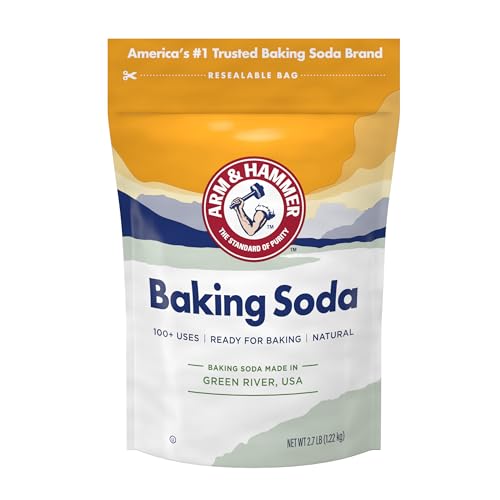
ARM & HAMMER Baking Soda Made in USA, Ideal for Baking, Pure & Natural, 2.7lb Bag
Ideal for Baking: Made with fine baking soda particles from Grade 1 baking soda to create fluffier recipes;…
As an affiliate, we earn on qualifying purchases.
As an affiliate, we earn on qualifying purchases.
baking powder for baking
As an affiliate, we earn on qualifying purchases.
As an affiliate, we earn on qualifying purchases.