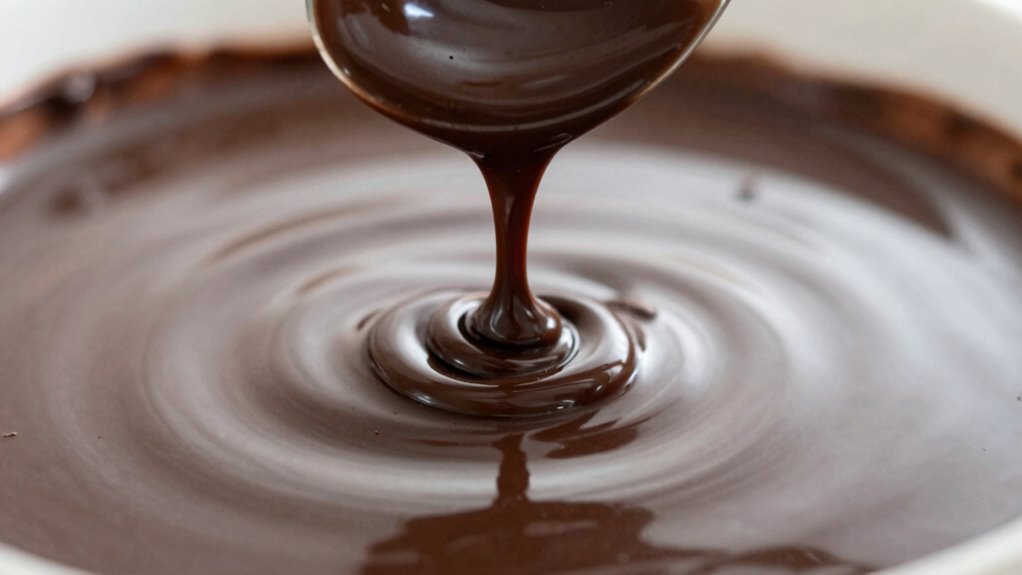

Your drizzle turns dull because you likely overheated the chocolate beyond its proper melting point. Different types of chocolate have specific melting ranges; for example, dark chocolate melts around 115°F to 120°F, while milk and white chocolates melt at lower temperatures. When you heat chocolate too much, the cocoa butter separates and creates a dull, streaky surface called bloom. By understanding these melting points, you can better control your process and achieve a glossy finish—learn more to perfect your technique.
Key Takeaways
- Overheating chocolate causes cocoa butter bloom, leading to a dull, streaky appearance instead of a glossy finish.
- Melting chocolates beyond their optimal temperature disrupts fat structure, resulting in dullness and surface streaks.
- Different chocolates have specific melting ranges; exceeding these causes surface dullness and loss of shine.
- White and milk chocolates melt at lower temperatures, making them more susceptible to dull, streaky drizzles if overheated.
- Proper temperature control during melting preserves glossiness, preventing dullness caused by excessive heat.
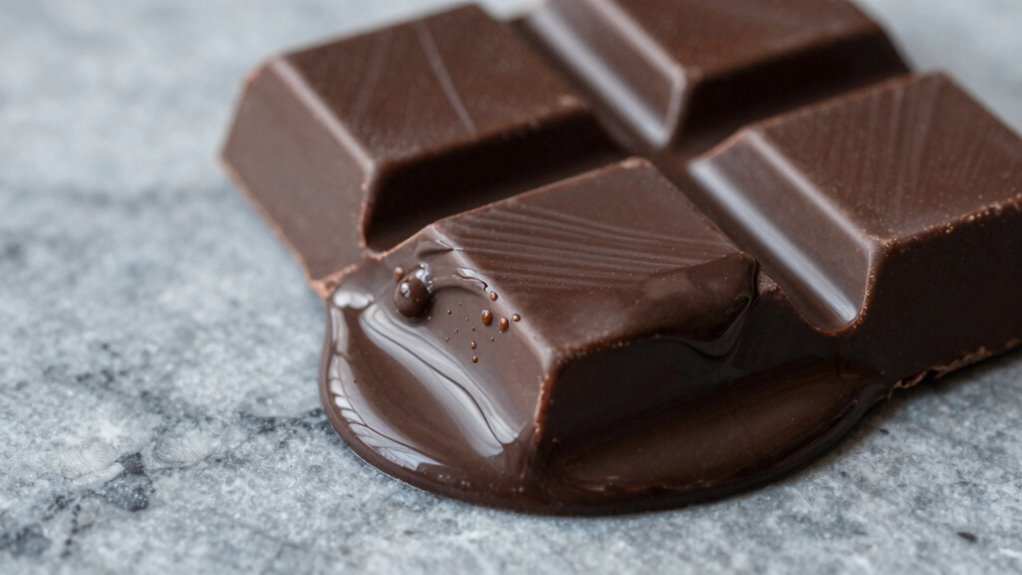
Understanding the melting points of chocolate is essential whether you’re tempering, baking, or creating confections. When you work with chocolate, knowing how temperature effects influence its behavior can make all the difference between a glossy finish and a dull, streaky drizzle. Chocolate’s melting point isn’t a fixed number; it varies depending on several ingredient influences, such as cocoa butter content, added fats, and the type of chocolate you’re using. These factors determine how sensitive your chocolate is to temperature changes, which directly impacts your results. ingredient influences play a significant role in how your chocolate responds to heat, affecting its melting behavior and final appearance. Temperature effects are critical because chocolate is highly sensitive to heat. If you heat it too quickly or go beyond its melting point, the fats can separate or burn, leading to a dull appearance and grainy texture. For example, dark chocolate typically melts around 115°F to 120°F, but if you go even a few degrees higher, it can cause the cocoa butter to bloom, creating a dull, whitish surface. This bloom isn’t harmful but makes your chocolate look unappealing and affects its sheen. Milk and white chocolates have slightly lower melting points, around 104°F to 113°F, so they require even more careful temperature control to avoid dullness.

Etekcity Infrared Thermometer Laser Temperature Gun 774, Meat Food Candy Oven Thermometer for Griddle Accessories, Heat Gun for Cooking Refrigerator Tools, Adjustable Emissivity & Max Measure, Yellow
𝐕𝐞𝐫𝐬𝐚𝐭𝐢𝐥𝐞 𝐓𝐨𝐨𝐥𝐬: Infrared technology allows you to measure various objects at home and outdoors; Use it for 𝒎𝒆𝒂𝒕,…
As an affiliate, we earn on qualifying purchases.
As an affiliate, we earn on qualifying purchases.
Frequently Asked Questions
How Does Humidity Affect Chocolate Melting Points?
Humidity effects can cause your chocolate to melt at lower temperatures, making it more prone to dullness and bloom. Environmental factors like high humidity introduce moisture, which disrupts the cocoa butter’s structure, leading to uneven melting. When you work in humid conditions, your chocolate may not melt smoothly or maintain its glossy appearance, so controlling humidity levels helps guarantee consistent melting points and a shiny, appealing drizzle.
Can Chocolate Melting Points Vary Between Brands?
Yes, chocolate melting points can vary between brands. Think of it like different recipes for the same dish; each brand’s composition, especially cocoa content, influences melting behavior. For example, a darker chocolate with higher cocoa content generally melts at a higher temperature than milk chocolate. Variations in ingredients and manufacturing processes mean your favorite brand might melt differently, affecting your drizzle’s shine and texture.
Do Different Cocoa Percentages Influence Melting Temperature?
Yes, different cocoa percentages do influence melting temperature. Higher cocoa content usually means more cocoa solids and less fat, which can lower the melting point, making the chocolate melt faster. Conversely, chocolates with lower cocoa percentages tend to have more fat, raising the melting temperature. So, when you choose chocolate based on cocoa content, you’re also affecting how it melts, impacting your drizzle’s shine and texture.
How Does Storage Temperature Impact Chocolate’s Melting Behavior?
Imagine your chocolate as a delicate dance partner, responding to the rhythm of temperature fluctuations. When you store it in airtight containers at stable temperatures, it stays poised, melting smoothly when needed. But if storage temperatures vary, the chocolate becomes unsteady, leading to dull drizzles. Keep it cool and consistent to preserve its glossy shine and perfect melt, avoiding dullness caused by unpredictable storage conditions.
Are There Specific Additives That Alter Melting Points?
Yes, certain additives can alter chocolate’s melting points through ingredient modifications. For example, adding emulsifiers like lecithin can lower melting points, making the chocolate easier to work with, while fats or oils may raise them, giving your drizzle a duller appearance. You can experiment with these additive effects to achieve the desired melting behavior, ensuring your chocolate stays smooth and glossy during use.

ChocoVision Revolation 2 Chocolate Tempering Machine (White)
Design: Designed for the professional chocolatier, the Revolation 2 is a conventional space-efficient tabletop tempering machine, which melts,…
As an affiliate, we earn on qualifying purchases.
As an affiliate, we earn on qualifying purchases.
Conclusion
Understanding chocolate’s melting points helps you master its art, turning dull drizzles into a glossy masterpiece. When you pay attention to temperature, you’re guiding your chocolate like a skilled conductor, bringing out its true shine. Don’t let the science scare you—embrace it, and watch your creations transform from ordinary to extraordinary. With patience and care, you’ll craft drizzles that dance with elegance, making every dessert feel like a work of art.

DD-life 3 Pcs Silicone Chocolate Melting Pot, Butter Sauce Milk Microwave Baking Pouring Tool
Material: Made of high quality silicone.
As an affiliate, we earn on qualifying purchases.
As an affiliate, we earn on qualifying purchases.
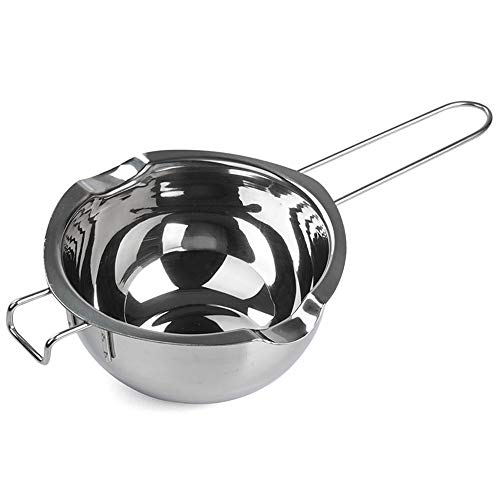
Stainless Steel Double Boiler Pot for Melting Chocolate, Candy and Candle Making (18/8 Steel, 2 Cup Capacity, 480ML)
【Superior Material 】- Made of 18/8 Stainless steel, Rust Resistant, Sturdy,and proper temperature to melt things but not…
As an affiliate, we earn on qualifying purchases.
As an affiliate, we earn on qualifying purchases.