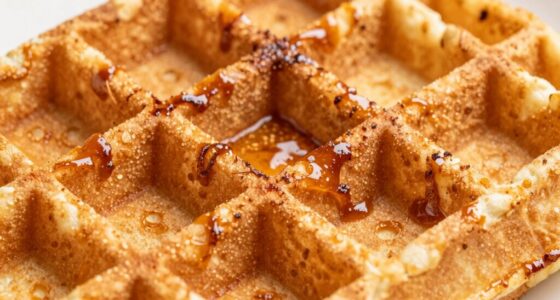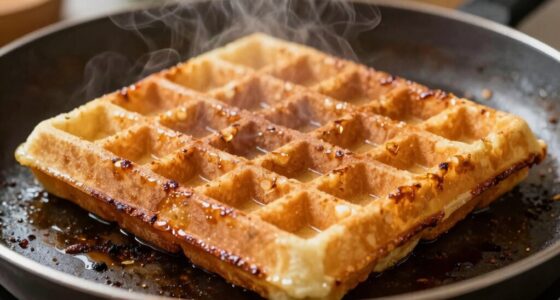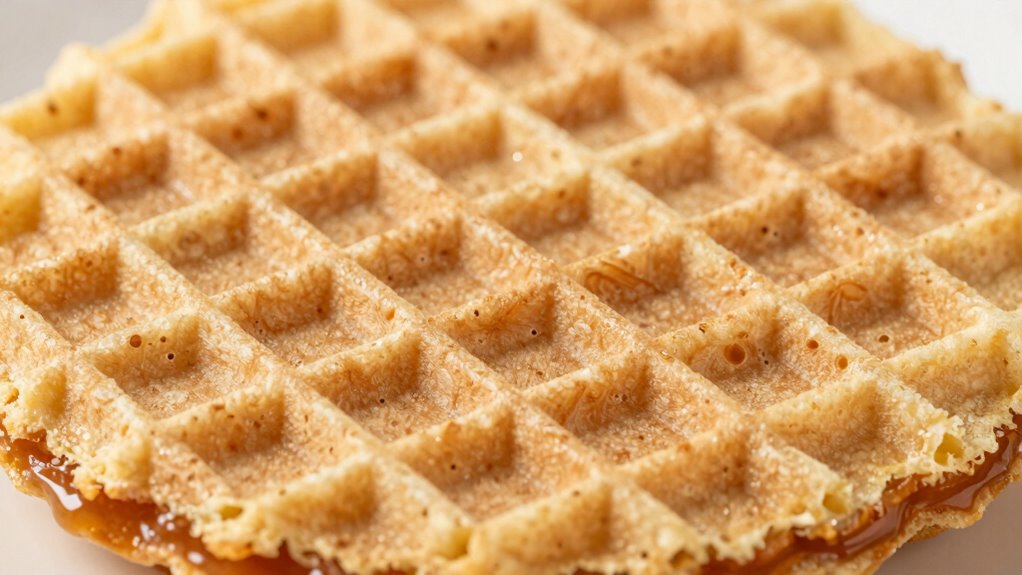

To get the perfect stroopwafel texture, you need to time removing the thin cookie from the iron when it’s just golden and crisp but still slightly flexible. If you take it out too early, the waffle might be soft and chewy, making caramel difficult to spread. Leave it on too long, and it could become brittle and fragile. Mastering this timing creates a cookie that’s light, crisp, and ideal for caramel. Keep exploring to discover more tips for perfecting your stroopwafel.

Get baking supplies delivered free with Prime
- Fast, free delivery on millions of items
- Prime Video, Amazon Music and more included
- Member-only deals all year
Key Takeaways
- Removing the waffle at the golden, just-firm stage ensures optimal crispness and flexibility for the thin cookie.
- Proper dough moisture allows for easy rolling and shaping, affecting the final thinness and texture.
- Baking duration and temperature control prevent over- or under-baking, which impacts crispness and brittleness.
- Timing caramel application immediately after baking preserves its pliability for smooth spreading on the thin wafer.
- Achieving the right balance in baking and handling produces a crispy, delicate waffle that holds caramel without breaking.
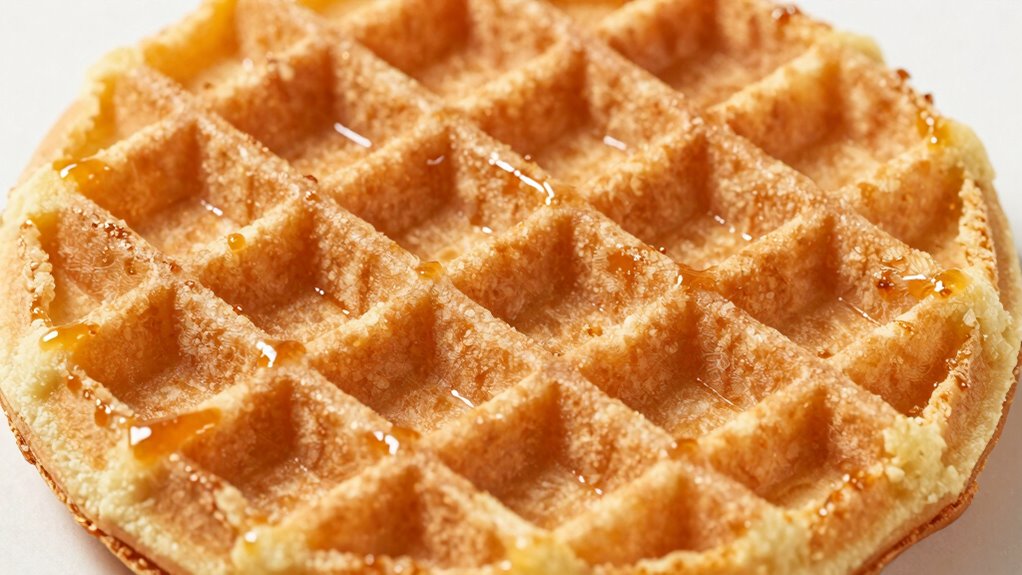
The texture of a stroopwafel is what makes it truly irresistible. When you bite into one, you’re greeted with a perfect balance of crispness and chewiness that’s difficult to find elsewhere. Achieving this ideal texture starts with understanding the dough consistency. If the dough is too wet, it will spread out too thin and become fragile, losing its structure when baked. Conversely, if it’s too dry, it’ll turn out dense and tough rather than light and airy. The key is to find that sweet spot where the dough is just moist enough to roll out easily yet firm enough to hold its shape. Once baked, this dough forms a thin, crisp wafer that serves as the perfect vessel for the caramel layer.
The perfect stroopwafel balances crispness and chewiness through precise dough consistency.
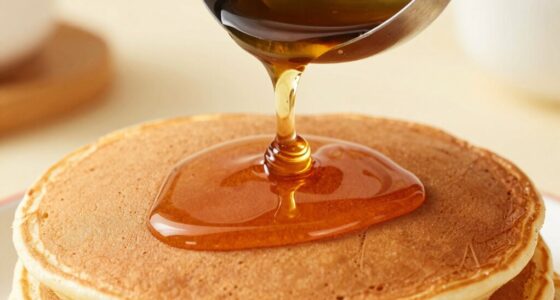
Speaking of the caramel layer, this is what transforms a simple cookie into a delightful treat. The caramel is typically made from a mixture of brown sugar, butter, and sometimes a touch of vanilla or cinnamon, which is spread onto the hot waffle just after baking. The timing here is critical. When the waffle comes out of the oven, you want to immediately spread the caramel evenly across the surface while it’s still warm and pliable. If you wait too long, the caramel will harden and won’t spread smoothly. If you spread it too early, the moisture from the caramel might make the waffle soggy rather than maintaining its crispy exterior. When done correctly, the caramel layer melds slightly into the hot wafer, creating a chewy contrast to the crisp edges. This combination of textures—crisp yet chewy—defines the stroopwafel’s signature appeal.
The thinness of the cookie also plays an essential role. A well-made stroopwafel isn’t thick, but it’s not so thin that it crumbles easily. The delicate balance in thickness ensures the cookie remains sturdy enough to hold the caramel without breaking apart when you bite into it. The timing of when you remove the waffle from the iron is critical here. You want it to be golden and just firm enough to handle the caramel topping. If you wait too long, it might overbake and become too brittle; too early, and it could be undercooked and too soft. That precise timing results in a wafer that’s perfectly crisp on the outside yet slightly flexible inside, complementing the chewy caramel layer. Additionally, understanding the baking process and how temperature affects texture is fundamental to perfecting the final product.
In essence, perfect stroopwafel texture hinges on controlling the dough consistency, mastering the caramel layer timing, and carefully managing the baking process. When these elements come together, you end up with a cookie that’s crispy, chewy, and utterly addictive. The delicate dance of timing and technique ensures each bite delivers that satisfying crunch followed by a luscious caramel chew—making every stroopwafel a truly delightful experience.
As an affiliate, we earn on qualifying purchases.
Frequently Asked Questions
How Does Humidity Affect Stroopwafel Texture?
Humidity impacts the texture of stroopwafels by increasing moisture absorption, making them softer and less crisp over time. When humidity is high, they tend to lose their original crunch, affecting texture preservation. To keep your stroopwafels fresh and maintain their ideal crunch, store them in airtight containers in a cool, dry place. This prevents excess moisture from compromising their crispy, thin-cookie structure.
What Is the Ideal Storage Method for Crispy Stroopwafels?
To keep your crispy stroopwafels fresh, store them in an airtight container to preserve their crunchiness. Keep the container in a cool, dry place away from humidity, which can make them soggy. Avoid refrigeration, as it can alter their texture. This method guarantees ideal cookie preservation, maintaining stroopwafel freshness and crunch for longer. You’ll enjoy that perfect crispy bite every time you indulge.
Can Different Fillings Change the Optimal Baking Timing?
Different fillings do change the ideal baking timing because filling consistency and flavor impact influence how the stroopwafel cooks. If you use a softer filling, you might need to bake a little longer to prevent sogginess, while firmer fillings require less time. Adjusting your timing ensures the filling remains flavorful and the cookie stays crisp, giving you perfect stroopwafels tailored to each filling’s unique characteristics.
How Does the Thickness of the Cookie Influence the Timing Window?
Your cookie thickness directly impacts the timing window for baking. Thicker cookies require a longer bake time to guarantee even caramel consistency and proper texture. If you make the cookie thinner, it bakes faster and risks burning or becoming too crispy. Adjust your timing based on thickness so the caramel stays gooey and the cookie maintains its perfect balance. Always monitor closely to achieve that ideal Stroopwafel texture.
Are There Regional Variations in Stroopwafel Texture Preferences?
Like a map guiding your taste buds, regional differences shape stroopwafel preferences. You’ll find that in the Netherlands, a delicate, crisp texture symbolizes tradition, while in Belgium, a softer, more pliable version reflects cultural influences. These regional taste preferences influence the thickness and texture of the cookie, making each stroopwafel a unique expression of local history and identity, inviting you to explore the rich tapestry of flavors across regions.
Conclusion
Now that you understand the delicate dance of timing and temperature, your stroopwafel experience will never be the same. It’s like catching a fleeting whisper of sweetness, a perfect harmony of crispy and chewy that dances on your taste buds. With each bite, you reveal a symphony of textures, a tender reminder that beauty lies in the precise moment. So, embrace the craft, and let every stroopwafel be a delightful masterpiece in your hands.
Halloween Picks
halloween
As an affiliate, we earn on qualifying purchases.