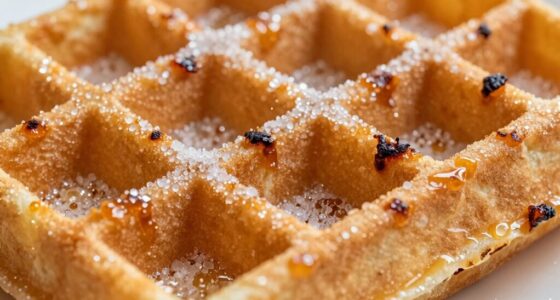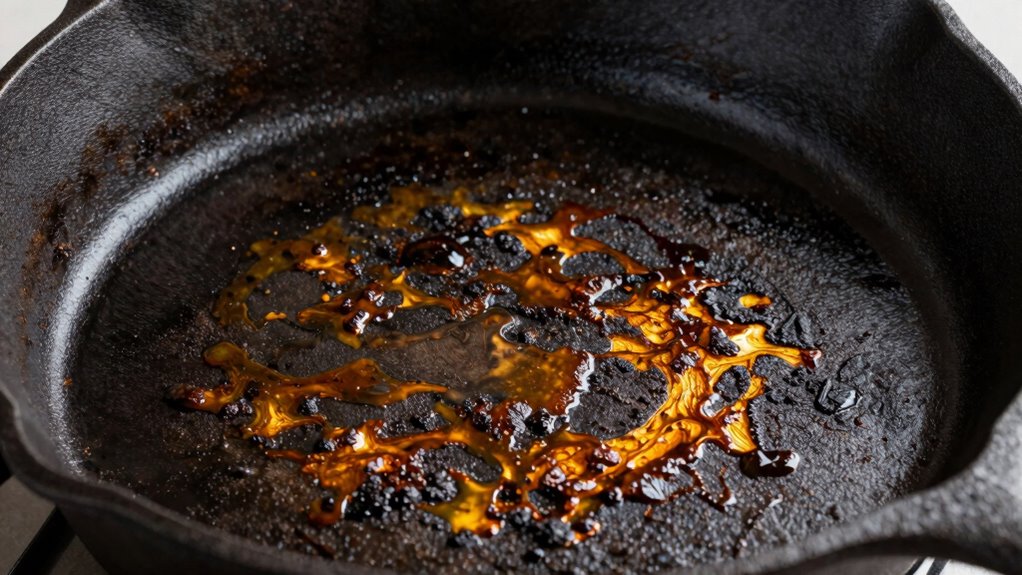
Cast iron browns food differently because of its heat properties. It retains heat very well but has low thermal conductivity, which means it heats slowly and unevenly. This causes hot spots that help develop deep, consistent browning and searing. The slow heat transfer enables better flavor development during long cooking but can make quick adjustments tricky. If you want to understand how these properties influence your cooking techniques, there’s more to discover about maximizing your cast iron’s performance.
Key Takeaways
- Cast iron’s high heat retention keeps surfaces hot, promoting consistent browning even after initial searing.
- Its low thermal conductivity causes uneven heat distribution, leading to varied browning across the surface.
- Slow, steady heat transfer allows for deep caramelization, resulting in distinct browning patterns.
- Proper preheating ensures even temperature across the cast iron plate, reducing hot spots.
- Differences in heat transfer properties among materials impact how uniformly and quickly browning occurs.
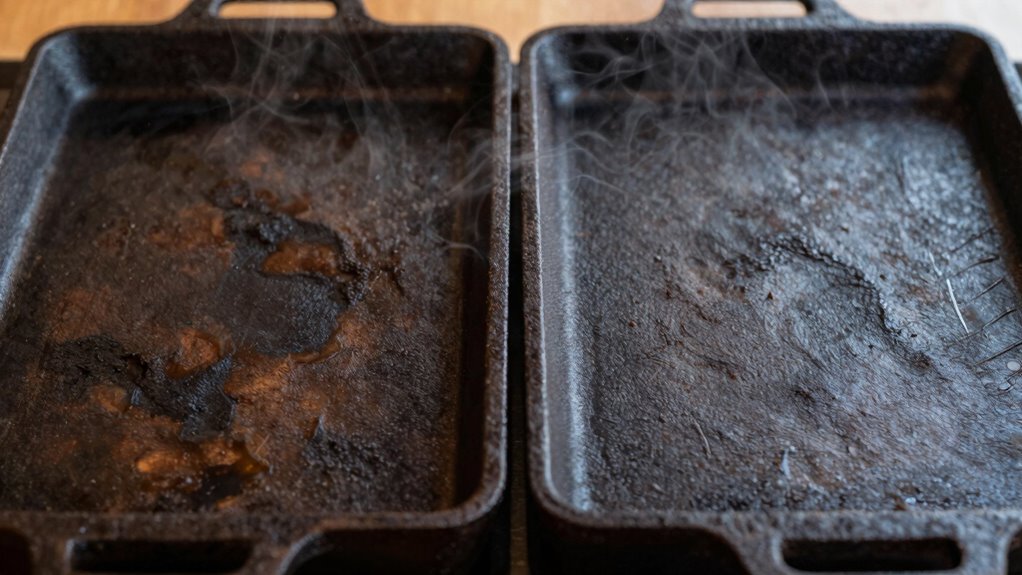
Have you ever wondered how the choice of plate material impacts heat transfer efficiency? When it comes to cooking, especially with cast iron, understanding how material properties influence heat flow can make a big difference in your results. The key factors here are thermal conductivity and heat retention. Thermal conductivity refers to how quickly heat moves through a material, while heat retention describes how well a material holds onto that heat once it’s been absorbed. Different materials have varying degrees of these qualities, affecting how evenly your food cooks and how well flavors develop.
Cast iron is renowned for its excellent heat retention, meaning once it heats up, it stays hot for a long time. This property allows for consistent cooking, which is why cast iron pans are favored for searing and browning meats like steaks. The high heat retention ensures that the surface remains hot enough to develop a rich, caramelized crust without fluctuations. However, cast iron’s thermal conductivity is relatively low compared to metals like copper or aluminum. This means it heats up more slowly and distributes heat unevenly across its surface, which can sometimes lead to hot spots. That’s why, as you cook, you might notice some parts browning faster than others.
Cast iron retains heat well but heats unevenly due to low thermal conductivity.
The impact of these properties becomes clear when you’re trying to brown something evenly. Cast iron’s slow but steady heat transfer allows you to develop a deep, consistent sear, but it requires patience and proper preheating. If you’re cooking delicate items or want quick temperature adjustments, cast iron might not be the best choice. Instead, materials with higher thermal conductivity like copper or aluminum can transfer heat more rapidly and evenly, giving you more precise control over browning and cooking times. They tend to heat up quickly and cool down faster, making them ideal for tasks that need quick temperature changes.
Choosing the right plate material boils down to what you’re cooking and your preferences. For long, slow cooking processes that benefit from heat retention, cast iron excels. For quick, precise heat adjustments, a material with higher thermal conductivity is preferable. Knowing how these properties influence heat transfer helps you pick the best cookware for your needs. So, next time you’re browning meat or preparing a delicate sauce, consider how the material’s thermal conductivity and heat retention are working together to give you the perfect result. Understanding these factors empowers you to cook more intentionally, making every meal a success. Grasping heat transfer principles can elevate your cooking skills and ensure better results in the kitchen.

Lodge Seasoned Cast Iron Skillet – PFAS-Free, Non-Toxic Cookware – Use with an Oven, Stove, Grill, or Campfire – Naturally Non-Stick & Oven Safe – 10.25 Inches
Quality Cast Iron Frying Pan: The Lodge Seasoned Cast Iron Skillet is loved for its great heat retention,…
As an affiliate, we earn on qualifying purchases.
As an affiliate, we earn on qualifying purchases.
Frequently Asked Questions
How Does Surface Finish Affect Heat Transfer in Cast Iron Plates?
Surface finish impacts heat transfer in cast iron plates by influencing surface roughness and oxidation layers. A smoother finish reduces surface roughness, allowing better contact and more efficient heat transfer. Conversely, a rougher surface increases oxidation layers, which act as insulators and hinder heat flow. Hence, maintaining a refined surface finish helps you achieve more uniform browning and better heat conduction in cast iron cookware.
Can Coatings Improve Heat Retention in Cast Iron Cookware?
Yes, coatings can improve heat retention in cast iron cookware. Non-stick coatings and ceramic layers create a barrier that helps trap heat more effectively, reducing heat loss during cooking. These coatings also make cleaning easier and prevent food from sticking, enhancing overall cooking performance. Just be aware that some coatings might affect heat transfer slightly, so choose high-quality options to maximize heat retention while maintaining durability.
What Role Does Plate Thickness Play in Browning Consistency?
Sure, because everyone loves a perfectly browned steak every single time, right? Well, plate thickness plays a vital role in browning consistency. Thicker plates distribute heat more evenly, preventing hot spots and uneven browning. Thin plates heat up quickly but can cause uneven browning, leaving you with burnt edges and raw centers. So, choose your thickness wisely if you want that delicious, consistent, golden-brown crust without the culinary lottery.
Are There Alternative Materials That Transfer Heat More Evenly?
Yes, you can consider alternative metals like aluminum or copper, which have higher thermal conductivity than cast iron. These materials transfer heat more evenly across the surface, reducing hot spots and promoting consistent browning. Aluminum heats quickly and distributes heat uniformly, while copper offers excellent thermal conductivity, making them great options for achieving more even heat transfer when cooking or browning foods.
How Does Ambient Temperature Influence Cast Iron Heating Performance?
Imagine you’re cooking on a chilly morning; ambient effects and temperature variability influence your cast iron skillet’s heating. Cooler ambient temperatures slow heat transfer, making it harder to reach ideal cooking temps. Conversely, warmer environments help cast iron heat more evenly and efficiently. So, ambient temperature directly impacts cast iron’s heating performance, requiring you to adjust your stove settings to maintain consistent heat and avoid uneven cooking caused by environmental fluctuations.
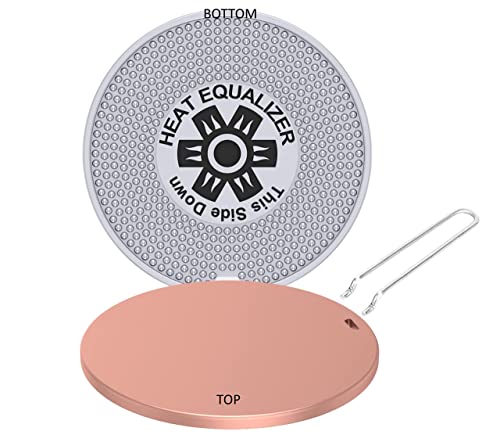
Heat Equalizer-6 inch None Stick Copper finish Heat Diffuser for Gas Stoves – Aluminum & Copper Alloy Hot Plate for Even Cooking-Burner Cover & Simmer Plate
Perfect Fit for Any Cookware: Don't settle for one-size-fits-all solutions. The Heat Equalizer offers three sizes (6, 8,…
As an affiliate, we earn on qualifying purchases.
As an affiliate, we earn on qualifying purchases.
Conclusion
Ultimately, understanding how different plate materials gently influence heat transfer allows you to refine your culinary artistry. Cast iron’s subtle warmth imparts a distinct, rich hue that subtly elevates your dishes, offering a nuanced touch that’s hard to replicate. By appreciating these delicate differences, you can craft meals with a refined finesse, ensuring each result is as thoughtfully tailored as you desire. Embrace these nuances, and your cooking will always carry a touch of elegant distinction.

EWFEN 12 Inch Tri-Ply Stainless Steel Frying Pan, Compatible with All Cooktops Up to 600℉, Large Frying Pan Induction-Ready Skillet, Dishwasher and Oven Safe, Even Heat, 12" Skillet
MULTIPLY CLAD STURDY CONSTRUCTION: Multiply cladding technology produces the highest-quality 3 ply stainless steel cookware set in your…
As an affiliate, we earn on qualifying purchases.
As an affiliate, we earn on qualifying purchases.
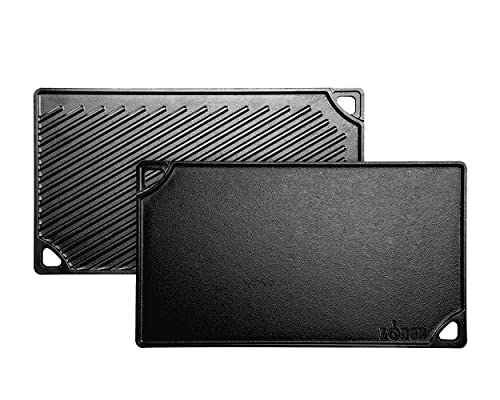
Lodge Double Play Reversible Cast Iron Grill/Griddle – Dual-Sided with Double Burner Configuration for Eggs, Pancakes, Burgers & More – Seasoned, Non-Toxic Cookware – Heavy-Duty Grill Pan – Black
Double Burner Configuration: The Lodge Double Play Reversible Cast Iron Grill/Griddle covers two burners, offering a generous breakfast…
As an affiliate, we earn on qualifying purchases.
As an affiliate, we earn on qualifying purchases.