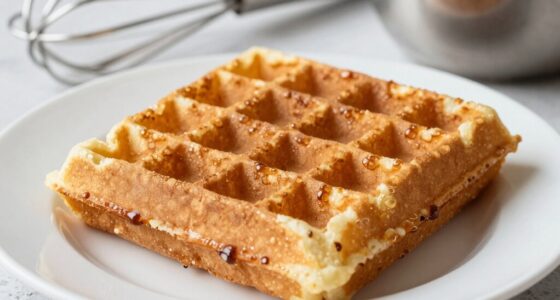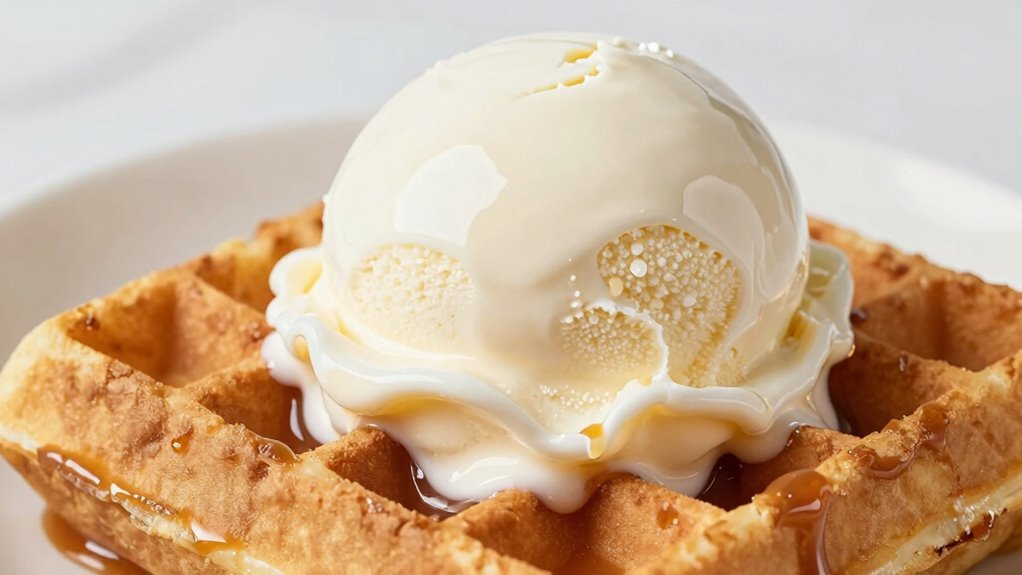

When ice cream has a high overrun, it contains more air, making it lighter and fluffier. This porous structure increases surface area, causing it to melt faster on waffles. In contrast, lower overrun ice cream is denser and melts more slowly because it has less air. Understanding how overrun influences texture and melting behavior helps you choose the best ice cream for different desserts. Keep exploring to discover how to pick the perfect scoop for every treat.
Key Takeaways
- Higher overrun creates a lighter, more porous ice cream that melts faster on waffles due to increased surface area.
- Lower overrun results in denser ice cream with less air, slowing melting and prolonging texture on waffles.
- Manufacturing controls overrun influence how quickly ice cream heats and melts when in contact with warm surfaces.
- Air content from overrun affects melting speed: more air accelerates melting, less air slows it down.
- Understanding overrun helps predict whether ice cream will melt quickly or linger longer on waffle toppings.

Ice cream overrun refers to the amount of air whipped into ice cream during the churning process, directly affecting its texture and volume. When you’re enjoying a scoop, the overrun determines whether it feels light and fluffy or dense and creamy. Understanding how overrun impacts the ice cream’s structure can help you grasp why some sundaes melt faster on waffles than others. The key lies in how the manufacturing process incorporates air and how that influences the final product’s texture.
During the manufacturing process, ice cream makers carefully control overrun to achieve specific qualities. Higher overrun means more air is injected into the mix, creating a product that’s more voluminous and softer. Conversely, lower overrun results in a denser, richer texture with less air. This process involves churning the mixture at precise speeds, incorporating air evenly to produce a consistent texture. As a result, the texture analysis of ice cream reveals that higher overrun often correlates with a lighter, less dense product, which can melt more quickly due to its increased surface area and reduced core density.
Higher overrun creates lighter, softer ice cream that melts faster due to increased surface area.
The amount of overrun also influences how ice cream interacts with heat. When you place a scoop on a waffle, the surface area in contact accelerates melting. Ice cream with a high overrun tends to have a more porous, aerated structure, which means heat penetrates more readily. This causes it to melt faster, especially if the ice cream was stored at a slightly warmer temperature or if the waffle is warm. On the other hand, ice cream with lower overrun, being denser and more compact, takes longer to melt because heat has to penetrate a more solid structure. The manufacturing process that determines overrun essentially crafts the foundation for these melting behaviors.
Knowing this, you can see why your favorite ice cream might behave differently depending on its overrun. A light, airy scoop may seem to disappear faster on your waffle, while a denser variety lingers longer. If you prefer a slow-melting experience, opting for ice cream with lower overrun could be your best choice. Alternatively, if you enjoy a quick melt to enhance flavor release, higher overrun options are ideal. Ultimately, the manufacturing process—how much air is incorporated during churning—directly impacts the texture analysis and melting characteristics, shaping your overall ice cream experience. Understanding this connection helps you appreciate why some sundaes seem to melt faster on waffles, revealing the science behind the creamy delight.
high overrun ice cream
As an affiliate, we earn on qualifying purchases.
As an affiliate, we earn on qualifying purchases.
Frequently Asked Questions
How Does Overrun Affect Ice Cream Flavor?
Overrun impacts ice cream flavor by causing flavor dilution, which can make the taste less intense. When ice cream has high overrun, more air is whipped in, reducing the overall flavor concentration. This also affects taste consistency, making the ice cream seem less rich or creamy. You might notice a lighter flavor or a less satisfying taste experience, especially if the overrun is very high.
Can Overrun Be Adjusted During Manufacturing?
Yes, overrun can be adjusted during manufacturing. Imagine a control panel where skilled technicians tweak the manufacturing processes, adding or removing air from the ice cream mixture. Ingredient adjustments, like altering stabilizers or fat content, help fine-tune overrun levels. These subtle changes create a lighter or denser texture, allowing manufacturers to optimize the product’s quality and melt rate, ultimately delivering a perfect scoop every time.
Does Overrun Impact the Nutritional Content?
Overrun does impact the nutritional content of ice cream. When overrun is high, it adds more air, making the ice cream less dense and reducing the calorie count and sugar content per serving. Conversely, lower overrun means less air, resulting in a richer, denser product with higher calories and sugar. So, if you’re watching your intake, understanding overrun helps you choose ice creams with appropriate nutritional values.
Is Higher Overrun Better for Ice Cream Quality?
While you might think higher overrun is a modern innovation, it’s actually like a Swiss watch’s precision—air incorporation enhances ice cream’s texture, making it lighter and more palatable. Higher overrun generally improves quality by creating a smoother, creamier texture, but too much can cause it to be less dense and less flavorful. Balance is key; you want enough air for texture enhancement without sacrificing richness.
How Does Overrun Influence Ice Cream Storage?
Higher overrun, meaning more air incorporation, can make ice cream easier to store because it reduces density and melting speed. When you store ice cream with increased air, it helps maintain a smoother texture and prevents ice crystal growth, which enhances texture. However, too much overrun might compromise flavor and creaminess. So, balancing overrun is key for ideal storage, ensuring your ice cream stays fresher longer and retains its quality.
dense ice cream for melting slow
As an affiliate, we earn on qualifying purchases.
As an affiliate, we earn on qualifying purchases.
Conclusion
So, next time your waffle sundae melts faster, remember it’s all about the ice cream’s overrun. For example, if you choose a low-overrun ice cream with less air, it’ll be denser and melt quicker on your waffle. Imagine a shop that uses high-overrun ice cream—your dessert stays firmer longer. Understanding overrun helps you pick the perfect scoop for your sundae, ensuring every bite stays delicious and doesn’t vanish too fast.
ice cream waffle toppings
As an affiliate, we earn on qualifying purchases.
As an affiliate, we earn on qualifying purchases.
best ice cream for sundaes
As an affiliate, we earn on qualifying purchases.
As an affiliate, we earn on qualifying purchases.