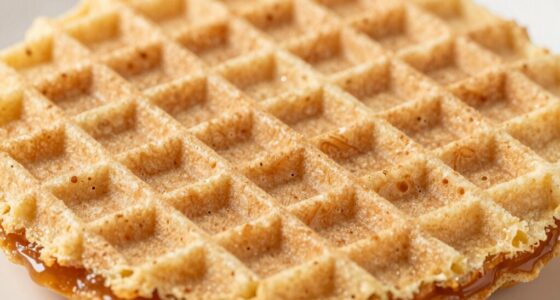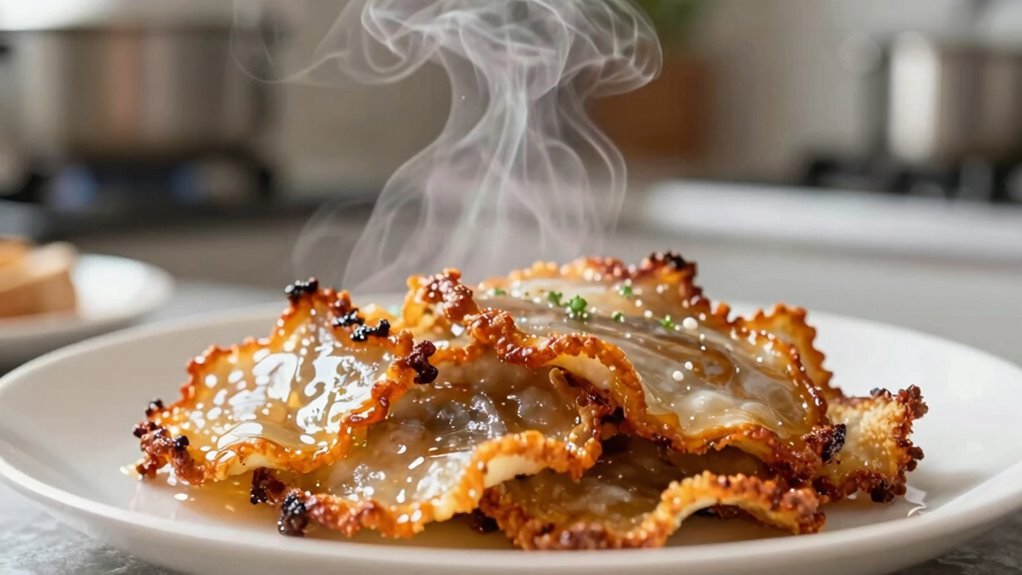

After cooking, it’s essential to vent steam to keep your snacks crispy because trapped moisture softens their exterior. Covering food immediately or sealing containers traps steam inside, making items soggy. Instead, let your snacks cool completely and provide a way for steam to escape—use a loose cover or cooling rack. Proper venting prevents moisture buildup and guarantees long-lasting crunch. Want to discover more tips for perfect crispness? Keep going to learn how proper storage makes all the difference.
Key Takeaways
- Venting hot food allows steam to escape, preventing moisture buildup that causes sogginess.
- Covering cooked snacks immediately traps steam, softening their crisp exterior.
- Proper cooling with ventilation preserves crunch by reducing condensation.
- Using breathable covers or leaving containers slightly open helps maintain crispness.
- Reheating in dry heat (oven or toaster) minimizes additional moisture and retains texture.

Ever wonder why your crispy snacks lose their crunch so quickly? The culprit is often moisture buildup inside the container or packaging. When you finish cooking or baking something crispy, steam doesn’t just disappear; it lingers. As the hot air escapes and cools, moisture condenses on the surface of your snacks, turning that once crisp texture into a soggy mess. To keep that desirable crunch, you need to understand how moisture impacts texture preservation and how to control it.
When you remove food from the oven or stovetop, it’s tempting to dive right in or cover it tightly to keep it warm. But doing so traps steam and prevents it from escaping. This trapped moisture seeps into the food, softening the exterior and ruining the crispness you worked so hard to achieve. The key is to allow the steam to escape and prevent moisture from settling back onto your snacks. This is where venting comes into play.
Allow steam to escape to keep snacks crispy and prevent sogginess.
Venting your cooked food after it’s done is essential for maintaining its crispness. Think of it as giving the steam a designated escape route, preventing it from accumulating and turning your snack into a soggy disappointment. When you open the oven door slightly or transfer your food to a cooling rack, you create an exit for excess moisture. This simple step helps preserve the snack’s texture by reducing moisture buildup. Your goal is to slow down the process of condensation and keep that desired crunch intact.
It’s also important to consider how you store leftovers. If you seal crispy snacks in an airtight container immediately after cooking, moisture gets trapped inside, accelerating the loss of crunch. Instead, let the food cool completely and, if possible, loosely cover it or use breathable packaging. This approach allows moisture to escape naturally, maintaining texture preservation longer. When reheating, try to do so in a way that minimizes steam—like reheating in an oven or toaster rather than microwave—so you don’t introduce unnecessary moisture. Additionally, understanding moisture control techniques can help you better preserve food textures and prevent sogginess over time.

Geesta 2/3/4-Tier Upgraded Collapsible Cooling Rack with Adjustable 3 Setting Design Stackable Roasting Cooking Drying Wire Cooling Rack for Cookies Baking Gifts for Women
【Collapsible 4 tier Cooling Rack】 Features a sturdy construction with a collapsible & adjustable design. Geesta wire cooling…
As an affiliate, we earn on qualifying purchases.
As an affiliate, we earn on qualifying purchases.
Frequently Asked Questions
Does Venting Affect the Overall Cooking Time?
Venting your food can slightly affect the overall cooking time because it causes steam loss, which may slow down the process. When you vent, you release moisture, leading to reduced moisture retention and potentially longer cooking times to reach the desired temperature. However, the impact is usually minimal. Just remember, venting is essential for maintaining crispness, but it can influence how long your dish takes to cook thoroughly.
Can Different Foods Require Different Venting Techniques?
Absolutely, different foods demand unique venting techniques—imagine delicately whispering to a fragile soufflé versus loudly shouting to a hearty steak. Your approach affects food texture and flavor retention, turning a crispy delight into soggy mush or vice versa. For veggies, quick venting preserves crunch, while slow release helps roast meats stay juicy. Adjust your vents like a culinary DJ, remixing your strategy for each dish’s perfect harmony.
Is There a Specific Type of Venting Tool Recommended?
You should use specific venting tools designed for steam release, like a quick-release valve or a silicone venting lid, to guarantee proper venting. These tools allow you to control steam escape, preventing over-pressurization and preserving crispness. Always follow the manufacturer’s instructions for your venting tools, and make sure to vent food promptly after cooking to avoid sogginess caused by excess steam.
How Does Venting Impact Food Storage After Cooking?
Ever wonder how venting affects your stored food? When you vent, you release moisture, which helps prevent sogginess and mold, but it can also lead to moisture loss, impacting flavor preservation. Proper venting balances moisture retention for longer shelf life while avoiding excess humidity. By controlling this process, you keep your leftovers fresher, tastier, and less prone to spoilage, making your storage more effective and enjoyable.
Are There Health Considerations Related to Venting Practices?
Venting after cooking is generally safe if you follow proper venting safety, but steam health concerns exist if you don’t. Steam can cause burns or scalds, so always open vents slowly and keep hands away. Make certain your kitchen has good ventilation to prevent moisture buildup, which can lead to mold. By practicing safe venting, you minimize health risks and enjoy your food without worry.
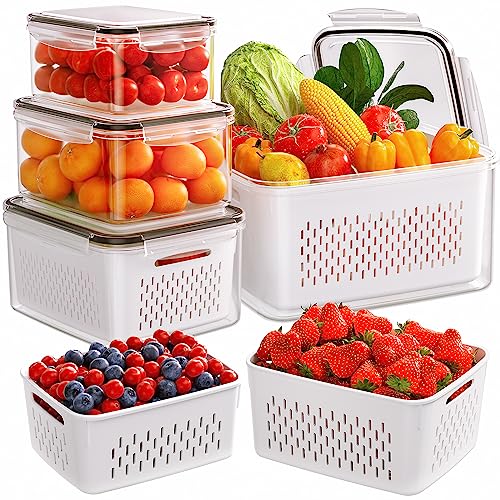
5-Pack Fruit Storage Containers for Fridge with Removable Colanders, 4 in 1 Produce Storage Containers with Lids, Leakproof Fridge Organizer Bins for Salad Berry Lettuce Vegetables Meat Keeper Fresh
【5 Different Size & Large Capacity】 Upgrade fruit containers for fridge set include 5 pack of X-Large size…
As an affiliate, we earn on qualifying purchases.
As an affiliate, we earn on qualifying purchases.
Conclusion
Remember, if you want that perfect crispy finish, don’t let steam steal the show. Vent your food like a savvy 21st-century chef, or you’ll end up with soggy results—no matter how much you wish for a magic wand. Think of it as avoiding the soggy bottom in your modern-day bakery or keeping your pizza crust from turning into a soggy mess. Stay vigilant, and your crispy dreams won’t be dashed by the sneaky enemy called steam.
oven-safe reheating tray
As an affiliate, we earn on qualifying purchases.
As an affiliate, we earn on qualifying purchases.

Snack Organizer for Countertop, Wood Pantry Storage Bins with Handles, Snack Bar Organizer for Kitchen, Office, 4 Compartment Food Container Snack Box with Drawer, Pantry Organizer for Chips, Candy
【Large Capacity Snack Organizer】Are you tired of having snacks scattered all over your countertop? Our snack basket organizer…
As an affiliate, we earn on qualifying purchases.
As an affiliate, we earn on qualifying purchases.