When you warm syrup, its viscosity drops, making it flow more easily. Heating increases the energy of its molecules, letting them slide past each other with less resistance. This means warm syrup spreads and soaks into foods faster and more evenly. If you want to understand how temperature controls syrup’s behavior and why it soaks in quicker when warm, keep exploring—it’s easier than you think.

Get baking supplies delivered free with Prime
- Fast, free delivery on millions of items
- Prime Video, Amazon Music and more included
- Member-only deals all year
Key Takeaways
- Warming reduces syrup viscosity, making it flow more easily and soak into foods faster.
- Increased temperature energizes syrup molecules, decreasing resistance to flow.
- Warm syrup’s lower viscosity allows it to spread and penetrate surfaces more quickly.
- Heating breaks molecular bonds, facilitating smoother flow and faster absorption.
- Controlling syrup temperature optimizes soaking time and improves flavor integration.

Have you ever wondered what makes some syrups flow smoothly while others pour slowly? The answer lies in understanding the role of temperature effects on syrup viscosity and how it influences flow rate. When you pour syrup straight from the jar, its consistency can vary markedly depending on how warm or cold it is. Cold syrup tends to be thick and resistant to movement, making it difficult to pour or spread evenly. On the other hand, warming the syrup reduces its viscosity, allowing it to flow more freely and soak into foods faster. This is because temperature directly impacts the molecular structure of syrup, affecting how easily its molecules slide past each other.
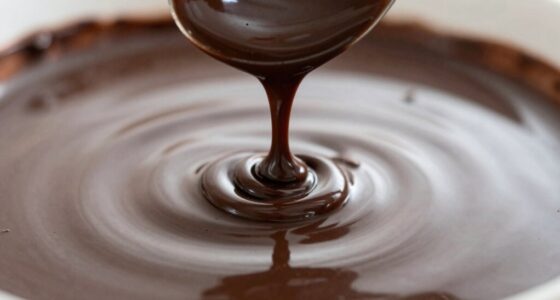
Warm syrup flows more smoothly by reducing viscosity and allowing molecules to slide past each other more easily.
As temperature increases, the syrup’s viscosity decreases. Think of it like this: at lower temperatures, the syrup’s molecules are packed tightly together, creating more resistance to movement. When you heat the syrup, those molecules gain energy and move more rapidly, breaking the bonds that hold them in a thick, resistant state. This results in a higher flow rate, meaning the syrup pours more smoothly and spreads effortlessly. That’s why warm syrup is often preferred for pancakes or drizzling over desserts—it soaks in quickly and evenly, enhancing flavor and texture.
Conversely, if you try to pour cold syrup, you’ll notice it pours much slower. Its high viscosity means it resists flow, and it can even leave a sticky trail instead of soaking into your food. This slow flow can be frustrating if you’re trying to coat something evenly or if you want the syrup to absorb quickly. Heating the syrup beforehand can markedly improve this process by lowering its viscosity, making it easier to work with. Just a gentle warm-up, like placing the jar in hot water or microwaving it briefly, can make a big difference.
Understanding temperature effects on syrup’s flow rate empowers you to control how it interacts with your food. If you want quick absorption, warming the syrup is the way to go. If you prefer a thicker consistency for decorative purposes or coating, keeping it cool might be better. This control over viscosity through temperature is essential for culinary precision and achieving the perfect texture. So next time you’re dealing with syrup, remember that a slight increase in temperature can turn a stubborn, slow-moving liquid into a smooth, flowing one, allowing it to soak in faster and do its job more effectively.
As an affiliate, we earn on qualifying purchases.
Frequently Asked Questions
Does Syrup Viscosity Affect Its Sweetness?
Syrup viscosity does impact its perceived sweetness, but it doesn’t change the actual sugar content. When syrup is less viscous, like warm syrup, it spreads more evenly, enhancing your perception of sweetness. Conversely, thicker syrup may seem less sweet because it doesn’t coat your palate as thoroughly. So, viscosity impact influences how sweet the syrup feels, even though the true sweetness remains constant regardless of temperature or thickness.
How Does Humidity Influence Syrup Flow?
Imagine a warm summer day, and you notice how humidity impact makes syrup flow more easily. High humidity slows syrup evaporation, keeping it wetter longer, which means it pours smoother and spreads faster. Low humidity, on the other hand, causes quicker evaporation, thickening the syrup and making it harder to pour. So, humidity directly influences how easily syrup flows, affecting its consistency and application.
Can Syrup Viscosity Change Over Time?
Yes, syrup viscosity can change over time. Temperature effects play a significant role, as warmer storage conditions cause the syrup to become less viscous, making it flow more easily. Conversely, colder environments increase viscosity. Additionally, storage duration matters; prolonged storage can lead to crystallization or separation, affecting viscosity. To maintain ideal flow, store syrup in a consistent, moderate temperature and use it within a reasonable timeframe.
Is Thicker Syrup Better for Pouring?
You might think thicker syrup is better for pouring, but it actually depends on what you prefer. Thicker syrup has a more viscous pouring consistency, which can be harder to pour smoothly. The syrup’s texture influences how easily it flows from your bottle or spoon. If you want a smoother pour, a slightly thinner syrup works better. Ultimately, choose a consistency that matches your desired pouring ease and presentation.
Do Different Syrup Flavors Have Different Viscosities?
Yes, different syrup flavors can have varying viscosities due to their ingredients and flavor impact. For example, fruit-flavored syrups might be thinner, while caramel or honey-based ones tend to be thicker. These viscosity variations affect pouring, soaking, and overall texture. So, if you’re choosing a syrup for a specific purpose, consider how its flavor impact might influence its viscosity and, consequently, how it interacts with other foods or beverages.
Conclusion
Now you see, warm syrup is like a speedy river rushing to fill every nook and cranny. When it’s heated up, its viscosity drops, turning it into a smooth, enthusiastic flow that soaks in faster than you can say “sweet success.” So next time you want that perfect drizzle, warm it up—let it dance and glide into every crevice, transforming your treat into a masterpiece of sticky perfection. Embrace the flow, and enjoy every delicious drop.
Halloween Picks
halloween
As an affiliate, we earn on qualifying purchases.