
To achieve a perfect fill, you need to match your batter’s viscosity to the grid depth. If the viscosity is too high, it won’t fully penetrate deep or complex grids, causing voids and weak coatings. Too low, and the slurry may spill or lack adhesion. By adjusting your formulation and monitoring flow, you can optimize coverage. Keep exploring to discover how precise control leads to stronger, more reliable batteries.
Key Takeaways
- Proper batter viscosity ensures complete filling of deep or complex grid structures without voids.
- Too low viscosity can cause spillage or uneven coating, especially in shallow or intricate grids.
- Adjusting slurry composition based on grid depth optimizes flow and adhesion during coating.
- Real-time viscosity monitoring enables dynamic control for consistent fill across varied grid depths.
- Matching batter viscosity to grid geometry improves coating uniformity, mechanical stability, and battery performance.
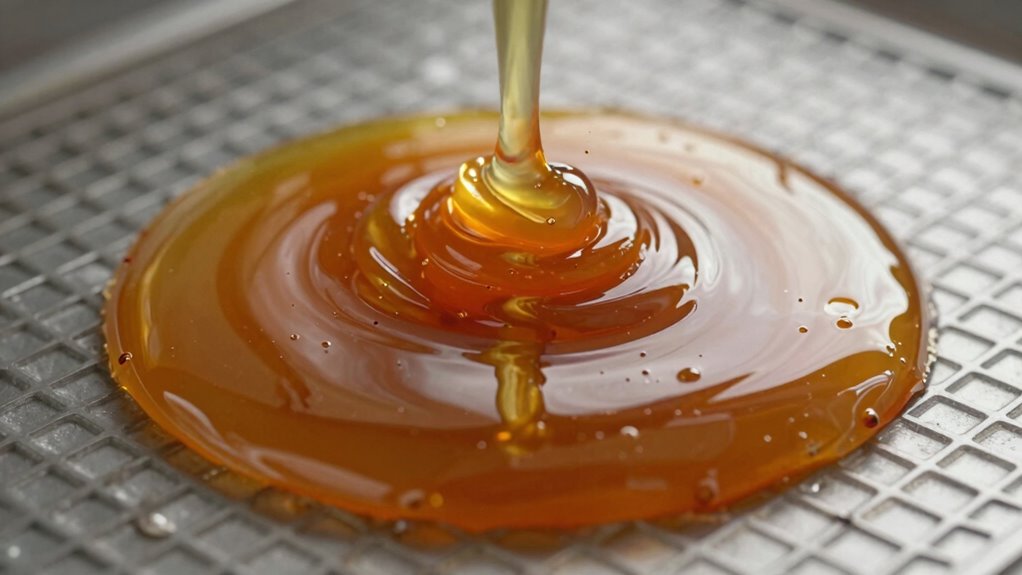
Understanding how batter viscosity interacts with grid depth is essential for optimizing battery performance. When you’re working with the electrode slurry, the way the liquid flows through the porous grid directly impacts the uniformity and quality of the coating. This liquid flow dynamics is influenced heavily by the batter’s viscosity, which determines how easily it moves and fills every corner of the grid structure. If the viscosity is too high, the batter becomes thick and sluggish, leading to incomplete coverage or uneven coating. Conversely, if it’s too low, the batter may flow excessively, risking spillage or insufficient adhesion. Striking the right balance is critical, and that’s where precise viscosity measurement techniques come into play.
Batter viscosity and grid depth control are key to optimal battery coating quality.
Using accurate viscosity measurement techniques allows you to monitor and control the batter’s flow properties during formulation and application. Techniques such as rotational viscometry or capillary rheometry help you assess how the slurry behaves under different shear rates, giving you an understanding of its flow profile within the narrow spaces of the grid. This data is vital because it helps you predict how the batter will behave during the coating process, enabling adjustments to be made before production begins. For example, increasing the solvent content may lower viscosity, improving flow, but could also weaken the coating’s mechanical stability. Alternatively, adding binders might increase viscosity, making the slurry more resistant to flow but improving adhesion and durability.
Understanding these interactions means you can optimize the coating process by tailoring the batter’s viscosity to match the grid depth. Thinner, less viscous slurries tend to fill deeper or more complex grid structures more effectively, ensuring full coverage and minimizing voids. Thicker slurries, on the other hand, are better suited for shallower grids or applications requiring thicker coatings. Adjustments based on viscosity measurement techniques help you find that ideal point where the batter flows smoothly, coats evenly, and adheres properly without defects. This precision reduces waste, enhances battery lifespan, and improves overall manufacturing efficiency.
Furthermore, advancements in viscosity measurement techniques have made it easier to obtain real-time data during coating, enabling dynamic adjustments and improved process control. Understanding these interactions means you can optimize the coating process by tailoring the batter’s viscosity to match the grid depth. Thinner, less viscous slurries tend to fill deeper or more complex grid structures more effectively, ensuring full coverage and minimizing voids. Thicker slurries, on the other hand, are better suited for shallower grids or applications requiring thicker coatings. Adjustments based on viscosity measurement techniques help you find that ideal point where the batter flows smoothly, coats evenly, and adheres properly without defects. This precision reduces waste, enhances battery lifespan, and improves overall manufacturing efficiency.
In the end, mastering liquid flow dynamics through diligent viscosity measurements empowers you to produce batteries with consistent quality. It streamlines your process, ensures uniform fill, and minimizes defects caused by improper flow. By understanding how batter viscosity interacts with grid depth, you gain control over the entire coating process, leading to better-performing batteries and more reliable production outcomes. It’s a pivotal aspect of battery manufacturing that, when managed well, makes a significant difference in the final product’s performance and longevity.

Car Battery Hydrometer, Precision & Fast Dectection Car Electric Hydraulic Density Meter, Professional Battery Tester, Performance Car Repairing Tool
【Precision Measurement】:This professional battery hydrometer has a wide measurement range of 1.100-1.300 and a measurement accuracy of 0.005….
As an affiliate, we earn on qualifying purchases.
As an affiliate, we earn on qualifying purchases.
Frequently Asked Questions
How Does Temperature Impact Batter Viscosity?
Temperature directly impacts batter viscosity by causing thermal expansion, which influences how thick or fluid your batter becomes. As temperature rises, viscosity stability decreases, making the batter more fluid, while cooler temperatures increase viscosity, thickening it. You notice this because warmer batter flows more easily, guaranteeing better fill, but too hot can break viscosity stability. Keeping the right temperature ensures your batter maintains ideal viscosity for perfect filling.
Can Viscosity Adjustments Improve Fill Consistency?
Yes, viscosity adjustments can improve fill consistency. By controlling viscosity, you enhance fill uniformity, ensuring each cavity is filled evenly. When your batter is too thick, it may cause incomplete fills; too thin, and it might overflow or create air pockets. Using viscosity control techniques, such as adjusting ingredient ratios or temperature, helps you fine-tune the batter’s flow, resulting in a smoother, more consistent fill process.
What Materials Influence Grid Depth and Viscosity Interaction?
Imagine a battle of giants—material compatibility and surface tension—dictating grid depth and viscosity interaction. You need materials like compatible polymers and coatings that match the batter’s chemistry, preventing clashes that cause inconsistent fills. Surface tension plays a game-changing role, influencing how the batter spreads and fills the grid. Choosing the right materials guarantees ideal interaction, leading to precise, uniform fills and flawless battery performance.
Are There Industry Standards for Optimal Batter Viscosity?
Yes, industry standards for ideal batter viscosity exist to guarantee quality and consistency. You should follow standard compliance guidelines that specify viscosity measurement techniques, such as using a viscometer or rheometer, to accurately assess batter flow. These standards help you maintain the right viscosity level for effective filling, preventing issues like underfilling or overflow. Regular viscosity measurement ensures your process aligns with industry benchmarks and produces reliable, high-quality results.
How Does Viscosity Affect the Longevity of the Grid?
A stitch in time saves nine, so maintaining proper paste consistency is essential. Viscosity directly impacts the longevity of the grid by ensuring ideal batter flow and consistent fill. If your batter is too thick, it strains the grid, causing uneven wear and early failure. Conversely, if it’s too thin, it leaks or doesn’t adhere properly. Keep the viscosity balanced to prolong grid life and achieve perfect fills every time.

Digital Rotary Viscometer with 4 Rotors and Temperature Probe, Lab Viscosity Meter with Data Output Inks, Paints, Coatings, Adhesives, Greases, Cosmetics 10-2,000,000Mpa.S, Accuracy:±3.0% NDJ-8S
Efficient Data Processing:Equipped with an RS232 interface, a temperature probe, and special software, it supports data setting on…
As an affiliate, we earn on qualifying purchases.
As an affiliate, we earn on qualifying purchases.
Conclusion
So, after all this, it turns out that finding the perfect batter viscosity isn’t just about science—it’s a game of patience and luck. You’d think tweaking the mix would be straightforward, but nope, it’s a fine art. Ironically, the right viscosity might just depend on how deep you go into the grid. So, next time your fill’s off, remember: it’s all about that delicate balance—who knew science could be so unpredictable?

Portable Rotational Viscometer, Rotary Viscometer Viscosity Tester with 4 Rotors, Microprogrammed Control and 1~100,000 MPa.s Measurement Range, Can Be Adjusted Body, for Paints, Coatings and Inks
【Ingenious Design】The Viscometer Is Equipped With 4 Rotors For Different Viscosity Scopes Of Samples. It Features With Premium…
As an affiliate, we earn on qualifying purchases.
As an affiliate, we earn on qualifying purchases.

Unistik2 Capillary Blood Sampling Device
As an affiliate, we earn on qualifying purchases.
As an affiliate, we earn on qualifying purchases.