
Adding fruit to batter affects moisture and structure by releasing extra liquid or absorbing it, depending on the fruit type. Juicy fruit makes the batter wetter, risking a dense or uneven bake if you don’t adjust your dry ingredients. Dried fruit absorbs moisture but needs pre-soaking to prevent drying out the batter. Properly handling and balancing these factors helps you achieve a consistent batter and perfect final texture; explore how to manage this for best results.
Key Takeaways
- Fresh fruit adds moisture, making batter wetter and potentially affecting texture if not adjusted.
- Dried fruit absorbs moisture, helping to firm the batter but may require soaking beforehand.
- Proper balance of dry and liquid ingredients maintains batter consistency despite added fruit moisture.
- Coating dried fruit with flour prevents clumping and sinking, ensuring even distribution.
- Excess moisture from fruit can lead to dense or uneven baked goods if not properly managed.
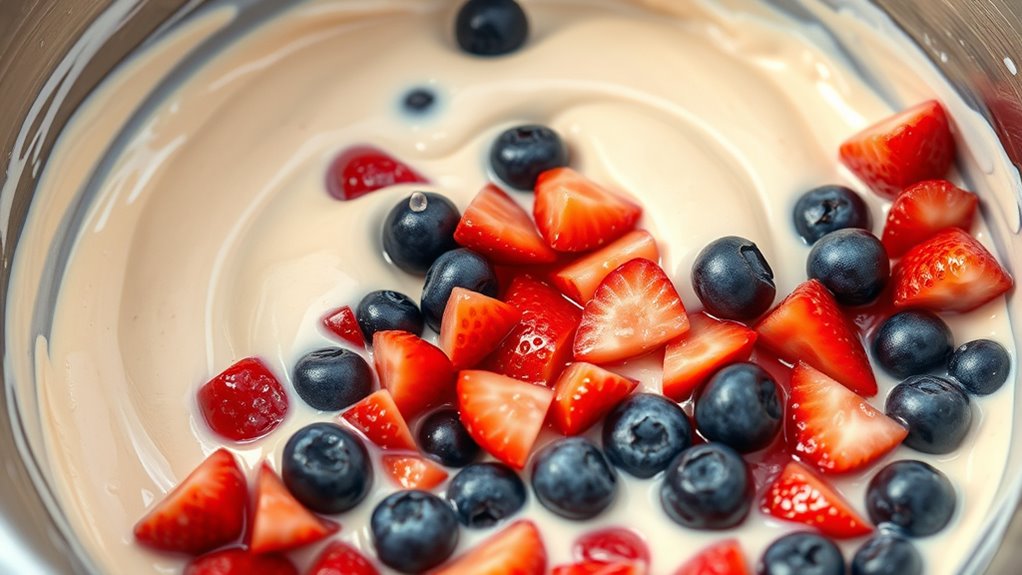
Adding fruit to batter is a simple way to enhance both the flavor and texture of your baked goods. When you incorporate fruit, you’re introducing moisture and natural sugars that can change the way your batter behaves during mixing and baking. One of the key considerations is how the fruit’s texture influences the overall fruit texture in your final product. Depending on the type of fruit you use—be it fresh berries, chopped apples, or dried fruit—the impact on batter consistency can vary considerably. Fresh, juicy fruit releases moisture into the batter, making it wetter, while dried fruit tends to absorb some moisture, slightly firming the mixture. This difference affects how easily you can stir the batter and how it will hold together before baking.
You need to be mindful of batter consistency when adding fruit. Too much moisture from overly ripe or juicy fruit can make your batter runny, leading to dense or unevenly baked results. To prevent this, consider adjusting your dry ingredients—slightly increasing flour or reducing liquids—to maintain a balanced batter. Conversely, if you’re adding dried fruit, you might want to soak it briefly in warm water or a flavorful liquor beforehand. This step prevents the dried fruit from drawing moisture away from the batter, which could otherwise result in a dry, crumbly texture in the finished product. The goal is to keep a uniform batter consistency that’s thick enough to hold the fruit evenly dispersed but not so stiff that it’s difficult to fold in the fruit without breaking it apart.
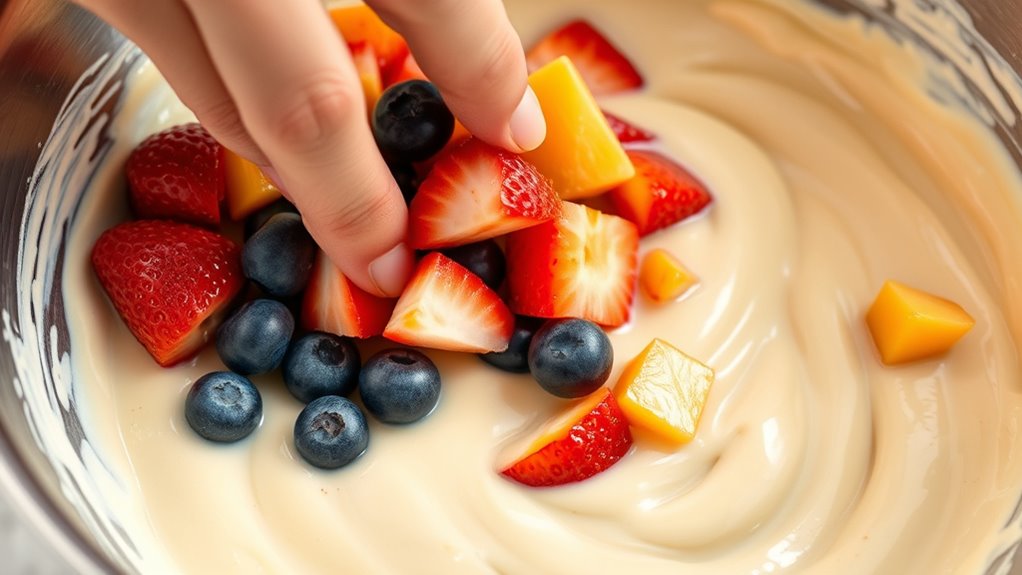
The way you handle fruit during mixing also influences the final product. Gently folding fresh berries or chopped fruit into the batter preserves their shape and prevents them from sinking to the bottom. Over-mixing can break down delicate fruit and lead to a watery batter, which affects both the texture and the appearance of your baked goods. When working with dried fruit, ensure it’s well coated with flour before mixing to help it stay suspended evenly throughout the batter. This technique enhances the overall fruit texture and prevents clumping or settling during baking.

WhiteRhino Glass Mixing Bowls Glass Bowls with Lids Set(4.5QT,2.7QT, 1.1QT),Large Salad Bowls,glass mixing bowl Space-Saving Nesting Storage bowls for Cooking,Baking,Prepping,Dishwasher Safe
【Premium High Borosilicate Glass – Durable,Safe &Heat-Resistant】Our glass mixings bowls are made of high borosilicate glass,thicker,safer&more durable for…
As an affiliate, we earn on qualifying purchases.
As an affiliate, we earn on qualifying purchases.
Frequently Asked Questions
How Does Fruit Size Influence Batter Moisture Absorption?
You’ll find that smaller fruit particles absorb more moisture because their increased surface area enhances moisture retention. Larger fruit pieces absorb less moisture, which can lead to uneven distribution in your batter. To optimize moisture absorption, consider chopping fruit into smaller sizes. This not only improves moisture retention but also guarantees a more consistent texture throughout your baked goods, giving you better control over the final product’s moisture and structure.
Can Adding Fruit Affect Batter Shelf Life?
Adding fruit can reduce batter shelf life because fruit spoilage accelerates, leading to quicker deterioration. While it adds flavor and moisture, it also introduces bacteria and enzymes that compromise shelf stability. You might enjoy fresh fruit’s sweetness, but beware, it shortens the batter’s freshness window. To prevent spoilage, consider adding dried or preserved fruit, which helps maintain shelf stability longer and keeps your batter fresher.
What Are Optimal Fruit Types for Different Baked Goods?
You should choose fruit based on flavor compatibility and the baked good’s texture. For muffins, berries like blueberries or raspberries work well because they add moisture and vibrant flavor. Dried fruits, such as raisins or cranberries, suit cookies or bread, providing sweetness without excess moisture. For tarts or pies, fresh fruits like apples or peaches are ideal, enhancing flavor without compromising structure. Always consider how the fruit’s moisture impacts your recipe’s balance.
How Does Fruit Addition Impact Baking Time?
Adding fruit to your batter is like adding a splash of sunshine—it brightens your baked goods. It can slightly extend baking time because moisture from the fruit causes dehydration, making the center take longer to cook. To retain flavor and prevent overbaking, keep an eye on your baked good and consider pre-drying fruit slightly. This way, you balance moisture, flavor retention, and ideal baking time.
Are There Health Benefits to Adding Fruit to Batter?
Adding fruit to batter offers health benefits like nutritional enhancement and antioxidant properties. When you include fruits, you boost vitamins, fiber, and minerals, making your baked goods more nutritious. The antioxidants in fruits can help fight free radicals, supporting your overall health. So, by adding fruit, you not only improve flavor and texture but also create a healthier treat that contributes positively to your diet.

Chopped Dates Dusted with Oat Flour, 1 Pound
CHOPPED DATES WITH OAT FLOUR: Our chopped dates are tender, naturally sweet pieces of premium fruit, lightly dusted…
As an affiliate, we earn on qualifying purchases.
As an affiliate, we earn on qualifying purchases.
Conclusion
Adding fruit to batter is like planting a surprise inside your baked good—moisture and flavor burst with every bite. You’ll notice it keeps the texture tender and gives your treat a delightful twist. Just remember, too much fruit can make it soggy, so find that perfect balance. Think of it as seasoning a dish—you want just enough to enhance, but not overpower. With a little practice, your baked creations will be as juicy and satisfying as a ripe summer peach.

Sukh 100PCS 2Gram Silica Packets – Decassant Packs Anti Humidity Packs Silicone Packets Dry for Electronic Products, Jewelry, Cameras, Clothes, Books, Iron Tools, Precision Instruments
Excellent Moisture Absorption: Our silica gel packets has transparent silica gel beads inside, decassant packs has high moisture…
As an affiliate, we earn on qualifying purchases.
As an affiliate, we earn on qualifying purchases.

Tovolo Cupcake Scoop Batter Dispenser – Easy to Use Baking Scoop for Muffins, Cupcakes, Cookie Dough & Pancakes – Unique Baking Supplies, Gadgets & Appliances for Kitchen- BPA Free & Dishwasher Safe
Deposit Batter Without Drips: Avoid leaving drips between cupcakes with the easy-to-use Tovolo Cupcake Scoop. The curved edge…
As an affiliate, we earn on qualifying purchases.
As an affiliate, we earn on qualifying purchases.