
Predictive modeling of waffle browning using colorimetry helps you control the cooking process precisely by analyzing how temperature and ingredients affect surface color. By measuring color parameters during cooking, you can forecast the final appearance and make real-time adjustments. This method ensures consistent, visually appealing waffles while reducing waste. If you want to learn how to build these models and optimize your process, exploring this topic further will give you valuable insights.

Get baking supplies delivered free with Prime
- Fast, free delivery on millions of items
- Prime Video, Amazon Music and more included
- Member-only deals all year
Key Takeaways
- Colorimetry provides objective, numerical data to quantify waffle surface browning during cooking.
- Predictive models incorporate temperature, ingredient variations, and color metrics to forecast final color outcomes.
- Real-time color measurements enable adjustments in cooking conditions for consistent waffle browning.
- Modeling helps optimize process parameters, reducing waste and ensuring uniform, appealing waffle coloration.
- Data-driven approaches facilitate recipe customization and process control for high-quality, visually consistent waffles.
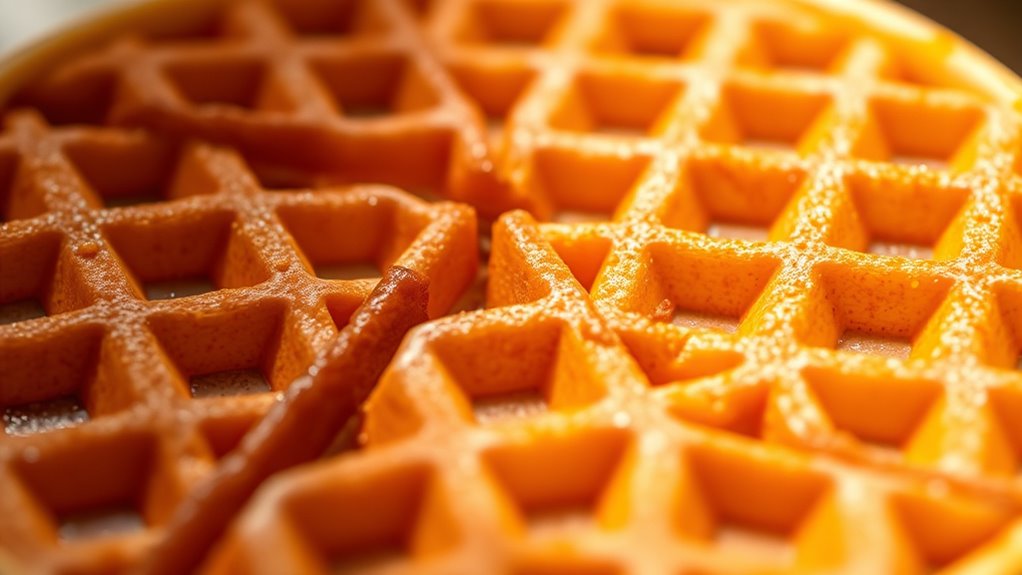
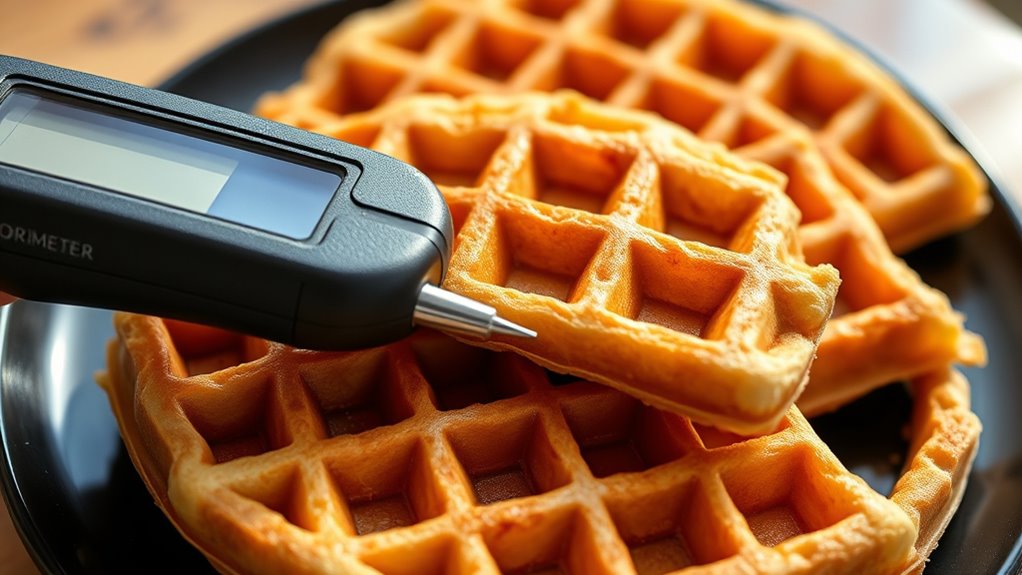
Predictive modeling plays a crucial role in optimizing waffle browning by analyzing factors like batter composition, cooking temperature, and time. When you aim for the perfect golden-brown waffle, understanding how these variables influence color development is essential. One of the key aspects is temperature effects. As you increase the temperature, the Maillard reaction accelerates, leading to faster browning. Conversely, lower temperatures slow this process, resulting in paler waffles. By modeling these temperature effects, you can predict the ideal cooking conditions that produce consistent color without over- or under-browning. This approach helps you fine-tune your waffle-making process, ensuring each batch reaches the desired level of doneness. Additionally, controlling colorimetric parameters allows for more precise adjustments during cooking. Ingredient variations also considerably impact browning. For instance, altering the sugar content or type can change how quickly and intensely waffles brown. More sugar generally promotes faster browning due to increased caramelization, whereas using less sugar may result in lighter waffles. Similarly, the type of flour or the addition of fats influences heat transfer and surface reactions, affecting color development. Predictive models incorporate these ingredient variations by analyzing their effects on color parameters, allowing you to anticipate how different recipes will behave under specific cooking conditions. This insight helps you customize recipes for different flavor profiles or dietary needs without sacrificing visual appeal. Colorimetry provides a precise way to measure waffle browning objectively. By translating color into numerical data, you can monitor changes during cooking and develop models that predict final color based on initial conditions. For example, you might find that a certain batter composition reaches the ideal color at a specific temperature and time. Using these predictions, you can adjust your cooking process in real-time, avoiding guesswork and ensuring uniform results. This method reduces waste, improves consistency, and enhances quality control. In practical terms, predictive modeling allows you to experiment with various temperature settings and ingredient ratios in a controlled way. By collecting colorimetric data across different batches, you develop a robust model that guides you toward the perfect waffle. Whether you’re adjusting for ingredient variations, ambient conditions, or equipment differences, these models help you achieve the same high-quality browning every time. Ultimately, integrating colorimetry with predictive analytics empowers you to optimize your waffle process, delivering consistently appealing and delicious results that meet your standards and satisfy your customers.
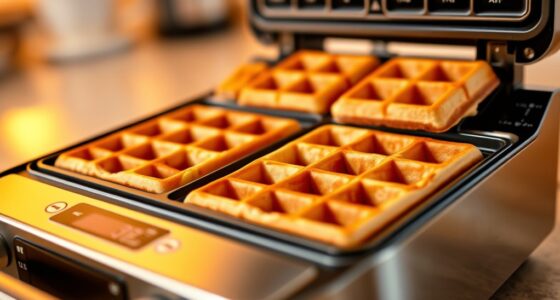
digital waffle iron with temperature control
As an affiliate, we earn on qualifying purchases.
As an affiliate, we earn on qualifying purchases.
Frequently Asked Questions
What Are the Cost Implications of Implementing Colorimetric Sensors?
When you consider implementing colorimetric sensors, you’ll need to account for costs related to sensor calibration and data processing. Regular calibration guarantees accuracy, which can add to expenses, while sophisticated data processing tools might require initial investments or ongoing maintenance. These costs vary depending on the sensor quality and system complexity, but focusing on efficient calibration and data handling can help manage your overall expenses effectively.
Can This Model Be Adapted for Other Baked Goods?
Oh, sure, why stop at waffles? You can totally adapt this model for other baked goods—if you’re willing to explore alternative sensor technologies, that is. Cross product application becomes a breeze when you realize that colorimetry isn’t the only game in town. With a little tweaking, your predictive model can work wonders on bread, muffins, or even cookies, making your baked delights perfectly browned every single time.
How Does Humidity Affect Waffle Browning Predictions?
Humidity interference and moisture variability can markedly impact waffle browning predictions. When humidity levels fluctuate, they alter the moisture content in the waffle batter and surface, affecting color development. This means your colorimetric readings might not accurately reflect browning stages if humidity isn’t controlled or accounted for. To improve prediction accuracy, consider monitoring humidity levels and adjusting models accordingly, ensuring they reflect real-world moisture variability during baking.
What Are the Environmental Impacts of Colorimetric Devices?
Think of colorimetric devices as tiny eco-ambassadors, silently measuring and reporting. Their environmental footprint hinges on resource consumption like energy, rare materials, and manufacturing impacts. While they aid in reducing waste and optimizing processes, their production and disposal can contribute to environmental strain. You should consider these factors to guarantee you’re minimizing your ecological impact, balancing technological benefits with sustainable practices for a greener future.
How User-Friendly Is the Technology for Small-Scale Producers?
You’ll find that evaluating user friendliness is vital for small producer adoption of colorimetric devices. These tools are generally designed to be intuitive, enabling quick learning and easy operation. Small-scale producers often appreciate straightforward interfaces and minimal setup, making it easier to incorporate the technology into their routines. Overall, with proper training and clear instructions, these devices are quite accessible, encouraging wider adoption among small producers seeking reliable, simple solutions.
Conclusion
So, next time you enthusiastic ly wait for that perfect golden waffle, remember—your colorimeter might just be the secret hero behind every crispy, browned bite. Who knew that predicting browning could be so scientific, turning your breakfast into a precise art? Ironically, while we chase the perfect hue, it’s the tiny device doing all the work, making your breakfast both perfectly predictable and delightfully boring in its precision. Enjoy your scientifically optimized waffle!
Columbus Day / Indigenous Peoples' Day Picks
long weekend sales
As an affiliate, we earn on qualifying purchases.