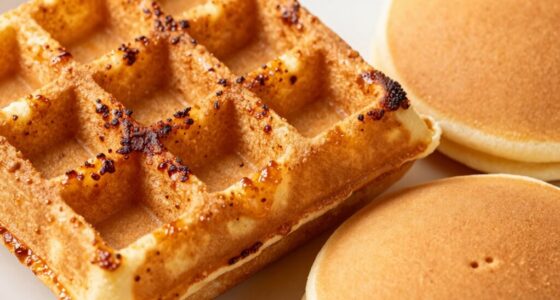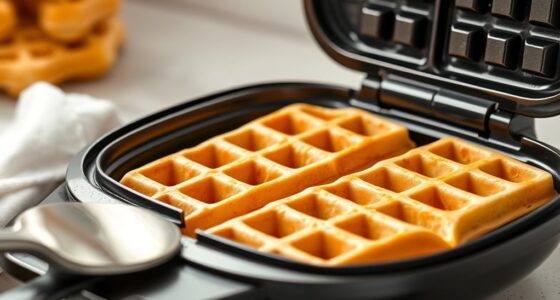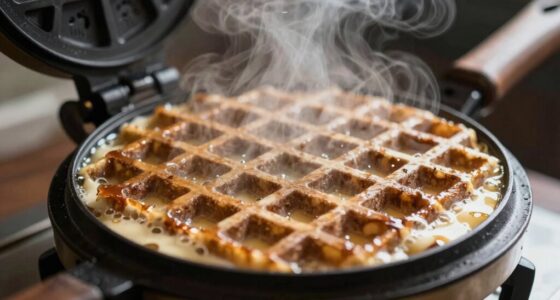
When experimenting with dessert waffles, gelatin gives you a soft, smooth, and melt-in-the-mouth texture, setting quickly at lower temperatures. Agar creates a firmer, more stable structure that sets faster and withstands higher heat, perfect for layered or intricate designs. If you choose gelatin, expect a delicate bite, while agar offers a firmer bite and clearer appearance. Continue exploring, and you’ll discover how each gelling agent can transform your waffle texture to suit your dessert ideas.

Get baking supplies delivered free with Prime
- Fast, free delivery on millions of items
- Prime Video, Amazon Music and more included
- Member-only deals all year
Key Takeaways
- Gelatin yields a softer, melt-in-the-mouth waffle texture, while agar creates a firmer, more structured finish.
- Agar sets quickly at higher temperatures, enabling faster waffle preparation compared to gelatin.
- Gelatin forms smooth, transparent gels ideal for delicate layering in dessert waffles.
- Agar provides a more stable, rigid structure suitable for intricate or decorative waffle presentations.
- Choice between gelatin and agar influences flavor neutrality and dietary suitability in dessert waffle recipes.

Have you ever wondered how gelatin and agar compare as gelling agents? When you’re experimenting with dessert waffles, knowing their differences can help you achieve the perfect texture. Gelatin, derived from animal collagen, has long been a staple in traditional baking and culinary applications. However, if you’re seeking vegetarian alternatives, agar becomes a top contender. Agar-agar is made from red algae and is completely plant-based, making it suitable for vegetarians and vegans alike. This difference in origin influences how each gelling agent behaves in recipes, especially when it comes to setting and texture.
Gelatin from animal collagen versus plant-based agar: key differences in setting and texture for perfect dessert waffles.
In culinary applications, gelatin is prized for its smooth, melt-in-the-mouth consistency and ability to create clear, firm gels. It’s often used in mousses, jellies, and panna cotta, where its ability to produce a delicate, yet sturdy structure is essential. Agar, on the other hand, sets more rapidly and at a higher temperature than gelatin, which can be advantageous in certain dessert preparations. When you’re making dessert waffles or other confections, agar’s quick setting time means you can move from mixing to chilling faster, saving you time during preparation.
Vegetarian alternatives like agar come with their own set of benefits and limitations. Agar is flavorless and odorless, so it doesn’t interfere with your recipe’s taste, and it creates a firmer gel than gelatin at the same concentration. This can help you achieve a more stable structure, especially if your dessert involves layering or intricate presentations. On the flip side, agar requires boiling to activate its gelling properties, which might alter delicate flavors or textures in some recipes. Gelatin, by contrast, dissolves easily in warm liquids without boiling, allowing for more delicate flavor preservation and smoother textures.
Additionally, understanding the gelling strength of each agent can help you modify recipes more precisely to get the desired firmness and consistency. When experimenting with textural qualities in dessert waffles, understanding these differences allows you to tailor your approach. If you want a softer, more delicate gel, gelatin might be your go-to, especially if you don’t mind using animal-based products. If you’re vegan or want a firmer, quicker-setting gel, agar offers a versatile vegetarian alternative that can stand up to creative culinary applications. Keep in mind that the amount needed varies: agar generally needs to be used in higher quantities than gelatin to achieve the same firmness.
As an affiliate, we earn on qualifying purchases.
Frequently Asked Questions
Can Agar Replace Gelatin in All Dessert Recipes?
You might wonder if agar can replace gelatin in all dessert recipes. While agar is a popular vegetarian alternative, it doesn’t work perfectly in every case. Its setting properties and flavor differences can affect texture and taste, especially in delicate desserts. You’ll need to adjust recipes and experiment to achieve the desired results, as agar may not provide the same smoothness or elasticity gelatin offers.
How Does Cooking Time Affect Gelatin and Agar Textures?
Did you know that over 60% of chefs adjust cooking times to perfect textures? When you cook gelatin, longer cooking causes it to melt, making desserts less firm. Conversely, agar sets quickly and remains stable with extended heat. So, cooking time directly impacts their textures: gelatin melts with heat, while agar’s firmness endures. Adjust your timing carefully to achieve the desired consistency in your desserts.
Are There Dietary Restrictions for Gelatin and Agar?
You might wonder about dietary restrictions for gelatin and agar. Gelatin, derived from animal collagen, isn’t suitable for vegetarians or vegans and may pose allergy concerns for some. Agar, made from seaweed, offers a vegetarian alternative and is generally allergy-friendly. When choosing between them, consider these dietary restrictions and allergy considerations to guarantee your desserts accommodate all guests comfortably.
How Do Temperature Changes Influence Dessert Stability?
Temperature fluctuations considerably impact dessert stability by altering dessert consistency. When temperatures rise, your dessert may become too soft or melt, losing its shape. Cooling helps set the structure, but sudden changes can cause separation or sogginess. To maintain stability, avoid extreme temperature shifts and serve your dessert at a consistent, appropriate temperature. Proper storage and handling ensure your dessert retains its desired texture and overall quality.
Which Thickener Creates a More Authentic Waffle Texture?
When choosing a thickener for authentic waffle texture, you notice texture differences and flavor impacts. Gelatin tends to produce a tender, slightly chewy crumb, closely mimicking traditional waffles. Agar, on the other hand, creates a firmer, more brittle texture, which can feel less authentic. You’ll want to pick gelatin if you seek a classic, moist waffle experience, while agar offers a firmer bite but may alter flavor subtly.
Conclusion
Imagine crafting a dessert that’s as firm as a handshake or as delicate as a butterfly’s wing. In your experiments, gelatin gave your waffles a jiggly, inviting texture, like a cozy hammock swaying gently. Agar, on the other hand, set quickly, offering a firmer bite, like a sturdy bridge holding steady. Whether you prefer the playful bounce of gelatin or the crispness of agar, your choice shapes the story your dessert tells—deliciously unique every time.
Halloween Picks
halloween
As an affiliate, we earn on qualifying purchases.