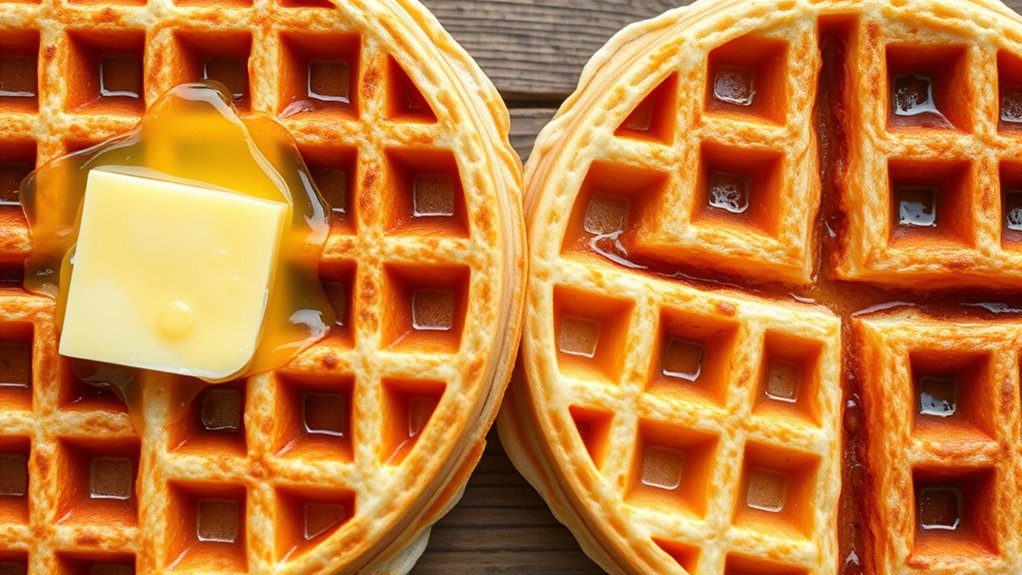

Using butter in your waffle batter adds rich flavor and creates a tender, soft crumb with a slightly softer crust. It melts into the batter, forming tender pockets and enhancing mouthfeel. Oil, on the other hand, blends smoothly, resulting in a crisper exterior and a more uniform, moist interior. The choice affects texture and taste—keep exploring to discover how these fats can perfect your waffle experience.
Key Takeaways
- Butter enhances tenderness and flavor, creating a softer, richer waffle crumb, while oil produces a crisper exterior and lighter texture.
- Butter melts into the batter, forming tender pockets and uneven fat distribution if not mixed well, affecting uniformity.
- Oil blends seamlessly, coating ingredients evenly and promoting a consistent, moist crumb with a crisp crust.
- Butter can lead to a softer crust and nuanced flavor, whereas oil tends to yield a steadier, crisper surface.
- The choice between butter and oil influences waffle texture: butter for tenderness and flavor, oil for crispness and uniformity.

Fat plays a essential role in shaping the texture of your waffles, influencing both their crispiness and tenderness. When you add fat to your batter, it interacts with the flour and liquids to create a unique structure that determines how your waffles turn out. The type of fat you choose—whether butter or oil—significantly impacts the final texture, and understanding their differences helps you craft the perfect waffle.
Butter melts into the batter, creating pockets of richness that contribute to a tender crumb. As it melts, butter coats the flour particles, preventing them from forming too much gluten, which keeps the waffles soft inside. This melting process also introduces tiny air pockets, adding lightness and a delicate crumb. Additionally, butter’s flavor infuses the waffle with a savory richness that enhances sweetness and complements toppings. On the other hand, butter’s melting point means it can sometimes create uneven fat distribution if not properly incorporated, so careful mixing is essential to ensure consistent texture.
Butter melts into batter, creating tender pockets and enhancing flavor with rich, delicate crumb.
Oil absorption plays a crucial role when you use liquid fats. Oils blend seamlessly into the batter without melting in the traditional sense, which means they uniformly coat the flour and other dry ingredients. This absorption prevents excessive gluten development, resulting in a more tender waffle. Since oil doesn’t solidify at room temperature, it helps produce a consistent, moist crumb with a crisp exterior, especially when cooked at the right temperature. The oil’s ability to evenly distribute throughout the batter also means your waffles will have a steadier texture, avoiding the sometimes uneven crumb that butter can cause if not mixed thoroughly.
The difference in how butter melting and oil absorption influence your waffle’s texture is noticeable. Butter’s melting creates a slightly richer, more tender interior with a nuanced flavor, but it may produce a slightly softer crust. Oil, however, tends to produce a crisper exterior because it remains liquid during cooking and helps water evaporation, which crisps up the surface. Both fats contribute to a tender inside, but the choice depends on whether you prefer a more flavor-rich, buttery waffle or a crisper, lighter one.
Frequently Asked Questions
Does Fat Type Influence Waffle Flavor as Well as Texture?
Yes, the fat type influences both waffle flavor and aroma. When you use butter, you add a rich, creamy flavor and a warm aroma that enhances the overall taste. Oil, on the other hand, provides a more neutral flavor, letting other ingredients shine. The fat you choose subtly affects the waffle’s aroma and flavor profile, making your waffles uniquely delicious and aromatic based on your selection.
How Does Fat Quantity Affect Waffle Crispiness?
You double the fat quantity, and your waffle turns into a crispy, golden masterpiece! More fat means increased fat absorption, creating a crunch that’s almost addictive. It enhances crispiness to an extraordinary level, making each bite irresistibly crunchy. Just remember, adding too much can weigh down the waffle, so strike the perfect balance. When you get it right, the crispiness enhancement will blow your mind!
Can Fat Substitutions Improve Waffle Healthiness?
Yes, fat substitutions can improve waffle healthiness. You can use healthier fat options like olive oil or avocado oil instead of butter, which contain beneficial monounsaturated fats. Try fat substitution techniques such as reducing overall fat or replacing part of the oil with applesauce or Greek yogurt. These swaps lower saturated fat and add nutrients, making your waffles a healthier choice without sacrificing texture or flavor.
What Is the Ideal Fat-To-Flour Ratio for Perfect Waffles?
You should aim for a fat-to-flour ratio of about 1:4 for perfect waffles. This balance promotes ideal gluten development, giving your waffles the right texture. Nutritional considerations come into play, so choosing healthier fats like oils or butter can impact overall health. Too much fat can make waffles greasy, while too little might result in dry, crumbly bites. Adjust the ratio to suit your flavor and dietary needs.
How Do Different Fats Impact Waffle Shelf Life and Freshness?
Did you know waffles stored with oil last 1-2 days longer than those with butter? Different fats impact waffle shelf life and freshness through fat oxidation, which causes spoilage. Oil’s stability helps prevent rancidity, maintaining flavor and texture longer. Butter, being less stable, accelerates spoilage, reducing freshness. To maximize shelf stability, choose oils with high smoke points and antioxidants, ensuring your waffles stay delicious for days.
Conclusion
Choosing between butter and oil isn’t just about flavor; it’s about the texture of your waffle. Butter offers a richer, crisper bite, while oil creates a lighter, softer interior. If you want a golden crunch, butter’s your friend. But if you prefer fluffiness, oil might be your go-to. Ultimately, it’s a balancing act—like life itself—where fat shapes your waffle’s personality, just as it shapes your experience in the kitchen.