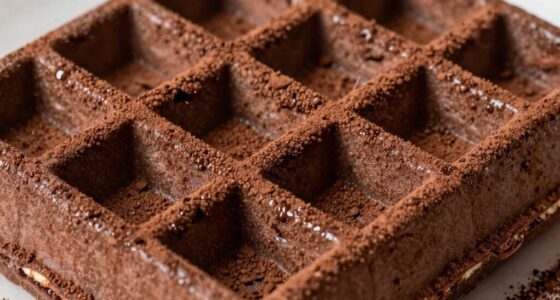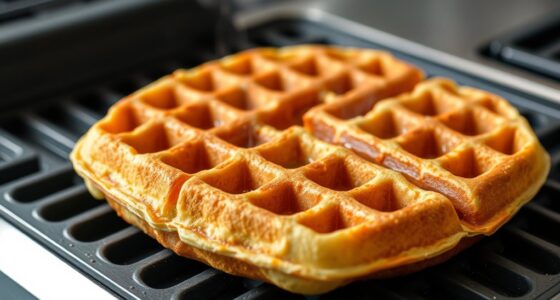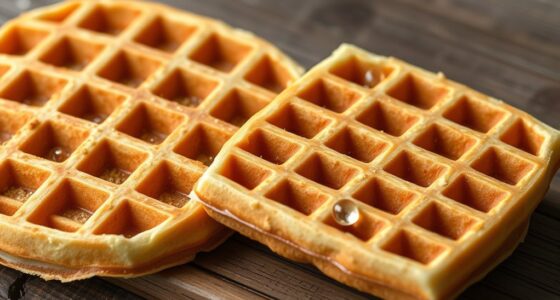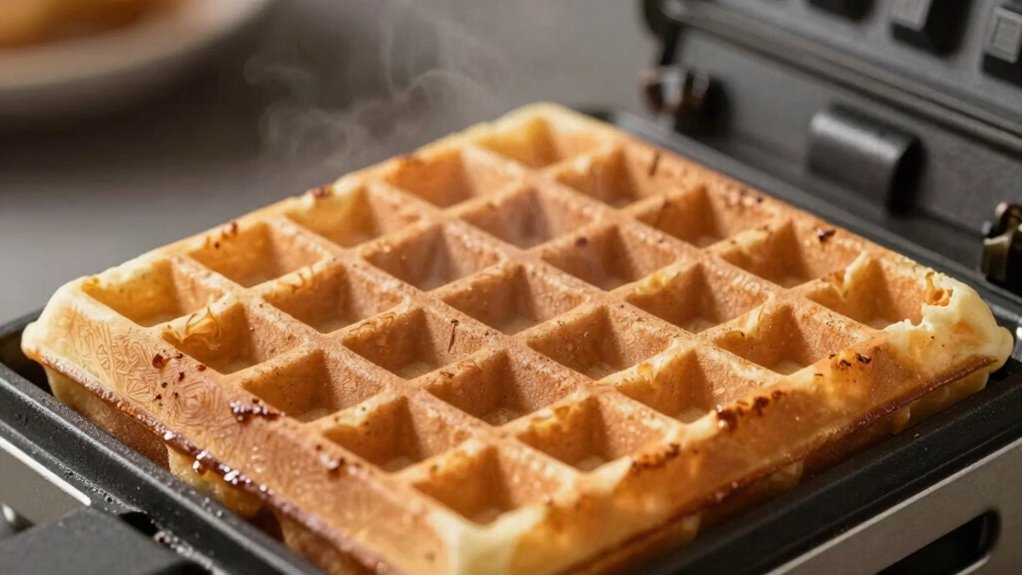

When you apply pressure from the lid, it presses the batter into the waffle iron’s grooves, shaping the final structure. This firm contact pushes the batter into all the intricate details, ensuring even shaping and crisp edges. The right amount of pressure helps cook the waffle evenly, prevents gaps, and maintains its form. Keep exploring how adjusting pressure impacts your waffle’s texture and appearance to perfect your technique.

Get baking supplies delivered free with Prime
- Fast, free delivery on millions of items
- Prime Video, Amazon Music and more included
- Member-only deals all year
Key Takeaways
- Pressure pushes batter into the iron’s grooves, creating the waffle’s detailed shape and ridges.
- Consistent pressure ensures even contact, promoting uniform heat transfer and proper shaping.
- Adequate pressure prevents batter leakage, maintaining the waffle’s intended structure and crispness.
- Excessive pressure on thin batter can cause collapse or tearing, affecting final form.
- Proper pressure helps achieve well-defined edges, crispy exterior, and tender interior.
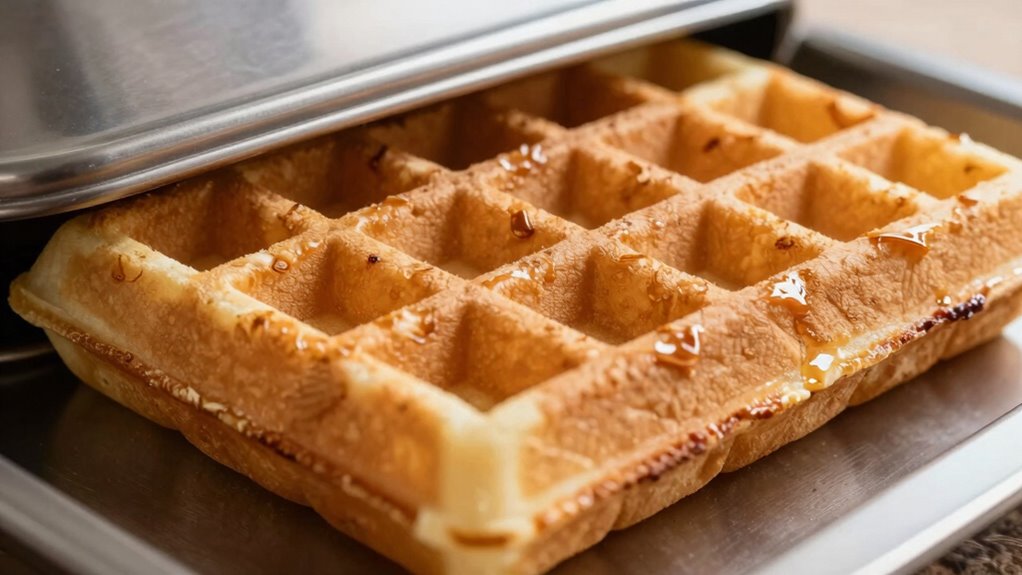
When you close the lid on a waffle iron, the pressure it exerts plays an essential role in shaping the final structure of your waffle. This pressure helps push the waffle batter into the intricate grooves of the iron’s plates, guaranteeing each waffle is evenly cooked and holds its shape. The amount of pressure influences how well the batter spreads and how the heat penetrates, making it a key factor in achieving that perfect, crispy exterior and tender interior. But pressure alone isn’t enough; the baking temperature and waffle batter consistency are equally critical for ideal results.
Proper pressure ensures even batter spread and perfect waffle shape for crispy, tender results.
The baking temperature determines how quickly and evenly your waffle cooks. If the temperature’s too low, the waffle might turn out soggy or undercooked, while too high a temperature risks burning the outer layer before the inside is fully done. When the lid applies proper pressure, it helps maintain consistent contact between the batter and the hot plates, which is essential for even heat transfer. This makes the right baking temperature even more important because it ensures that the batter cooks uniformly under the pressure, creating that ideal balance of crispy outside and fluffy inside. Additionally, understanding the role of pressure in heat transfer can help you optimize your cooking process.
Waffle batter consistency is another essential element. If your batter is too thin, it’ll spread excessively under pressure, resulting in a thin, fragile waffle that might tear or stick to the plates. On the other hand, if it’s too thick, the pressure from the lid may not be enough to spread it evenly, leading to uneven cooking or dense, doughy spots. The right consistency—thick but pourable—allows the batter to fill the waffle iron’s grooves properly without overflowing or sagging. When you close the lid, the pressure helps mold this perfect batter into the shape of the plates, capturing all the ridges and creating those signature grooves. Proper pressure distribution is also crucial to prevent uneven cooking and ensure the waffle’s final structure is consistent from edge to edge.
Achieving the optimal waffle structure also depends on understanding how pressure interacts with other factors, which can influence the final outcome. The combination of proper pressure, baking temperature, and waffle batter consistency determines the overall quality of your waffle. If any one of these factors is off, the structure can be compromised. Too much pressure on a batter that’s too runny can cause it to leak out or collapse, while insufficient pressure on a batter that’s too thick might produce a flat, dense waffle. When you master this balance, you’ll consistently produce waffles with a well-defined shape, crispy edges, and a tender interior. Ultimately, understanding how pressure interacts with temperature and batter consistency helps you control the final structure, turning simple ingredients into a perfectly cooked waffle every time.
waffle iron with adjustable pressure
As an affiliate, we earn on qualifying purchases.
As an affiliate, we earn on qualifying purchases.
Frequently Asked Questions
Can Different Lid Pressures Change Waffle Texture?
Yes, different lid pressures can change waffle texture. If you apply inconsistent lid pressure, it affects the waffle shape deformation, leading to uneven thickness and crispiness. Too much pressure can make the waffle dense and tough, while too little may result in a waffle that’s too soft or unevenly cooked. Maintaining lid pressure stability ensures a uniform shape and desired texture, giving you perfectly crispy and evenly cooked waffles every time.
Does the Type of Waffle Batter Affect Lid Pressure Impact?
Think of waffle batter composition as the personality of your waffle—some are more delicate, others more resilient. The type of batter greatly influences how lid pressure consistency shapes the final structure. For instance, airy batters might compress too much under high pressure, losing fluffiness, while thicker batters hold shape better. So, adjusting lid pressure based on your batter’s makeup ensures your waffle turns out just right, tender yet crisp.
How Does Lid Pressure Influence Waffle Crispiness?
Lid pressure directly affects your waffle’s crispiness by compacting the batter and increasing waffle density. When you apply more pressure, it forces out excess moisture, resulting in a crunchier texture. Conversely, lighter pressure creates a softer waffle. Adjusting lid pressure helps you control the final crispiness, letting you achieve your preferred balance between a crunchy exterior and tender interior. So, experiment with pressure to perfect your waffle’s crunch!
Is There an Optimal Pressure for Perfect Waffles?
Yes, there’s a ideal lid pressure for perfect waffles. You want consistent lid pressure to guarantee uniform heat distribution and even waffle shape. Too much pressure can flatten the batter, making the waffle less fluffy, while too little can cause uneven cooking. Aim for gentle, steady pressure to maintain waffle shape uniformity, resulting in a crisp, golden exterior and tender interior. Adjust the lid pressure based on your waffle iron’s design for best results.
Does Lid Pressure Affect Waffle Cooking Time?
You notice as you press the lid down, it seals the waffle maker tighter, which can influence cooking time. Lid pressure affects heat transfer, often reducing cooking time because the pressure helps trap heat more effectively. When you apply firm lid pressure, the waffle cooks faster and evenly, preventing undercooked centers. Conversely, lighter pressure or no pressure at all might extend cooking time, leaving your waffle slightly underdone.
Conclusion
So, next time you press down on that waffle lid, think about how you’re shaping its final form. That gentle pressure cradles the batter, creating those perfect ridges and pockets. Isn’t it fascinating how a simple act influences the texture and crunch? By understanding this, you can tweak the pressure to get your ideal waffle every time. After all, isn’t the joy of cooking in mastering these subtle, almost invisible, details?
Halloween Picks
halloween
As an affiliate, we earn on qualifying purchases.