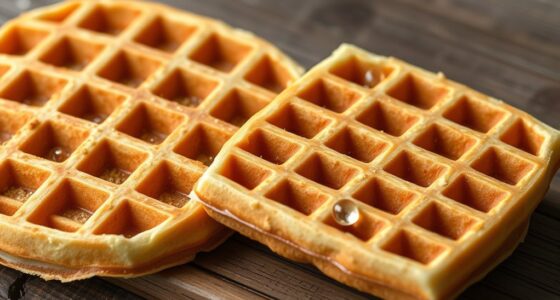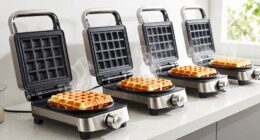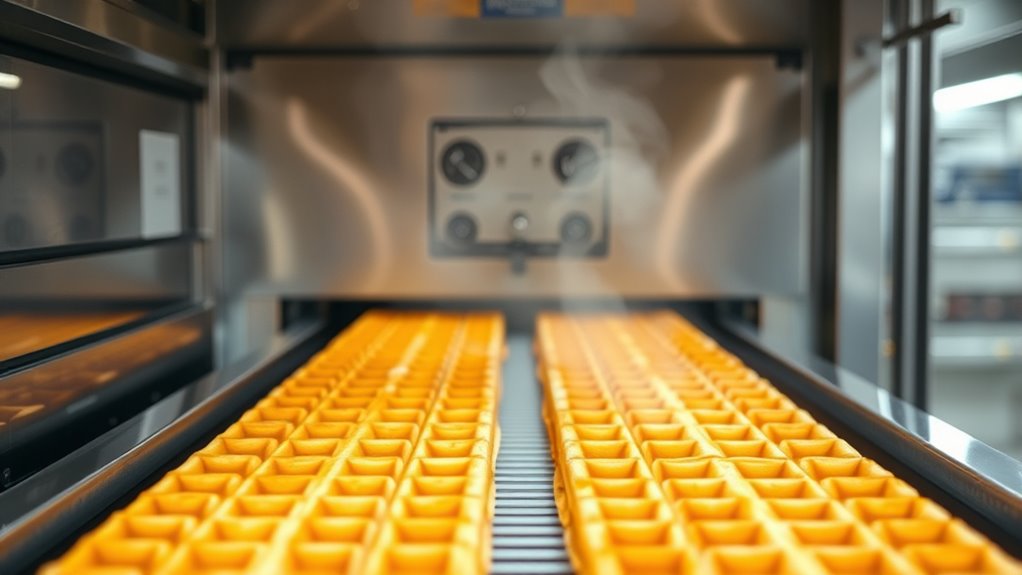

To minimize sticking in your industrial waffle oven, you should maintain precise temperature control within the ideal range of 350°F to 375°F. Regularly monitor and calibrate your oven to prevent uneven heat that causes waffles to stick or burn. Additionally, clean the equipment thoroughly after each batch, focusing on surfaces and crevices, and consider applying a light non-stick coating before use. Mastering these practices helps guarantee a smooth, efficient production process—you’ll find more tips if you keep exploring.
Key Takeaways
- Maintain the optimal baking temperature range (350°F to 375°F) to ensure even cooking and prevent sticking.
- Regularly clean oven plates and surfaces to remove residue buildup that causes waffles to stick.
- Use proper surface care, such as non-stick coatings or sprays, to reduce adherence during baking.
- Monitor and calibrate temperature controls consistently to sustain stable heat levels.
- Apply gentle cleaning methods and manufacturer-approved agents to preserve non-stick surfaces and equipment longevity.

Industrial waffle ovens are essential tools for large-scale food operations that want to produce consistent, high-quality waffles quickly and efficiently. When you’re managing high-volume production, ensuring each waffle comes out perfectly every time is crucial, and controlling factors like baking temperature and cleaning procedures plays a significant role in preventing sticking and maintaining product quality.
First, paying close attention to the baking temperature is vital. If the temperature is too low, waffles may stick because they don’t develop a proper crust, making them prone to tearing or sticking to the plates. Conversely, if the temperature is too high, the waffles might burn on the outside while remaining undercooked inside, which can also lead to sticking issues. To minimize these problems, you need to set the oven to an optimal temperature recommended by the manufacturer—usually around 350°F to 375°F (175°C to 190°C)—and monitor it regularly. Many industrial ovens come with precise temperature controls, so take advantage of these features to keep the baking environment consistent. Regular calibration of the oven ensures that the temperature remains stable, reducing the chances of uneven cooking and sticking.
Optimal baking temperature (350°F–375°F) ensures even cooking and prevents waffles from sticking or burning.
Alongside temperature control, adhering to proper cleaning procedures is essential for preventing waffles from sticking. Residue from previous batches can build up on the plates or within the oven, creating a sticky film that causes waffles to adhere and makes cleaning more difficult over time. Implementing a routine cleaning schedule after each batch helps keep the surfaces smooth and non-stick. Use manufacturer-approved cleaning agents and tools to wipe down the plates thoroughly, paying special attention to corners and crevices where batter remnants can accumulate. Some industrial ovens feature removable plates or non-stick coatings, which should be cleaned gently to preserve their effectiveness. Keeping the surfaces clean not only prevents sticking but also extends the lifespan of your equipment. Additionally, applying a thin layer of non-stick spray or oil to the plates before each use can further reduce the likelihood of waffles sticking. Just ensure that you’re applying the right amount—too much oil can cause uneven browning or smoking, while too little might not prevent sticking effectively. Combining proper baking temperature management with diligent cleaning procedures ensures your industrial waffle oven operates smoothly, producing high-quality waffles batch after batch. By maintaining these practices consistently, you’ll minimize sticking issues, improve efficiency, and keep your production line running seamlessly.
Furthermore, using temperature monitoring tools can help you maintain consistent heat levels, which is crucial for preventing sticking and ensuring uniform cooking.

Cuisinart GR-WAFP Electric Griddler, Waffle Plates Set of 2
Fits Only : GR-4N: Griddler, GR-4: Griddler and GR-5B: Griddler Five . This item does not come with…
As an affiliate, we earn on qualifying purchases.
As an affiliate, we earn on qualifying purchases.
Frequently Asked Questions
What Are the Best Cleaning Practices for Waffle Ovens?
You should regularly use effective cleaning techniques like wiping down the plates with a damp cloth after each use and deep cleaning weekly. Adjust batter formulations to reduce stickiness, ensuring they aren’t too thick or oily. Avoid harsh abrasives that could damage surfaces, and always unplug the oven before cleaning. Proper maintenance helps prevent batter buildup and sticking, making your waffle production smoother and more efficient.
How Often Should I Calibrate the Oven Temperature?
Think of calibrating your oven temperature like tuning a vintage radio — it keeps things running smoothly. You should calibrate your oven temperature at least once a month, or more often if you notice uneven cooking or sticking issues. Regular calibration ensures your waffle oven maintains accurate heat levels, reducing sticking and improving product consistency. Don’t forget, proper calibration frequency keeps your production on point, just like a well-tuned classic.
Can Different Batter Recipes Affect Sticking Issues?
Yes, different batter recipes can affect sticking issues. When your batter consistency varies or you use ingredient variations, it may cause uneven surface contact or stickiness. Thicker batters might stick more, especially if not properly greased, while thinner ones tend to release easily. To minimize sticking, adjust your batter’s consistency when needed, and verify your oven surface is well-maintained and properly prepared for each batch.
What Maintenance Schedule Ensures Optimal Oven Performance?
You should follow a regular maintenance schedule that includes a detailed maintenance checklist and frequent oven inspections. Check for buildup, wear, or damage to heating elements, belts, and sensors. Clean the interior and exterior thoroughly to prevent sticking issues. Schedule inspections weekly, and perform extensive maintenance monthly. By staying consistent with your maintenance routine, you guarantee peak oven performance, reduce sticking, and extend the lifespan of your industrial waffle oven.
Are There Specific Waffle Batter Additives to Reduce Sticking?
You can add waffle batter additives like cornstarch or a small amount of oil to reduce sticking. Using non-stick coatings on your waffle iron also helps prevent batter from adhering. These additives create a barrier, making it easier to release the waffles without tearing. Make sure to adjust your batter consistency as well, ensuring it’s not too thick, which can contribute to sticking despite the additives and coatings.

oven thermometers oven thermometer oven thermometer for gas oven oven temperature gauge oven thermostat stove thermometer internal oven thermometer
CLEAR READING: Our oven thermometer is nice for traditional ovens, toaster ovens, or other heat-based food appliances, and…
As an affiliate, we earn on qualifying purchases.
As an affiliate, we earn on qualifying purchases.
Conclusion
As you perfect your industrial waffle oven process, you’ll notice that minimizing sticking isn’t just about equipment—it’s about timing and a bit of luck. Sometimes, a small tweak or an unexpected cool breeze can make all the difference, turning a sticky mess into flawless waffles. Keep experimenting, stay attentive, and trust that the right coincidence might just be the breakthrough you need. After all, success often comes when least expected, right when you’re about to give up.

MiToBeLe Heavy Duty Oven Cleaner Brush Set,Oven Cleaning Kits,Oven Cleaning Tools Accessories with Razor Blade Scraper,Crevice Cleaning Brush,Pumice Stone,Microfiber Cleaning Cloth,Scrub Sponges
CONQUER 10-YEAR BAKED-ON MESSES IN 10 MINUTES:Our Heavy Duty Oven Cleaner Brush Set pairs a razor-edged stainless scraper…
As an affiliate, we earn on qualifying purchases.
As an affiliate, we earn on qualifying purchases.

Spray;Waffle;Grid (CASE of 6)
As an affiliate, we earn on qualifying purchases.
As an affiliate, we earn on qualifying purchases.