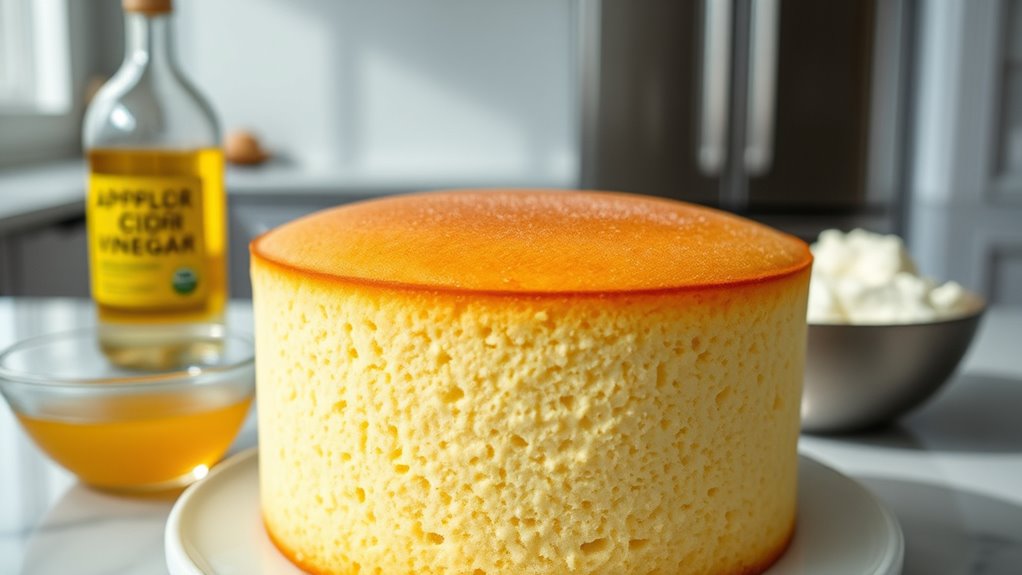

To achieve rise without eggs, you can use plant-based substitutes like chia or flaxseed gel, which trap air and provide structure, especially in gluten-free baking. Adding leavening agents like baking powder helps create lift, while commercial egg replacers with starches mimic the egg’s rising function. Incorporating xanthan or guar gum improves elasticity. Understanding how each substitute works allows you to tailor your recipes for perfect lift—exploring these options will give you even more baking confidence.
Key Takeaways
- Use plant-based egg substitutes like flaxseed or chia seed gels to mimic binding and structure.
- Incorporate leavening agents such as baking powder or baking soda to promote rise.
- Add xanthan gum or guar gum to replicate gluten’s elasticity and improve dough lift.
- Substitute mashed bananas or applesauce for moisture and slight sweetness, aiding in leavening.
- Conduct small tests to adjust ingredient ratios for optimal rising and texture without eggs.
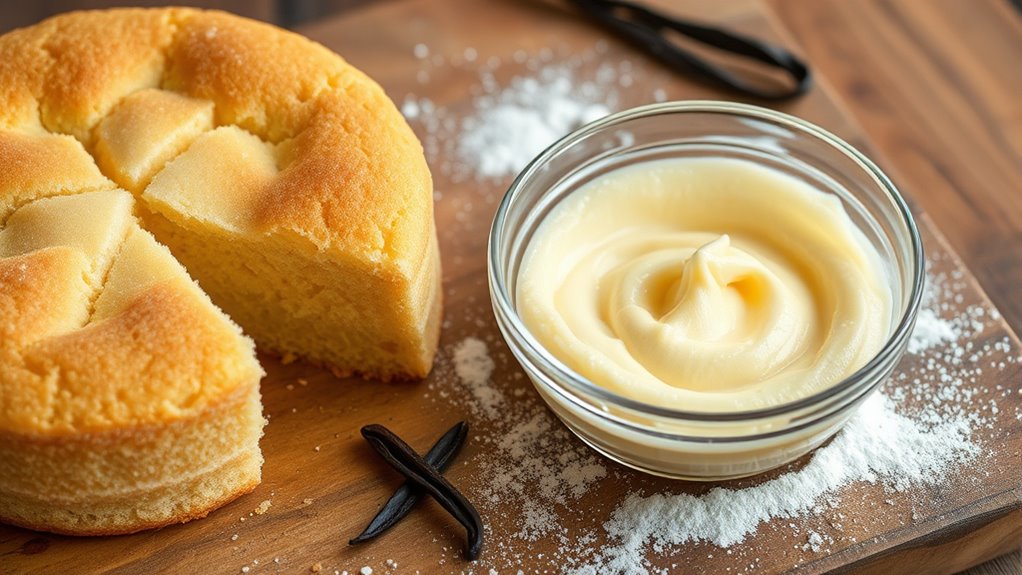
When you’re in the middle of cooking and realize you’re missing an essential ingredient, knowing how to make effective substitutions can save your dish from disappointment. This is especially true when baking without eggs, which often act as binders and leaveners. Luckily, many alternatives can help your baked goods rise and hold together, even if you’re vegan baking or working with gluten-free options. Understanding these substitutes allows you to adapt recipes on the fly, ensuring your baked treats turn out just as delicious.
Missing an ingredient? Discover quick egg substitutes to save your baking and keep your treats delicious.
For vegan baking, the key is to replace eggs with plant-based ingredients that provide similar binding and leavening properties. Mashed bananas or applesauce are popular options—they add moisture and help with binding, while also contributing a subtle sweetness. Chia seeds or flaxseeds are excellent choices too; when ground and mixed with water, they form a gel that mimics egg whites. Use about one tablespoon of ground seeds mixed with three tablespoons of water for each egg you’re replacing. These options work well in cakes, muffins, and quick breads, giving them structure and lift without animal products.
When dealing with gluten-free options, the challenge often lies in achieving the right texture and rise. Gluten provides elasticity and strength in conventional baking, so gluten-free recipes need extra support. Flaxseed or chia seed gels work well here too, but you can also incorporate commercial egg replacers designed specifically for gluten-free baking. These products often contain starches and leavening agents that help trap air and give your baked goods the rise you’re after. Additionally, adding a bit of baking powder or soda along with your egg substitute can enhance lift, especially in dense gluten-free recipes. For extra moisture and binding, consider adding a small amount of xanthan gum or guar gum, which mimic gluten’s properties and improve the overall texture.
Incorporating baking science principles can help you better understand how different substitutes impact your baked goods’ structure and rise. Both vegan baking and gluten-free options require attention to ingredient ratios and mixing techniques. When substituting eggs, start with small batches to see how the texture develops. Keep in mind that some substitutes may alter the flavor slightly—banana and applesauce bring sweetness, while seed gels are more neutral. Adjust your sweeteners and seasonings accordingly. With practice, you’ll learn which substitutes work best for your specific recipes, ensuring your baked goods rise beautifully without eggs. The ability to adapt quickly makes cooking more flexible and enjoyable, especially when you’re trying to accommodate dietary needs or ingredient shortages.
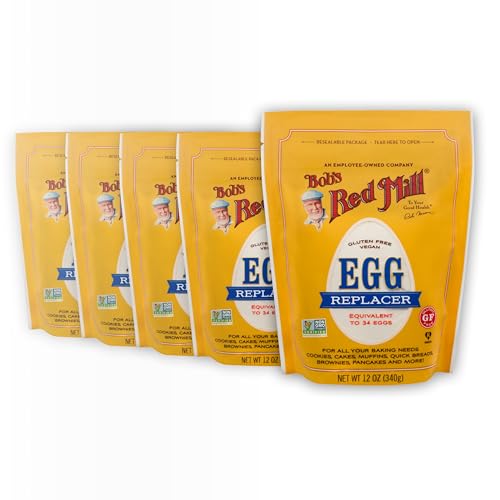
Bob's Red Mill Gluten Free Egg Replacer, 12oz (Pack of 5) – Non GMO, Vegan, Paleo Friendly, Equals 34 Eggs/Bag, Kosher
Versatile Egg Alternative: Bob's Red Mill Egg Substitute provides a versatile solution for recipes that traditionally require eggs,…
As an affiliate, we earn on qualifying purchases.
As an affiliate, we earn on qualifying purchases.
Frequently Asked Questions
Can Fruit Purees Replace Eggs in All Baked Goods?
Fruit puree variations can often replace eggs in baked goods, but they don’t work in all recipes. You’ll find they’re great for muffins, pancakes, or quick breads, adding moisture and sweetness. However, egg substitute limitations mean they might not provide enough structure or leavening for delicate cakes or soufflés. So, while fruit purees are versatile, you should choose your substitute based on the specific baked good you’re making.
Are Commercial Egg Replacers Suitable for All Recipes?
Imagine trying to fit a square peg into a round hole—that’s what using commercial egg replacers feels like for some recipes. While they’re versatile and work well in many baked goods, they aren’t suitable for all. Commercial egg replacers excel in recipes needing binding or moisture, but for delicate items like soufflés, they might fall short. You need to evaluate recipe versatility when choosing the right egg substitute.
How Do Egg Substitutes Affect the Texture of Baked Products?
Egg substitutes can change the texture of your baked goods, often affecting moisture retention and binding properties. You might notice a slightly different crumb or density, especially if the substitute doesn’t provide the same structure as eggs. Some alternatives, like flaxseed or applesauce, add moisture but may reduce binding strength. To get the best results, experiment with different options to find the one that maintains your desired texture.
What Is the Shelf Life of Egg-Free Baked Goods?
Like a fine wine, egg-free baked goods have a shorter shelf life. Typically, you’ll want to consume them within 2-4 days if stored properly in an airtight container. Keep an eye out for spoilage indicators such as off smells, mold, or changes in texture. Proper storage duration helps maintain freshness and safety, ensuring you enjoy your treats before they start to spoil.
Do Egg Alternatives Impact the Flavor Profile Significantly?
You might notice some flavor impact when using egg alternatives, but it usually isn’t significant. Ingredient variations can influence the taste, especially if you choose options like applesauce or mashed bananas, which add sweetness and moisture. However, most egg substitutes maintain the original flavor profile well when used correctly. Experimenting with different options allows you to find the perfect balance that suits your recipe and personal taste.

Baking Powder, 1 pound No added Aluminum, Corn Starch Free, gluten free. Made in our USA allergen free facility. Premium leavening agent.
Aluminum free, gluten free, and allergen free – premium baking powder for baking. A pure clean baking powder…
As an affiliate, we earn on qualifying purchases.
As an affiliate, we earn on qualifying purchases.
Conclusion
Think of your baking journey as exploring a vast garden. When eggs are out of reach, you simply pick a different seed—applesauce, flaxseed, or vinegar—that blooms just as beautifully. With each substitution, you’re tending to your garden with creativity and care, ensuring your baked goods rise and flourish. So, keep exploring these hidden treasures, and watch your culinary garden thrive, proving that even without eggs, your baking can still reach new heights.

Just Egg, Plant-Based, 16 Fl Oz
5 grams of protein per serving
As an affiliate, we earn on qualifying purchases.
As an affiliate, we earn on qualifying purchases.

It's Just – Xanthan Gum, 8oz, Batch Tested Gluten Free, Keto Baking, Non-GMO, Thickener for Sauces, Soups, Dressings, Packaged in USA
It's Just – Xanthan Gum, 8oz, Batch Tested Gluten Free, Keto Baking, Non-GMO, Thickener for Sauces, Soups, Dressings,…
As an affiliate, we earn on qualifying purchases.
As an affiliate, we earn on qualifying purchases.