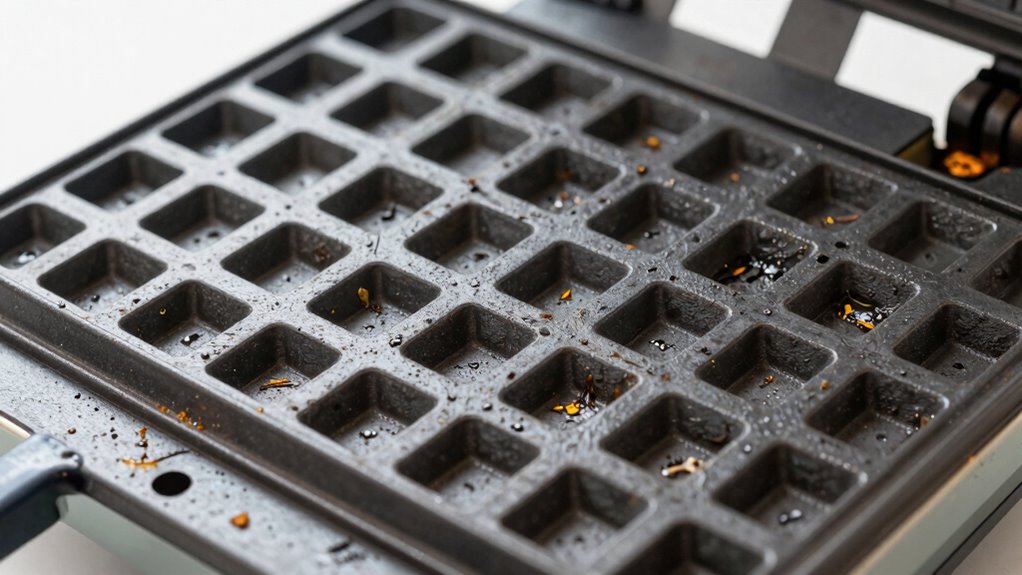

If your waffle plates are showing signs of wear like sticking, uneven cooking, or visible damage such as scratches, chips, or warping, it’s time to replace them. Rust or corrosion, persistent sticking despite cleaning, or a decline in performance also signal replacements are needed. Continuing to use worn or damaged plates can affect waffle quality and safety. Keep an eye out for these indicators to maintain top results—and discover more tips below.
Key Takeaways
- Waffles consistently undercook or overcook despite adjustments, indicating declining heating performance.
- Visible damage like cracks, chips, or warping on the plates suggests replacement is needed.
- Non-stick coating shows scratches, peeling, or deterioration affecting waffle release and quality.
- Persistent sticking or residue buildup after cleaning indicates worn plates that impair performance.
- Rust, corrosion, or safety hazards on the plates necessitate replacement to ensure food safety.
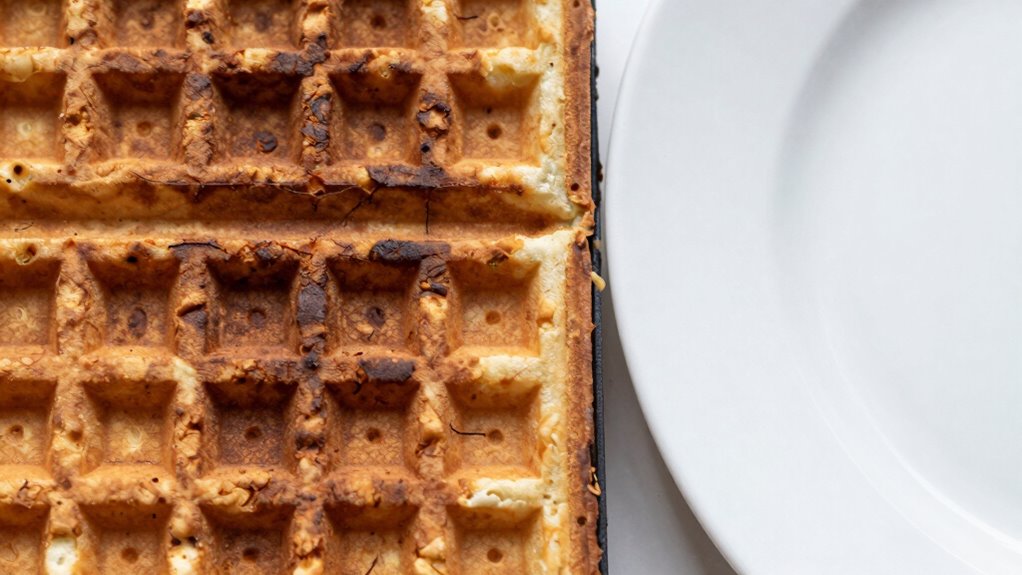
Waffle plates are essential for making perfect waffles, but over time, they can wear out and lose their ability to produce the same quality results. If you notice your waffles aren’t turning out as crisp or evenly cooked as they used to, it’s time to consider whether your plates are showing signs of wear. Paying attention to maintenance tips can help you extend their lifespan, but recognizing replacement signs is vital to maintaining excellent waffle quality.
One of the most common maintenance tips is to regularly clean your waffle plates thoroughly after each use. Residue from batter, grease, or crumbs can build up, affecting heat distribution and waffle texture. However, despite diligent cleaning, if you start noticing that waffles stick excessively or don’t release easily, it might be a sign that the plates have become warped or damaged. Warping can lead to uneven cooking, which is a clear replacement sign that your plates are no longer performing at their best.
Consistent sticking or difficulty releasing waffles signals warped or damaged plates.
Another key indicator is if your waffles are consistently undercooked or overcooked despite adjusting the temperature settings. This inconsistency often points to a decline in the plates’ heat retention and distribution. Over time, the non-stick coating may deteriorate, or the plates may develop hot spots, making it difficult to cook waffles evenly. If these issues persist even after calibrating your waffle maker, it’s a strong sign that the plates are reaching the end of their lifespan.
You should also watch out for physical damage. Cracks, chips, or warping are clear replacement signs because they compromise the integrity of the plates. Damage like this can not only hinder your ability to make perfect waffles but can also pose safety risks. Additionally, if your plates are rusting or showing signs of corrosion, it’s best to replace them immediately, since rust can transfer to your food and affect flavor.
In some cases, the non-stick surface will become visibly worn, with scratches or peeling coating. This deterioration reduces the plates’ effectiveness and can cause waffles to stick or break apart. When you notice these signs, it’s time to replace your waffle plates to restore your waffle-making process to its best condition.
Regularly inspecting the plates for signs of wear and proper maintenance can help prolong their lifespan, but ultimately, recognizing when they need replacing is crucial. Doing so ensures you keep making delicious, perfectly cooked waffles without frustration or compromise on quality.
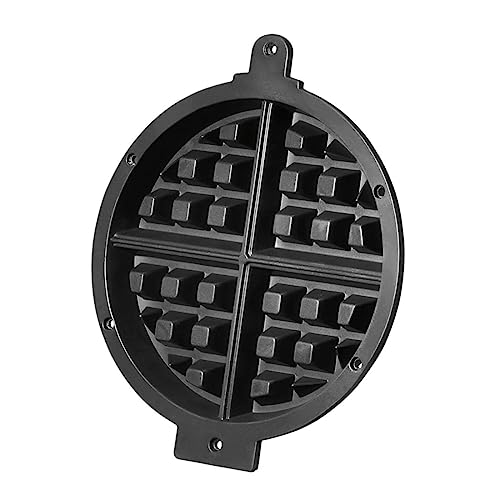
Waring Commercial WW180XRP Belgian Waffle Replacement Kit (2 Plates, Screws, Screwdriver) for WW180X only. Nonstick plates
Replacement Kit
As an affiliate, we earn on qualifying purchases.
As an affiliate, we earn on qualifying purchases.
Frequently Asked Questions
How Often Should Waffle Plates Be Inspected for Wear?
You should inspect your waffle plates regularly as part of your plate maintenance routine, ideally every 3 to 6 months depending on usage. Follow a consistent inspection schedule to catch signs of wear early, such as scratches or uneven heating. Regular inspections help guarantee peak performance, prevent unexpected breakdowns, and extend the lifespan of your plates. Don’t wait for performance issues—make inspection a routine part of your maintenance plan.
Can Damaged Waffle Plates Be Repaired or Only Replaced?
Like trying to fix a vintage radio, repairing damaged waffle plates isn’t always practical. Often, plate repair isn’t feasible because damage affects performance and safety. You should consider replacement instead, especially if the damage is extensive or affects heating. Replacement considerations include cost, downtime, and ensuring consistent waffle quality. Ultimately, when in doubt, swapping out the plates guarantees reliable results and avoids ongoing issues caused by damaged components.
What Are the Signs of Uneven Waffle Cooking?
You’ll notice uneven waffle cooking if you see inconsistent browning or crispy edges while some parts stay pale. Temperature fluctuations can cause this, making certain areas cook faster than others. Also, batter consistency plays a role—if it’s too thick or too thin, it won’t spread evenly. Pay attention to these signs, and adjust your temperature settings or batter to improve cooking quality before considering replacing your waffle plates.
Does Using Certain Ingredients Accelerate Plate Deterioration?
Like a painter’s palette, your waffle plates face harsh realities from certain ingredient effects. Using sticky or overly acidic ingredients can corrode the surface, speeding up deterioration. High cooking temperatures intensify this process, acting as a fiery forge that wears down the plates faster. To keep your waffle game strong, avoid ingredients that cling or react aggressively, and maintain ideal temperatures to preserve the integrity and longevity of your plates.
Are There Specific Cleaning Tips to Extend Waffle Plate Lifespan?
To extend your waffle plate’s lifespan, clean it regularly—ideally after each use—and stick to gentle cleaning methods. Use a soft cloth or sponge with warm, soapy water to remove residue without damaging the surface. Avoid abrasive scrubbers or harsh chemicals, which can cause wear. Regular cleaning prevents buildup that accelerates deterioration, helping your waffle plates stay in top shape longer and ensuring consistently delicious waffles.

Dash MultiMaker® Treat Maker Plate Pack, Waffle – Dishwasher Safe Nonstick Plates – Breakfast and Snack Accessory- 2-Plate Pack
Fresh Homemade Treats: These Removable Plates will transform your Dash MultiMaker Treat Maker into a convenient countertop waffle…
As an affiliate, we earn on qualifying purchases.
As an affiliate, we earn on qualifying purchases.
Conclusion
Remember, just like the trusty steed in your grandmother’s tales, waffle plates have a lifespan. When you notice uneven cooking, sticking, or a significant drop in heat retention, it’s time to replace them. Don’t wait until your waffles turn into a medieval mess—treat your machine like an old friend. Keep an eye on performance, and you’ll enjoy perfect waffles every time, no matter if it’s 2023 or the dawn of the Renaissance!

OVENTE 3 in 1 Electric Sandwich Maker, Panini Press Grill and Waffle Iron Set with Removable Non-Stick Plates, Perfect for Cooking Grilled Cheese, Tuna Melts, Burgers, Steaks and Snacks, Black GPI302B
HOT SANDWICH READY IN MINUTES – High performance powered by 750 Watts (120V), its fast heating technology ensures…
As an affiliate, we earn on qualifying purchases.
As an affiliate, we earn on qualifying purchases.
Waring Commercial WW180XRP Belgian Waffle Replacement Kit (2 Plates, Screws, Screwdriver) for WW180X only. Nonstick plates
Replacement Kit
As an affiliate, we earn on qualifying purchases.
As an affiliate, we earn on qualifying purchases.