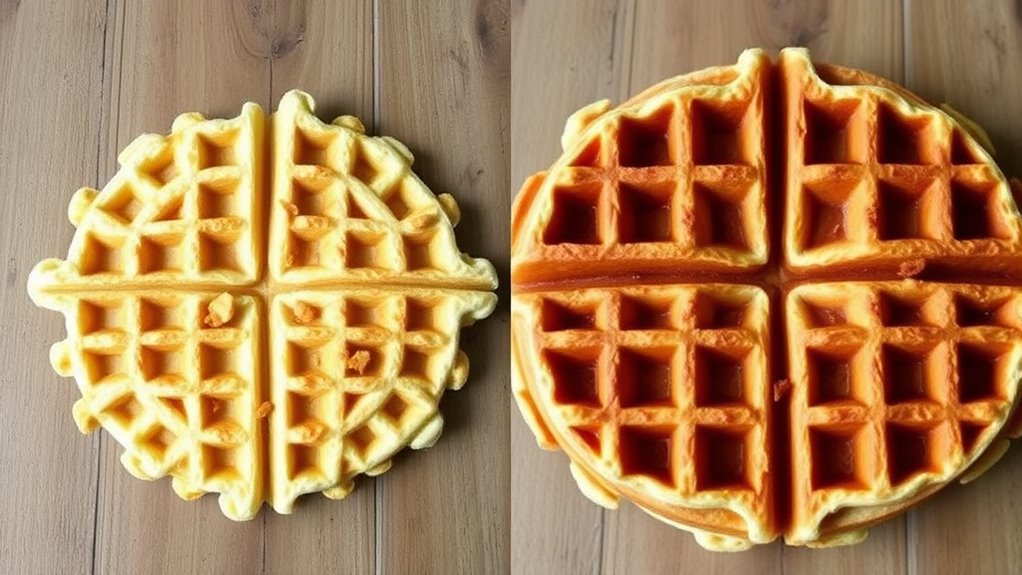
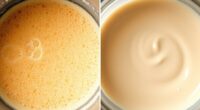
The amount of liquid you add to your waffle batter greatly affects the thickness and texture of your waffles. More hydration creates thinner, crispier waffles with a tender interior, while less liquid results in thicker, denser, and sturdier waffles. Adjusting the hydration level also influences gluten development and how well your batter rises, impacting both shape and mouthfeel. For a perfect waffle, balancing the hydration is key—keep exploring to master this essential step.
Key Takeaways
- Higher hydration produces thinner, crispier, and softer waffles; lower hydration results in thicker, denser, and chewier waffles.
- Increased liquid enhances gluten development, leading to better rise and more delicate texture.
- More moisture allows leavening gases to expand fully, creating fluffier waffles with improved volume.
- Excessive batter hydration can make waffles too loose and hard to handle, while insufficient hydration yields firmer, sturdier waffles.
- Balancing batter hydration is essential for achieving the desired thickness, texture, and structural integrity of waffles.
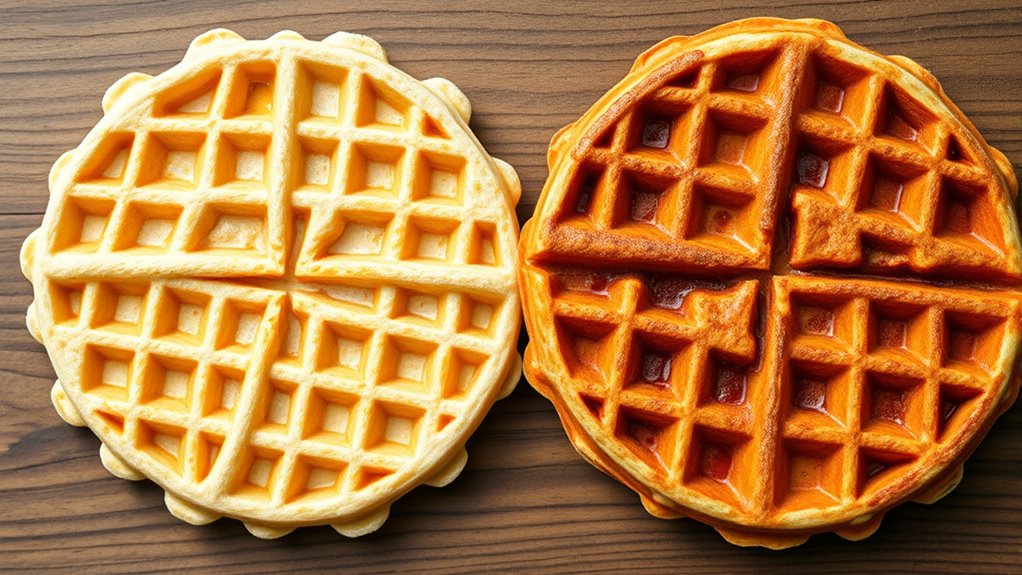
When making waffles, the amount of liquid in your batter—known as hydration—directly influences the thickness and texture of the final product. If you add more liquid, you’ll likely end up with a thinner, crispier waffle; less liquid results in a thicker, denser one. But hydration does more than just affect consistency. It also plays a vital role in gluten development, which impacts the waffle’s structure and chewiness, and in leavening effects, determining how much the batter rises during cooking.
Higher hydration levels typically lead to a softer, more tender waffle because the increased moisture weakens the gluten network. This softer texture is desirable in many waffle styles, especially if you prefer a delicate, airy bite. However, too much liquid can cause the batter to become overly loose, making it difficult to pour and shape evenly. Conversely, lower hydration results in a thicker batter that develops a stronger gluten framework, giving your waffle more density and chew. This is perfect if you want a sturdy, substantial waffle that holds toppings well.
Gluten development is directly affected by hydration. When you add water or milk, the proteins in flour—glutenin and gliadin—combine to form gluten. More liquid encourages these proteins to bond, creating an elastic dough that can trap leavening gases more effectively. This results in a better rise and a lighter waffle. Additionally, proper hydration enhances the leavening process, allowing gases to expand more efficiently during cooking and contributing to a fluffier texture. On the other hand, if your batter is too dry, gluten formation is limited, leading to a tougher, less airy waffle. So, adjusting hydration not only influences texture but also how well your waffle can rise and maintain its shape.
Leavening effects are equally sensitive to hydration levels. When you incorporate baking powder or baking soda, these leavening agents produce gases that expand during cooking, making your waffle fluffy. Adequate moisture allows these gases to expand fully, giving a light, airy texture. With more liquid, the leavening agents work more efficiently, producing more rise. Conversely, if the batter is too thick or dry, less gas is produced and trapped, resulting in a denser waffle. Hence, balancing hydration ensures ideal leavening and a desirable texture.
waffle batter hydration measuring cups
As an affiliate, we earn on qualifying purchases.
As an affiliate, we earn on qualifying purchases.
Frequently Asked Questions
How Does Batter Hydration Affect Waffle Flavor?
Batter hydration plays a key role in flavor enhancement by influencing batter consistency, which affects how ingredients meld together. When your batter is well-hydrated, it produces a more balanced, flavorful waffle because the ingredients blend smoothly, allowing for better taste distribution. Conversely, under-hydrated batter can lead to a less flavorful, dry waffle. Adjusting hydration levels helps you control both texture and flavor, giving you a richer, more satisfying breakfast.
Can Hydration Levels Influence Waffle Crispiness?
Yes, hydration levels can influence waffle crispiness. When you maintain the right batter consistency through proper hydration balance, your waffles become crispier on the outside. If the batter is too wet, the waffles may turn out soft and less crunchy. Conversely, a thicker batter with less water yields a crunchier texture. Adjust hydration carefully to achieve that perfect crispy exterior while keeping the interior tender.
What’s the Best Hydration Ratio for Gluten-Free Waffles?
For the best gluten-free waffles, aim for a hydration ratio of around 1:1.5 to 1:2, meaning one part flour to 1.5-2 parts liquid. You should adjust hydration based on your gluten-free flour blend, as some absorb more liquid than others. Keep experimenting with hydration adjustment until you find the perfect batter consistency that yields crispy, tender waffles without being too runny or too thick.
Does Batter Hydration Impact Waffle Sticking to the Iron?
Batter hydration is like a dance between ingredients, affecting how your waffle sticks to the iron. If the batter is too sticky, it clings like glue, making it harder for the iron to release the waffle smoothly. Conversely, a properly hydrated batter ensures the waffle releases easily, reducing sticking issues. Adjust hydration for a balance, so your waffles come out perfect without tearing or sticking.
How Does Hydration Affect Waffle Shelf Life and Storage?
You’ll find that higher batter hydration can shorten waffle shelf life because more moisture promotes quicker spoilage. To maximize freshness, store your batter in airtight storage containers, which help maintain consistency and prevent contamination. Use a glass or plastic container with a tight-fitting lid, and keep it refrigerated. Proper storage slows down spoilage, helping your batter stay usable longer while maintaining the right consistency for perfect waffles.
non-stick waffle maker for crispy waffles
As an affiliate, we earn on qualifying purchases.
As an affiliate, we earn on qualifying purchases.
Conclusion
Understanding batter hydration helps you perfect your waffle texture. Thinner batters produce crisp, delicate waffles, while thicker ones create fluffy, hearty bites. Interestingly, studies show that batter with around 60% hydration yields the best balance of crispness and tenderness. By experimenting with hydration levels, you can customize your waffles to your preference. So, next time you make waffles, remember that a simple tweak in batter consistency can elevate your breakfast experience remarkably.

Whiskware Pancake Batter Mixer with BlenderBall Wire Whisk
The fastest, easiest way to make smooth batters for pancakes, waffles, crepes, and more. Simply add ingredients, toss…
As an affiliate, we earn on qualifying purchases.
As an affiliate, we earn on qualifying purchases.
baking powder for fluffy waffles
As an affiliate, we earn on qualifying purchases.
As an affiliate, we earn on qualifying purchases.