
Water hardness, caused by calcium and magnesium, plays a big role in your waffle baking. High mineral levels can make your batter thicker and harder to pour, resulting in dense or uneven waffles. Using softer water helps you achieve a smoother batter, better rise, and crispier crust. Managing water mineral content is essential for perfect texture, color, and flavor. Keep exploring to learn how filtering water can improve your waffle results even more.

Get baking supplies delivered free with Prime
- Fast, free delivery on millions of items
- Prime Video, Amazon Music and more included
- Member-only deals all year
Key Takeaways
- Hard water increases calcium levels, which can thicken batter and hinder proper pourability.
- Elevated mineral content in hard water can prevent waffles from browning evenly and achieving crispiness.
- Using soft water with lower calcium improves batter smoothness and results in lighter, fluffier waffles.
- Water filtration reduces mineral content, helping maintain consistent batter consistency and optimal texture.
- Managing water hardness enhances browning, crispness, and overall quality of waffles during baking.
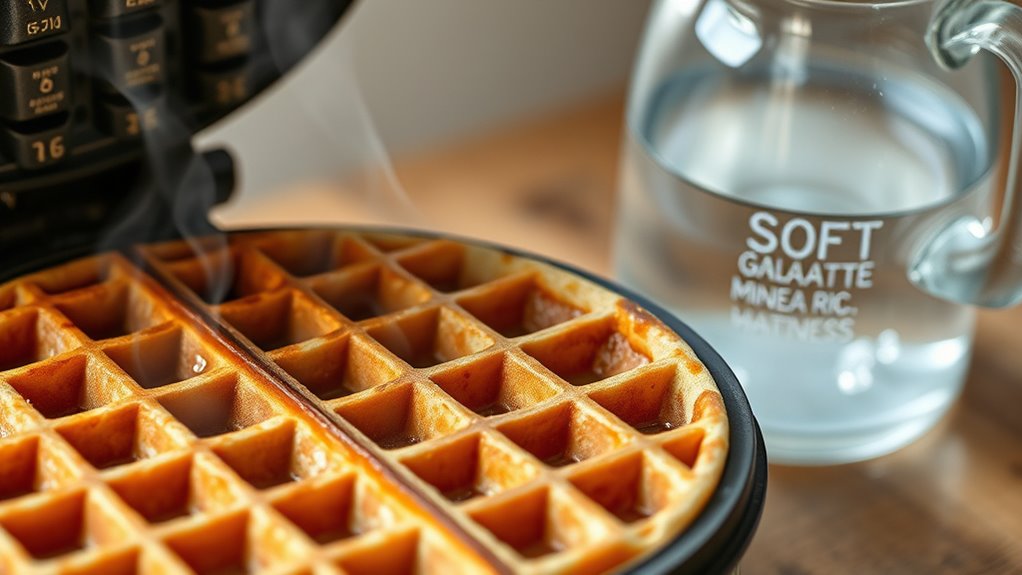
Water hardness can substantially impact the quality of your waffles, especially since minerals like calcium and magnesium influence how batter behaves during mixing and cooking. When water contains high levels of calcium, it can affect the structure and texture of your waffle batter. Calcium effects, in particular, can cause the batter to become thicker or more difficult to pour, leading to waffles that are dense or unevenly cooked. Conversely, softer water with lower calcium levels allows the batter to blend smoothly, resulting in lighter, fluffier waffles. Understanding this impact helps you control the consistency, ensuring your waffles turn out just right.
High water mineral content can make waffle batter thicker and denser.
One effective way to manage water hardness is through water filtration. Using a water filter can notably reduce calcium content, making your water softer and more suitable for baking. Filtration systems that target calcium and other minerals help create a more neutral water profile, giving you better control over how your batter behaves. This is especially helpful if you notice your waffles are consistently dense or if the batter feels overly thick. By filtering out excess calcium, you can improve batter pourability and achieve a more desirable rise and texture.
Calcium effects extend beyond batter consistency; they also influence browning and crispiness. Hard water with high calcium levels can interfere with the Maillard reaction, which is responsible for that golden crust on your waffles. As a result, waffles baked with hard water might not develop the same appealing color or crunch. Using water filtration minimizes this problem by reducing calcium levels, allowing the waffles to brown evenly and develop a satisfying crisp exterior. This not only enhances flavor but also improves overall presentation.
If you frequently bake waffles, investing in a water filtration system tailored to reduce calcium is a wise choice. It offers more consistent results, saves you from troubleshooting batter issues, and improves the final product’s texture and appearance. Keep in mind that the mineral content of your water can vary depending on your location, so testing your tap water can help determine whether filtration is necessary. When you control calcium effects through filtration, you’re better equipped to create waffles with the perfect batter consistency, appealing color, and crispy finish. Ultimately, managing water hardness ensures that your waffle-making process is smoother, more predictable, and yields delicious results every time. Additionally, understanding the impact of minerals on baking can help you make more informed adjustments for optimal results.
water filtration system for baking
As an affiliate, we earn on qualifying purchases.
As an affiliate, we earn on qualifying purchases.
Frequently Asked Questions
How Does Water Temperature Affect Waffle Batter?
You’ll find that water temperature directly impacts your waffle batter’s consistency. Warm water helps dissolve ingredients more effectively, resulting in a smoother, more cohesive batter. Cold water can make the batter thicker and harder to mix. Adjusting water temperature guarantees your batter reaches the ideal consistency for fluffy, crispy waffles. So, always consider whether to use warm or cold water to get the best texture and overall waffle quality.
Can Water Hardness Impact Waffle Batter Flavor?
Yes, water hardness can impact your waffle batter’s flavor. The minerals in hard water, like calcium and magnesium, interact with ingredients, leading to flavor enhancement or sometimes a metallic taste. These mineral interactions can subtly alter the batter’s taste, making your waffles more flavorful or, if too hard, possibly detracting from the overall flavor profile. Using softened water can help maintain a consistent, delicious flavor in your waffles.
Are There Specific Minerals in Hard Water Beneficial for Waffles?
Imagine mineral benefits hidden in your hard water, like secret ingredients shaping waffle mineralization. Calcium and magnesium in hard water can strengthen gluten, giving your waffles a better structure and crispness. These minerals, while often overlooked, enhance texture and flavor subtly. So, yes, specific minerals in hard water contribute positively, turning simple batter into crispy, golden waffles with improved taste and texture.
Does Water Hardness Influence Waffle Crispiness?
Yes, water hardness influences waffle crispiness through mineral interactions that affect batter texture. Hard water’s minerals, like calcium and magnesium, can strengthen gluten networks, leading to a firmer batter. This results in waffles with enhanced crispiness and a desirable crunch. Texture modifications caused by these minerals help you achieve the perfect golden-brown exterior, ensuring your waffles are crispy on the outside while tender inside.
How Can I Test My Tap Water’s Hardness Level?
Think of your tap water as a secret ingredient—its mineral content can make or break your waffles. To test its hardness, you can use a water testing kit or strips, which reveal mineral levels and pH balance. These tests show how much calcium and magnesium are in your water, helping you decide if you need to soften it for perfect waffles. Just follow the kit instructions, and you’ll uncover your water’s true character.
Conclusion
Just as a symphony relies on harmonious instruments, your waffle results depend on your water’s hardness. When you understand and control water hardness, you craft waffles that sing with perfect texture and flavor. Think of it as tuning your culinary instrument—fail to do so, and the melody falls flat. So, remember, the secret to waffle perfection lies not just in the batter but in the water you use—channel that knowledge and elevate your baking game.
Fall Picks
fall essentials
As an affiliate, we earn on qualifying purchases.