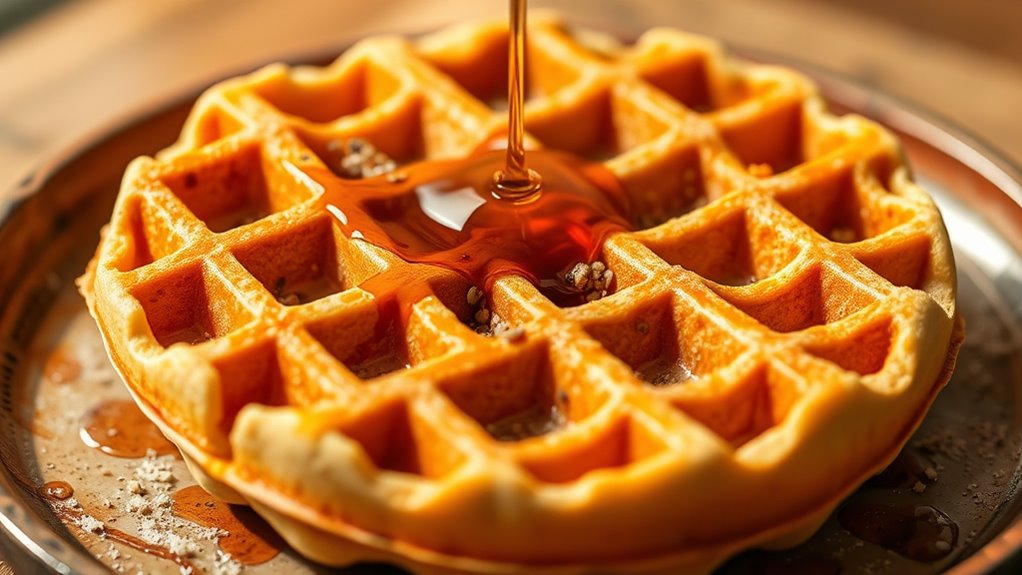

To make vegan waffles without eggs, you rely on plant-based ingredients that mimic eggs’ binding and leavening roles. Ingredients like flaxseed gel or mashed bananas create a sticky, cohesive batter that traps air, helping the waffles rise and stay fluffy. Emulsifiers like plant milk or aquafaba add stability by trapping air bubbles. Understanding these techniques can help you craft waffles that are both well-structured and delicious—there’s more behind these science tricks to explore.
Key Takeaways
- Plant-based proteins like flaxseed or chickpea flour mimic eggs’ binding and structural functions in waffle batter.
- Aquafaba acts as a foam and emulsifier, trapping air to create lift and lightness in vegan waffles.
- Emulsification stabilizes mixtures of liquids and dry ingredients, ensuring even distribution and improved texture.
- Proper combination of plant proteins and emulsifiers maintains moisture, cohesion, and a tender, fluffy waffle structure.
- Understanding these processes allows for egg-free waffles that replicate traditional stability, rise, and mouthfeel.
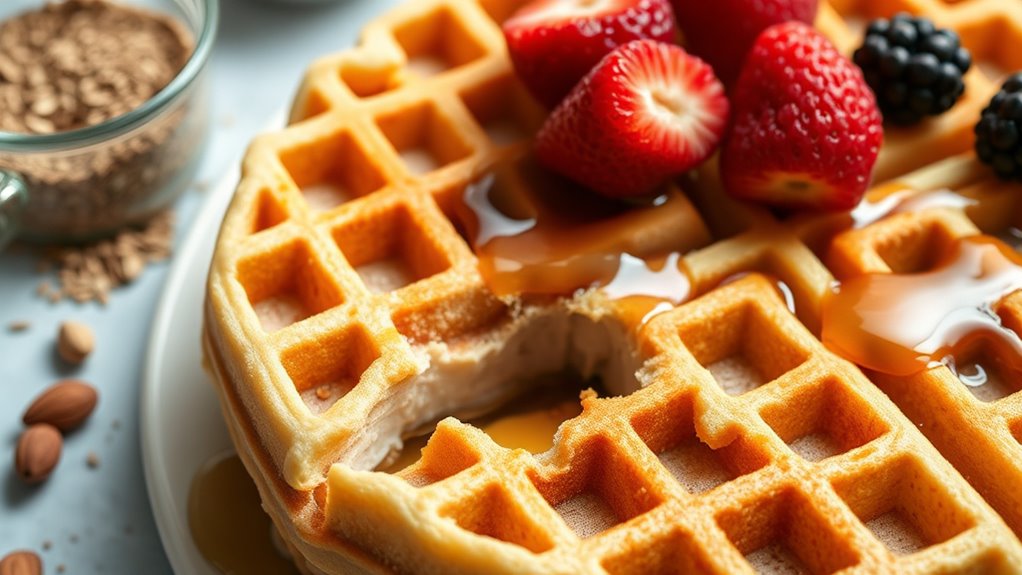
Vegan waffles might seem like a simple breakfast treat, but their science is surprisingly fascinating. When you explore how they come together without eggs, you realize it’s all about understanding binding agents and how ingredients work in harmony. Eggs traditionally serve as binders, giving waffle batter structure and moisture. Without them, you need alternative methods to achieve the same results. That’s where plant-based proteins and emulsification techniques come into play, allowing you to create waffles that are just as fluffy and cohesive as their traditional counterparts.
Plant-based proteins are essential in vegan waffle recipes because they mimic the binding qualities of eggs. Ingredients like mashed bananas, flaxseed meal, or chickpea flour are common choices. These proteins help hold the batter together by forming a network that traps air and moisture. For example, when you mix ground flaxseed with water, it creates a gel-like substance known as a flax egg, which acts as a binder. This gel provides the necessary structure and moisture, ensuring your waffles don’t fall apart. The key is understanding how these plant-derived proteins interact with other ingredients to create stability, moisture, and tenderness in your waffles.
Emulsification techniques further enhance the texture by stabilizing the mixture of liquids and dry ingredients. In traditional baking, eggs help emulsify fats and liquids, creating a smooth, uniform batter. Without eggs, you can use plant-based oils or plant milk combined with natural emulsifiers like aquafaba (the liquid from cooked chickpeas). When whipped, aquafaba traps air and creates a foam that acts like egg whites, providing lift and lightness. This process involves incorporating air into the batter, which is essential for fluffy waffles. The emulsification stabilizes these air bubbles, ensuring they remain evenly distributed during cooking, which results in a well-textured waffle with a desirable rise.
Understanding these techniques allows you to manipulate ingredients to achieve the perfect waffle. By combining plant-based proteins with emulsification methods, you can craft a batter that binds well, traps air efficiently, and results in a light, tender waffle. It’s a science that involves balancing moisture, stabilizing air pockets, and creating a cohesive batter—without eggs. Recognizing the role of binding agents helps you appreciate how plant-based ingredients can replicate traditional baking functions and improve your recipe outcomes. So, next time you make vegan waffles, think of it as a clever chemistry experiment where plant proteins and emulsification techniques work together to produce delicious, egg-free breakfast treats. Mastering these concepts enables you to customize recipes, add flavors, and guarantee your waffles are just as satisfying and structurally sound as traditional versions.
vegan waffle batter binder
As an affiliate, we earn on qualifying purchases.
As an affiliate, we earn on qualifying purchases.
Frequently Asked Questions
Can Vegan Waffles Be Gluten-Free?
Yes, you can make gluten-free vegan waffles using gluten-free grains like rice, buckwheat, or sorghum. To bind everything together, use egg replacer options such as flaxseed meal, chia seeds, or commercial egg substitutes. These alternatives help create a cohesive batter, ensuring your waffles are both gluten-free and vegan. Just mix your chosen grains and egg replacers, then cook as usual for delicious, allergy-friendly waffles.
How Do Vegan Waffles Compare in Texture to Traditional Ones?
Imagine biting into a cloud—vegan waffles offer a lighter, sometimes fluffier texture than traditional ones. Egg replacers create subtle texture differences, making them softer or more delicate. While some find vegan waffles slightly less crisp or dense, the overall experience can be just as satisfying. You’ll notice a gentle, tender bite that’s uniquely different yet equally delightful, showcasing how plant-based ingredients can craft a delicious, textured masterpiece.
Are There Any Health Benefits to Egg Substitutes?
Using egg replacers offers several benefits, including reducing cholesterol and saturated fat intake, which can improve heart health. You might also experience fewer allergic reactions if you’re sensitive to eggs. While egg substitute benefits include easier digestion and lower calorie content, it’s crucial to evaluate health implications of substitutes, as some may contain added sugars or preservatives. Overall, choosing the right egg replacer can support a healthier, balanced diet.
How Long Do Vegan Waffles Typically Last?
Vegan waffles usually last about 2-3 days if stored properly in an airtight container in the fridge. To maintain freshness, you should reheat them in a toaster or oven before eating. If you want to keep them longer, consider freezing for up to a month. Proper storage duration and careful preservation help ensure your waffles stay tasty and safe to enjoy later.
Can Vegan Waffle Recipes Be Adapted for Savory Flavors?
Yes, you can adapt vegan waffle recipes for savory flavors. To do this, incorporate ingredients like herbs, spices, nutritional yeast, or chopped vegetables into your batter. You might replace sweeteners with savory options like miso or tahini. These flavor adaptations enhance the savory profile, making your vegan waffles perfect for breakfast or brunch. Experiment with different ingredients to find the ideal balance for your vegan savory waffle creations.

Aquafaba Powder (4oz) – Aquafaba For Cocktail Foamer and Meringues | Vegan Egg Replacer for Baking | 40 Egg Equivalent | Plant-Based, Gluten-Free, Vegan Meringue Powder | Shelf Stable Egg Substitute
Replaces 40 Eggs – One 4oz bag replaces up to 40 eggs. Perfect for both home or food…
As an affiliate, we earn on qualifying purchases.
As an affiliate, we earn on qualifying purchases.
Conclusion
Now that you know the science behind vegan waffles, you can confidently craft fluffy, delicious treats without eggs. Think of your ingredients as a symphony—each playing its part to create harmony. By understanding how plant-based binders work, you become the conductor, guiding your waffle masterpiece to perfection. So, go ahead—experiment, learn, and enjoy the sweet success of vegan waffles that prove you don’t need eggs to achieve culinary greatness.

Pure Original Ingredients Flaxseed Meal Vegan Egg Replacement, Nutritional (1 Pound Bag)
Pure Original Ingredients Flaxseed Meal in a resealable bag
As an affiliate, we earn on qualifying purchases.
As an affiliate, we earn on qualifying purchases.

Simple Mills Almond Flour Pancake & Waffle Mix, Original – Gluten Free, Plant Based, Paleo Friendly, Breakfast 10.7 Ounce (Pack of 1)
Mix makes 20 scrumptious pancakes or 5 large and fluffy waffles
As an affiliate, we earn on qualifying purchases.
As an affiliate, we earn on qualifying purchases.