
To get consistent waffle batter results when scaling up, make sure to measure ingredients precisely using a reliable kitchen scale, not just volume. Analyze the original recipe ratios and adjust each ingredient proportionally, double-checking your calculations. Mix the batter smoothly to the right pourable consistency, adding small amounts of liquid or flour as needed. Keep detailed records of your measurements and adjustments, so every batch turns out perfect. Continue exploring these tips to master scaling your waffle batter effectively.
Key Takeaways
- Use precise kitchen scales for accurate ingredient measurements during scaling.
- Analyze and maintain original ingredient ratios to ensure consistent batter composition.
- Recalculate ingredient quantities proportionally when increasing batch size.
- Adjust batter consistency gradually with small liquid or flour additions for the desired texture.
- Document scaled recipes and measurement tweaks to ensure reproducibility and uniform results.
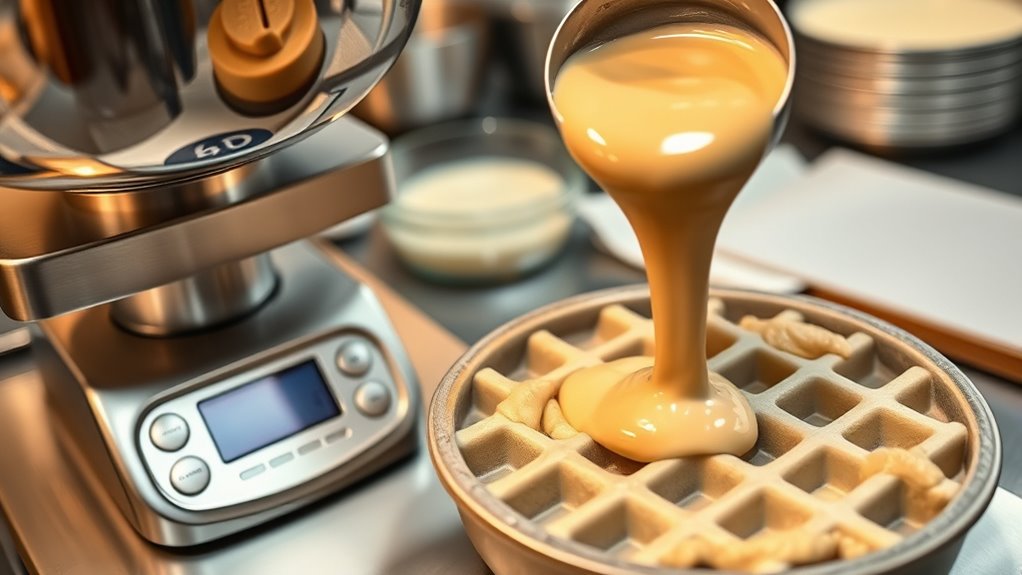
Scaling waffle batter is essential when you need to make more waffles without sacrificing quality. Whether you’re preparing for a busy morning or catering an event, maintaining the right batter consistency is vital. When you scale your batter, you want to guarantee that each batch has the same texture, flavor, and rise, so every waffle turns out perfect. The key to achieving this lies in measurement accuracy. Using precise measurements guarantees that your scaled recipe retains the intended balance of ingredients, which directly impacts batter consistency.
To effectively scale your waffle batter, start by understanding the original recipe’s ratios. Each component—flour, liquids, eggs, leavening agents—needs to be scaled proportionally. Measuring ingredients accurately is non-negotiable; even small deviations can lead to inconsistencies in batter texture or flavor. Invest in a reliable kitchen scale and use it for all your measurements, especially when working with larger quantities. This method minimizes errors that often occur with volume-based measurements, such as cups or spoons, which can vary depending on how ingredients are packed or scooped.
Accurate measurement of ingredients ensures consistent, high-quality scaled waffle batter.
When scaling, double-check your calculations before mixing. For example, if your original recipe calls for 1 cup of milk, and you’re doubling the batch, you’ll need 2 cups. But for more complex scaling, use a calculator or a scaling chart to ensure proportions stay correct. Once you’ve measured everything accurately, focus on mixing. The batter should be smooth and pourable but not too thin or too thick. Consistency in mixing techniques helps maintain batter uniformity across scaled batches.
Additionally, pay attention to how the batter interacts with the waffle iron. Slight variations in batter consistency can lead to uneven cooking or texture differences. If your scaled batter feels thicker than usual, consider adding small amounts of liquid incrementally until it reaches the desired consistency. Conversely, if it’s too runny, a little more flour can help stabilize it. Adjusting gradually ensures your batter remains within the ideal consistency range, which directly affects the final product.
Finally, document your scaled recipes and measurements. Keeping track of your adjustments helps you replicate perfect waffles consistently. Over time, you’ll develop a sense of how small measurement tweaks influence batter consistency and overall quality. This precision guarantees each waffle is as good as the last, no matter how big your batch. Scaling waffle batter effectively combines careful measurement accuracy with attention to batter consistency, ensuring you produce delicious, uniform waffles every time. Consistent results are the hallmark of a well-scaled recipe.
Frequently Asked Questions
How Do I Adjust Batter for Different Waffle Sizes?
To adjust batter for different waffle sizes, start by maintaining consistent batter consistency, ensuring it’s neither too thick nor too runny. Use ingredient substitution carefully; for larger waffles, add slightly more liquid or flour as needed. Measure ingredients precisely, and tweak as you go, testing the batter’s texture. This way, you’ll get uniform results, regardless of waffle size, with ideal batter consistency and minimal adjustments.
What Equipment Is Best for Precise Batter Scaling?
You should use a digital scale with a fine-tuned measurement capability for precise batter scaling. This equipment guarantees ingredient precision, helping you maintain consistent batter viscosity across batches. Look for a scale that can handle small increments, ideally to the gram, and is easy to clean. Accurate weighing minimizes variability, so your waffles turn out perfect every time, regardless of size.
Can Scaling Affect Waffle Texture or Flavor?
Scaling your batter can definitely influence waffle flavor and batter consistency, much like adjusting ingredients in a recipe. I once watched a chef tweak portion sizes, noticing the waffles became crisper and more evenly flavored. When you scale accurately, you control moisture and ingredient ratios, ensuring the batter’s consistency stays steady. This consistency helps preserve the desired waffle texture and flavor, making each batch reliably delicious and perfectly cooked.
How Do I Troubleshoot Inconsistent Waffle Results?
To troubleshoot inconsistent waffle results, start by checking your batter consistency—make sure it’s smooth and not too thick or thin. Verify that your ingredient ratios are accurate; small measurement errors can impact texture and flavor. Also, confirm your waffle iron heats evenly and preheats properly. Making these adjustments helps maintain consistent batter quality, leading to uniform waffles every time.
What Are the Safety Tips for Handling Scaled Batter?
When handling scaled batter, always keep safety in mind by storing it properly in airtight containers to prevent contamination. Avoid ingredient substitution that could alter batter consistency or safety. Use clean utensils and wash your hands thoroughly before touching the batter. Keep the batter refrigerated if not used immediately, and always check for spoilage before use. These steps help guarantee safe, consistent waffles every time.
Conclusion
By mastering waffle batter scaling, you guarantee every batch turns out perfect, whether you’re making a small breakfast or a large brunch spread. Imagine you’re baking for a busy café; consistently scaled batter helps maintain quality and speed. For instance, a bakery that adjusted their recipe proportions saw a 20% increase in customer satisfaction due to uniform waffles. Keep practicing your scaling techniques, and you’ll always serve waffles that delight with every bite.