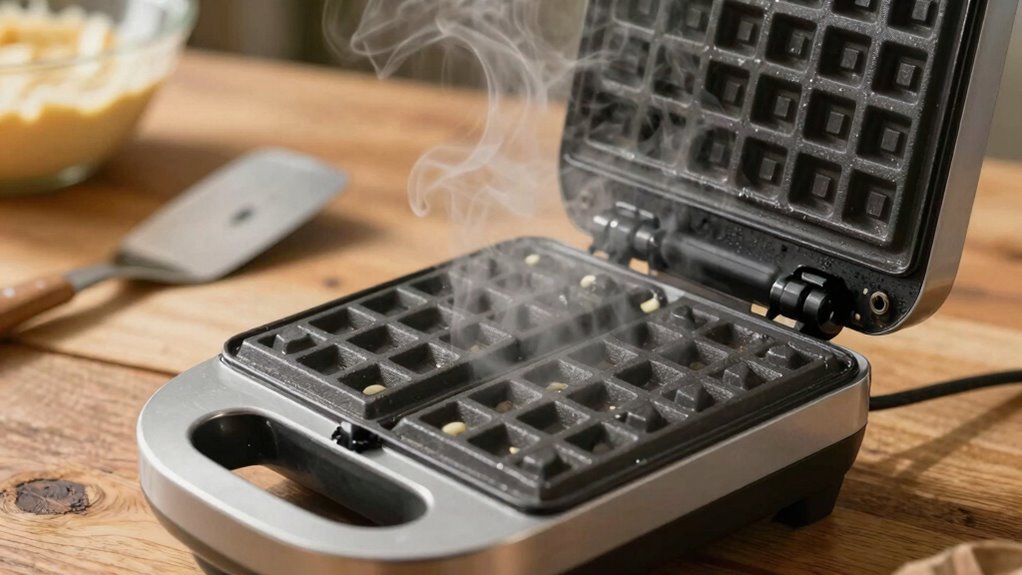
Even premium waffle makers need a learning period because mastering their temperature and timing controls takes practice. You’ll need to experiment to prevent burnt or undercooked waffles, as each machine reacts differently. Patience is key to understanding how preheating, temperature, and adjustments impact results. With experience, you’ll recognize your machine’s quirks and consistently make restaurant-quality waffles. Stick with it, and you’ll discover how to achieve perfect waffles every time.

Get baking supplies delivered free with Prime
- Fast, free delivery on millions of items
- Prime Video, Amazon Music and more included
- Member-only deals all year
Key Takeaways
- Premium waffle makers have adjustable settings that require practice to optimize for perfect browning and texture.
- Variations in ingredients and recipes necessitate a learning period to achieve consistent results.
- Machine responsiveness and quirks demand experimentation to understand ideal preheating and temperature adjustments.
- Even high-end models benefit from user experience to prevent issues like sticking or uneven cooking.
- Patience and trial-and-error help users master the machine’s behavior for restaurant-quality waffles.
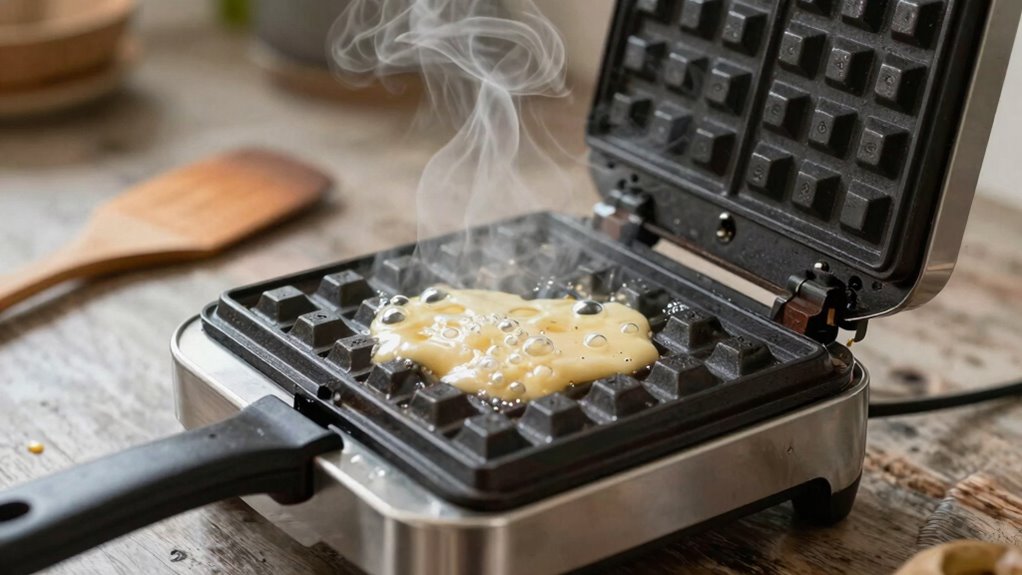
When you’re new, you might set the temperature too high, resulting in burnt exteriors and raw insides. Conversely, setting it too low can produce pale, soggy waffles. The learning curve involves experimenting with different temperature levels to find the sweet spot where your waffles turn out crispy on the outside and fluffy inside. Over time, you’ll learn how long to preheat the waffle maker and how to tweak the temperature for various recipes. This process helps you avoid common pitfalls, like sticking or uneven browning. Developing baking skills and understanding your machine’s responses are essential parts of mastering your waffle maker. Additionally, paying attention to machine responsiveness can help you better anticipate how adjustments will affect your results. Patience is essential during this learning period. Even premium waffle makers are precision instruments, and mastering their operation doesn’t happen instantly. You might need several attempts to get the baking consistency just right or to figure out how the machine reacts to different batter types. Recognizing temperature control as an important factor can significantly improve your results, especially as you learn how your specific model responds to adjustments. It’s worth noting that manufacturers often include helpful guides or indicators to assist you, but your personal experience will ultimately guide your adjustments. Once you get the hang of it, you’ll appreciate how a well-calibrated waffle maker can deliver perfect, restaurant-quality waffles every time. Until then, expect some trial and error, and don’t get discouraged—every batch teaches you something new about your machine’s quirks and capabilities.
Products Worth Considering

Instant Pot InstantChill Plus Ice Cream Maker, 2-Pint

Ninja CREAMi 7-in-1 Ice Cream Maker, NC301

Le Creuset Signature Enameled Cast Iron Round Dutch Oven, 5.5 qt, Deep Teal
As an affiliate, we earn on qualifying purchases.
Frequently Asked Questions
How Long Does the Learning Period Typically Last?
The learning period usually lasts about 2 to 3 waffle batches, but it varies based on your batter consistency and temperature adjustment. You’ll need time to perfect the batter’s thickness and find the right heat settings. As you experiment, you’ll notice how slight tweaks improve your waffles. Stay patient, and soon you’ll master your premium waffle maker, creating perfectly crispy and fluffy waffles each time.
Can I Use Different Batter Types During the Learning Phase?
Absolutely, you can experiment with different batter types during the learning phase! Imagine trying to tame a wild beast—adjusting batter consistency and flavor variations is your training. Each batter’s unique texture and ingredients might behave differently, helping you master your waffle maker’s quirks. This process might be messy at first, but it’s essential for perfecting your waffle game. So, go ahead—embrace the chaos and discover your favorite waffle style!
Do Premium Waffle Makers Require Special Maintenance During Learning?
Yes, premium waffle makers do need special maintenance during the learning phase. You should follow consistent cleaning routines to prevent batter buildup and guarantee ideal performance. After use, wipe down the plates and avoid using harsh abrasives. Additionally, store your waffle maker in a dry place, ideally covered, to protect it from dust and moisture. Proper maintenance helps your machine operate smoothly and extends its lifespan.
Is There a Risk of Damaging the Waffle Maker During This Period?
Yes, there’s a slight risk of damaging your waffle maker during the learning period. If you don’t monitor the initial temperature closely and don’t follow the manufacturer’s guidelines, you might overheat the material or cause uneven heating. To prevent damage, start with moderate heat, check the durability of the materials, and adjust gradually. This careful approach helps preserve your waffle maker’s longevity and ensures consistent, delicious results.
How Can I Tell if My Waffle Maker Is Properly “Learned”?
You can tell your waffle maker has properly “learned” when it consistently maintains temperature stability and delivers flavor consistency in each batch. During this period, monitor if your waffles turn out evenly cooked and have uniform texture and taste. If you notice stable browning and predictable cooking times, your machine has adapted. This indicates it’s mastered the required temperature control, ensuring your waffles come out perfect every time.
Conclusion
Just like Da Vinci’s notebooks, your waffle maker’s learning curve is a tribute to craftsmanship and patience. Embrace this initial phase, knowing that mastery takes time—each batch brings you closer to perfection. Remember, even the greatest artisans faced early struggles. So, trust the process, and soon you’ll be creating waffles that seem almost artful, a delicious reminder that excellence, like all masterpieces, is worth the wait.