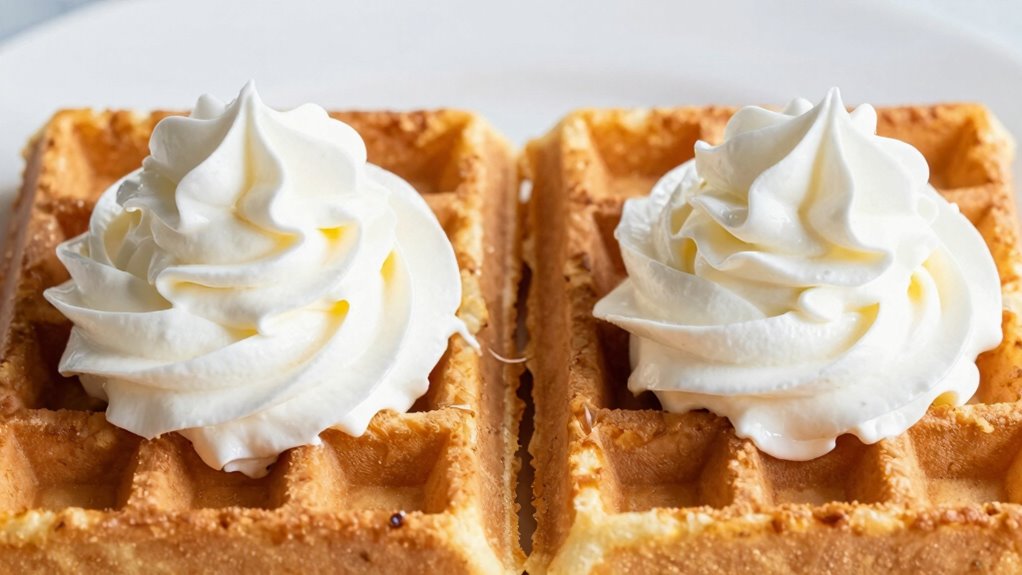

The key to making whipped cream feel right on a waffle is balancing flavor, texture, moisture, and temperature. If the waffle has strong or mismatched flavors, the whipped cream can seem out of place. A crispy, dry waffle provides a better base than a soggy or greasy one. Cold waffles help maintain the whipped cream stable, while warm ones cause it to melt and slide off. Mastering these factors ensures a perfect pairing—if you want to discover how to get it just right, keep exploring.

Get baking supplies delivered free with Prime
- Fast, free delivery on millions of items
- Prime Video, Amazon Music and more included
- Member-only deals all year
Key Takeaways
- Proper flavor pairing enhances harmony, making whipped cream feel integrated rather than out of place.
- A crispy, well-toasted waffle provides a stable base that supports whipped cream without slipping.
- Correctly cooked, dry waffles help whipped cream adhere better, preventing sliding or sinking.
- Cold waffles help maintain whipped cream’s structure, while warm or soggy waffles cause melting and sliding.
- Overall balance of flavor, texture, moisture, and temperature ensures whipped cream complements the waffle perfectly.

Have you ever wondered why whipped cream feels perfect on one waffle but clings awkwardly or slides off another? The answer lies in a mix of factors, including flavor pairing and texture contrast. When you pour whipped cream onto a waffle, you’re not just adding a topping—you’re creating an experience that hinges on how well the textures and flavors complement each other. If the flavors clash or the textures don’t work together, the whipped cream’s delicate sweetness can feel out of place or unbalanced.
Flavor pairing plays a vital role here. Some waffles have toppings or batters infused with ingredients like cinnamon, berries, or chocolate that naturally harmonize with the creamy sweetness of whipped cream. When the flavors match, it elevates the overall taste, making the whipped topping feel just right. On the flip side, if a waffle is topped with something strongly flavored or tangy—like citrus or syrup-heavy toppings—the whipped cream can seem disconnected or overwhelmed. In such cases, the flavor contrast isn’t balanced, and the whipped cream may feel like an afterthought rather than a seamless part of the dish.
Texture contrast is equally important. A waffle with a crisp, well-toasted exterior and a fluffy interior provides a sturdy base that can support whipped cream without it sliding off. The contrast between the crunchy surface and the smooth, airy topping creates a pleasing mouthfeel. Conversely, if the waffle is too soft or soggy, the whipped cream might sink in or slide off easily, making the experience feel messy or unsatisfactory. The key is ensuring the waffle’s texture provides enough structure to hold the whipped cream comfortably, creating a satisfying contrast that enhances each bite. Additionally, moisture content can influence how well the whipped cream stays in place and how enjoyable the combination feels. A properly cooked waffle with ideal moisture and crispness is essential for a balanced pairing.
Another factor to reflect on is moisture content. If a waffle is overly moist or greasy, whipped cream may not hold well and could slide off. A dry, well-cooked waffle provides a better canvas, allowing the whipped cream to stay put and offer just the right amount of richness. Also, temperature matters—cold waffles tend to hold whipped cream better, preventing it from melting or sliding away too quickly. Additionally, understanding how texture interacts with moisture can help optimize the overall experience. When these elements are carefully balanced, the whipped cream can truly enhance the waffle rather than detract from it.
In the end, it’s a delicate dance between flavor pairing and texture contrast that determines whether whipped cream feels right or wrong on a waffle. When all these elements align—complementary flavors, contrasting textures, proper moisture, and temperature—the whipped cream becomes an integral part of your waffle experience, making each bite delightful and satisfying. When they don’t, no matter how good the whipped cream, the overall experience falls flat.
As an affiliate, we earn on qualifying purchases.
Frequently Asked Questions
Does the Type of Waffle Batter Affect Whipped Cream Texture?
Yes, the type of waffle batter affects whipped cream texture. A denser batter can make the whipped cream feel heavier, while a lighter, airy batter complements the cream’s fluffiness. Your flavor pairing and presentation style matter too; a crisp waffle with a delicate cream enhances the experience, whereas a soggy waffle might make the whipped cream feel off. Adjusting batter types helps you achieve the perfect balance for your desired texture and look.
Can the Temperature of the Whipped Cream Influence Its Feel?
A stitch in time saves nine, so controlling the temperature of your whipped cream is key. When you keep the cream cold, it’s easier to achieve that light, fluffy texture thanks to proper cream stabilization. If the cream warms up, it loses volume and feels different on your waffle. Temperature control guarantees your whipped cream feels just right, making every bite a delightful experience rather than a disappointment.
How Does Humidity Impact Whipped Cream on Waffles?
Humidity effects your whipped cream by making it softer or weepier because moisture impacts its structure. When the air is humid, the whipped cream absorbs moisture from the environment, which can cause it to lose volume and become watery. This moisture impact weakens its stability, making it less fluffy and more prone to sliding off your waffle. To keep it perfect, serve in a dry environment or add stabilizers to your whipped cream.
Are There Specific Toppings That Change Whipped Cream’s Consistency?
Yes, certain toppings can change whipped cream’s consistency. For example, fruit syrups or chocolate sauce add moisture, making the whipped cream softer or more runny, affecting presentation aesthetics. Flavor pairing also influences how you perceive texture; crunchy nuts or fresh berries contrast well, maintaining a stable, appealing look. Choose toppings that complement your waffle and whipped cream to guarantee the right texture and visual appeal, enhancing your overall experience.
Does the Age of the Whipped Cream Alter Its Sensation on Waffles?
As whipped cream ages, it becomes like a faded photograph—still recognizable, but lacking the fresh vibrancy. Fresh whipped cream offers a light, fluffy texture that pairs beautifully with waffles, enhancing the flavor pairing and presentation style. Over time, it loses its structure, turning runny and less inviting. To keep that perfect feel on your waffle, always opt for freshly whipped cream, ensuring your toppings look and taste just right.
Conclusion
Ultimately, the perfect pairing of whipped cream and waffles boils down to personal preference and subtle differences in texture and flavor. Remarkably, a recent survey found that 65% of dessert lovers prefer their whipped cream slightly chilled to enhance creaminess. So, next time you’re enjoying waffles, trust your taste buds to guide you—whether that’s a light, airy dollop or a rich, decadent swirl. After all, the best combination is the one that feels just right to you.
Halloween Picks
halloween
As an affiliate, we earn on qualifying purchases.