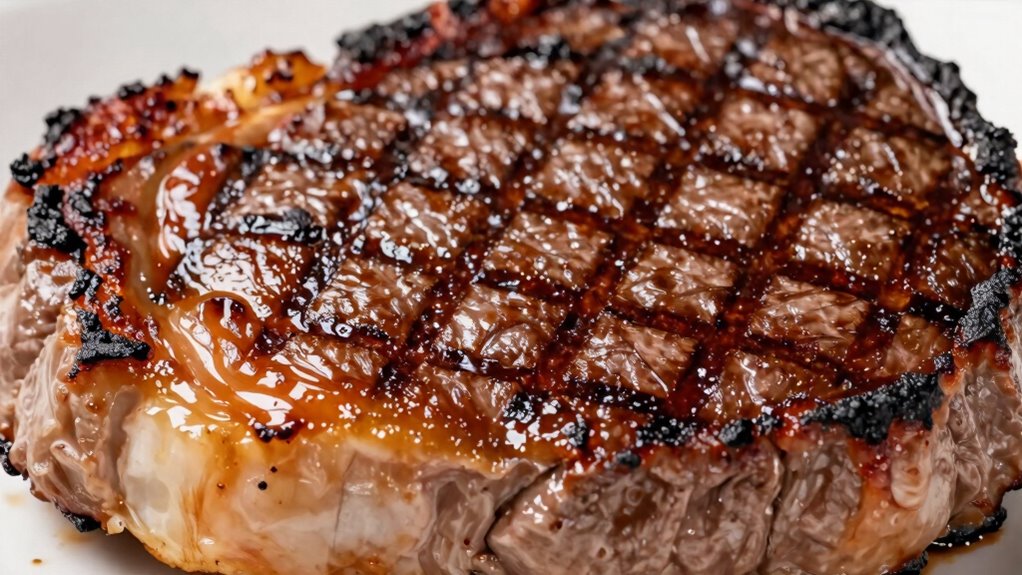

Uneven browning from one side to the other happens mainly because your skin responds differently to sun exposure based on patterns and skin type. If you tend to spend more time on one side, like driving or working outdoors, that side gets more UV rays, stimulating melanin production and causing darker patches. Your skin’s natural melanin level and overall health also influence this uneven pigmentation. Keep exploring to discover how these factors interact and what you can do about it.

Get baking supplies delivered free with Prime
- Fast, free delivery on millions of items
- Prime Video, Amazon Music and more included
- Member-only deals all year
Key Takeaways
- Uneven sun exposure, such as during outdoor activities or driving, causes one side to darken faster.
- Variations in skin response and melanin production lead to irregular pigmentation across different areas.
- Genetics and skin type influence susceptibility to uneven browning from UV radiation.
- Repeated exposure on one side enhances localized pigmentation differences over time.
- Patterns of activity and lifestyle habits determine the degree and distribution of uneven skin darkening.
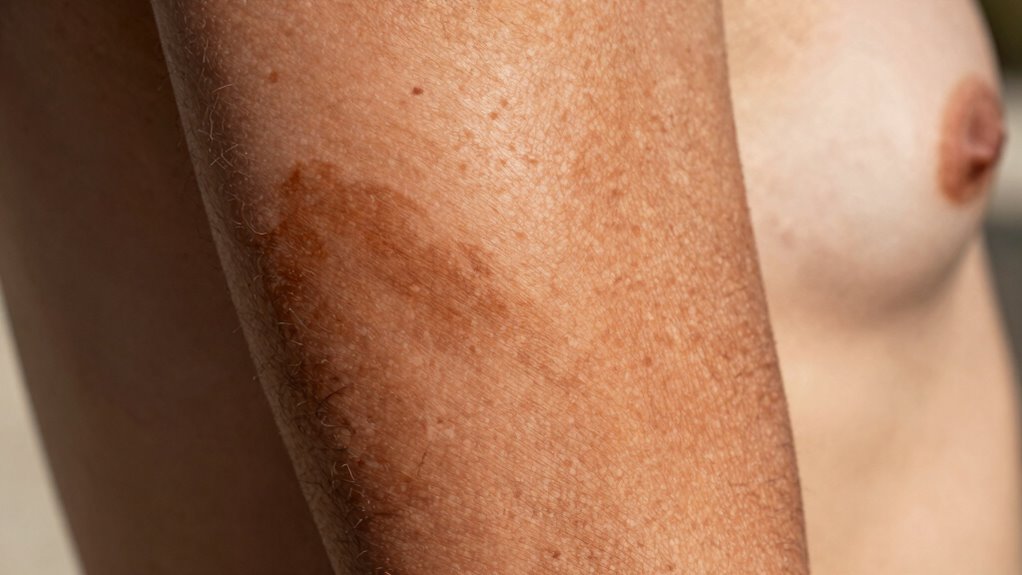
Have you ever noticed that your food browns unevenly, with one side darker than the other? That same unevenness can happen to your skin when you’re exposed to the sun. Sun exposure plays a significant role in skin pigmentation, which influences how your skin reacts to UV rays. Some areas may develop a darker hue, while others stay lighter, leading to that uneven browning effect. This uneven pigmentation is often caused by the way your skin responds to the sun’s rays, producing more melanin in some spots than others. Melanin is the pigment responsible for your skin color, and its uneven distribution can be influenced by various factors like genetics, skin type, and exposure patterns.
When parts of your skin are exposed to the sun more frequently or intensely, they tend to develop a darker pigmentation. For example, if you spend more time outdoors on one side of your body—say, your left arm while driving or gardening—that side may darken faster than the other. This is because your skin responds to UV radiation by producing more melanin as a protective mechanism. Over time, this creates uneven pigmentation, which manifests as darker patches or spots. In some cases, the difference in skin tone can be quite noticeable, especially if you have a lighter skin tone that’s more prone to sun damage. Additionally, skin response to UV rays can vary depending on your skin’s natural melanin levels and overall health, further affecting uneven browning.
UV protection sunscreen for uneven skin tone
As an affiliate, we earn on qualifying purchases.
As an affiliate, we earn on qualifying purchases.
Frequently Asked Questions
Can Uneven Browning Be a Sign of Skin Cancer?
Uneven browning can sometimes be a sign of skin cancer, especially if it’s accompanied by changes in color, shape, or texture. While sun exposure and skin pigmentation variations often cause uneven tanning, you should watch for irregular, asymmetrical spots that don’t fade or change over time. If you notice these signs, it’s essential to see a dermatologist promptly, as early detection is vital for skin cancer treatment.
Does Diet Influence Uneven Tanning or Browning?
Yes, your diet can impact uneven tanning or browning. Nutritional deficiencies, like low levels of vitamins A, C, or E, can affect your skin’s ability to tan evenly. A diet lacking in antioxidants and essential nutrients may lead to uneven skin tone or patchy tanning. To improve this, incorporate foods rich in these vitamins, such as fruits, vegetables, and nuts, to support healthy, balanced skin pigmentation.
How Long Does It Take to Correct Uneven Skin Tone?
Correcting uneven skin tone depends on your skin’s response and the treatments you choose. Typically, it can take several weeks to months of consistent sun protection, targeted skincare, and possibly professional treatments. Sun exposure and pigmentation issues influence the process, so avoiding sun damage is essential. Patience is key, and you should see gradual improvements as your skin heals and evens out. Stay committed to your skincare routine for the best results.
Are There Specific Skincare Products to Even Out Skin Color?
Ever wish for a magic wand to even out your skin tone? While no magic exists, specific skincare products can help. Look for those with skin lightening ingredients like vitamin C, niacinamide, or alpha arbutin, which promote pigment correction. These products target uneven pigmentation, helping you achieve a more uniform complexion. Consistent use is key—patience and dedication turn hope into reality, revealing your true, radiant skin.
Can Genetics Determine Uneven Browning Patterns?
Yes, genetics can determine uneven browning patterns. Your genetic predisposition influences skin pigmentation, which affects how your skin reacts to sun exposure and other environmental factors. If your genes cause uneven melanin distribution, you’ll notice uneven browning on different sides of your body or face. Understanding this can help you tailor skincare routines or sun protection strategies to minimize the appearance of uneven skin tone.
Conclusion
So, next time you notice uneven browning, consider the possibility that your oven’s hot spots might be to blame. It’s a common issue, but many assume it’s just bad technique. In reality, uneven heating is often caused by oven calibration or hot spots, and knowing this can help you adjust your cooking process. Don’t dismiss this theory—try rotating your dish or checking your oven’s temperature. You might just achieve perfectly even browning every time!
Fall Picks
fall essentials
As an affiliate, we earn on qualifying purchases.