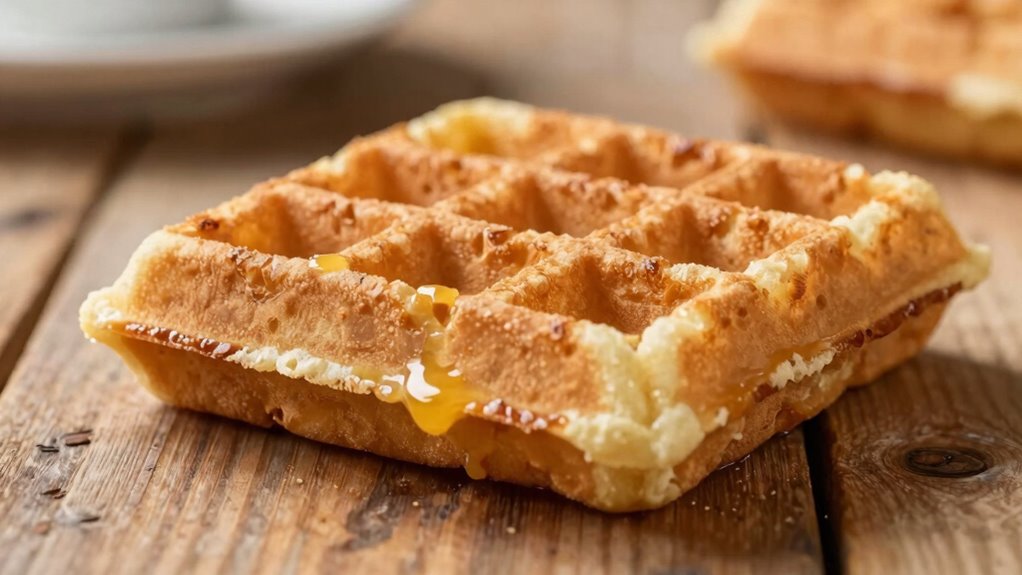

When waffles rise beautifully and then collapse, it usually means the leavening was initially active but lost its strength or the batter wasn’t balanced properly. This can happen if ingredients are too cold, overmixed, or if the leavening agents aren’t fresh or used in the right amounts. Poor handling of ingredients or uneven preheating might also cause this. To avoid this, understanding how each step affects rise and collapse can help you perfect your waffle technique. Keep exploring to learn more.

Get baking supplies delivered free with Prime
- Fast, free delivery on millions of items
- Prime Video, Amazon Music and more included
- Member-only deals all year
Key Takeaways
- Excessive leavening or expired leavening agents can cause waffles to rise quickly then collapse.
- Overmixing batter destroys trapped air, leading to initial rise followed by collapse.
- Insufficient preheating or uneven heat causes batter to set prematurely, resulting in collapse after rising.
- Using cold ingredients slows leavening reactions, preventing stable rise and causing collapse afterward.
- Too much leavening or improper balance creates unstable bubbles that burst, leading to initial rise then collapse.
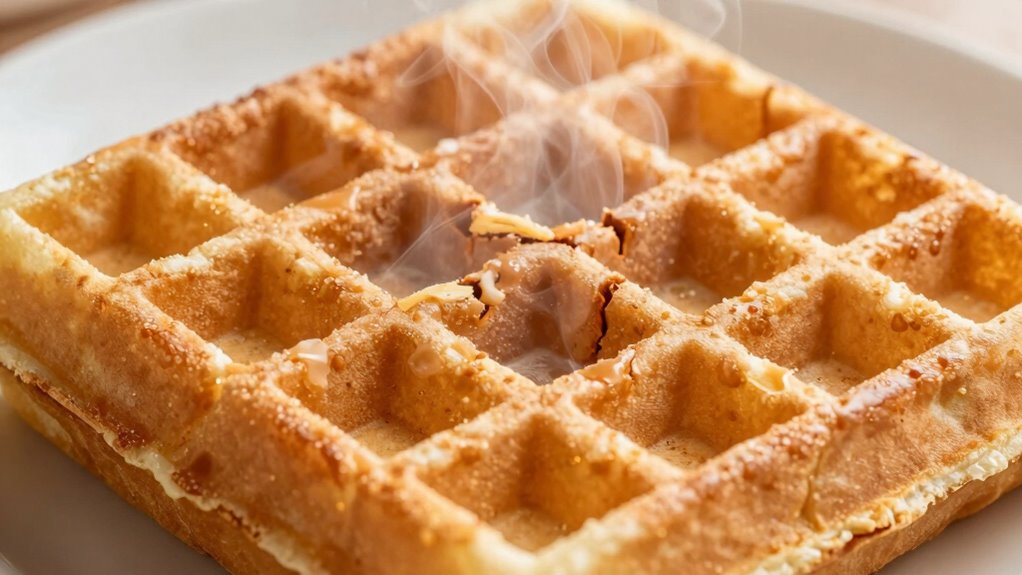
Waffles have long been a beloved breakfast staple, but their popularity often rises and falls with changing tastes and trends. When you make waffles that rise beautifully and then suddenly collapse, it can be frustrating. This usually points to issues with your baking techniques or ingredient variations. Understanding what causes this pattern can help you perfect your waffle game and achieve that perfect, fluffy texture every time.
First, consider your baking techniques. When you beat the batter too vigorously or overmix, you can develop gluten too much, which results in dense, flat waffles that won’t hold their rise. Conversely, mixing just enough to combine the ingredients creates a lighter, airier batter. Also, the temperature of your ingredients matters. Using cold milk or eggs can slow down the chemical reactions that produce leavening, leading to waffles that don’t rise well initially. Warming your liquids slightly before adding them to dry ingredients helps activate your leaveners more effectively, giving your waffles that initial lift. Additionally, preheating your waffle iron thoroughly is crucial; a hot iron helps set the batter quickly, trapping gases that expand and create that desirable rise.
Ingredient variations also play a significant role. For example, the type of flour you use influences the structure. Using all-purpose flour provides a good balance of gluten, but too much gluten development from overmixing or high-protein flours can cause waffles to be tough and less prone to rise. Incorporating baking powder or baking soda properly is essential—these are your leavening agents that generate the bubbles to lift your batter. If you use too little, your waffles won’t rise; too much, and they might rise rapidly but then collapse as the gases escape. Also, the freshness of your baking powder matters. Old or expired leaveners lose potency, resulting in weak rising power. Ingredient variations like adding whipped egg whites or folding in beaten egg whites can introduce extra air, giving your waffles a more consistent rise. However, if you don’t fold gently, you might knock out the air and lose that lift, causing collapse. Ensuring the proper leavening balance is crucial for achieving that perfect rise and stable structure. Additionally, understanding the chemical reactions involved in leavening can help you fine-tune your technique for better results. Small adjustments in ingredient ratios can also significantly impact the final outcome. To further enhance the rise, some bakers recommend incorporating stabilizers like cream of tartar to help maintain the foam in beaten egg whites. Recognizing how ingredient freshness impacts leavening efficiency can also prevent unexpected collapses.
best waffle maker for fluffy waffles
As an affiliate, we earn on qualifying purchases.
As an affiliate, we earn on qualifying purchases.
Frequently Asked Questions
Can the Type of Waffle Iron Affect Rising and Collapsing?
Yes, the type of waffle iron can affect rising and collapsing. A waffle iron with uneven heat distribution might cause inconsistent rising, leading to collapsing in some areas. For example, a thicker or poorly insulated waffle iron may not heat evenly, preventing proper rising. Choosing a high-quality waffle iron with even heat distribution guarantees your batter rises uniformly, giving you perfectly fluffy waffles without collapse.
Does Altitude Influence Waffle Rising and Collapsing?
Altitude effects can markedly influence waffle stability, causing waffles to rise unevenly or collapse. Higher altitudes mean lower air pressure, which can make the batter rise too quickly and then deflate. To counteract this, you might need to adjust ingredients like reducing leavening agents or increasing liquids. Understanding how altitude effects impact waffle rise helps you adapt recipes, ensuring your waffles stay stable and fluffy, no matter where you are.
Are There Specific Ingredients That Prevent Collapsing?
You can prevent waffle collapse by choosing ingredients wisely. Using strong gluten development through proper flour and mixing helps create a sturdy structure. Additionally, controlling sugar crystallization keeps the batter stable; too much sugar can weaken the waffle’s rise. Think of it like building a fortress—selecting the right ingredients guarantees your waffles stand tall and proud, not deflate like a sad balloon. Small tweaks make all the difference!
How Does Batter Temperature Impact Waffle Structure?
Batter temperature greatly impacts waffle structure because warmer batter tends to be more fluid, affecting batter consistency. If your batter is too cold, it can be thick and dense, leading to flat waffles. Conversely, slightly warmer batter promotes better aeration, resulting in a light, fluffy waffle texture. Keep your batter at an ideal temperature—around room temperature—for the best rise and a crisp, airy waffle.
Can Overmixing Batter Cause Waffles to Collapse?
Overmixing batter can definitely cause your waffles to collapse. When you mix too much, gluten develops excessively, affecting the waffle texture and making the batter too dense. This disrupts the proper rise, resulting in waffles that fall flat or collapse after rising. Keep your batter’s consistency gentle and avoid overmixing to make sure fluffy, well-structured waffles that hold their shape and have a light, airy texture.
Conclusion
So, next time your waffles rise perfectly only to collapse, don’t get discouraged. It’s usually just a sign that your batter was too heavy or the oven temperature shifted. Think of it as a learning moment—each batch teaches you a little more. With a few tweaks, you’ll get fluffy, beautiful waffles every time. Remember, even the best cooks face setbacks; it’s all part of the delicious journey.
Fall Picks
fall essentials
As an affiliate, we earn on qualifying purchases.