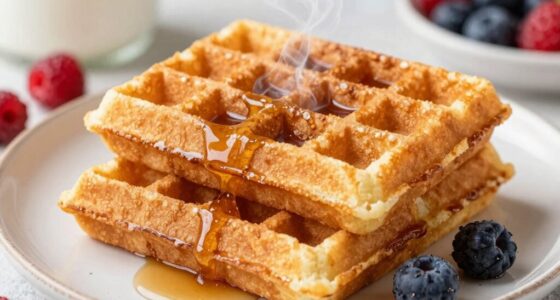
If your waffles stay pale no matter how long you cook them, it’s often due to batter or temperature issues. A runny batter prevents proper browning, so thickening it with more flour helps. Also, make certain your waffle iron is thoroughly preheated to a high temperature, as low heat leads to pale results. Adjusting sugar content can speed up browning, and proper heat distribution matters too. Keep these tips in mind to get perfect golden waffles—more details await if you continue exploring.

Get baking supplies delivered free — and shop member deals
- Fast, free delivery on millions of items
- Access to Prime Big Deal Days deals on October 6–7
- Prime Video, Amazon Music and more included
Key Takeaways
- Insufficient waffle iron temperature prevents proper browning regardless of cooking duration.
- Batter too thin or runny reduces heat retention and inhibits Maillard reaction.
- Low sugar content slows caramelization, resulting in pale waffles despite extended cooking.
- Inadequate preheating or uneven heat distribution leads to uneven or pale results.
- Overcooking won’t improve color if the heat isn’t high enough for browning.

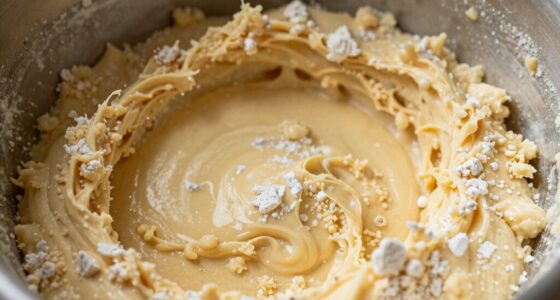
If your waffles often turn out paler than you’d like, it’s likely due to a few common factors that can be easily adjusted. One of the main culprits is batter consistency. If your batter is too thin or runny, your waffles won’t develop that appealing golden-brown color. Thin batter spreads thinly over the waffle iron, reducing the Maillard reaction—the chemical process that gives waffles their rich color and flavor. To fix this, try thickening your batter slightly by adding a bit more flour or reducing the liquid ingredients. A thicker batter tends to stay in place better, allowing the heat to caramelize and brown the waffles more evenly. Additionally, the Maillard reaction requires sufficient heat to produce those desirable colors and flavors. Ensuring your waffle iron is preheated properly can significantly impact the browning process, as starting with a hot surface promotes even cooking and color development.
Thickening batter with more flour helps waffles brown evenly and develop richer flavor.
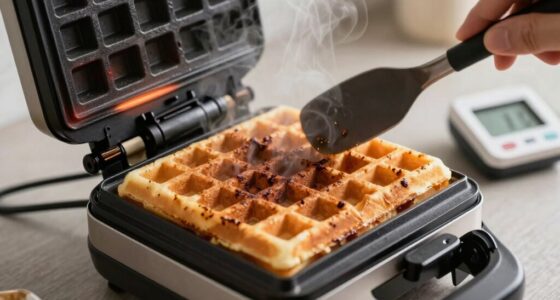
Another essential factor is the waffle iron temperature. If your iron isn’t hot enough, your waffles won’t brown properly, no matter how long you cook them. It might seem counterintuitive, but a lower temperature can cause pale waffles because the heat isn’t sufficient to trigger the browning process. Check your waffle iron’s temperature settings, and consider preheating it longer or increasing the temperature if you notice consistent paleness. Many waffle irons have indicator lights or temperature controls—use these to verify you’re reaching the ideal heat level before pouring in the batter.
Timing also plays a role, but if your waffle iron isn’t hot enough, even extended cooking won’t help. The heat needs to be high enough to promote caramelization and develop a crisp, golden crust. If you find yourself waiting longer than usual, but the waffles still remain pale, it’s a clear sign that the heat isn’t sufficient. Adjust the heat and give your waffle iron a few extra minutes to reach the right temperature before you start cooking. Ensuring proper heat distribution across the surface can also help in achieving an even, golden color.
Additionally, the type of batter you use can influence color. Batters with high sugar content tend to brown faster, so if your batter is low in sugar, your waffles might stay pale longer. If you prefer darker waffles, consider adding a small amount of sugar or honey to promote browning.
As an affiliate, we earn on qualifying purchases.
Frequently Asked Questions
Can Using a Different Waffle Iron Affect Browning?
Yes, using a different waffle iron can affect browning. Each waffle iron has unique heating elements and temperature controls, impacting how your waffles cook. Make certain you maintain your waffle iron properly, including regular waffle iron maintenance, to guarantee even heat distribution. Additionally, adjusting batter consistency—thicker batter browns better—can help you achieve a golden-brown waffle, especially if your new waffle iron runs cooler.
Does the Type of Flour Influence Waffle Color?
Think of flour as the paint that colors your waffle; different types create various shades. Using refined flours like cake or pastry flour can result in paler waffles, while whole grain or bread flours give a richer hue. Fresh ingredients and proper batter consistency also influence browning. If your batter is too thick or ingredients are old, the waffles may stay pale despite cooking longer. Adjust your flour type and guarantee freshness for better color.
How Does Altitude Impact Waffle Cooking?
Altitude effects can cause your waffles to turn out paler because the lower air pressure affects heat transfer and batter expansion. To counter this, you should make recipe adjustments such as increasing flour slightly or adding a pinch more baking powder. Also, cook waffles a bit longer or at a slightly higher temperature to guarantee they brown properly. These tweaks help you achieve golden, crispy waffles despite high-altitude cooking challenges.
Can Adding Extra Sugar Darken Waffles?
Adding extra sugar can indeed darken your waffles, thanks to sugar caramelization, which occurs at higher temperatures. Ironically, you might think more sugar makes them sweeter and darker, but too much can cause uneven browning or burning. To achieve a richer color without risking over-browning, consider ingredient substitution—using honey or molasses. Just remember, adjusting sugar levels influences caramelization, so keep an eye on your waffle’s color as it cooks.
Is It Necessary to Preheat the Waffle Iron Thoroughly?
Yes, preheating your waffle iron thoroughly is essential. It guarantees the waffle batter consistency is ideal for even cooking and helps prevent pale waffles. A properly heated iron also reduces sticking and promotes a crispy exterior. Regular waffle iron maintenance, like cleaning and checking for hot spots, guarantees consistent heat distribution. This way, you get golden, delicious waffles every time, avoiding the disappointment of pale results despite long cooking.
Conclusion
So, next time your waffles turn out pale, remember it’s not just about cooking time. Could it be the batter’s ingredients or your waffle iron’s heat? Sometimes, a simple tweak makes all the difference. Don’t let a pale waffle dampen your breakfast spirits—think of it as a chance to get creative. After all, isn’t the perfect waffle worth a little experimentation? Keep trying, and soon, you’ll be serving golden, crispy waffles every time.
Evergreen bestsellers Picks
bestsellers
As an affiliate, we earn on qualifying purchases.