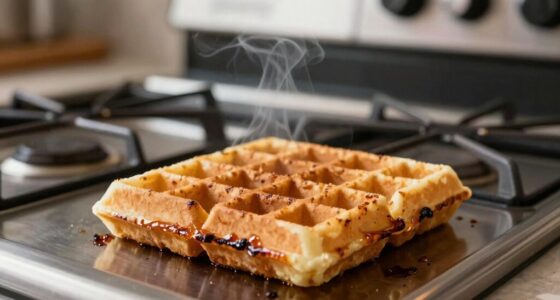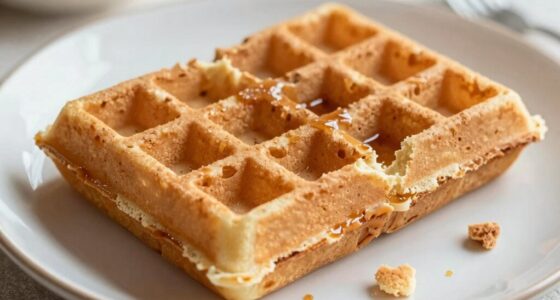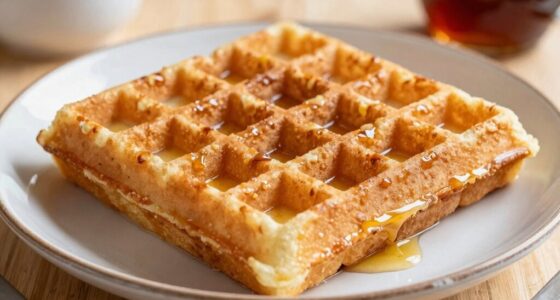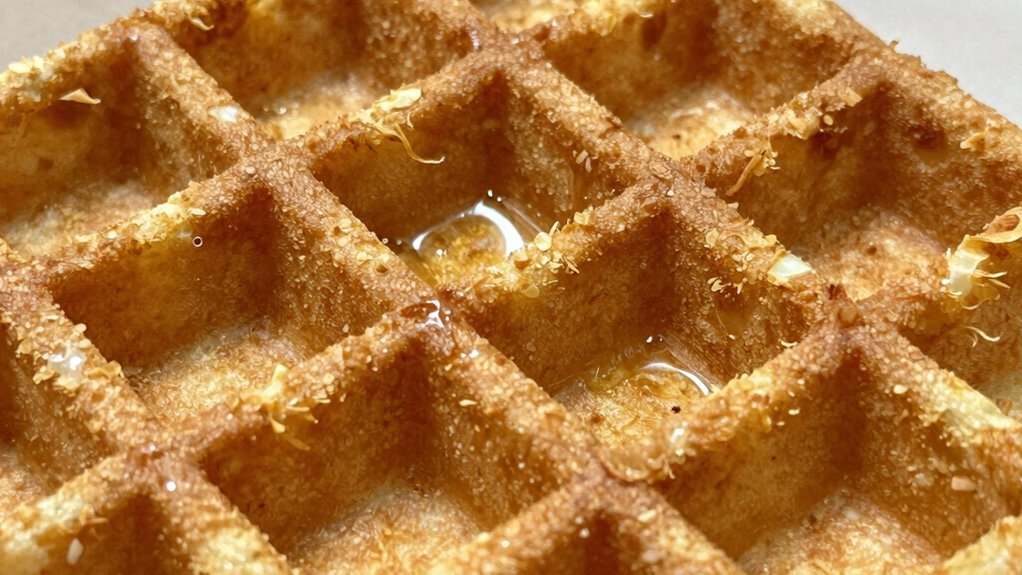

Dry corners and wet centers in your waffle happen when you don’t mix the batter well, use the wrong temperature, or open the iron too often. Overmixing, underheating, or uneven heat distribution can cause parts to cook improperly. Pouring too much or too little batter also creates inconsistent results. Staying mindful of these factors can help you achieve evenly cooked waffles. Keep exploring to discover how to fix these common issues.

Get baking supplies delivered free — and shop member deals
- Fast, free delivery on millions of items
- Access to Prime Big Deal Days deals on October 6–7
- Prime Video, Amazon Music and more included
Key Takeaways
- Uneven batter distribution or overfilling causes dry edges and wet centers.
- Inconsistent or excessively high waffle iron temperature leads to uneven cooking.
- Poor heat distribution within the iron results in dry corners and soggy centers.
- Opening the waffle maker prematurely disrupts even cooking, causing moisture imbalance.
- Improper mixing creates uneven moisture, leading to dry and wet spots on the waffle.
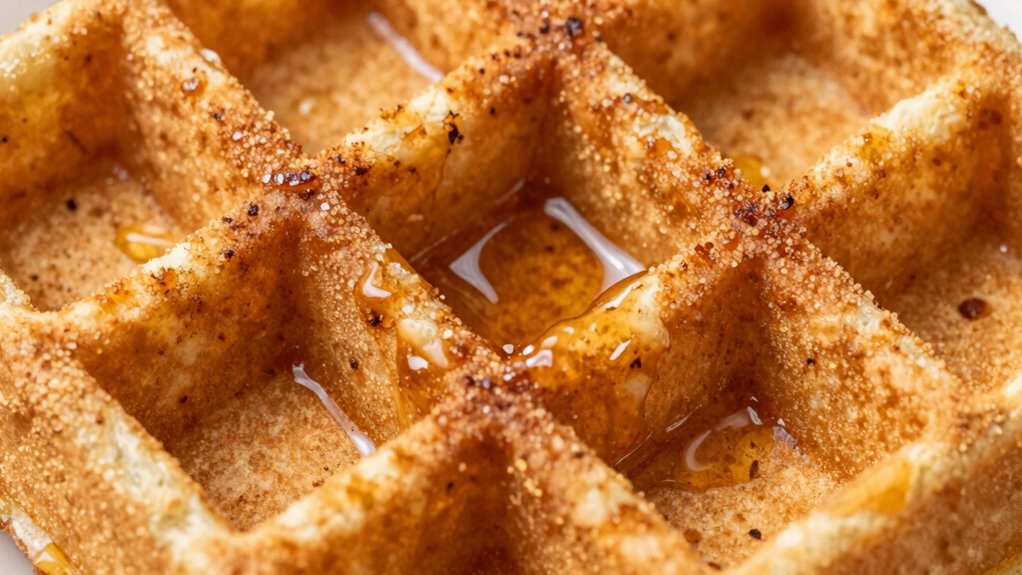
If your waffles turn out with dry corners and wet centers, it’s usually due to uneven heat distribution or improper batter mixing. The key to a perfectly cooked waffle lies in understanding how waffle batter consistency and iron temperature settings influence the outcome. When the batter isn’t mixed properly, it can result in uneven distribution of moisture and dry spots. If you overmix, you might develop gluten that makes the batter thick and heavy, leading to inconsistent cooking. Under-mixing, on the other hand, can cause pockets of wet batter that don’t cook through. Aim for a smooth, slightly thick consistency—like pouring syrup—that’s not too runny or stiff. When your batter has the right consistency, it promotes even cooking, preventing those frustrating dry corners and wet centers. Additionally, the batter consistency plays a significant role in ensuring the heat is distributed evenly throughout the waffle. Next, the iron temperature settings play an essential role. Many waffle makers have adjustable heat controls, but if your settings are too high, the outside will cook too quickly while the inside remains wet. Conversely, if the heat is too low, the waffle may not crisp up properly, leaving the center undercooked and soggy. It’s vital to preheat your waffle iron thoroughly and test the temperature with a small amount of batter before making a full batch. Once you find the ideal temperature, maintain it consistently. If your waffle iron has a temperature indicator, use it to keep the heat steady throughout cooking. Uneven heat distribution within the iron can also cause parts of the waffle to cook differently. To mitigate this, avoid opening the waffle maker too often during cooking, as it causes temperature fluctuations that contribute to uneven results. Proper iron maintenance can also help ensure consistent heat distribution and better cooking outcomes. Additionally, the amount of batter you pour affects the final product. Overfilling can cause batter to spill out and not cook evenly, creating those dry, overcooked edges and still-wet centers. Underfilling, on the other hand, doesn’t provide enough batter to fill the mold properly, leading to dry corners. Use a ladle or measuring cup to add just enough batter for a full, but not overflowing, waffle. This ensures even heat exposure and thorough cooking from edge to center.
waffle maker temperature control
As an affiliate, we earn on qualifying purchases.
As an affiliate, we earn on qualifying purchases.
Frequently Asked Questions
Can the Type of Waffle Iron Affect the Moisture Distribution?
Yes, the type of waffle iron can affect moisture distribution. A waffle iron’s material, like cast iron or non-stick, influences heat retention and evenness. Plate temperature plays a vital role too; if it’s too high or uneven, parts of your waffle may cook faster, leading to dry corners and wet centers. Choosing the right waffle iron with good heat distribution and properly setting the temperature helps guarantee consistent moisture throughout your waffle.
Does Batter Consistency Influence Dry and Wet Areas?
Did you know that uneven batter consistency can cause wet centers and dry corners? You influence this by how you mix your batter and the ingredient temperature. Overmixing can create air pockets, leading to uneven cooking, while cold ingredients may slow heat transfer. Ensuring thorough batter mixing and using ingredients at the right temperature helps distribute moisture evenly, so your waffles cook consistently from edge to center.
How Does Timing Impact Uneven Waffle Texture?
Timing affects your waffle’s texture because if you wait too long before flipping, uneven heat distribution can cause dry corners and wet centers. Properly monitoring cooking time ensures the batter viscosity stays consistent, helping the heat transfer evenly across the waffle. When you flip too early or late, the heat doesn’t distribute evenly, resulting in inconsistent textures. To prevent this, follow the recommended cooking time and keep an eye on your waffle as it cooks.
Can Altitude Change Cause Moisture Issues in Waffles?
Yes, altitude effects can cause moisture issues in waffles. At higher altitudes, lower air pressure can lead to faster moisture migration within the batter, resulting in uneven cooking. The moisture may escape more quickly from the batter’s edges, leaving dry corners, while the center retains more moisture, creating wet spots. Adjusting your recipe or cooking time for altitude can help you achieve a more consistent waffle texture.
Do Different Flour Types Affect Moisture Balance?
Yes, different flour types affect moisture balance in your waffle. For example, bread flour has higher gluten development, which can create a chewier texture and trap more moisture, while cake flour absorbs less liquid, resulting in a lighter, crisper waffle. You should adjust your recipe based on flour absorption rates to prevent dry corners and wet centers. Experimenting with flour blends helps you find the perfect moisture balance for your desired waffle texture.
Conclusion
Understanding why your waffle has dry corners and a wet center helps you perfect your breakfast game. Remember, uneven heat distribution or overmixing batter can cause this issue. Did you know that an uneven heat source can make your waffle’s center cook twice as fast as the edges? By adjusting your heat and mixing techniques, you can achieve that perfect, golden-brown waffle with evenly cooked centers and crispy edges, making every bite deliciously consistent.
Fall Picks
fall essentials
As an affiliate, we earn on qualifying purchases.